Statins and Other Lipid-Lowering Medicines
Comprehensive guide to statins and lipid-lowering drugs for managing high cholesterol and reducing heart disease risk.
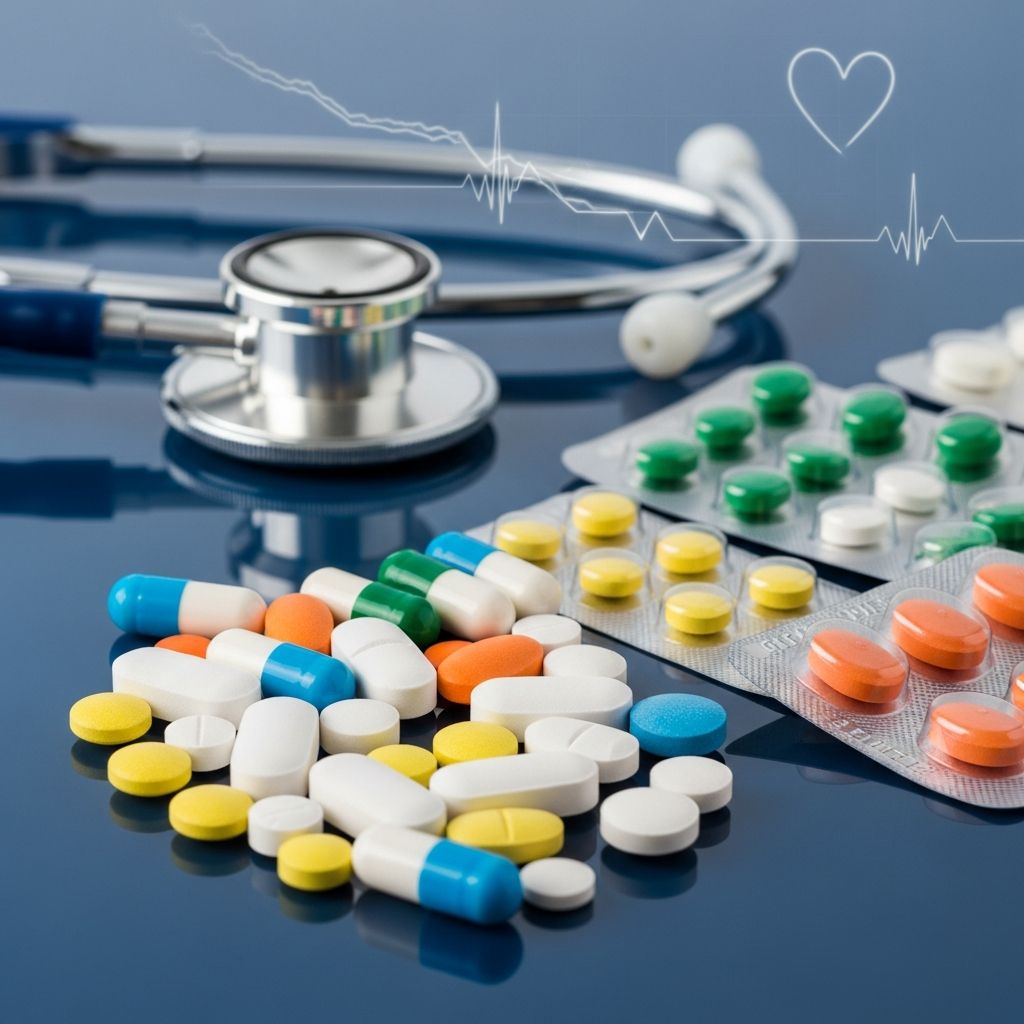
High cholesterol, particularly elevated low-density lipoprotein (LDL) cholesterol, significantly increases the risk of cardiovascular diseases such as heart attacks and strokes. Statins, known as HMG-CoA reductase inhibitors, are the cornerstone of lipid-lowering therapy. They reduce LDL cholesterol by 25-50% or more, lower triglycerides, and modestly raise high-density lipoprotein (HDL) cholesterol, thereby preventing atherosclerotic cardiovascular disease (ASCVD).
What are Statins?
Statins are prescription medications that inhibit the enzyme hydroxymethylglutaryl-CoA (HMG-CoA) reductase in the liver, which is crucial for cholesterol synthesis. By blocking this enzyme, statins decrease hepatic cholesterol production, prompting the liver to increase LDL receptor expression. This enhances the uptake and clearance of LDL from the bloodstream.
Common statins approved by the FDA include atorvastatin, rosuvastatin, simvastatin, pravastatin, fluvastatin, lovastatin, and pitavastatin. They are available as oral tablets, with some like simvastatin also in liquid form.
How Do Statins Work?
Statins competitively inhibit HMG-CoA reductase, the rate-limiting enzyme in the mevalonate pathway responsible for converting HMG-CoA to mevalonate, a precursor to cholesterol. This reduction in intracellular cholesterol triggers upregulation of LDL receptors on hepatocytes, increasing LDL clearance from plasma.
Additionally, statins reduce triglyceride levels by decreasing the hepatic production of apolipoprotein B100-containing lipoproteins and may increase HDL cholesterol. Genetic factors, such as variations in ABCG2, lipoprotein(a), apo E, and RhoA genes, can influence individual responses.
Who Needs Statins?
Guidelines recommend statins for primary and secondary prevention of ASCVD. Candidates include:
- Adults with clinical ASCVD (e.g., prior heart attack, stroke, or peripheral artery disease).
- Individuals aged 40-75 with diabetes and LDL ≥70 mg/dL.
- Those with LDL ≥190 mg/dL (suggestive of familial hypercholesterolemia).
- Patients with a 10-year ASCVD risk ≥7.5% based on risk calculators.
- Pediatric patients with familial hypercholesterolemia.
For very high-risk patients on maximal statin therapy with LDL ≥70 mg/dL, add-ons like ezetimibe or PCSK9 inhibitors are considered.
Types of Statins
Statins are classified by potency:
| Intensity | % LDL Reduction | Examples (Daily Dose) |
|---|---|---|
| High | ≥50% | Atorvastatin 40-80 mg, Rosuvastatin 20-40 mg |
| Moderate | 30-49% | Atorvastatin 10-20 mg, Rosuvastatin 5-10 mg, Simvastatin 20-40 mg, Pravastatin 40-80 mg, Lovastatin 40 mg, Fluvastatin XL 80 mg, Pitavastatin 1-4 mg |
| Low | <30% | Pravastatin 10-20 mg, Fluvastatin 20-40 mg |
High-intensity therapy is preferred for patients ≤75 years with clinical ASCVD to achieve ≥50% LDL reduction.
Dosage and Administration
Statins are typically taken once daily, often in the evening due to peak cholesterol synthesis at night. Doses are individualized based on risk, baseline LDL, and tolerability. Start with moderate-intensity for primary prevention and high-intensity for secondary.
Monitor lipid profiles 4-12 weeks after initiation or dose changes, then every 3-12 months. Liver enzymes (ALT/AST) should be checked before starting, at 6-12 weeks, and annually if stable.
Benefits of Statins
Clinical trials demonstrate statins reduce major vascular events by 20-30% per 1 mmol/L (39 mg/dL) LDL reduction. They are effective for primary prevention in high-risk individuals and secondary prevention in those with established disease.
Related Stories



Benefits extend beyond lipids: statins have anti-inflammatory, plaque-stabilizing, and endothelial function-improving effects, reducing risks of heart attack, stroke, and revascularization.
Side Effects of Statins
Most people tolerate statins well, but common side effects include:
- Muscle pain or weakness (myalgia, 5-10%; rare rhabdomyolysis <0.1%).
- Headache, nausea, diarrhea, constipation.
- Elevation in liver enzymes (usually asymptomatic, <3x ULN in 0.5-2%).
- Increased blood sugar (new-onset diabetes risk increase of 9-12% per 1 mmol/L LDL drop).
Risk factors for myopathy include high dose, advanced age, female sex, hypothyroidism, renal/hepatic impairment, and interacting drugs (e.g., fibrates, cyclosporine). Statin-associated autoimmune myopathy is rare and reversible upon discontinuation.
Other Lipid-Lowering Medicines
When statins alone are insufficient, combination therapy is used:
Ezetimibe
Inhibits intestinal cholesterol absorption, reducing LDL by additional 15-25% when added to statins. Well-tolerated with minimal side effects.
PCSK9 Inhibitors
Monoclonal antibodies (alirocumab, evolocumab) or siRNA (inclisiran) that inhibit PCSK9, increasing LDL receptor recycling. Lower LDL by 50-60%; used in very high-risk patients or familial hypercholesterolemia. Administered subcutaneously every 2-4 weeks.
Bile Acid Sequestrants
Cholestyramine, colestipol bind bile acids in the gut, forcing hepatic cholesterol use for bile synthesis. LDL reduction 15-30%; safest but may cause GI upset and drug interactions.
Fibrates
Primarily lower triglycerides (20-50%) and raise HDL; modest LDL effect. Used in hypertriglyceridemia.
Niacin
Lowers LDL and triglycerides, raises HDL, but limited use due to side effects like flushing.
ACLY Inhibitors
Bempedoic acid blocks ATP-citrate lyase, reducing cholesterol synthesis. LDL reduction 15-25%; oral, for statin-intolerant patients or add-on.
Who Should Not Take Statins?
Contraindications include active liver disease, pregnancy/breastfeeding, and hypersensitivity. Use caution in heavy drinkers, unexplained persistent transaminase elevations, or predisposition to myopathy.
Interactions
Statins interact with CYP3A4 inhibitors (e.g., grapefruit juice, itraconazole, erythromycin for simvastatin/lovastatin), increasing myopathy risk. Avoid high-intensity lovastatin with amiodarone; limit simvastatin to 20 mg with amlodipine.
Monitoring and Follow-Up
Assess adherence, side effects, and lipids regularly. If myalgia occurs, check CK levels; temporarily hold statin and restart at lower dose if resolves. Lifestyle modifications (diet, exercise) remain essential adjuncts.
Lifestyle Advice Alongside Medication
Combine therapy with heart-healthy habits:
- Mediterranean diet low in saturated fats, high in fruits/vegetables/fiber.
- 150 minutes moderate aerobic exercise weekly.
- Weight management, smoking cessation, limit alcohol.
These amplify benefits and may allow lower doses.
Frequently Asked Questions
Are statins safe for long-term use?
Yes, benefits outweigh risks for most; decades of data show cardiovascular protection with low serious adverse event rates.
Can statins cause memory loss?
No strong evidence; FDA removed this warning as studies show no causal link.
Do I need statins if my cholesterol is borderline?
Depends on overall ASCVD risk; discuss with your doctor using risk calculators.
What if I experience muscle pain on statins?
Common and often resolves with dose reduction, switch, or statin holiday; consult your provider.
Can I stop statins once cholesterol is normal?
No, lifelong therapy usually needed for sustained protection; abrupt stop increases event risk.
This article provides an overview; always consult healthcare professionals for personalized advice. (Word count: 1678)
References
- Statin Medications – StatPearls — NCBI Bookshelf. 2023-08-14. https://www.ncbi.nlm.nih.gov/books/NBK430940/
- Statins — MedlinePlus, U.S. National Library of Medicine. 2024-10-01. https://medlineplus.gov/statins.html
- Cholesterol Medications — American Heart Association. 2024-05-15. https://www.heart.org/en/health-topics/cholesterol/prevention-and-treatment-of-high-cholesterol-hyperlipidemia/cholesterol-medications
- Statins: How They Work & Side Effects — Cleveland Clinic. 2023-11-20. https://my.clevelandclinic.org/health/treatments/22282-statins
- Statins — NHS. 2024-02-28. https://www.nhs.uk/medicines/statins/
Similar Articles








Read full bio of Sneha Tete