Are Statins Enough? When to Consider PCSK9 Inhibitors
Explore when PCSK9 inhibitors may be necessary beyond statin therapy for cholesterol management.
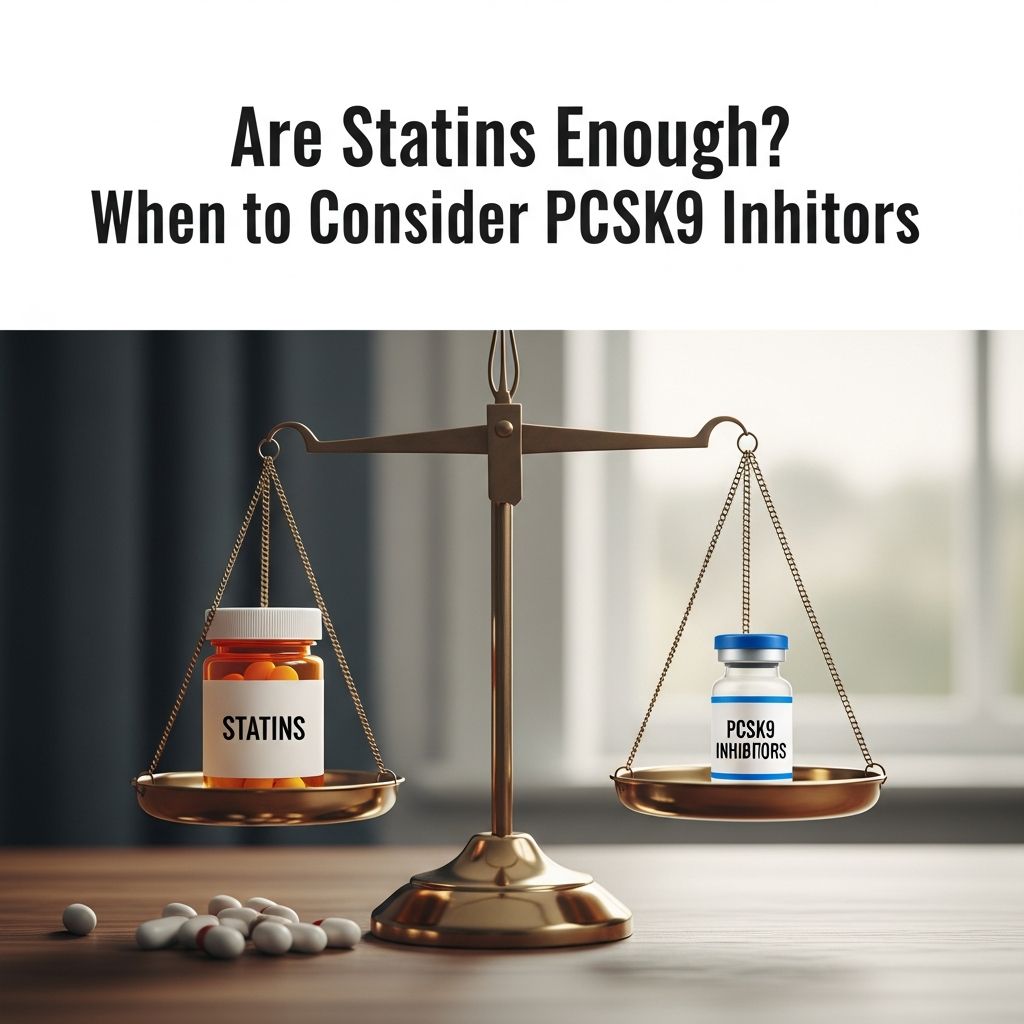
For decades, statins have been the cornerstone of cholesterol management, successfully lowering low-density lipoprotein (LDL) cholesterol levels in millions of patients worldwide. However, despite their widespread use and proven efficacy, some patients continue to experience elevated cholesterol levels even when taking statins consistently. This reality has prompted cardiovascular specialists to explore additional therapeutic options, particularly PCSK9 inhibitors, a newer class of medications that can work alongside statins to achieve more aggressive cholesterol reduction. Understanding when statins alone may be insufficient and when PCSK9 inhibitors become a necessary addition is crucial for optimizing cardiovascular health outcomes.
Understanding Statin Therapy and Its Limitations
Statins work by inhibiting HMG-CoA reductase, an enzyme in the liver essential for cholesterol synthesis. By blocking this enzyme, statins reduce the amount of cholesterol your body produces, thereby lowering LDL cholesterol levels in the bloodstream. For many patients, statins effectively reduce cardiovascular risk and prevent heart disease progression. However, statins have inherent limitations that make them insufficient for certain high-risk populations.
First, not all patients respond equally to statin therapy. While some individuals achieve optimal cholesterol levels with standard doses, others demonstrate a limited response even at maximum tolerated doses. Second, some patients experience side effects such as muscle pain or elevated liver enzymes, limiting their ability to take effective doses. Third, statins typically reduce LDL cholesterol by 20% to 55%, depending on the specific statin and dosage, which may not be aggressive enough for patients with very high baseline cholesterol levels or those with established cardiovascular disease.
What Are PCSK9 Inhibitors?
PCSK9 inhibitors represent a breakthrough in cholesterol management. These medications work through a completely different mechanism than statins. PCSK9 (proprotein convertase subtilisin/kexin type 9) is a protein that binds to LDL receptors on liver cells, causing their degradation and reducing the liver’s ability to remove LDL cholesterol from the bloodstream. PCSK9 inhibitors are monoclonal antibodies that block PCSK9, preventing this degradation process and allowing LDL receptors to remain functional longer. This enables the liver to clear more LDL cholesterol from the blood.
Unlike statins, which are taken orally as pills, PCSK9 inhibitors are administered as injectable medications, typically given either biweekly or monthly depending on the specific drug. The most commonly prescribed PCSK9 inhibitors include evolocumab and alirocumab. Because they work through a different mechanism than statins, they can be used together to achieve more substantial cholesterol reduction.
The Cholesterol-Lowering Power of PCSK9 Inhibitors
Clinical trials have demonstrated the remarkable efficacy of PCSK9 inhibitors in lowering cholesterol. When used alone, PCSK9 inhibitors reduce LDL cholesterol by approximately 47% to 60% compared to placebo. More impressively, when combined with statin therapy, PCSK9 inhibitors provide an additional 43% to 64% reduction in LDL cholesterol beyond what statins achieve alone. This means patients taking both medications can experience total LDL reductions exceeding 70%, bringing cholesterol levels down to therapeutic targets that would be impossible to achieve with either medication alone.
The combination of statins and PCSK9 inhibitors can lower LDL levels by more than half compared to baseline, which is particularly valuable for patients with familial hypercholesterolemia or those with very high baseline cholesterol levels. This aggressive LDL reduction translates into meaningful cardiovascular benefits, as numerous studies have shown that lower LDL levels correlate with reduced risk of heart attack and stroke.
Related Stories



When to Consider PCSK9 Inhibitors: Key Patient Populations
Not every patient with elevated cholesterol requires PCSK9 inhibitors. These medications are typically recommended for specific high-risk patient populations where the additional cholesterol-lowering benefit justifies the cost and the need for injections.
Patients with Established Cardiovascular Disease
Individuals with a history of heart attack, stroke, or other cardiovascular events benefit most from PCSK9 inhibitors when combined with statins. These patients have already demonstrated they are susceptible to atherosclerotic disease, and achieving more aggressive LDL reduction can help prevent recurrent events. Clinical trials have shown that adding PCSK9 inhibitors to statin therapy reduces the risk of heart attack by approximately 27% compared to statin therapy alone.
Statin-Intolerant Patients
Approximately 10% of the population experiences significant side effects from statins, most commonly muscle pain and weakness. For these patients, PCSK9 inhibitors can serve as an alternative or supplementary therapy. While PCSK9 inhibitors also have side effects, they tend to differ from statin-related adverse events, making them a viable option for statin-intolerant individuals.
Familial Hypercholesterolemia
Patients with familial hypercholesterolemia (FH), a genetic condition causing extremely high cholesterol levels, often fail to achieve adequate cholesterol reduction with statins alone. For these individuals, PCSK9 inhibitors can provide the additional LDL reduction necessary to reduce their significantly elevated cardiovascular risk. Many guidelines now recommend PCSK9 inhibitors as part of the standard treatment regimen for patients with heterozygous or homozygous familial hypercholesterolemia.
Very High-Risk Patients with Suboptimal LDL Response
Some patients taking maximally tolerated statin doses still fail to achieve LDL cholesterol targets set by their physicians. This might be due to genetic factors, limited statin response, or very high baseline cholesterol levels. For these individuals, adding a PCSK9 inhibitor can help bridge the gap between their current LDL level and their therapeutic target.
Evidence Supporting PCSK9 Inhibitor Use
The clinical evidence supporting PCSK9 inhibitor use has grown substantially over the past decade. Major randomized controlled trials have demonstrated that PCSK9 inhibitors not only lower cholesterol more effectively than statins alone but also reduce cardiovascular events. The FOURIER trial, which evaluated evolocumab in nearly 28,000 statin-treated patients with established cardiovascular disease, found that adding a PCSK9 inhibitor to statin therapy resulted in fewer myocardial infarctions, strokes, and hospitalizations at two-year follow-up compared to statin therapy alone.
Additional research, including the PACMAN-AMI trial, demonstrated that concomitant initiation of PCSK9 inhibitors and high-intensity statin therapy resulted in greater coronary plaque regression compared to placebo and statin therapy alone in patients undergoing percutaneous coronary intervention for acute myocardial infarction. A comprehensive 2022 meta-analysis of over 83,000 patients found that combination PCSK9 inhibitor and maximally tolerated statin therapy resulted in reduced nonfatal myocardial infarction and stroke in high-risk patients.
Important Considerations About Medication Adherence
While PCSK9 inhibitors offer substantial additional cholesterol-lowering benefits, an important consideration has emerged from recent research: patients starting PCSK9 inhibitors sometimes discontinue their statin therapy. A retrospective analysis of real-world patients found that statin discontinuation rates increased from 11% to 39% after PCSK9 inhibitor initiation, compared to only 7% to 9% in patients continuing statins alone. At 12 months following PCSK9 inhibitor initiation, statin medication adherence decreased by 19%, with statin discontinuation occurring in 28% of patients.
This finding is concerning because evidence suggests that continuing both medications provides superior cardiovascular outcomes compared to PCSK9 inhibitor monotherapy. The reduction in statin adherence after PCSK9 inhibitor initiation highlights the critical importance of patient education emphasizing that both medications should be continued together. Healthcare providers must clearly communicate that statins and PCSK9 inhibitors work synergistically, and discontinuing either medication compromises the cardiovascular benefits of this combination therapy.
Comparing LDL-Lowering Strategies
| Treatment Strategy | LDL Reduction | Administration | Best For |
|---|---|---|---|
| Statin Monotherapy | 20-55% | Daily oral pill | Primary prevention, moderate risk |
| Statin + Ezetimibe | 55-65% | Daily oral pills | Patients with modest additional reduction needs |
| Statin + PCSK9 Inhibitor | 70%+ reduction | Daily pill + biweekly/monthly injection | Very high-risk, familial hypercholesterolemia, statin-intolerant |
| PCSK9 Inhibitor Monotherapy | 47-60% | Biweekly/monthly injection | Statin-intolerant patients |
Cost and Insurance Considerations
PCSK9 inhibitors are significantly more expensive than statins, typically costing thousands of dollars per month without insurance coverage. Most insurance plans, including Medicare, require documentation that a patient has tried maximally tolerated statin therapy and either failed to achieve adequate LDL reduction or experienced statin intolerance before approving PCSK9 inhibitor coverage. This prior authorization requirement means patients typically cannot start PCSK9 inhibitors immediately but must first demonstrate an inadequate response to statins. Additionally, many insurance plans require step therapy, meaning patients must try and fail ezetimibe (a less expensive alternative) before PCSK9 inhibitors are approved.
Risk-Based Approach to PCSK9 Inhibitor Use
Current evidence suggests that PCSK9 inhibitors provide the most substantial cardiovascular benefit in very high-risk patients. Among adults with very high cardiovascular risk, adding PCSK9 inhibitors was likely to reduce myocardial infarction by 16 per 1000 patients and stroke by 21 per 1000 patients. However, among moderate and low cardiovascular risk groups, adding PCSK9 inhibitors or ezetimibe to statins yielded little or no benefit for myocardial infarction and stroke prevention. This risk-stratification approach helps guide appropriate therapy selection, reserving the most aggressive and expensive interventions for patients most likely to benefit.
Side Effects and Safety Profile
PCSK9 inhibitors are generally well-tolerated medications. The most common side effects include injection site reactions (pain, redness, or bruising), upper respiratory infections, and flu-like symptoms. Serious adverse events are rare. Unlike statins, PCSK9 inhibitors do not typically cause muscle pain or liver problems. For patients who have experienced statin intolerance, PCSK9 inhibitors often represent a much better-tolerated alternative. However, as with any medication, PCSK9 inhibitors should only be used under medical supervision with regular monitoring of cholesterol levels and cardiovascular risk factors.
The Future of Cholesterol Management
The emergence of PCSK9 inhibitors has fundamentally changed how cardiologists approach aggressive cholesterol lowering in high-risk patients. As prices for these medications gradually decrease and long-term safety data continues to accumulate, their role in clinical practice will likely expand. Additional PCSK9 inhibitor formulations and alternative LDL-lowering agents continue to enter the market, providing patients and physicians with more treatment options. However, statins remain the foundation of cholesterol management for the majority of patients, and PCSK9 inhibitors should be viewed as an important but targeted addition for those with the greatest need.
Frequently Asked Questions
Q: Can PCSK9 inhibitors be used instead of statins?
A: For most patients, statins should remain the primary therapy. However, patients who are statin-intolerant or have genetic conditions like familial hypercholesterolemia may use PCSK9 inhibitors as monotherapy. The evidence strongly supports using both medications together for maximum benefit in high-risk patients.
Q: How often do PCSK9 inhibitors need to be injected?
A: Most PCSK9 inhibitors are administered either every two weeks or once monthly, depending on the specific medication and dosage prescribed. Patients can often self-administer these injections at home.
Q: How quickly do PCSK9 inhibitors work?
A: PCSK9 inhibitors begin lowering LDL cholesterol relatively quickly, often within one to two weeks of starting therapy, with maximum effect typically achieved by four weeks.
Q: Will my insurance cover PCSK9 inhibitors?
A: Most insurance plans cover PCSK9 inhibitors only after documentation of statin failure or intolerance. Prior authorization and step therapy requirements are common, so coverage availability varies by plan and individual circumstances.
Q: Are there any drug interactions with PCSK9 inhibitors?
A: PCSK9 inhibitors have minimal drug interactions and can be safely combined with statins, ezetimibe, and most other medications. However, discuss all medications and supplements with your healthcare provider.
Q: What happens if I stop taking PCSK9 inhibitors?
A: LDL cholesterol levels typically rebound within one to two weeks of discontinuing PCSK9 inhibitors. Consistent use is necessary to maintain the cholesterol-lowering benefits.
References
- Association of PCSK9 Inhibitor Initiation on Statin Adherence and Cardiovascular Outcomes — Journal of the American Heart Association. 2023. https://www.ahajournals.org/doi/10.1161/JAHA.123.029707
- How Do PCSK9 Inhibitors Lower Cholesterol? — WebMD. https://www.webmd.com/cholesterol-management/pcsk9-inhibitors-treatment
- PCSK9 Inhibitors for Treatment of High Cholesterol — Institute for Clinical and Economic Review (ICER). 2015. https://icer.org/wp-content/uploads/2020/10/Final-Report-for-Posting-11-24-15-1.pdf
- PCSK9 Inhibitors and Ezetimibe with or Without Statin Therapy for Cardiovascular Disease Prevention — PubMed/National Library of Medicine. 2022. https://pubmed.ncbi.nlm.nih.gov/35508321/
Similar Articles








Read full bio of medha deb