Steam Vs. Boil Vegetables: 10 Steaming Times And Nutrition
Discover why steaming vegetables beats boiling for maximum nutrient retention, flavor, and health benefits in your daily meals.
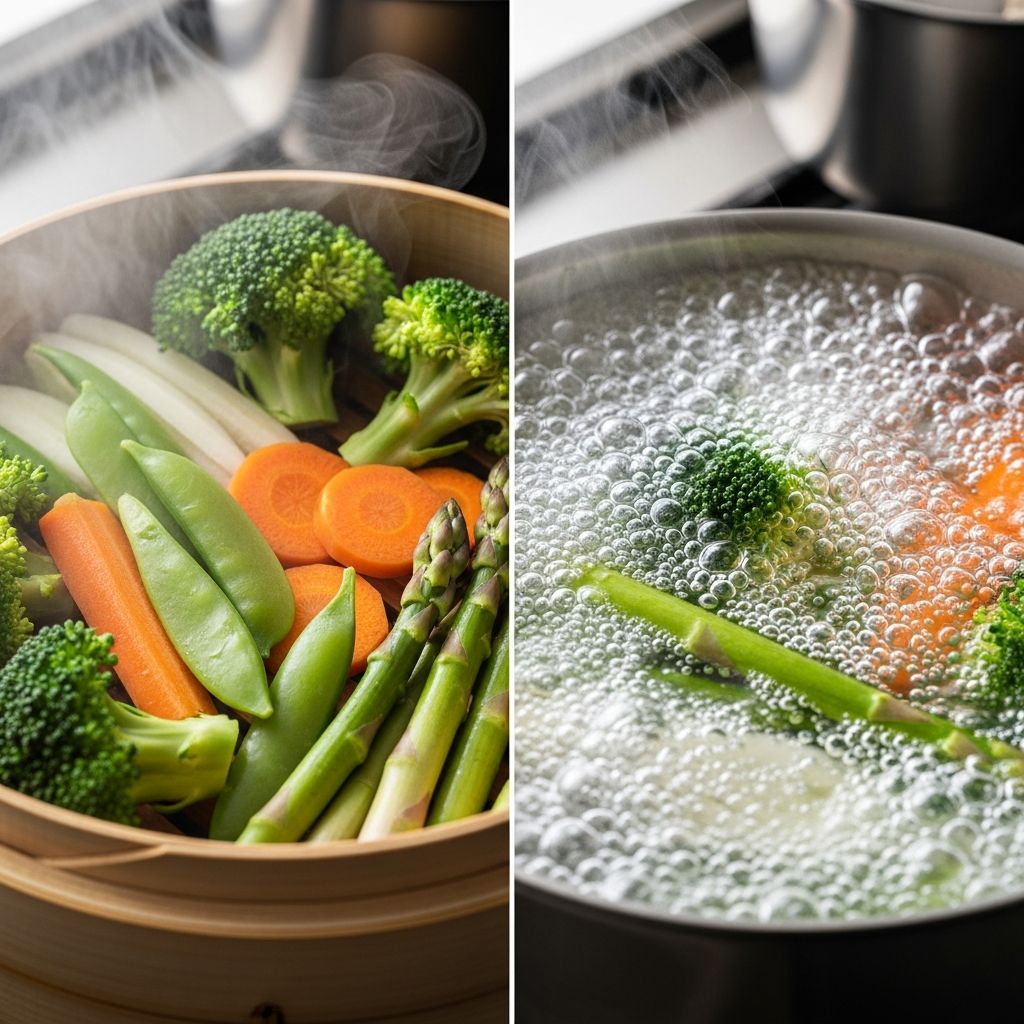
Steaming vegetables is generally superior to boiling for preserving essential nutrients, flavor, and texture, as it minimizes the loss of water-soluble vitamins like vitamin C and antioxidants that leach out during boiling.
Vegetables are packed with vitamins, minerals, fiber, and protective plant compounds that support heart health, weight management, and reduced risk of chronic diseases like cancer and diabetes. However, cooking methods significantly impact nutrient retention. While eating vegetables raw is ideal for some nutrients, cooking can enhance bioavailability of others, such as beta-carotene in carrots. The key is choosing the right technique to maximize benefits.
What Is Steaming?
Steaming cooks food using hot vapor from boiling water without direct submersion, preserving more nutrients than wet methods like boiling. Steam rises from simmering water below a perforated basket, gently transferring heat to vegetables above.
This method retains water-soluble vitamins (e.g., vitamin C, B vitamins) and phytochemicals because there’s no liquid to leach them away. Studies show steamed vegetables often have higher levels of vitamin C, beta-carotene, and flavonoids compared to boiled ones.
- Key advantages: Minimal nutrient loss, vibrant color, crisp texture, enhanced flavor.
- Common tools: Steamer baskets, electric steamers, or microwave-safe dishes with vents.
Nutrient Retention: Steaming vs. Boiling
Boiling submerges vegetables in water, causing water-soluble nutrients to dissolve into the cooking liquid, often discarded. This results in up to 54% loss of vitamin C, compared to just 14% with steaming.
A study on broccoli found steaming retained the most nutrients among methods including boiling, microwaving, and stir-frying. Another analysis showed steaming increased beta-carotene in most vegetables (except carrots in some cases) and preserved flavonoids, potent antioxidants linked to cancer prevention.
| Nutrient | Steaming Retention | Boiling Loss | Source |
|---|---|---|---|
| Vitamin C | 86-91% (e.g., spinach, broccoli) | Up to 54% | |
| Beta-Carotene | Increased in most veggies | Significant leaching | |
| Flavonoids | Highest retention | Moderate to high loss | |
| Vitamin A precursors | Enhanced bioavailability | Reduced |
Steaming and microwaving outperform boiling due to less water contact and lower temperatures. For instance, microwaving with minimal water preserved over 90% vitamin C in spinach and carrots.
Pros and Cons of Each Method
Steaming Vegetables
Pros:
- Superior nutrient preservation, especially heat-sensitive vitamins.
- Maintains crispness, color, and natural flavors—no sogginess.
- Low risk of overcooking; gentle heat.
- No added fats needed, supporting low-calorie diets.
Cons:
- Takes slightly longer than boiling.
- Requires equipment like a steamer basket.
- Over-steaming can still degrade some nutrients.
Boiling Vegetables
Pros:
- Quick and simple; no special tools.
- Can soften tough veggies like potatoes effectively.
- For carrots, boiling may boost beta-carotene bioavailability despite other losses.
Cons:
- High nutrient leaching (vitamins C, B, antioxidants).
- Results in mushy texture, faded color, diluted taste.
- Discarded water means lost minerals; boiling liquid can be reused in soups.
How to Steam Vegetables: Step-by-Step Guide
Steaming is straightforward and yields restaurant-quality results at home. Use fresh veggies, cut uniformly for even cooking, and avoid overcrowding the basket.
- Fill a pot with 1-2 inches of water; bring to a boil.
- Place steamer basket inside; add prepped vegetables (e.g., trimmed broccoli, snapped green beans).
- Cover with a tight lid; reduce heat to medium.
- Steam until tender-crisp; test with a fork.
- Season post-cooking with olive oil, herbs, lemon for enhanced absorption of fat-soluble nutrients.
Related Stories



Pro tip: For best results, start with cold water for denser veggies or boiling water for greens to prevent sogginess.
Steaming Times for Popular Vegetables
Timing prevents under- or overcooking, optimizing nutrition and texture. These are guidelines for 1-inch pieces; adjust for size.
- Broccoli florets: 5 minutes
- Cauliflower florets: 5-6 minutes
- Brussels sprouts (halved): 8-10 minutes
- Green beans: 4-5 minutes
- Spinach: 3 minutes
- Peas: 3 minutes
- Small potatoes: 15-20 minutes
- Asparagus spears: 4-6 minutes
- Carrots (sliced): 6-8 minutes
- Zucchini: 4 minutes
Microwave steaming alternative: Place veggies in a covered dish with 2 tbsp water; cook 3-5 minutes on high, stirring halfway.
Does Boiling Destroy Nutrients?
Yes, boiling significantly reduces water-soluble nutrients. Vitamin C, sensitive to heat and water, drops sharply—e.g., 0-89% retention across veggies, worse than steaming. Beta-carotene and flavonoids also leach out, though some veggies like carrots see improved absorption of certain compounds.
To mitigate: Boil briefly, use minimal water, consume the liquid (e.g., in stocks), or opt for steaming/microwaving. Overboiling exacerbates losses.
Other Healthy Cooking Methods
Beyond steaming and boiling:
- Microwaving: Fast, low water use; retains >90% vitamin C in many veggies.
- Stir-frying/Sautéing: Adds healthy fats (olive oil) for better absorption of vitamins A, E, K; minimal time preserves nutrients.
- Roasting: Concentrates flavors, enhances antioxidants via Maillard reaction; use at 400°F for 20-30 min.
- Blanching: Quick boil (1-2 min) then ice bath; good for prep, retains more than full boiling.
No single method is perfect—rotate for variety and max benefits.
Tips for Maximum Nutrient Retention
- Cook al dente: Stops enzyme breakdown of nutrients.
- Use minimal water/time across methods.
- Add acids (lemon) post-cooking to stabilize vitamin C.
- Pair with fats: Boosts lycopene, beta-carotene uptake.
- Fresh > frozen > canned; steam frozen directly.
- Avoid copper pots (destroys vitamin C).
Frequently Asked Questions (FAQs)
Is steaming vegetables healthier than boiling?
Yes, steaming preserves more water-soluble vitamins and antioxidants by avoiding submersion in water.
Can boiling ever be better than steaming?
For carrots, boiling may increase beta-carotene bioavailability, but overall nutrient losses make steaming preferable.
How long to steam broccoli?
5 minutes for florets until bright green and tender-crisp.
Does microwaving vegetables retain nutrients?
Yes, often comparably to steaming with minimal water; high vitamin C retention in spinach, carrots.
Should I eat the water from boiled vegetables?
If possible, use it in soups or sauces to recapture leached nutrients.
Final Thoughts on Cooking Vegetables
While eating any vegetables is beneficial, steaming emerges as the gold standard for nutrient density, taste, and convenience. Experiment with times and pairings to make veggies irresistible. Small changes like switching from boiling to steaming can amplify health gains from your plate.
References
- Should you steam or boil vegetables? — Tribune Content Agency. 2023. https://tribunecontentagency.com/article/should-you-steam-or-boil-vegetables/
- Steaming vs. Boiling: Which Cooking Method Preserves The Most Nutrients? — Healthandme.com. 2023. https://www.healthandme.com/nutrition/steaming-vs-boiling-which-cooking-method-preserves-the-most-nutrients-article-151109315
- Effect of different cooking methods on the content of vitamins and… — PMC (PubMed Central). 2018-07-06. https://pmc.ncbi.nlm.nih.gov/articles/PMC6049644/
Similar Articles








Read full bio of Sneha Tete