Stem Cell Advances In Eye Care: 2025 Progress And What To Know
Discover how stem cell innovations are transforming treatments for vision loss and degenerative eye conditions worldwide.
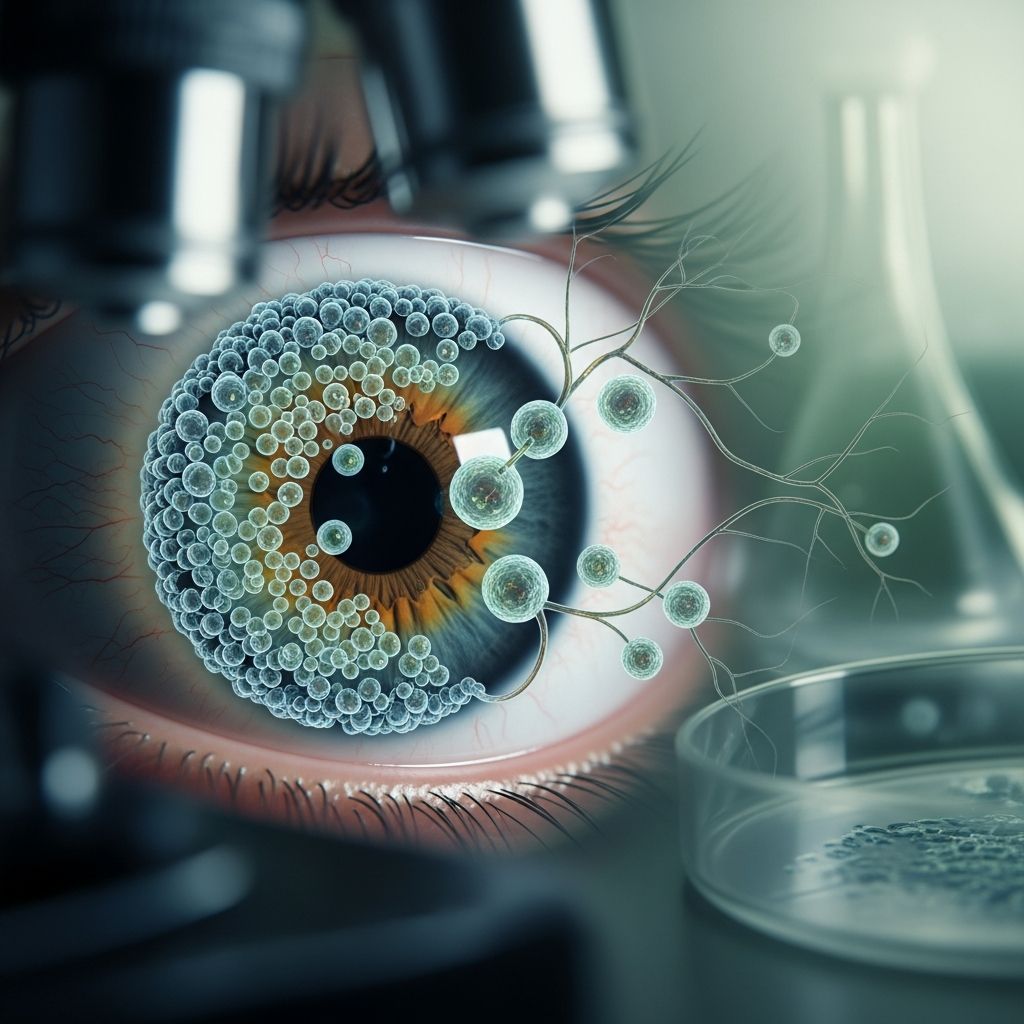
Stem cell therapies represent a groundbreaking shift in ophthalmology, offering hope for restoring vision in patients with previously untreatable degenerative conditions. These regenerative approaches harness the unique ability of stem cells to differentiate into specialized eye tissues, repair damage, and modulate inflammation.
The Promise of Regenerative Medicine for Vision Loss
Degenerative eye diseases such as age-related macular degeneration (AMD), glaucoma, retinitis pigmentosa (RP), and corneal disorders affect millions globally, leading to irreversible blindness. Traditional treatments like medications or surgery often only slow progression without addressing root causes like cell loss. Stem cells, with their self-renewal and differentiation potential, target these issues directly by replacing lost cells or secreting protective factors.
Research shows stem cells can regenerate tissues from the cornea to the retina. For instance, mesenchymal stem cells (MSCs) release exosomes that reduce inflammation and provide neuroprotection, while induced pluripotent stem cells (iPSCs) can be programmed to form specific eye cell types.
Key Types of Stem Cells Revolutionizing Eye Treatments
- Embryonic Stem Cells (ESCs): Highly versatile, these can differentiate into retinal pigment epithelium (RPE) cells for AMD treatment. Phase I/II trials demonstrated safety and some vision improvements, though immunosuppression risks were noted.
- Induced Pluripotent Stem Cells (iPSCs): Patient-derived to avoid rejection, iPSCs generate personalized retinal cells. They’re central to projects aiming to cure blindness from late-stage retinal diseases.
- Mesenchymal Stem Cells (MSCs): Sourced from bone marrow or umbilical cord, MSCs promote healing via paracrine effects, ideal for dry eye disease (DED) and RP.
- Retinal Progenitor Cells (RPCs) and Neural Progenitors: These preserve retinal structure and secrete growth factors like GDNF for photoreceptor protection in RP models.
- Limbal Stem Cells: Essential for corneal surface renewal, expanded in labs for transplantation.
Breakthroughs in Corneal Regeneration
The cornea, the eye’s clear front layer, relies on limbal stem cells for maintenance. Damage from burns, infections, or limbal stem cell deficiency (LSCD) causes opacity and vision loss. Cultivated limbal epithelial transplantation (CLET) and simple limbal epithelial transplantation (SLET) have shown success. In CLET, cells from a healthy donor are lab-expanded on amniotic membrane and grafted; SLET uses smaller tissue pieces for in vivo growth, cutting costs and time.
Holoclar®, the first approved stem cell eye therapy (2015 by EMA), treats LSCD by transplanting autologous limbal cells, restoring corneal clarity and vision without rejection in patients with viable donor tissue. Recent Mass Eye and Ear trials confirmed a similar biopsy-expansion-graft method safely repaired corneas in 14 patients over 18 months.
| Procedure | Source | Advantages | Status |
|---|---|---|---|
| CLET | Donor limbus | Lab expansion for large defects | Clinical use |
| SLET | Patient tissue | Faster, cheaper | Ongoing trials |
| Holoclar | Autologous | Approved, no rejection | Marketed |
Retinal Therapies: Targeting the Back of the Eye
Retinal diseases like AMD and RP destroy photoreceptors and RPE, causing central vision loss. Stem cell-derived RPE transplants have been tested in trials for Stargardt dystrophy and AMD, showing engraftment and modest vision gains despite procedure-related side effects.
Cedars-Sinai research advanced neural progenitor cells injected subretinally in RP rat models. These preserved retina structure at late disease stages; GDNF-engineered versions offered superior photoreceptor protection, paving the way for human trials. The London Project to Cure Blindness is testing iPSC-derived cells for wet AMD.
Related Stories



Addressing Glaucoma, Diabetic Retinopathy, and More
Glaucoma’s optic nerve damage and diabetic retinopathy’s vascular issues challenge conventional care. Stem cells like MSCs and RPCs show paracrine benefits, reducing inflammation and supporting neuron survival. Early trials focus on safety, with phase I studies reporting minimal adverse events.
For cataracts and DED, stem cells promote tissue remodeling. RPCs target multiple layers, from trabecular meshwork in glaucoma to lens epithelium in cataracts.
Current Clinical Landscape and Approved Options
Most trials are phase I/II, prioritizing safety. No FDA-approved stem cell eye therapies exist yet in the US, but Holoclar® is available in Europe. Ongoing studies (e.g., ISRCTN12217540 for LSCD) compare techniques. Over 50 trials worldwide target AMD, RP, and corneal issues.
- Phase I focus: Adverse reactions, dosing.
- Emerging phase II/III: Efficacy in vision restoration.
Challenges in Stem Cell Eye Therapy
Despite promise, hurdles remain: tumor risk from pluripotent cells, immune rejection, cell survival post-transplant, and integration into host tissue. Surgical delivery (subretinal injections) carries inflammation risks. Standardization and scalability are key for widespread use.
Regulatory bodies demand rigorous safety data; older trials highlighted immunosuppression needs. Long-term follow-up is crucial to confirm durability.
Future Directions and Optimism
Advancements in bioengineering, like ROCK inhibitors for corneal endothelium, boost engraftment. Combining stem cells with gene editing (CRISPR) or biomaterials could enhance outcomes. Patient-specific iPSCs minimize ethics concerns around ESCs.
Toward 2030, experts predict approved therapies for AMD and RP, potentially restoring vision in late stages. Global collaborations accelerate translation from bench to bedside.
Frequently Asked Questions (FAQs)
Is stem cell therapy safe for eye diseases?
Early trials show good safety profiles, with minor side effects like inflammation. Long-term data is emerging.
What eye conditions can stem cells treat?
Corneal damage, AMD, RP, glaucoma, DED, and more.
Are there approved stem cell treatments for eyes?
Holoclar® for LSCD is EMA-approved; others in trials.
How do stem cells restore vision?
By replacing cells, secreting growth factors, or reducing inflammation.
When will stem cell eye therapies be widely available?
Phase III trials may yield approvals in 5-10 years.
References
- Regenerative treatment of ophthalmic diseases with stem cells — PMC/NCBI. 2024. https://pmc.ncbi.nlm.nih.gov/articles/PMC10997875/
- The eye and stem cells: the path to treating blindness — EuroStemCell. 2023. https://www.eurostemcell.org/eye-and-stem-cells-path-treating-blindness
- Stem Cells: Progress in Treating Degenerative Eye Disease — Cedars-Sinai. 2023. https://www.cedars-sinai.org/newsroom/stem-cells-progress-in-treating-degenerative-eye-disease/
- Novel Stem Cell Therapy Repairs Irreversible Corneal Damage — Mass General Brigham. 2024. https://www.massgeneralbrigham.org/en/about/newsroom/press-releases/calec-stem-cell-therapy-clinical-trial-repairs-corneal-damage
- Stem cell therapy — Macular Society. 2024. https://www.macularsociety.org/research/now/stem-cell-therapy/
- What stem cell-based therapies are currently available for eye diseases? — Harvard Stem Cell Institute. 2024. https://www.hsci.harvard.edu/faq/eye
Similar Articles








Read full bio of medha deb