Sternum (Breastbone): Anatomy, Function & Health
Complete guide to your sternum: anatomy, function, and common conditions affecting your breastbone.
Understanding Your Sternum: The Breastbone
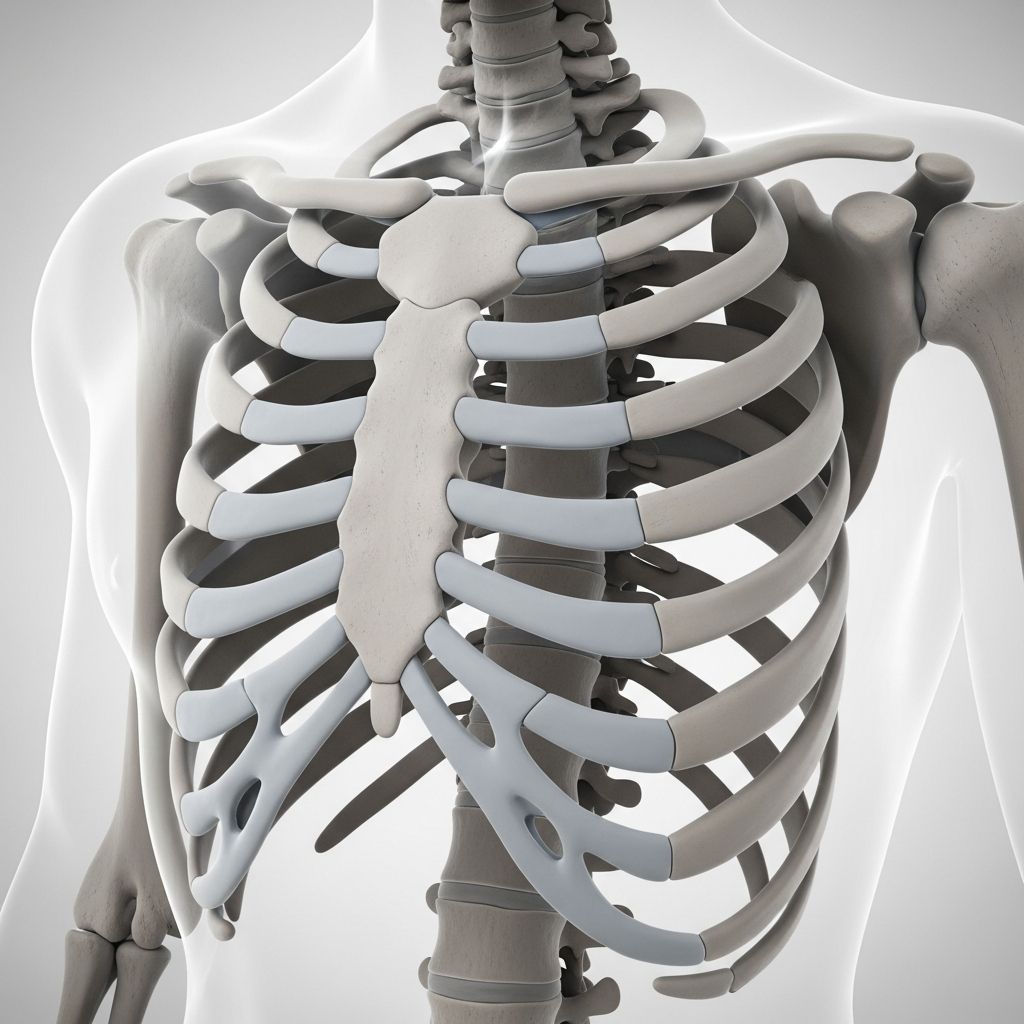
Your sternum, commonly known as your breastbone, is a flat, T-shaped bone positioned at the center and front of your chest. This remarkable bone plays a critical role in protecting the vital organs and muscles housed within your thoracic cavity. The sternum is not merely a passive structure; it is an integral component of your skeletal system that works in harmony with your ribcage to maintain the structural integrity of your upper body. Understanding the anatomy and function of your sternum is essential for recognizing potential health issues and maintaining overall wellness.
The sternum serves as a central hub for your skeletal system, connecting to multiple bones and muscles through cartilage. Its unique T-shaped design allows it to function as both a protective shield and a structural anchor for various anatomical components. Most people never give their sternum much thought until they experience pain or discomfort in the area, but this bone deserves recognition for its essential contribution to your health and survival.
Anatomy of the Sternum
The sternum is composed of three distinct bony parts that work together to form this important protective structure. Understanding each component helps clarify how your breastbone maintains its structural integrity and performs its protective functions.
The Three Sections of the Sternum
The first section is the manubrium, which forms the upper part of the sternum. This is the widest portion and resembles the handle of an upside-down sword. The manubrium connects directly to your clavicles (collarbones) at the top corners, establishing crucial connections to your upper body.
The second section is the body of the sternum, also called the mesosternum. This middle portion is long and flat, comparable to the blade of a sword. The body provides the main structural support and connects to most of your ribs through cartilage.
The third section is the xiphoid process, the pointed lower tip of your sternum. This smallest and narrowest part of your breastbone extends downward and can vary in shape among individuals. The xiphoid process is typically 1 to 2 inches long in most adults.
Size and Structure
Your sternum measures approximately 6 inches in length from top to bottom. The sword analogy effectively describes the sternum’s unique shape: the wide handle-like top, the long blade-like middle section, and the pointed tip at the bottom. This distinctive geometry allows the sternum to maximize its protective capabilities while maintaining structural efficiency.
Location of the Sternum
The breastbone is located at the center and front of your chest, positioned directly in the midline of your body. You can easily locate your own sternum by placing your hand flat against the front of your chest. The hard bone you feel running vertically down the middle is your breastbone.
Specifically, the sternum sits in your upper chest, positioned in front of your thymus gland, which is part of your lymphatic system. The thymus gland, responsible for training T-lymphocytes (specialized white blood cells that support immune function), lies directly behind your sternum. This anatomical relationship highlights the importance of protecting this region, as it houses components critical to your immune system.
Related Stories



Your sternum connects horizontally to your clavicles (collarbones), which run from side to side above the breastbone. This connection point, called the sternoclavicular joint, is one of the few joints where your upper limbs attach to your central skeleton. The positioning of the sternum at the center of your chest makes it accessible for physical examination and a reliable landmark for medical procedures.
Function and Connections of the Sternum
The sternum serves multiple critical functions in maintaining your health and structural integrity. While many people think of bones primarily as support structures, the sternum has several specialized roles that make it uniquely important.
Protective Functions
The primary function of your sternum is protection. Working in conjunction with your ribcage, the sternum shields vital organs from injury. The organs protected by your sternum and ribcage include:
- Your heart
- Your lungs
- Your esophagus
- Your thymus gland
- Major blood vessels
This protective function is absolutely essential for survival. Without the sternum and ribcage working together, these vital organs would be exposed to direct trauma from external forces. The bone’s flat, shield-like structure efficiently distributes impact forces, reducing the risk of injury to internal organs.
Structural Support and Connections
Beyond protection, your sternum provides crucial structural support for your upper body. The sternum connects to other parts of your skeletal system, including your clavicles (collarbones) and the first six sets of ribs. These connections are made through cartilage, which provides flexibility while maintaining structural stability.
Additionally, various muscles in your chest and upper abdomen attach to your sternum. These muscle connections allow your sternum to work as an anchor point for muscles involved in breathing, arm movement, and core stability. The interconnected nature of these connections demonstrates how the sternum functions as a central hub in your body’s structural framework.
Role in Respiration
Although the sternum itself doesn’t directly participate in chest or torso movement, the cartilage connecting your sternum to your ribs facilitates minor motions that occur with every breath you take. This subtle movement is essential for normal respiratory function. The flexibility of the sternocostal joints (where ribs connect to the sternum) allows your ribcage to expand slightly during inhalation, enabling your lungs to fill with air.
Common Sternum Conditions and Problems
Several conditions can affect the sternum, ranging from minor discomforts to more serious structural issues. While many sternum-related conditions aren’t serious, it’s important to understand what might cause pain or concerns in this area.
Sternal Fractures
A sternal fracture occurs when your sternum bone breaks, most often due to blunt force trauma. These fractures commonly result from automobile accidents, sports injuries, or falls. Understanding the two types of sternal fractures can help explain the varying severity levels:
- Simple fractures: A single clean break in the bone
- Compound fractures: Multiple breaks or fragments that may damage surrounding tissues
Sternal fractures are serious injuries that require immediate medical attention, as they can indicate damage to underlying organs, particularly the heart.
Sternoclavicular Joint Problems
Your sternoclavicular joint is the area where your clavicle (collarbone) connects to your sternum. Although problems in this joint area are rare, they can develop due to infections, injuries, or arthritis. When issues arise, patients typically experience pain and discomfort at the connection point. Since the collarbone and sternum are closely connected, an injury to your collarbone often results in pain radiating to your sternum as well.
Muscle Strains and Injuries
A muscle strain, commonly called a pulled muscle, can occur when you injure a tendon or muscle. Since many tendons and muscles attach to your sternum, injuries to these structures can affect the breastbone area. Muscle strains near the sternum typically result from overuse, sports activities, or excessive coughing. These injuries are often manageable with conservative treatments like rest and physical therapy.
Pectus Carinatum (Pigeon Chest)
Pectus carinatum, also known as pigeon chest or keel chest, is a condition where your sternum protrudes or sticks out more than usual. This condition is the opposite of pectus excavatum, which causes an inward depression of the breastbone. Pectus carinatum can be caused by excessive growth of cartilage and may appear at birth or develop during adolescence following a puberty growth spurt.
Treatment Options for Pectus Carinatum
The most common treatment options for pectus carinatum include bracing and surgery. Bracing involves wearing a specialized chest brace around your chest continuously for an extended period, sometimes lasting months to years. The brace applies pressure from both the back and front to gradually move your sternum back to its normal position.
For more severe cases, surgical intervention may be necessary. The primary surgical procedure is called the Ravitch procedure. During this operation, a surgeon makes an incision into your chest to remove cartilage in the front of your chest. They then make a small cut in the front of your breastbone, reposition it to its normal location, and anchor it securely in place. Some surgeons use minimally invasive approaches similar to the Nuss procedure, employing a metal bar to depress the sternum, which remains in place for one or more years before removal in a separate procedure.
The Xiphoid Process
The xiphoid process deserves special attention as the pointed lower section of your sternum. Also called the xiphisternum, this small but important structure is connected to the rest of your sternum by a symphysis—a wedge of cartilage that joins bones together.
Interestingly, the xiphoid process begins as cartilage when you’re born but transforms into bone as you grow and develop. It’s possible to live without a xiphoid process, but surgeons typically only remove it if it becomes fractured, and the broken pieces threaten to damage your internal organs.
When to Seek Medical Attention
While many sternum-related conditions aren’t serious, certain situations warrant professional medical evaluation. You should consult your healthcare provider if you experience persistent sternum pain, notice unusual chest deformities, or have concerns following an injury to your chest area. Early intervention can prevent complications and ensure proper diagnosis and treatment.
Frequently Asked Questions
Q: What is the primary function of the sternum?
A: The primary function of your sternum is to protect vital organs inside your chest, including your heart, lungs, esophagus, and thymus gland. It works with your ribcage to create a protective shield against external trauma.
Q: Can you feel your sternum?
A: Yes, you can easily feel your sternum by placing your hand flat against the front of your chest. The hard vertical bone running down the center is your breastbone.
Q: How long is the average sternum?
A: The average sternum measures approximately 6 inches in length from top to bottom, though individual measurements may vary slightly.
Q: What is pectus carinatum?
A: Pectus carinatum, also called pigeon chest, is a condition where your sternum protrudes outward more than normal. It can result from excessive cartilage growth and may be treated with bracing or surgery.
Q: What bones and structures connect to the sternum?
A: Your sternum connects to your clavicles (collarbones) at the top and to your first six sets of ribs through cartilage. It also provides attachment points for various chest and abdominal muscles.
Q: Can you live without a xiphoid process?
A: Yes, it’s possible to live without a xiphoid process. However, surgeons typically only remove it if it becomes fractured and the broken pieces pose a threat to internal organs.
References
- Sternum (Breastbone): What It Is, Where It Is & Anatomy — Cleveland Clinic. 2024-02-27. https://my.clevelandclinic.org/health/body/sternum-breastbone
- Pectus Carinatum: Causes & Treatments for Chest Wall Disorder — Cleveland Clinic. https://my.clevelandclinic.org/health/diseases/15790-pectus-carinatum
- Xiphoid Process: What It Is, Where It Is & Function — Cleveland Clinic. https://my.clevelandclinic.org/health/body/xiphoid-process
- Chest Wall Deformities — Cleveland Clinic Abu Dhabi. 2017. https://www.clevelandclinicabudhabi.ae/en/health-hub/health-resource/diseases-and-conditions/chest-wall-deformities
Similar Articles








Read full bio of Sneha Tete