Steroid Acne: Causes, Symptoms & Top 5 Treatments
Understanding steroid acne: causes, distinctive features, diagnosis, and effective management strategies for this common side effect of steroid use.
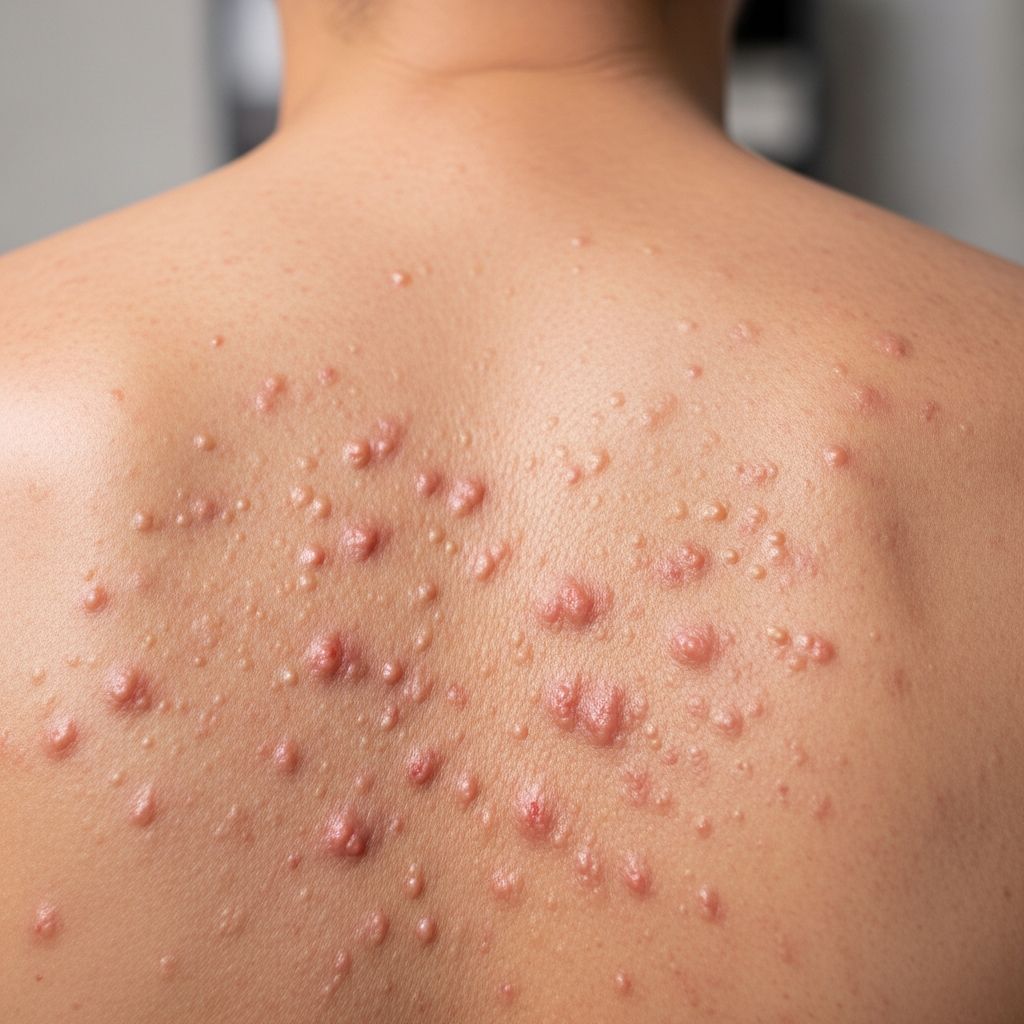
Steroid acne, also known as steroid-induced acne or corticosteroid acne, is a distinctive form of acneiform eruption resulting from the use of corticosteroids or anabolic-androgenic steroids. It typically manifests as monomorphous papules and pustules, often on the chest, back, and upper arms, and may persist until the offending steroid is discontinued.
What is Steroid Acne?
Steroid acne arises from short-term or long-term use of corticosteroids, which are potent anti-inflammatory agents prescribed for conditions like autoimmune diseases, allergies, or organ transplant rejection. Anabolic steroids, misused for bodybuilding or performance enhancement, also commonly trigger this condition. Unlike typical acne vulgaris, steroid acne features uniform lesions without significant comedones initially, and it can mimic Malassezia folliculitis due to yeast overgrowth.
Two primary forms exist: one from corticosteroids (often in medical contexts) and another from anabolic steroids (frequently recreational). Severe cases, termed ‘bodybuilding acne,’ can lead to ulcerated nodules in chronic users. The condition affects adolescents and adults alike, with no age restriction, though young adults using anabolic steroids are particularly prone.
Who Gets Steroid Acne?
Steroid acne predominantly affects patients on moderate to high doses of oral corticosteroids such as prednisone or dexamethasone for several weeks. Common underlying conditions include inflammatory disorders, asthma, rheumatoid arthritis, or post-transplant immunosuppression.
Anabolic steroid users, especially bodybuilders, represent another high-risk group, with up to 50% developing acne due to elevated androgen levels. Topical or inhaled steroids rarely cause it, but high-potency topical applications can contribute. Genetic predisposition to acne or oily skin exacerbates risk.
- Patients on systemic corticosteroids for chronic illnesses
- Bodybuilders or athletes misusing anabolic-androgenic steroids
- Individuals with prior acne history
- Immunosuppressed transplant recipients
Causes of Steroid Acne
The pathogenesis involves steroid-induced hormonal changes, particularly elevated androgens, leading to sebaceous gland hyperplasia and increased sebum production. This clogs pilosebaceous units, fostering bacterial or yeast proliferation.
Corticosteroids upregulate Toll-like receptor 2 (TLR2) expression, enhancing inflammatory responses to Propionibacterium acnes (now Cutibacterium acnes). Anabolic steroids directly boost testosterone-like hormones, amplifying sebum output and skin cell turnover. In many cases, especially on the chest and back, overgrowth of Malassezia yeasts causes an itchy folliculitis variant.
| Mechanism | Description |
|---|---|
| Increased Sebum | Hyperplasia of sebaceous glands due to androgens |
| TLR2 Upregulation | Heightened inflammation from bacterial triggers |
| Malassezia Proliferation | Yeast folliculitis mimicking acne pustules |
| Hormonal Imbalance | Exogenous steroids disrupt endogenous hormone balance |
Symptoms of Steroid Acne
Lesions appear 1-4 weeks after starting steroids, featuring 2-5 mm uniform pink-red papules and pustules. Common sites are the chest, upper back, shoulders, neck, and arms; facial involvement is less monomorphic.
In the Malassezia form, lesions are itchy superficial pustules without comedones. Anabolic steroid acne may progress to deeper nodules or cysts on the back and chest. Systemic steroid side effects like weight gain or mood changes may coexist but are not diagnostic.
Related Stories



- Monomorphous papulopustules (uniform size and shape)
- Predilection for trunk (chest, back)
- Minimal to no comedones initially
- Itch in yeast-associated cases
- Possible progression to comedones over time
Clinical Features
Steroid acne is characterized by dense aggregates of follicular papules evolving into closed then open comedones in waves. Lesions are more uniform than acne vulgaris, lacking polymorphic elements like cysts early on.
Differentiation from acne vulgaris: steroid acne favors trunk over face, shows uniformity, and lacks response to standard acne therapies until steroids stop. It differs from folliculitis decalvans or gram-negative folliculitis by distribution and history.
Diagnosis
Diagnosis is clinical, based on history of steroid use and characteristic monomorphous eruption on the upper trunk. No biopsy is usually needed, but if performed, it shows dilated follicles with neutrophils and yeasts.
To confirm Malassezia folliculitis, a KOH preparation or culture reveals yeast. Blood tests for hormone levels may support anabolic steroid abuse suspicion. Differential includes bacterial folliculitis, eosinophilic folliculitis, and drug eruptions.
Differential Diagnosis
- Acne vulgaris (polymorphic, facial)
- Malassezia folliculitis (itchy, yeast-positive)
- Bacterial folliculitis (gram stain positive)
- Drug eruption (systemic symptoms)
Treatment of Steroid Acne
The cornerstone is discontinuing the steroid if feasible; acne often resolves within weeks to months. If continuation is necessary, topical therapies are first-line.
Topical retinoids like tretinoin (0.05%) applied nightly effectively clear comedones and papules. Benzoyl peroxide reduces bacteria, while topical antifungals (ketoconazole) target Malassezia. Oral tetracyclines or isotretinoin are reserved for severe cases, though isotretinoin may exacerbate initially in anabolic acne.
Phototherapy (blue/red light) offers non-invasive bacterial and inflammatory control. Always taper steroids gradually under medical supervision.
| Treatment | Indications | Efficacy Notes |
|---|---|---|
| Topical Tretinoin | Mild-moderate | Effective for comedones; once/twice daily |
| Benzoyl Peroxide | Bacterial component | Reduces P. acnes |
| Oral Tetracycline | Severe inflammatory | Monitor for resistance |
| Topical Ketoconazole | Malassezia type | 2% cream/shampoo |
| Isotretinoin | Refractory anabolic acne | Use cautiously |
Prevention
Avoid unnecessary steroids; use lowest effective dose for shortest duration. For anabolic users, cessation prevents recurrence and other risks like liver damage.
Prophylactic benzoyl peroxide or topical retinoids during steroid therapy may mitigate onset. Maintain hygiene, avoid occlusive clothing on trunk.
Frequently Asked Questions (FAQs)
Q: How long does steroid acne last after stopping steroids?
A: It typically clears in weeks to months, though persistent cases may require treatment.
Q: Can topical steroids cause steroid acne?
A: Rarely, but prolonged high-potency use on the face or trunk can induce it; differs from steroid rosacea.
Q: Is steroid acne the same as acne from anabolic steroids?
A: Similar mechanisms but anabolic often more severe on back/chest due to higher androgen doses.
Q: Should I stop my prescribed steroids if acne develops?
A: No, consult your doctor first; abrupt cessation can be dangerous for underlying conditions.
Q: Does Malassezia folliculitis always accompany steroid acne?
A: In many trunk cases yes, presenting as itchy pustules; confirm with microscopy.
This article provides comprehensive insights into steroid acne, emphasizing early recognition and tailored management to improve outcomes while balancing steroid necessity.
References
- Anabolic Steroids Acne: Causes and Treatments — TeleTest.ca. 2023. https://teletest.ca/blog/anabolic-steroids-acne-causes-and-treatments/
- What causes steroid acne and how can you treat it? — Curology. 2023-10-12. https://curology.com/blog/everything-you-need-to-know-about-steroid-acne/
- Steroid acne: Causes, treatment, and prevention — Medical News Today. 2023. https://www.medicalnewstoday.com/articles/325997
- Steroid acne — DermNet NZ. 2024-01-15. https://dermnetnz.org/topics/steroid-acne
- Tretinoin Treatment of Steroid Acne — JAMA Dermatology. 1977-06. https://jamanetwork.com/journals/jamadermatology/fullarticle/533402
- Steroid Acne — Enrich Clinic. 2023. https://www.enrichclinic.com.au/steroid-acne/
- Severe ulcerated ‘bodybuilding acne’ caused by anabolic steroid abuse — PMC/NCBI. 2021-03-01. https://pmc.ncbi.nlm.nih.gov/articles/PMC7951664/
Similar Articles








Read full bio of Sneha Tete