Stomach: Function, Anatomy, Location & Disorders
Understanding your stomach: anatomy, function, and how to maintain digestive health.
What Is Your Stomach?
Your stomach is a muscular, J-shaped organ that plays a vital role in your digestive system. Located in the upper left portion of your abdominal cavity, beneath your rib cage, your stomach is responsible for storing food and breaking it down into a form your body can absorb and use for energy, growth, and cell repair. While many people think of the stomach as a simple storage unit, it’s actually a sophisticated organ that performs complex chemical and mechanical processes essential to digestion.
Your stomach connects your esophagus (the tube that carries food from your mouth) to your small intestine, specifically the duodenum. When you swallow food, it travels down your esophagus and enters your stomach through an opening called the gastroesophageal sphincter, or cardiac sphincter. Your stomach then goes to work, transforming the food you eat into a nutrient-rich liquid that your small intestine can process and absorb.
Stomach Anatomy and Structure
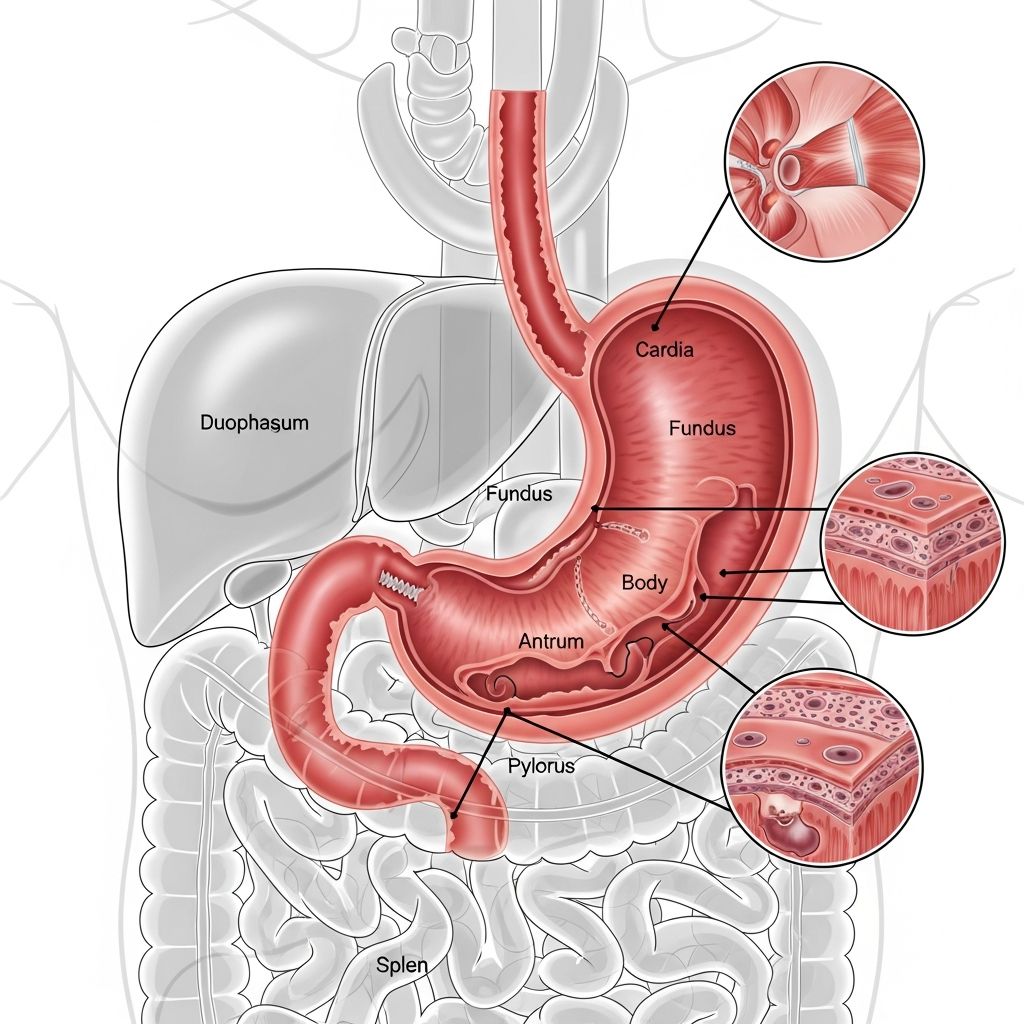
Understanding your stomach’s anatomy helps explain how it performs its digestive functions so effectively. Your stomach has several distinct regions, each with specialized functions.
The Main Regions of Your Stomach
The Cardia: This is the upper portion of your stomach where food first enters from your esophagus. The cardia contains the cardiac sphincter, which prevents food from backing up into your esophagus.
The Fundus: Located at the top and left side of your stomach, the fundus serves as a storage area for food and gas. This region helps accommodate large meals.
The Body: The largest section of your stomach, the body is where most of the stomach’s muscular mixing and churning occurs. This is where the majority of digestion takes place as your stomach’s strong muscles work to break down food.
The Antrum: This lower portion of your stomach continues the mixing process and helps regulate the flow of partially digested food (called chyme) into your small intestine through the pyloric sphincter.
The Pylorus: This is the outlet of your stomach. It contains the pyloric sphincter, a muscular valve that controls how much chyme moves into your duodenum at a time, ensuring your small intestine isn’t overwhelmed.
Stomach Wall Layers
Your stomach wall consists of four distinct layers, each with specific functions:
Mucosa (innermost layer): This layer contains gastric glands that produce gastric juices, including hydrochloric acid and pepsin (an enzyme that breaks down proteins). The mucosa also produces mucus that protects your stomach lining from the acidic environment it creates.
Submucosa: Located beneath the mucosa, this layer contains blood vessels and nerves that support the stomach’s function.
Muscularis: This thick muscular layer consists of three types of muscle fibers (circular, longitudinal, and oblique) that work together to churn and mix food with digestive juices.
Serosa (outermost layer): Also called the visceral peritoneum, this protective outer layer helps hold your stomach in place and reduces friction as it moves during digestion.
Related Stories



Where Is Your Stomach Located?
Your stomach is positioned in the upper left portion of your abdominal cavity, nestled beneath your rib cage for protection. It sits just below your diaphragm (the muscle that controls your breathing) and to the left of your liver. Your spleen is located above and behind your stomach, while your pancreas sits behind it.
The stomach is mostly protected by your ribcage, which is why you typically don’t feel it during normal digestion. The upper surface of your stomach (the fundus) is at approximately the level of your fifth rib on the left side. Most of your stomach extends horizontally across your upper abdomen, with its outlet (the pylorus) positioned more toward the midline of your body.
What Does Your Stomach Do?
Your stomach performs several critical functions in the digestive process, transforming the food you eat into a form your body can use.
Food Storage
One of your stomach’s primary functions is to act as a temporary reservoir for food. When you eat a meal, your stomach stretches to accommodate the food while your digestive system prepares to break it down. This storage capacity allows you to eat meals in a reasonable timeframe rather than constantly consuming small amounts of food throughout the day. Your stomach can typically hold about 1 to 4 liters (approximately 1 to 4 quarts) of food at once, depending on your individual anatomy and eating habits.
Mechanical Digestion
Your stomach’s muscular walls perform powerful contractions that mix and churn food with gastric juices. These mechanical movements break down food into smaller particles, increasing its surface area and preparing it for chemical digestion. This churning action can continue for several hours, depending on the type of food you’ve eaten. Foods high in fat and protein typically spend more time in your stomach than carbohydrates.
Chemical Digestion
Your stomach produces gastric juices containing hydrochloric acid and enzymes like pepsin that chemically break down proteins. The acid also kills many bacteria that might be present in your food, serving as a protective function for your digestive system. Additionally, your stomach produces gastric lipase, an enzyme that begins breaking down fats, though most fat digestion occurs later in your small intestine.
Nutrient Absorption
While your small intestine absorbs most nutrients, your stomach does absorb certain substances directly into your bloodstream, including water, alcohol, and some medications. However, the primary absorption of nutrients happens downstream in your small intestine.
Regulation of Digestion
Your stomach produces hormones like gastrin that regulate digestive processes throughout your gastrointestinal tract. These hormones help control stomach acid production, muscle contractions, and the release of pancreatic enzymes and bile into your small intestine.
How Does Digestion Work in Your Stomach?
Digestion in your stomach is a coordinated process involving both mechanical and chemical actions. When food enters your stomach from your esophagus, it triggers the release of gastric juices from specialized cells in your stomach lining. Your stomach muscles then contract in coordinated waves called peristalsis, mixing the food with these juices to create a thick, soupy substance called chyme.
The stomach’s acid-rich environment denatures proteins (unravels their structure) and activates pepsinogen into pepsin, which then begins breaking proteins into smaller peptides. This process typically takes 1 to 3 hours for a mixed meal, though liquids may pass through more quickly and fatty foods more slowly.
As chyme becomes sufficiently liquid and broken down, your stomach gradually releases it through the pyloric sphincter into your duodenum (the first part of your small intestine), where further digestion and nutrient absorption occur.
Common Stomach Conditions and Disorders
Because your stomach is constantly exposed to acidic conditions and various substances, it’s susceptible to several disorders and diseases.
Peptic Ulcers
Peptic ulcers are open sores that develop in your stomach lining (gastric ulcers) or duodenum (duodenal ulcers). The most common causes include infection with Helicobacter pylori (H. pylori) bacteria and regular use of nonsteroidal anti-inflammatory drugs (NSAIDs) like aspirin and ibuprofen. Contrary to popular belief, stress and spicy food don’t directly cause ulcers, though they may aggravate symptoms in some people.
Gastroesophageal Reflux Disease (GERD)
GERD occurs when stomach acid frequently flows back into your esophagus, causing irritation and discomfort. This happens when your lower esophageal sphincter doesn’t close properly, allowing acidic stomach contents to escape.
Gastritis
Gastritis is inflammation of your stomach lining, often caused by H. pylori infection, NSAIDs, excessive alcohol consumption, or stress. It can lead to stomach pain, nausea, and vomiting.
Stomach Cancer
While less common in developed countries, stomach cancer remains a serious concern. Risk factors include H. pylori infection, family history, smoking, and certain dietary factors.
Functional Dyspepsia
Also called indigestion, functional dyspepsia involves stomach pain or discomfort without an identifiable underlying cause. Symptoms may include early fullness, bloating, or nausea.
Maintaining Your Stomach Health
Taking care of your stomach involves adopting healthy digestive habits and lifestyle choices. Eating slowly and chewing food thoroughly reduces the workload on your stomach and aids digestion. Avoiding excessive alcohol, limiting NSAIDs, and managing stress can help protect your stomach lining from damage.
Including fiber-rich foods, staying hydrated, and maintaining a balanced diet support optimal stomach function. If you’re at risk for H. pylori infection or have a family history of stomach cancer, discuss screening options with your healthcare provider.
Frequently Asked Questions
Q: How long does food stay in your stomach?
A: Food typically remains in your stomach for 1 to 3 hours for a mixed meal. Liquids pass through more quickly (30 minutes to 1 hour), while fatty or protein-rich foods stay longer (up to 4 hours or more).
Q: Can your stomach produce new acid after you eat?
A: Yes. Your stomach continuously produces gastric juices containing hydrochloric acid. The amount increases significantly when you eat in response to hormones like gastrin that signal the need for digestion.
Q: What happens if your stomach produces too much acid?
A: Excess stomach acid can damage your stomach lining or duodenum, leading to ulcers or GERD. Medications like proton pump inhibitors can reduce acid production if this becomes problematic.
Q: Can you live without a stomach?
A: Yes, though life is more challenging. After stomach removal (gastrectomy), the esophagus is connected directly to the small intestine. Patients must eat smaller, more frequent meals and may experience nutritional deficiencies.
Q: How does stress affect your stomach?
A: Stress activates your “fight or flight” response, which can disrupt normal digestive processes, reduce protective mucus production, and increase acid secretion, potentially triggering or worsening symptoms like indigestion or ulcers.
References
- Small Intestine: Function, Parts, Length & Location — Cleveland Clinic. 2024. https://my.clevelandclinic.org/health/body/22135-small-intestine
- Pancreas: Function, Location, Anatomy & Living Without One — Cleveland Clinic. 2024. https://my.clevelandclinic.org/health/body/21743-pancreas
- Duodenum: What It Is, Function, Location & Concerns — Cleveland Clinic. 2024. https://my.clevelandclinic.org/health/body/duodenum
- What Is the Digestive System? — Cleveland Clinic. 2024. https://my.clevelandclinic.org/health/body/7041-digestive-system
- Peritoneum: Anatomy, Function, Location & Definition — Cleveland Clinic. 2024. https://my.clevelandclinic.org/health/body/22894-peritoneum
Similar Articles








Read full bio of medha deb