Stopping Myopia Progression In Kids: 4 Proven Strategies
Discover proven strategies to slow myopia advancement in children and safeguard their future vision health effectively.
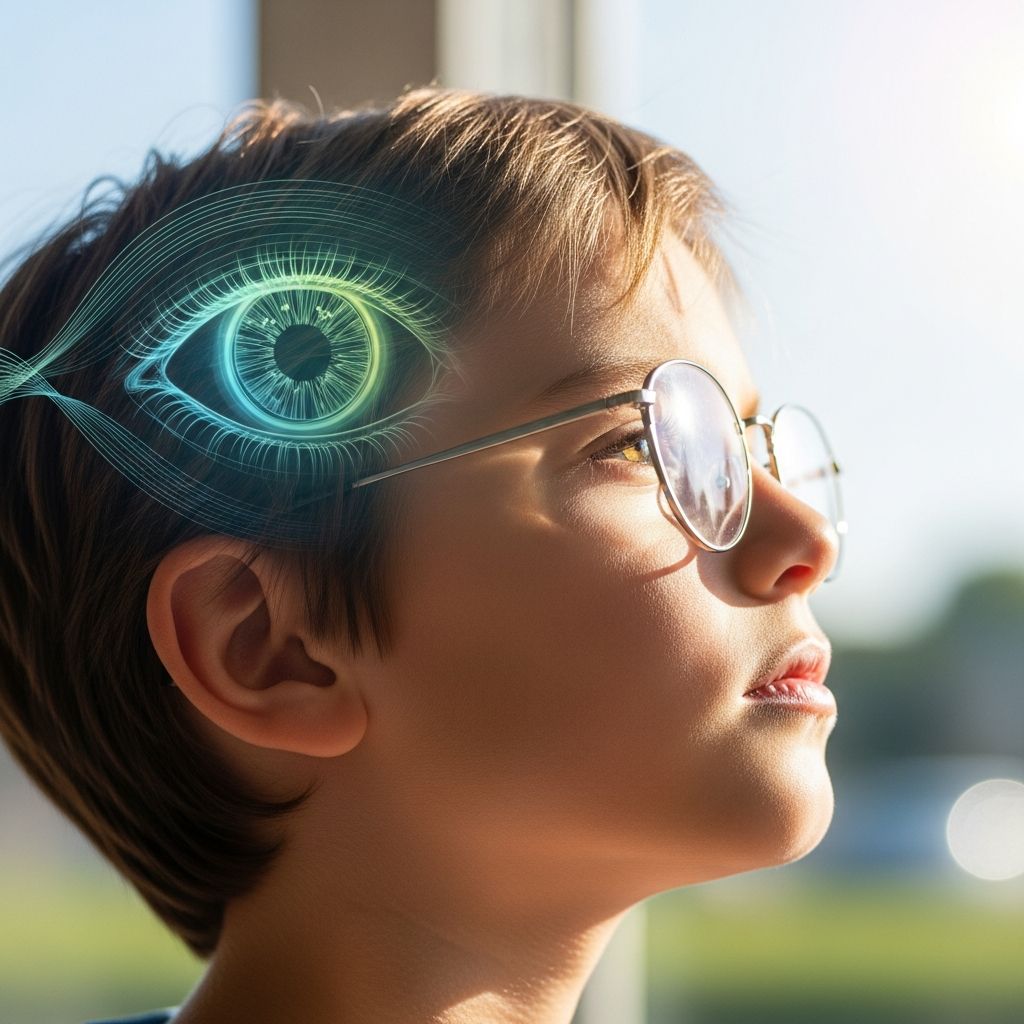
Progressive myopia, a condition where nearsightedness worsens rapidly during childhood, affects millions of children worldwide and poses significant risks for future eye health if not addressed early. By understanding its mechanisms and implementing targeted interventions, parents and eye care professionals can significantly slow its advancement, potentially preventing high myopia and associated complications.
Understanding the Basics of Myopia
Myopia, commonly known as nearsightedness, occurs when the eyeball elongates excessively or the cornea curves too steeply, causing light to focus in front of the retina instead of on it. This results in clear near vision but blurry distance vision. In children, this elongation often continues unchecked, leading to progressive myopia that can advance by 0.5 diopters or more annually during growth spurts.
Unlike stable adult myopia, progressive forms typically emerge between ages 6 and 12, coinciding with rapid eye growth, and may persist into the early 20s. Early detection through routine eye exams is crucial, as progression can transform mild nearsightedness into high myopia (worse than -5.00 to -6.00 diopters), dramatically increasing risks for serious conditions.
Key Causes Driving Myopia Progression
Several interconnected factors contribute to myopia’s development and worsening. Genetics play a pivotal role: children with one myopic parent are twice as likely to develop it, and the risk triples if both parents are affected. Environmental influences amplify this predisposition.
- Near Work Overload: Prolonged focus on close objects, such as reading, homework, or screens, stresses the eye’s accommodation system, promoting axial elongation. Studies link over two hours daily of near tasks to faster progression.
- Limited Outdoor Exposure: Natural light exposure outdoors appears protective; children spending at least two hours daily outside show 30-50% lower myopia rates, possibly due to dopamine release in the retina that inhibits growth.
- Urban and Educational Pressures: Higher incidence in urban areas and academically intensive environments suggests lifestyle factors like reduced playtime outdoors exacerbate genetic risks.
Pathologic myopia, an extreme variant, stems from unchecked elongation, stretching retinal tissues and leading to degenerative changes.
Health Risks of Uncontrolled Progression
High myopia elevates the lifetime risk of vision-threatening issues by stretching the eye’s internal structures. Key complications include:
| Complication | Description | Risk Increase |
|---|---|---|
| Retinal Detachment | Thinning retina tears and detaches from underlying tissue | 10x higher in high myopia |
| Myopic Macular Degeneration | Central vision loss from retinal scarring | Leading cause of blindness in myopes |
| Glaucoma | Optic nerve damage from elongated eye pressure changes | 3-5x elevated risk |
| Cataracts | Early lens clouding | Accelerated onset by decades |
These issues often manifest in adulthood but originate from childhood progression, underscoring the need for proactive management. Regular monitoring via optical coherence tomography (OCT) and fundus exams can detect early changes.
Related Stories



Proven Strategies to Slow Myopia Advance
Recent advancements offer multiple FDA-approved and off-label options to curb progression by 30-60% on average. Interventions target axial length growth and visual signals to the sclera.
Pharmacological Approaches
Low-dose atropine eye drops (0.01-0.05%) administered nightly relax eye focus and inhibit growth signals, slowing progression by 50% in trials without significant side effects like light sensitivity. Higher doses (1%) are more effective but cause pupil dilation and near blur.
Specialty Contact Lenses
Orthokeratology (Ortho-K) lenses worn overnight reshape the cornea for daytime clear vision without glasses, reducing progression by 40-60% via peripheral defocus. Multifocal soft contacts create myopic defocus zones, similarly effective for daily wear.
Spectacle Innovations
Diffractive multifocal glasses like MiyoSmart or Stellest lenses alter peripheral light focus, achieving 60% slowdown in studies, ideal for young children averse to contacts.
Lifestyle Modifications
Increase outdoor time to two hours daily, enforce the 20-20-20 rule (every 20 minutes, look 20 feet away for 20 seconds), and limit screen time to under two hours recreationally. These behavioral changes alone can reduce onset risk by 20-30%.
Combining therapies often yields synergistic effects; for instance, atropine plus Ortho-K can exceed 70% control.
When to Seek Professional Help
Annual comprehensive eye exams starting at age 6 are recommended, or sooner if family history or symptoms like squinting appear. Measure axial length alongside refraction for precise tracking—progression over 0.3mm/year warrants intervention.
Eye care providers tailor plans based on age, progression rate, and lifestyle. Parental education on compliance is key, as dropout rates impact efficacy.
Emerging Research and Future Directions
Ongoing trials explore novel drops, light therapies, and gene therapies. Recent meta-analyses confirm outdoor time’s dose-dependent benefits, prompting public health campaigns in Asia. Long-term studies affirm sustained effects into adulthood, reducing high myopia prevalence.
Frequently Asked Questions (FAQs)
Can progressive myopia be reversed?
No, myopia cannot be reversed, but progression can be slowed or halted with timely interventions.
At what age should myopia control start?
Ideally between 6-12 years when progression peaks, but earlier for high-risk kids.
Are myopia control treatments safe for children?
Yes, low-dose options have minimal side effects; regular monitoring ensures safety.
How much outdoor time is needed daily?
At least 90-120 minutes, even on cloudy days, for protective effects.
Will my child outgrow myopia?
Most stabilize by early 20s, but without control, it may reach dangerous levels.
Empowering parents with knowledge and access to these tools can transform outcomes, preserving clear vision for life.
References
- Progressive Myopia: When Your Child’s Vision Keeps Getting Worse — Sunrise Eye Care. 2023. https://www.sunriseeyecare.com/progressive-myopia-when-your-childs-vision-keeps-getting-worse/
- Progressive (High) Myopia — American Association for Pediatric Ophthalmology and Strabismus (AAPOS). 2024. https://www.aapos.org/glossary/progressive-high-myopia
- What Causes Progressive Myopia in Children? — Pusz Siegel Eye Care. 2023. https://puszsiegeleyecare.com/blog/what-causes-progressive-myopia-in-children/
- What Is Progressive Myopia? — All About Vision. 2024. https://www.allaboutvision.com/conditions/myopia/progressive-myopia/
- Degenerative Myopia: Causes, Symptoms & Treatment Options — Optometrists.org. 2023. https://www.optometrists.org/general-practice-optometry/guide-to-eye-conditions/guide-to-blurry-vision-and-headaches/what-is-degenerative-myopia/
- Myopia: Prevalence and Progression — National Center for Biotechnology Information (NCBI). 1983 (updated 2022). https://www.ncbi.nlm.nih.gov/books/NBK235051/
Similar Articles








Read full bio of medha deb