Stopping Nosebleeds: A Pinch Will Usually Do the Trick
Learn simple and effective techniques to stop nosebleeds at home with proper first aid methods.
Understanding Nosebleeds: What You Need to Know
Nosebleeds, medically known as epistaxis, are a common occurrence that affects millions of people every year. While they can be alarming and messy, the good news is that most nosebleeds are not serious and can be managed effectively at home with simple first aid techniques. Understanding what causes nosebleeds and how to respond appropriately is essential for anyone who experiences this condition.
The nasal cavity contains numerous blood vessels that are close to the surface, making them vulnerable to injury and bleeding. When these vessels rupture, blood flows from the nose, creating what we commonly call a nosebleed. The severity and frequency of nosebleeds can vary greatly from person to person, with some individuals experiencing occasional episodes while others deal with them more regularly.
Common Causes of Nosebleeds
Nosebleeds can occur for various reasons, and understanding the underlying causes can help you prevent future episodes. Here are the most common triggers:
- Trauma or injury: The most frequent cause is direct injury to the nose, such as from a blow, picking at the nose, or aggressive nose blowing.
- Dry air: Low humidity in winter months or dry indoor environments can cause the nasal mucosa to become dry and crack, leading to bleeding.
- Nasal infections: Colds, sinus infections, and other upper respiratory infections can inflame blood vessels and cause nosebleeds.
- High blood pressure: Elevated blood pressure can increase the pressure on nasal blood vessels, potentially triggering epistaxis.
- Blood clotting disorders: Conditions that affect blood clotting or certain medications like anticoagulants may increase nosebleed frequency.
- Nasal polyps: Growths in the nasal passage can bleed when irritated.
- Allergies: Allergic rhinitis can cause nasal inflammation and subsequent bleeding.
- Strenuous activity: Heavy exercise or straining can occasionally trigger nosebleeds.
Types of Nosebleeds
Nosebleeds are typically categorized into two main types based on their location within the nasal cavity:
Anterior Epistaxis
Anterior nosebleeds originate from the front part of the nose and account for approximately 90 percent of all nosebleed cases. Most anterior nosebleeds stem from the Kiesselbach plexus, a vascular network located on the nasal septum where blood vessels are particularly susceptible to injury. These nosebleeds are usually less severe and easier to control than posterior epistaxis. Typically, they involve bleeding from one nostril and respond well to home treatment methods.
Posterior Epistaxis
Posterior nosebleeds originate from the back of the nasal cavity and are less common but generally more serious than anterior bleeds. These nosebleeds tend to produce heavier bleeding and may result in blood flowing down the throat rather than out the nostrils. Posterior epistaxis is more common in older adults and often requires professional medical attention.
The Pinch Technique: Your First Line of Defense
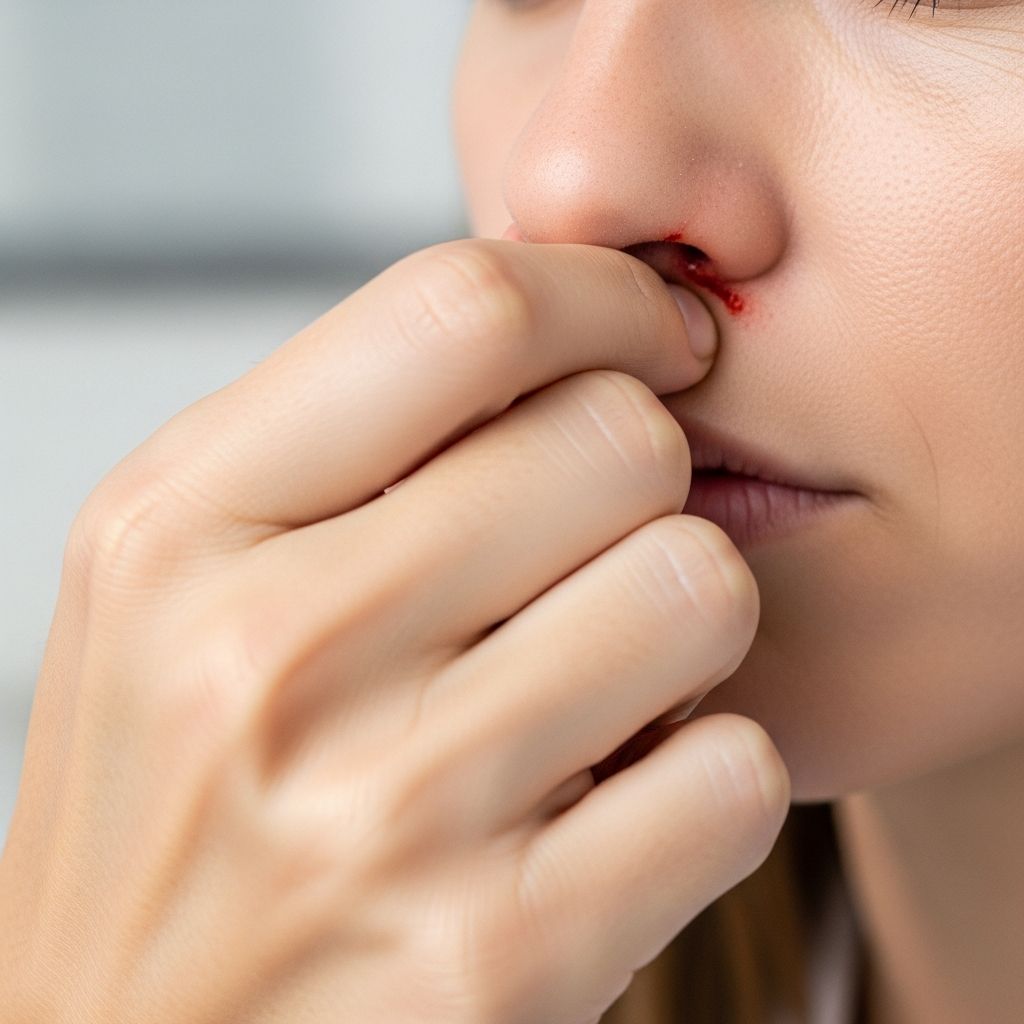
When a nosebleed occurs, the most effective and recommended first aid response is the simple pinch technique. This straightforward method can stop most nosebleeds within minutes and should be your immediate course of action.
Step-by-Step Instructions for the Pinch Technique
- Sit upright: Sit down and lean slightly forward. This position helps prevent blood from flowing down your throat and allows you to monitor the bleeding better.
- Pinch the nostrils: Using your thumb and index finger, firmly pinch the soft part of your nose—specifically the fleshy area below the nasal bone. Apply steady, direct pressure to the bleeding nostril or both nostrils if both are bleeding.
- Maintain pressure: Hold the pinch for at least 5 to 10 minutes without releasing. Resist the temptation to check if the bleeding has stopped by releasing pressure too early.
- Breathe through your mouth: With your nose pinched, breathe through your mouth to ensure you can breathe comfortably during this time.
- Apply ice if available: Placing an ice pack or cold compress on the bridge of your nose while pinching can help constrict blood vessels and reduce bleeding.
- Release and assess: After 10 minutes, gently release the pressure and check if the bleeding has stopped. If bleeding continues, reapply pressure for another 10 minutes.
Related Stories



Additional Home Management Strategies
While the pinch technique is your primary tool, several complementary measures can enhance your nosebleed management:
Maintaining Proper Position
Sit upright with your head elevated slightly above heart level. Leaning forward prevents blood from flowing down your throat and reduces the risk of swallowing blood, which can cause nausea or stomach irritation. Avoid tilting your head back, as this is a common misconception that can actually worsen the situation.
Cold Therapy
Applying a cold compress or ice pack to the bridge or sides of your nose helps vasoconstriction—narrowing of blood vessels—which reduces blood flow and promotes clotting. Use ice for 10-minute intervals with breaks in between to avoid tissue damage.
Saline Rinse and Topical Treatment
After the bleeding stops, gently rinsing the nasal cavity with saline solution can help clear any clots and reduce irritation. Over-the-counter saline nasal sprays or drops can also help moisturize the nasal passages and prevent future bleeding episodes.
Avoid Irritation
Once bleeding has stopped, avoid blowing your nose forcefully, picking at the nose, or engaging in strenuous activities for several hours. These actions can disrupt clot formation and restart bleeding.
When to Seek Medical Attention
While most nosebleeds are harmless and self-limiting, certain situations warrant professional medical evaluation. You should seek immediate medical care if:
- The nosebleed lasts longer than 20 to 30 minutes despite applying pressure.
- You experience frequent nosebleeds (more than once weekly) without an obvious cause.
- The bleeding is heavy or accompanied by other symptoms like dizziness or shortness of breath.
- You’ve recently undergone nasal surgery.
- You take blood-thinning medications and experience nosebleeds.
- You have a bleeding disorder or family history of bleeding problems.
- Blood flows down your throat persistently or you’re coughing up blood.
- The nosebleed follows a significant facial injury.
Professional Medical Treatments
When nosebleeds cannot be controlled at home, healthcare providers have several options available. For severe epistaxis that requires intervention, endoscopic techniques have proven highly effective. These may include topical vasoconstrictive agents—medications that narrow blood vessels—or local injections of vasoconstrictors to reduce blood flow. For intractable posterior epistaxis, endoscopic sphenopalatine artery ligation has shown high success rates in controlling bleeding. In some cases, anterior ethmoid artery ligation may be necessary when this vessel is identified as the primary bleeding source.
Prevention Strategies for Future Nosebleeds
Taking preventive measures can significantly reduce your nosebleed frequency and severity:
Maintain Nasal Moisture
Use a humidifier during dry winter months or in dry climates. A well-humidified environment helps keep nasal tissues moist and less prone to cracking. Additionally, applying a light coating of petroleum jelly inside the nostrils can provide protective moisture.
Gentle Nasal Care
Avoid picking at your nose, as this is one of the most common causes of nosebleeds. If you need to clear nasal passages, do so gently and deliberately. When blowing your nose, use moderate pressure rather than forceful exhalation.
Manage Allergies and Infections
Treat nasal congestion from colds and allergies promptly using appropriate medications. Chronic inflammation from untreated allergies can increase nosebleed susceptibility. Consider consulting an allergist if you experience frequent allergic symptoms.
Control Blood Pressure
If you have high blood pressure, work with your healthcare provider to maintain healthy blood pressure levels through lifestyle modifications or medication as needed. High blood pressure is associated with increased epistaxis risk.
Avoid Nasal Irritants
Minimize exposure to environmental irritants like cigarette smoke, strong chemical fumes, or air pollution. If you must be around such irritants, consider wearing a mask or using nasal protective measures.
Careful Medication Use
If you take blood-thinning medications, inform your healthcare provider about frequent nosebleeds, as dosage adjustments may be necessary. Avoid over-the-counter medications that might increase bleeding risk.
Special Considerations for Different Populations
Certain groups may experience nosebleeds differently and require modified approaches to management and prevention.
Children
Children frequently experience nosebleeds, particularly due to nasal picking and upper respiratory infections. Use the same pinch technique as with adults but be prepared that children may feel anxious. Reassurance and calm guidance help them cooperate with treatment. Most children’s nosebleeds respond well to conservative home management.
Elderly Individuals
Older adults may experience more frequent and severe nosebleeds, particularly if they take anticoagulant medications or have blood clotting disorders. They should seek medical evaluation more readily if bleeding doesn’t stop quickly with home measures.
Pregnant Women
Pregnancy can increase nosebleed frequency due to hormonal changes and increased blood vessel fragility. The pinch technique remains safe and effective for pregnant women, and most nosebleeds pose no risk to the pregnancy.
Common Myths About Nosebleed Management
Several misconceptions about nosebleed treatment persist and can actually be counterproductive. Tilting your head back, a commonly recommended but outdated technique, can cause blood to flow down your throat and should be avoided. Similarly, packing tissues too tightly or leaving them in too long can damage the delicate nasal tissues. Using hot water or applying heat, another myth, can actually increase bleeding rather than stop it.
Living with Recurrent Nosebleeds
If you experience nosebleeds frequently despite prevention efforts, your healthcare provider may recommend additional interventions. Some people benefit from cauterization, a procedure that seals vulnerable blood vessels in the nose. For those with hereditary bleeding disorders or hereditary hemorrhagic telangiectasia, specialized management plans may be necessary.
Frequently Asked Questions
Q: How long should I pinch my nose during a nosebleed?
A: Maintain steady pressure for at least 5 to 10 minutes. Releasing too early can disrupt clot formation and restart bleeding. If bleeding continues after 10 minutes, reapply pressure for another 10 minutes.
Q: Is tilting my head back helpful for stopping a nosebleed?
A: No, tilting your head back is counterproductive. This causes blood to flow down your throat, potentially causing nausea and making it difficult to assess whether bleeding has actually stopped. Instead, sit upright and lean slightly forward.
Q: Can I use over-the-counter nasal sprays to stop a nosebleed?
A: Some topical vasoconstrictive nasal sprays containing epinephrine or oxymetazoline may help reduce bleeding, but the manual pinch technique is generally more effective for stopping an active nosebleed. Consult your healthcare provider before using medicated sprays.
Q: When should I go to the emergency room for a nosebleed?
A: Seek immediate medical attention if bleeding lasts longer than 30 minutes, involves heavy blood loss, or if you experience symptoms like dizziness, weakness, or if the bleeding follows significant trauma to your face or head.
Q: How can I prevent nosebleeds in winter?
A: Use a humidifier to maintain moisture in the air, apply petroleum jelly inside your nostrils to retain moisture, avoid overheating your home, and stay hydrated. These measures help prevent the dry nasal tissues that commonly trigger winter nosebleeds.
Q: Can frequent nosebleeds indicate a serious condition?
A: While most frequent nosebleeds are benign, recurring episodes can occasionally indicate underlying issues such as high blood pressure, blood clotting disorders, or nasal abnormalities. Consult your healthcare provider if you experience nosebleeds more than once weekly without an obvious cause.
References
- Surgical Management of Severe Epistaxis — Lin, G., Bleier, B., & colleagues, Otolaryngology—Head and Neck Surgery. 2016-06. https://pubmed.ncbi.nlm.nih.gov/27267015/
- Epistaxis: What Is It, Types, Causes, Prevention, Treatment, and More — Osmosis Medical Education. 2020. https://www.osmosis.org/answers/epistaxis
- Clinical Practice Guideline: Nosebleed (Epistaxis) — Tunkel, D. E., et al., American Academy of Otolaryngology—Head and Neck Surgery. 2020-01. https://pubmed.ncbi.nlm.nih.gov/31910111/
- Epistaxis (Nose Bleed) — Tabassom, A., Cho, J. J., StatPearls Publishing. 2020. https://www.ncbi.nlm.nih.gov/books/NBK435997/
- Association between Hypertension and Epistaxis: Systematic Review and Meta-Analysis — Min, H. J., et al., Otolaryngology—Head and Neck Surgery. 2017-12. https://pubmed.ncbi.nlm.nih.gov/28742425/
Similar Articles








Read full bio of Sneha Tete