Straight Talk on Planking: Benefits, Form, and Safety
Master the plank exercise: Learn proper form, benefits, and how to avoid common mistakes.
Straight Talk on Planking: The Ultimate Guide to Core Strength
Planking has become one of the most popular core exercises in fitness routines worldwide. Often referred to as “the gold standard to working your core” by Harvard Health Publishing, planks offer a unique and effective way to strengthen your abdominal muscles and stabilize your spine. Unlike traditional crunches and sit-ups, planks engage your entire core musculature simultaneously, making them a comprehensive exercise for overall core development. Whether you’re a beginner just starting your fitness journey or an experienced athlete looking to optimize your training, understanding the proper techniques and benefits of planking is essential.
Why Planks Are Superior to Traditional Core Exercises
Traditional abdominal exercises like crunches and sit-ups have long been considered standard for building abs, but research has shown that planks offer distinct advantages. The primary concern with sit-ups and crunches is the repetitive spinal flexion they require. This curling motion can place significant stress on your spine and lower back, particularly if your hip flexors are tight, potentially leading to discomfort and chronic pain.
Planks, by contrast, maintain your spine in a neutral position throughout the exercise. Your back remains raised and aligned, which substantially decreases the chance of back injury. This makes planks an ideal choice for individuals who already experience lower back pain but still want to strengthen their core effectively. Additionally, planks work all core muscles at once, including the rectus abdominis, transverse abdominis, and obliques, whereas traditional crunches primarily target only the vanity muscles responsible for six-pack definition.
Key Benefits of Planking
Comprehensive Core Strengthening
One of the most significant advantages of planking is that it engages all muscles in your core simultaneously. A study published in the Medicina (Kaunas) journal found that performing high plank exercises for just 10 minutes a day, five days a week over four weeks led to measurable increases in muscle strength, muscle endurance, flexibility, and cardiopulmonary fitness. Researchers also observed increases in skeletal muscle mass and basal metabolic rate, while body fat mass and fat percentage decreased, demonstrating the comprehensive benefits of consistent planking.
Protection for Your Spine and Lower Back
The spine-friendly nature of planks makes them particularly valuable for injury prevention and rehabilitation. Research published in the International Journal of Environmental Research and Public Health found that front planks with bracing were the best-tolerated core exercise among patients with chronic lower back pain. The Journal of Strength and Conditioning Research further confirmed that plank exercises effectively increase core strength and can serve as both a fitness program and a rehabilitation program for patients with decreased core stability.
By strengthening the muscles surrounding your spine, particularly the quadratus lumborum located in your lower back on either side of the lumbar spine, planks help reduce your risk of back injury. A weak core significantly increases your overall injury risk, making plank exercises an excellent preventative measure.
Improved Posture and Stability
Planks strengthen deep abdominal muscles like the transverse abdominis, which plays a crucial role in stabilizing your midsection and supporting your back and pelvis during movement. By holding your body in a plank position, the muscles surrounding your spine are forced to work hard to maintain stability, leading to improved posture and better body alignment. This benefit extends beyond the gym, as strengthened core muscles help you maintain proper posture during daily activities and reduce the tendency to slouch when sitting for extended periods.
Related Stories



Enhanced Balance and Coordination
Balance is a critical component of fitness that’s often overlooked. Planks, particularly variations like the single-leg plank and side plank, significantly improve your ability to maintain stability and coordination. These variations place your body in unstable positions, forcing your core muscles to work harder to keep you balanced. Research has shown that doing various plank exercises, including the basic plank, elbow plank, single-leg plank, plank arm reach, side plank, elevated side plank, and archer plank, helped increase arm muscle strength and endurance.
Benefits for Older Adults
Planking isn’t just for younger fitness enthusiasts. Research published in the Journal of Exercise Rehabilitation found that when older adults performed plank exercises three days a week for 12 weeks, their respiratory capacity increased and their immunocyte function was enhanced. These participants also recorded improvements in overall physical fitness, including increased grip strength and improved ability to perform sit-ups smoothly, demonstrating that planking offers significant benefits across all age groups.
Proper Plank Form and Technique
Standard High Plank Position
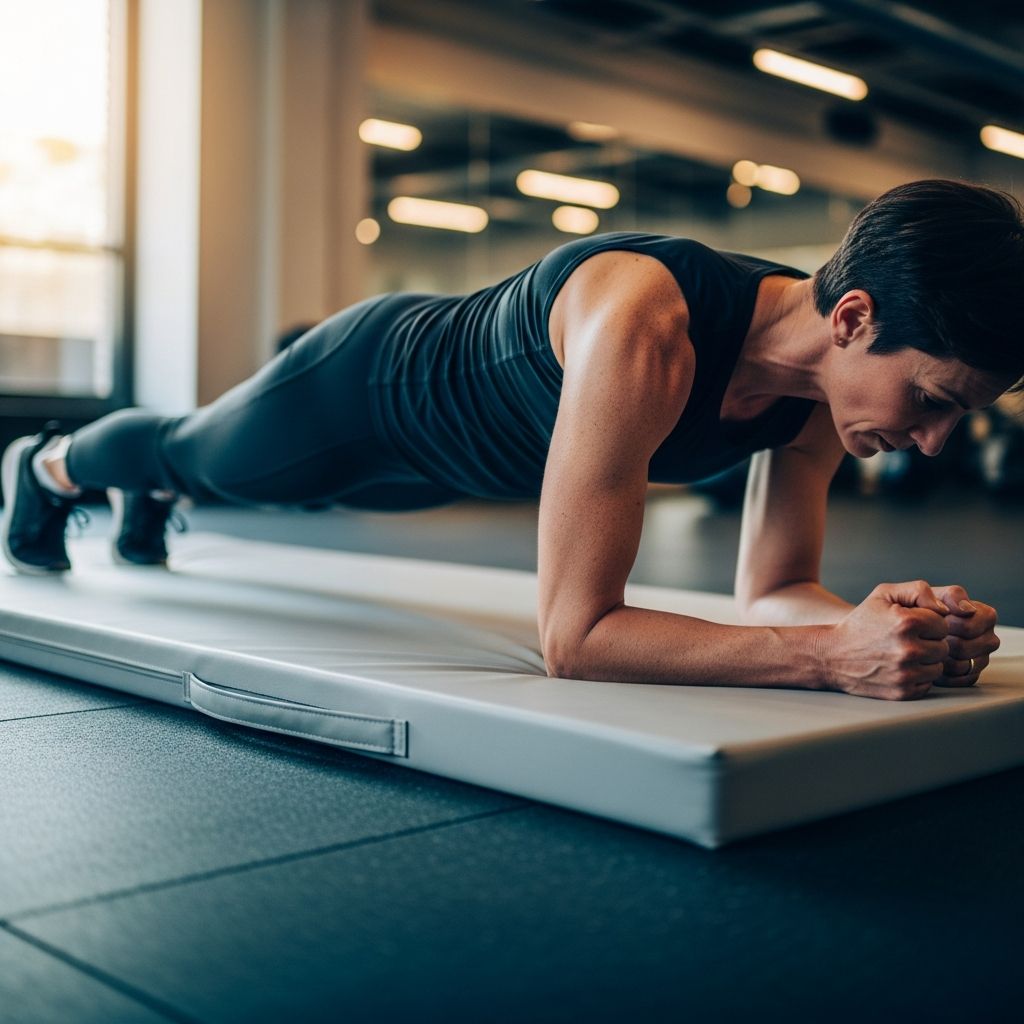
Proper form is essential to maximize the benefits of planking and minimize injury risk. To perform a standard high plank:
- Start in a push-up position with your hands directly beneath your shoulders
- Keep your body in a straight line from your head to your heels
- Engage your core muscles by tightening your abdominals
- Maintain a neutral neck position by looking slightly ahead
- Keep your shoulders relaxed and away from your ears
- Distribute your weight evenly between your hands and toes
- Hold this position for 20-60 seconds, depending on your fitness level
Low Plank (Elbow Plank) Position
The low plank or elbow plank is an excellent modification for beginners or those wanting to increase the intensity:
- Lie face-down with your forearms on the ground
- Position your elbows directly beneath your shoulders
- Lift your body off the ground, creating a straight line from head to heels
- Engage your core and hold for 20-60 seconds
- This variation typically allows for longer hold times due to reduced arm stress
Side Plank Technique
Side planks specifically target your obliques and lateral core muscles. To perform a side plank:
- Lie on your side with your forearm on the ground
- Position your elbow directly beneath your shoulder
- Lift your hips off the ground to create a straight line from head to feet
- Keep your core engaged throughout the hold
- Maintain this position for 20-60 seconds, then switch sides
- Note: Research suggests that some individuals with chronic lower back pain may not tolerate side planks well, so proceed cautiously if you have back issues
Common Mistakes to Avoid
Even though planks appear simple, improper execution can reduce their effectiveness and increase injury risk. One of the most common mistakes is allowing your hips to sag toward the ground. This breaks the straight-line alignment from head to heels and removes much of the core engagement. Similarly, raising your hips too high creates an inverted V-shape, which shifts the workload away from your core.
Another frequent error is improper head and neck positioning. Looking straight down or excessively upward can strain your neck. Instead, maintain a neutral head position by gazing slightly ahead. Additionally, many people hold their breath during planks, which increases intracranial pressure and reduces oxygen flow to your muscles. Remember to breathe steadily throughout your plank hold.
Holding a plank with your shoulders shrugged up toward your ears creates unnecessary tension. Instead, keep your shoulders relaxed and packed down away from your ears. Lastly, avoid placing your hands too far forward or backward from directly under your shoulders, as this misaligns your body and reduces core engagement.
Understanding Muscle Shaking During Planks
If you experience shaking while holding a plank, don’t be alarmed—it’s completely normal. The shaking occurs because your muscles are contracting and being pushed to their limits. Everyone, from beginners to expert athletes, experiences this phenomenon. As you continue to hold the plank position, your muscles contract increasingly, eventually causing visible trembling. The good news is that consistent plank practice increases your muscular endurance, which reduces the time between when you start the plank and when the shaking begins. With dedication and regular practice, you’ll be able to hold planks longer before experiencing fatigue-induced shaking.
How Often Should You Do Planks?
Unlike traditional strength training exercises that require 48 hours of recovery between sessions for the same muscle group, planks can be performed much more frequently. Since planks are isometric exercises where muscles contract without changing length, they don’t break down muscle fibers as extensively as dynamic resistance exercises. This means you can safely perform planks daily.
In fact, many fitness experts recommend incorporating planks into your daily routine. Some people even do multiple planks throughout the day as a way to take breaks from sitting and reset their posture. Planks are so versatile that you can include them in your aerobic workout cooldown before stretching, use them to realign your posture after prolonged sitting, or perform them as standalone core work.
The current world record for holding a plank is held by George Hood, a former U.S. Marine, who maintained the position for 8 hours and 15 minutes. While you certainly don’t need to approach this extreme duration to benefit from planking, this record demonstrates the impressive endurance capacity that can be developed through consistent practice.
Plank Variations and Progressions
Once you’ve mastered the basic plank, there are over 50 variations you can explore to challenge yourself and target different aspects of your core. Each variation offers unique benefits:
| Plank Variation | Primary Focus | Difficulty Level | Key Benefits |
|---|---|---|---|
| High Plank | Full core, shoulders, arms | Beginner to Intermediate | Overall core strength and stability |
| Elbow Plank (Low Plank) | Core stability, shoulders | Beginner to Intermediate | Enhanced core engagement with reduced arm strain |
| Side Plank | Obliques, lateral core | Intermediate | Improved lateral stability and spinal rotation control |
| Single-Leg Plank | Core balance, stability | Intermediate to Advanced | Enhanced balance and unilateral core strength |
| Plank Arm Reach | Core stability, arms | Advanced | Increased dynamic stability and upper body engagement |
| Archer Plank | Obliques, arms | Advanced | Enhanced rotational strength and archery performance |
| Elevated Side Plank | Obliques, shoulders | Advanced | Increased intensity for oblique strengthening |
Planks as a Functional Exercise
Beyond aesthetic benefits and simple strength gains, planks are highly functional exercises that translate to real-world activities. By improving core stability and balance, planks reduce your injury risk during training and daily life. The transverse abdominis, which planks effectively strengthen, is crucial for maintaining spinal stability during dynamic movements and weight-bearing activities.
The functional benefits of planks extend to improving body mechanics during complex movements like squats, deadlifts, and rotational exercises. A strong, stable core developed through planking provides the foundation necessary for safe and effective performance of these compound movements.
Special Considerations for Back Pain Sufferers
If you suffer from chronic lower back pain, planking can be an excellent rehabilitation tool. The front plank with bracing has been identified as the best-tolerated core exercise for this population. However, exercise selection matters significantly—research indicates that lateral (side) planks may not be well tolerated by all individuals with chronic lower back pain.
If you currently experience lower back discomfort, it’s advisable to focus on front plank variations initially and consult with a healthcare professional or physical therapist before attempting side plank variations. Many individuals find that as their core strength improves through planking, their chronic back pain diminishes, allowing them to progress to more advanced variations.
Frequently Asked Questions About Planking
Q: How long should I hold a plank as a beginner?
A: As a beginner, aim to hold a plank for 20-30 seconds with proper form. As your strength improves, gradually increase your hold time by 5-10 seconds each week. Quality form is far more important than duration, so don’t sacrifice proper alignment to achieve longer times.
Q: Can I do planks every day?
A: Yes, planks can be safely performed daily because they’re isometric exercises that don’t break down muscle fibers extensively. Many people incorporate planks into their daily routine or do multiple short planks throughout the day as posture breaks.
Q: Are planks better than crunches for abs?
A: Yes, planks are generally considered superior to crunches. They strengthen all core muscles simultaneously without the spinal stress associated with crunches, and they maintain your spine in a safer, neutral position throughout the exercise.
Q: What should I do if I experience neck pain during planks?
A: Neck pain during planks often results from looking too far up or down. Maintain a neutral head position by gazing slightly ahead. If pain persists, consider trying elbow planks (low planks), which may be more comfortable for your neck.
Q: Are planks safe for people with lower back pain?
A: Front planks with proper bracing are generally well-tolerated and beneficial for people with chronic lower back pain. However, side planks may not be suitable for everyone with back issues. Consult a healthcare professional before beginning any new exercise program if you have chronic pain.
Q: How do I know if I’m doing a plank with proper form?
A: Proper form means your body creates a straight line from head to heels, your core is engaged, your shoulders are relaxed and directly over your hands (or elbows), and your neck is neutral. Avoid allowing your hips to sag or rise excessively high.
Q: Can planks help me lose weight?
A: While planks alone won’t dramatically increase calorie burn, consistent planking combined with aerobic exercise and proper nutrition can contribute to weight management. Research shows that regular planking can increase muscle mass and basal metabolic rate, both of which support long-term weight management.
Q: What’s the difference between high and low planks?
A: High planks (performed with hands) typically allow for longer hold times and less upper body strain, while low planks (performed on elbows) provide increased core engagement. Both variations are effective; choose based on your current fitness level and comfort.
References
- Are Planks Good For Abs? The Truth About This Popular Workout — Better Me. 2024. https://betterme.world/articles/are-planks-good-for-abs/
- Core Training: How Often Should You Do Planks? — Cathe Friedrich. 2024. https://cathe.com/core-training-how-often-should-you-do-planks/
- Plank Exercise: Why Planking Is Good for Your Health & Core — DHGate Smart. 2024. https://smart.dhgate.com/plank-exercise-why-planking-is-good-for-your-health-core/
- Effects of High Plank Exercise on Physical Fitness — Medicina (Kaunas). 2023. DOI: Published research on physical fitness improvements from plank exercises
- Plank Exercises and Core Stability in Chronic Lower Back Pain — Journal of Strength and Conditioning Research. 2023. Research on rehabilitation benefits for core stability
- Front Plank Tolerance in Chronic Lower Back Pain Patients — International Journal of Environmental Research and Public Health. 2023. Research on plank exercise tolerance in clinical populations
- Exercise Rehabilitation Benefits for Older Adults — Journal of Exercise Rehabilitation. 2023. Research on respiratory capacity and immune function improvements in older populations
Similar Articles








Read full bio of medha deb