Strengthening Your Core: Right and Wrong Ways to Do Lunges, Squats, and Planks
Master proper form for lunges, squats, and planks to strengthen your core safely and effectively.
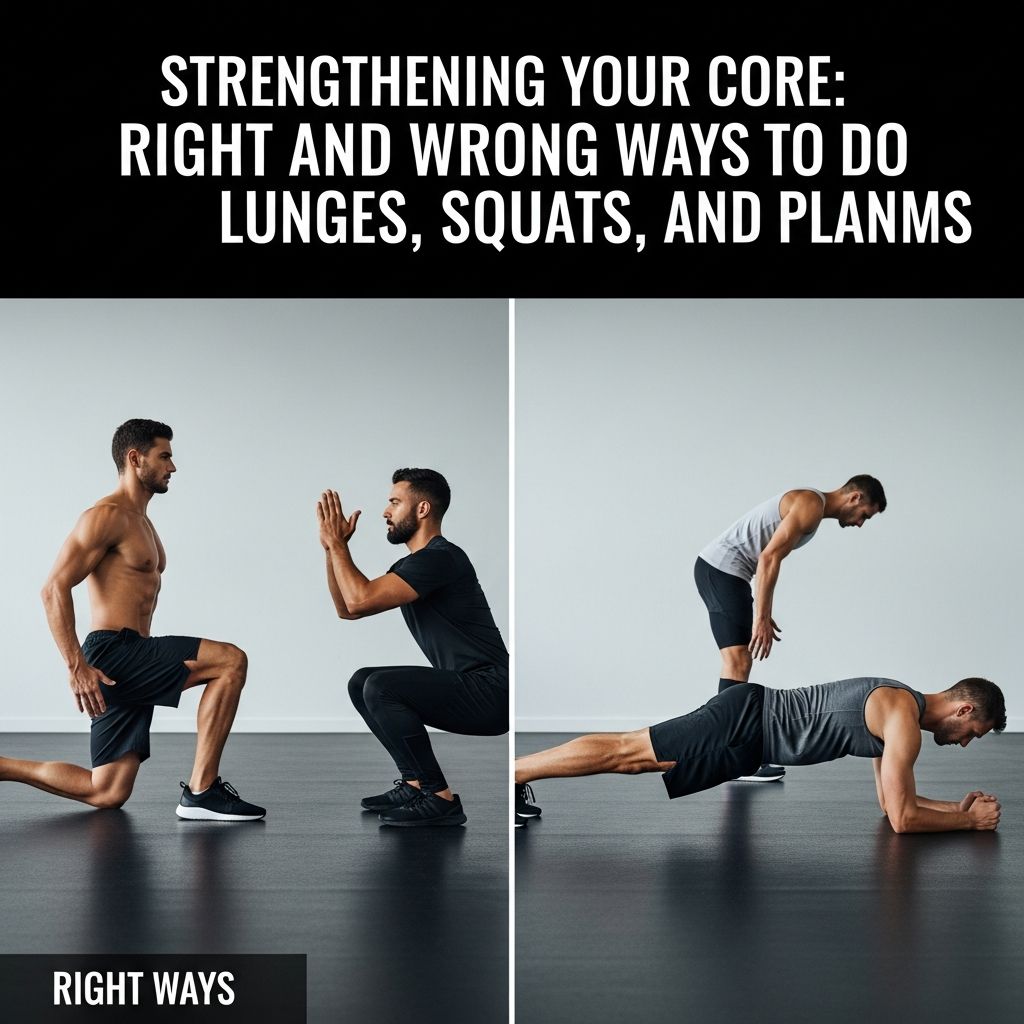
Core strength is fundamental to overall fitness, mobility, and long-term health. Your core muscles support your spine, improve your posture, and enable you to perform daily activities with greater ease and efficiency. However, many people perform core exercises incorrectly, which can lead to injury and prevent them from achieving their fitness goals. Understanding the proper technique for fundamental exercises like lunges, squats, and planks is essential for anyone looking to build a stronger, healthier core.
Why Core Strength Matters
The core encompasses more than just your abdominal muscles. It includes your deep abdominal muscles, obliques, lower back muscles, and the muscles surrounding your pelvis and hips. A strong core stabilizes your spine, reduces strain on your lower back, and improves your balance and coordination. According to Harvard Medical School research, a stable spine is also more flexible, allowing it to support a full range of natural movements while reducing pressure on the lower back and lowering the risk of pain and injury.
The muscles and ligaments surrounding your spine can weaken with age or from injury, making movements like twisting, stretching, lifting, and bending difficult. When these supporting muscles are weak, the lower back often has to compensate, placing greater stress and burden on its structures. This is why developing a balanced approach to core training is so important for maintaining spinal health and preventing chronic pain.
Understanding the Core Musculature
A strong core is not achieved by targeting a single muscle group. Instead, it requires engaging all the core muscles simultaneously—from the abdominals to the entire back. This integrated approach ensures that your spine receives balanced support from all directions. Physical therapists at Harvard-affiliated institutions emphasize that proper core training involves dynamic patterns of movement that strengthen the entire set of core muscles you use every day, rather than isolating individual muscle groups.
Many people make the mistake of focusing exclusively on crunches or sit-ups, which target only the abdominal muscles and can even increase strain on the lower back. Planks, by contrast, recruit several groups of muscles along your sides, front, and back, providing a more comprehensive and functional core workout.
The Right Way to Do Lunges
Proper Lunge Form
Lunges are an excellent exercise for strengthening your core, quadriceps, hamstrings, and glutes. However, performing lunges with improper form can strain your knees and lower back. Here’s how to execute a proper lunge:
- Stand with your feet hip-width apart, keeping your chest up and shoulders back
- Take a large step forward with one leg, lowering your hips until both knees are bent at approximately 90 degrees
- Ensure your front knee stays directly above your ankle and does not extend past your toes
- Keep your back knee hovering just above the ground without making contact
- Push through your front heel to return to the starting position
- Maintain an upright torso throughout the movement, avoiding forward lean
Common Lunge Mistakes
One of the most frequent errors people make when performing lunges is allowing their front knee to cave inward or extend beyond their toes. This places excessive stress on the knee joint and reduces the effectiveness of the exercise. Additionally, leaning your torso too far forward shifts the emphasis away from your core and glutes, instead placing strain on your lower back.
Another common mistake is taking too short a step, which reduces the range of motion and limits the engagement of your leg muscles. Conversely, taking an excessively long step can compromise your balance and stability. Finding the right stride length that allows you to maintain proper form is essential for maximizing the benefits of lunges while minimizing injury risk.
The Right Way to Do Squats
Proper Squat Technique
Squats are one of the most effective exercises for building lower body and core strength. When performed correctly, squats engage your quadriceps, hamstrings, glutes, and core muscles. Here’s how to perform a proper squat:
- Stand with your feet shoulder-width apart, toes pointing slightly outward
- Keep your chest up, shoulders back, and core engaged throughout the movement
- Lower your body by bending your knees and hips, as if sitting back into a chair
- Descend until your thighs are parallel to the ground, or slightly below if you have adequate mobility
- Ensure your knees stay aligned with your toes and do not cave inward
- Keep your weight distributed evenly across your entire foot, not on your heels or toes
- Drive through your heels to return to the standing position
Common Squat Errors
One of the most damaging mistakes people make when squatting is allowing their knees to collapse inward, a phenomenon known as knee valgus. This places excessive stress on the knee joint and increases injury risk. This often occurs when people squat too deeply beyond their current range of mobility or when their core muscles are insufficiently engaged.
Another frequent error is shifting weight forward onto the balls of the feet or toes. This can lead to excessive strain on the knees and reduces the engagement of your glutes and hamstrings. Lifting your heels off the ground during a squat is another sign of poor form that should be corrected by improving ankle mobility or modifying the depth of your squat.
Rounding your lower back during a squat is particularly problematic and indicates that you’re either descending beyond your current flexibility allows or your core is not sufficiently engaged. Maintaining a neutral spine throughout the movement is crucial for protecting your lower back from injury.
The Right Way to Do Planks
Proper Plank Positioning
Planks are among the most effective exercises for comprehensive core strengthening. Unlike crunches, which only target the abdominal muscles, planks engage all the core muscles—front, sides, and back—making them superior for developing functional strength. To perform a proper plank:
- Begin in a face-down position with your legs extended and elbows bent
- Position your elbows directly under your shoulders, with your hands clasped or flat on the ground
- Place your feet hip-width apart for stability
- Tighten your abdominal muscles and engage your core
- Lift your body off the ground, creating a straight line from your head to your heels
- Keep your hips level with your shoulders, avoiding any sagging or elevation
- Maintain steady, controlled breathing throughout the hold
Common Plank Mistakes
The most significant error people make when performing planks is allowing their hips to sag toward the ground. This indicates that your core muscles are not sufficiently engaged and reduces the effectiveness of the exercise. Conversely, hiking your hips too high shifts the emphasis away from your core and places unwanted strain on your shoulders.
Another common mistake is holding your breath during the plank. Proper breathing is essential for maintaining core engagement and ensuring adequate oxygen supply to your muscles. You should breathe steadily and deeply throughout the hold, avoiding breath-holding or shallow breathing patterns.
Many people also make the error of turning their head to look forward or letting it hang down. Your head should remain in a neutral position, aligned with your spine, throughout the exercise. Looking forward places strain on your neck, while allowing your head to hang can compress your cervical spine.
Progressing Your Plank Practice
If you’re new to planks, start by holding the position for 20 to 30 seconds, focusing entirely on maintaining proper form. As you get stronger, gradually increase your hold time to one minute or longer. You can also progress by performing variations such as side planks, which place greater emphasis on your obliques, or by extending your arms to hold yourself up on your palms rather than your forearms.
Building a Comprehensive Core Workout
Incorporating Multiple Exercises
A well-rounded core routine should include a variety of exercises that target different aspects of your core musculature. Combining lunges, squats, and planks with other exercises like bird-dogs, side planks, and curl-ups ensures that you’re developing balanced strength throughout your core.
According to Harvard Medical School research, the “big three” exercises developed by Dr. Stuart McGill, an expert in spine biomechanics, provide an excellent foundation for core stability. These exercises—curl-ups, side planks, and bird-dogs—should be performed together as part of an integrated core strengthening program.
Training Frequency and Progression
To see results from your core training, consistency is essential. Aim to perform your core exercises two to three times per week, gradually increasing frequency as you become more comfortable with the routine. When starting out, follow a pyramid sequence: begin with five repetitions of each exercise, then reduce to three reps, and finally perform each exercise just once. As you progress, you can increase the starting number of repetitions while maintaining the descending pattern.
Avoiding Common Training Mistakes
Prioritizing Quality Over Quantity
One of the most important principles of effective core training is prioritizing proper form over the number of repetitions or duration of holds. Performing an exercise with poor form is not only less effective but can actually lead to injury. If you find yourself struggling to maintain proper form, reduce the number of reps, decrease the duration of your hold, or simplify the exercise variation.
Avoiding Excessive Forward Flexion
Many traditional core exercises, such as crunches and sit-ups, involve repetitive forward flexion of the spine. Research from Harvard Medical School indicates that these exercises can strain your lower back, as pulling your body up into a sit-up position works the hip flexors, which run from your thighs to the lumbar vertebrae in your lower back. When these muscles become overly tight or strengthened, they can pull on your lower spine, causing pain or discomfort.
Maintaining Spinal Neutrality
Throughout all core exercises, maintaining a neutral spine is crucial. Your spine has natural curves that should be preserved during exercise. Avoid excessive arching or rounding of your lower back, as both positions place stress on your vertebrae and surrounding structures. Engaging your core muscles helps maintain spinal neutrality and protects your back from injury.
Special Considerations for Different Populations
Core Training for Seniors
Seniors can benefit significantly from core strengthening exercises, which improve balance, mobility, and overall functional fitness. However, older adults should modify exercises as needed and may need to progress more gradually. Starting with basic variations and focusing on perfect form is essential before attempting more advanced progressions.
Core Training for Individuals with Back Pain
People with existing back pain often fear movement, which can lead to stiffness and worsening pain over time. However, a stable spine is more flexible and can support a full range of natural movements, reducing pressure on the lower back and lowering pain and injury risk. Gentle, properly-performed core exercises can actually help alleviate back pain by strengthening the supporting muscles around your spine. However, individuals with significant back pain should consult with a healthcare provider or physical therapist before beginning a new exercise program.
Frequently Asked Questions
Q: How often should I perform core exercises?
A: Start with two to three sessions per week, allowing at least one day of rest between sessions. As your strength improves, you can gradually increase to four to five sessions weekly or even daily, depending on your fitness level and goals.
Q: How long should I hold a plank?
A: Beginners should start with 20 to 30 seconds of proper form. As you progress, gradually increase to one minute or longer. Remember that form is more important than duration—a 30-second plank with perfect form is more beneficial than a two-minute plank with poor form.
Q: Can I do lunges and squats every day?
A: While you can perform these exercises frequently, incorporating rest days is important for muscle recovery and preventing overtraining. A reasonable schedule might involve performing these exercises three to four times per week, with adequate rest days in between.
Q: Should I feel pain during these exercises?
A: You should feel muscle fatigue and tension, but not sharp pain. If you experience sharp pain in your joints, back, or knees, stop the exercise immediately and consult with a fitness professional or healthcare provider to ensure you’re performing the movement correctly.
Q: What if I can’t perform a full plank?
A: There are many modifications available. You can perform a plank on your knees, hold a plank against a wall, or perform the exercise with your hands on an elevated surface like a bench. These variations allow you to build the necessary strength to eventually perform a full plank.
Q: Are planks better than crunches?
A: Yes, research from Harvard Medical School indicates that planks are more effective than crunches for building core strength. Planks engage multiple muscle groups across your entire core, while crunches only target abdominal muscles and can strain your lower back.
References
- Three Moves for Better Spine Health — Harvard Medical School. August 2020. https://www.health.harvard.edu/staying-healthy/three-moves-for-better-spine-health
- Core Exercises — Harvard Health Publishing. https://www.harvardhealthonlinelearning.com/courses/core-exercises
Similar Articles








Read full bio of Sneha Tete