Stress Myocardial Perfusion Scan: Complete Guide
Comprehensive guide to stress myocardial perfusion scans for heart disease diagnosis.
Understanding Myocardial Perfusion Scans
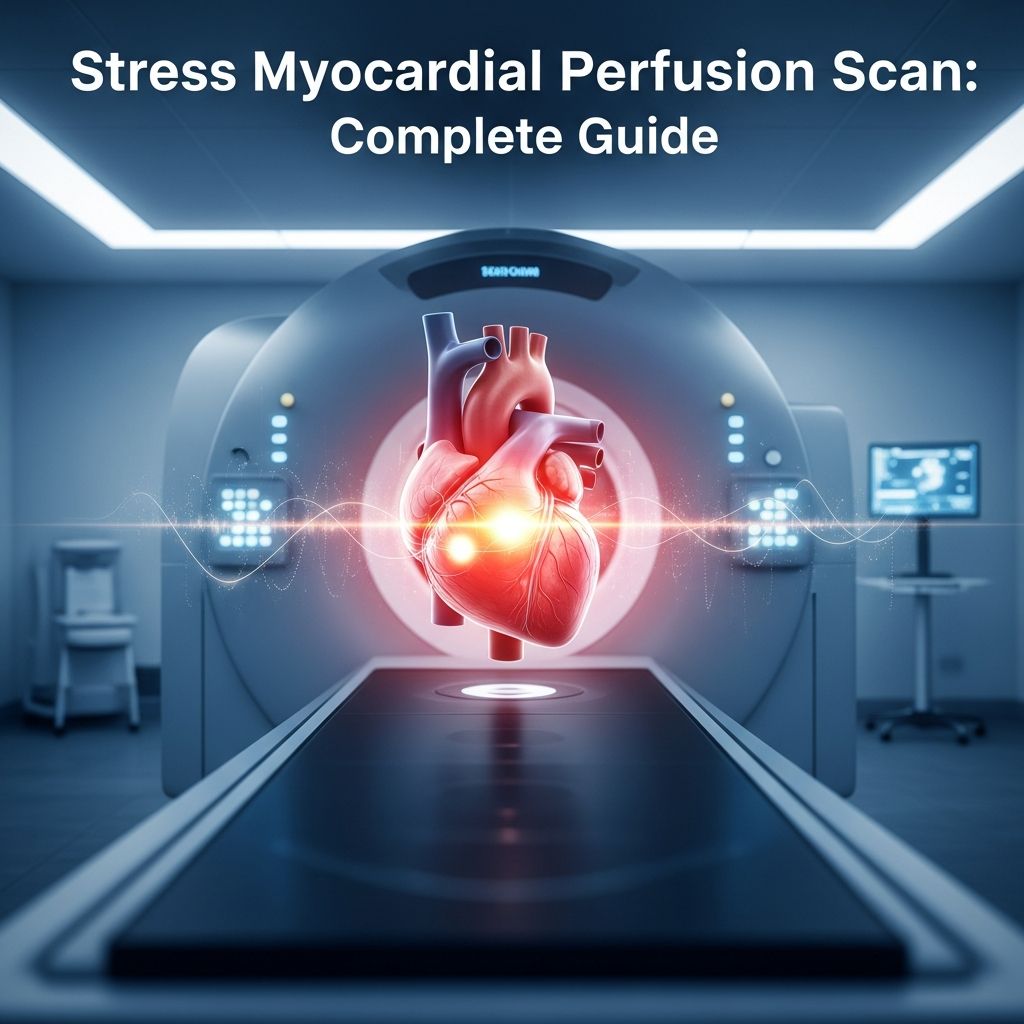
A myocardial perfusion scan, commonly referred to as a nuclear stress test, is a diagnostic imaging procedure that evaluates how well blood flows through the heart muscle both at rest and during stress. This non-invasive test helps physicians identify areas of the heart that may not be receiving adequate blood flow due to blockages in the coronary arteries. The scan produces detailed images of the heart and provides information about the heart’s pumping function, allowing cardiologists to assess your overall cardiac health and risk for heart disease.
What Is a Myocardial Perfusion Scan?
A myocardial perfusion scan is a specialized nuclear imaging test that combines the use of radioactive tracers with either physical exercise or medication-induced stress to evaluate coronary artery blood flow. During the procedure, a small amount of radioactive material is injected into your bloodstream, where it travels to the heart muscle and emits signals detected by a gamma camera. The camera captures these signals and converts them into detailed images that show blood flow patterns throughout the heart.
This test serves multiple purposes in cardiac evaluation. It can identify blockages severe enough to restrict blood flow, assess the extent and location of previous heart attacks, evaluate the overall pumping function of the heart, and determine your risk for future cardiac events. The myocardial perfusion scan is particularly valuable for patients experiencing chest pain, shortness of breath, or other symptoms suggestive of coronary artery disease.
Types of Myocardial Perfusion Imaging
There are two primary types of myocardial perfusion imaging techniques used in clinical practice:
Single Photon Emission Computed Tomography (SPECT)
SPECT is the traditional and most commonly used form of myocardial perfusion imaging. During a SPECT scan, a radioactive tracer such as Myoview is injected into the bloodstream. A specialized camera that rotates around the chest captures images of the radiation emitted by the tracer as it accumulates in the heart muscle. SPECT imaging provides clear, detailed images of blood flow patterns and can be performed during both rest and stress conditions. The procedure is well-established, widely available, and highly effective for identifying coronary artery disease.
Positron Emission Tomography (PET)
PET imaging is a more advanced form of myocardial perfusion imaging that has gained increased clinical use over the past two decades. This technique uses different radioactive tracers and offers superior image quality compared to SPECT. PET imaging provides higher diagnostic accuracy and enables routine quantification of myocardial blood flow in absolute units, which can be particularly valuable in complex clinical scenarios. While PET technology is more sophisticated, it may not be as widely available as SPECT in all medical centers.
How the Procedure Works
The myocardial perfusion scan operates on a straightforward but elegant principle: a small amount of radioactive tracer is injected into your bloodstream, where it concentrates in heart tissue that is receiving adequate blood flow. Areas of the heart with reduced blood flow accumulate less tracer, appearing as darker regions on the images. By comparing images taken at rest and during stress, physicians can identify whether reduced blood flow is present and assess how the heart responds to increased workload.
The radioactive material used is specifically designed to be absorbed by healthy, perfused heart muscle. The gamma camera detects the radiation emitted and converts it into detailed images that create a map of blood flow throughout the myocardium. This information allows cardiologists to pinpoint the exact location and severity of any blood flow abnormalities.
Related Stories



Reasons for the Test
Your cardiologist may recommend a myocardial perfusion scan for several important reasons:
- To evaluate symptoms such as chest pain, chest discomfort, or pressure that may indicate coronary artery disease
- To assess blood flow to the heart and identify areas with diminished circulation
- To determine the location and extent of a previous heart attack
- To evaluate how well the heart muscle is pumping
- To assess your risk for future cardiac events and guide treatment decisions
- To monitor the effectiveness of cardiac treatments and interventions
- To evaluate shortness of breath or other symptoms potentially related to heart disease
Preparing for Your Myocardial Perfusion Scan
Before the Test
Proper preparation is essential for obtaining optimal results from your myocardial perfusion scan. Your physician will provide specific instructions tailored to your individual circumstances. In general, you should avoid consuming caffeine for at least 24 hours before the test, as caffeine can interfere with the stress portion of the examination. Additionally, avoid eating heavy meals for several hours before your appointment, though light meals are typically acceptable.
Wear comfortable, loose-fitting clothing and supportive athletic shoes if you will be exercising on a treadmill. Avoid wearing jewelry or metal objects that could interfere with imaging. If you take regular medications, discuss with your physician which medications should be continued or held before the test. Some cardiac medications, including beta-blockers, may need to be temporarily discontinued to ensure the stress test is effective.
What to Bring
When you arrive for your myocardial perfusion scan, bring your insurance card and photo identification. Have a list of all current medications and supplements available to provide to the medical staff. If you have previous cardiac imaging studies or test results, bringing these documents may be helpful for comparison purposes.
The Myocardial Perfusion Scan Procedure
Initial Preparation
When you arrive at the imaging center, a qualified nuclear technologist will explain the procedure in detail and answer any questions you may have. An intravenous (IV) line will be inserted into a vein in your arm or hand. Adhesive electrodes will be applied to your chest to record an electrocardiogram (ECG) throughout the test, allowing the medical team to monitor your heart’s electrical activity. A blood pressure cuff will also be placed on your arm to continuously monitor your blood pressure during the examination.
Rest Imaging Phase
First, the radioactive tracer will be injected through your IV line while you are at rest. Approximately 45 minutes after this initial injection, you will be brought into the scanner room. You will be asked to lie on a table with both arms positioned overhead. The SPECT camera will slowly rotate around your chest, capturing detailed images of your heart for approximately 15 to 20 minutes. It is crucial to remain very still during this imaging period to ensure clear, accurate images. The camera will not touch you, and the procedure is completely painless.
Stress Test Phase
After the rest imaging is complete, the stress portion of the test begins. There are two primary methods to stress your heart:
Exercise Stress Test
If you are able to exercise safely, you will walk on a treadmill or ride a stationary bicycle. The exercise intensity gradually increases while the stress technologist monitors your heart rate, blood pressure, and ECG. You will be coached to reach an appropriate level of exertion, typically 85% of your predicted maximum heart rate. The medical team will closely supervise you throughout this phase, and you should immediately report any unusual symptoms such as chest pain, shortness of breath, dizziness, or severe fatigue. Near the end of the exercise period, a second injection of the radioactive tracer will be administered through your IV line.
Pharmacological (Chemical) Stress Test
If you are unable to exercise safely due to arthritis, lung disease, physical limitations, or other medical conditions, medication will be used to simulate the effects of exercise on your heart. Common medications used include dipyridamole (Persantine) or dobutamine, which dilate the coronary arteries and increase blood flow similarly to exercise. These medications are administered through your IV line while you lie on the imaging table. Your heart rate and blood pressure will be carefully monitored throughout this process.
Post-Stress Imaging Phase
Following the stress test, you will rest for 30 to 45 minutes. During this recovery period, your blood pressure and heart rate are monitored to ensure they return to baseline levels. You may be offered a light meal or beverages during this time. After the recovery period, you will return to the scanner room for the second set of imaging. You will again lie on the table with your arms overhead while the gamma camera captures images of your heart under stress conditions. This imaging phase typically takes 15 to 20 minutes.
Test Duration
Plan to spend approximately three to five hours at the imaging center on the day of your test. While the actual imaging time is relatively brief (approximately 30 to 40 minutes total), the intervals between injections, recovery time, and preparation account for the extended duration.
After Your Test
Following your myocardial perfusion scan, you can resume normal activities immediately. The radioactive tracer is eliminated from your body naturally over time and poses no health risk. You may return to your regular diet and resume taking any medications that were temporarily discontinued. Drink plenty of fluids to help flush the radioactive material from your system.
The nuclear medicine technologist will process all imaging data, and a physician will carefully review the images to assess blood flow patterns at rest and during stress. A detailed report will be generated and sent to your referring physician. This report will typically include findings about the presence and location of any blood flow abnormalities, the extent of any areas with reduced perfusion, and the overall function of your heart muscle. Your physician will discuss these results with you and determine any necessary next steps in your cardiac care.
Understanding Your Results
Myocardial perfusion scan results compare blood flow patterns between rest and stress conditions. Normal results indicate that blood flow to all areas of the heart muscle is adequate both at rest and during stress, suggesting that significant coronary artery blockages are unlikely. Abnormal results may reveal areas where blood flow is reduced, particularly during stress, which could indicate coronary artery disease. The severity and extent of these abnormalities help guide treatment decisions.
Results may show reversible ischemia, where blood flow is reduced during stress but returns to normal at rest, suggesting that a particular coronary artery is narrowed but the heart muscle is still viable. Fixed defects show reduced blood flow both at rest and during stress, typically indicating a prior heart attack. Your physician will integrate these findings with your clinical symptoms, medical history, and other test results to develop an appropriate treatment plan.
Risks and Complications
Myocardial perfusion scans are generally very safe procedures with minimal risks. The primary concern is radiation exposure from the radioactive tracer. However, the amount of radiation used is small and comparable to background radiation exposure over several months. Modern imaging techniques, particularly stress-only imaging with solid-state cameras, can reduce radiation exposure by up to 60% compared to traditional methods.
The exercise stress component carries minimal risk in patients without severe underlying heart disease, though some patients may experience brief chest discomfort, shortness of breath, or fatigue during exertion. These symptoms typically resolve quickly with rest. Pharmacological stress agents may cause temporary side effects such as mild chest discomfort, flushing, or headache, which are generally short-lived. Serious complications are extremely rare when the procedure is performed by experienced medical professionals with appropriate patient monitoring.
Frequently Asked Questions
Q: Is the myocardial perfusion scan painful?
A: No, the procedure is painless. You may feel a slight pinch when the IV is inserted, and you will not feel the radioactive tracer. The imaging portion of the test involves no sensations.
Q: How long does the entire procedure take?
A: The complete procedure typically takes three to five hours, including preparation, imaging, stress testing, and recovery time. However, actual imaging time is only about 30 to 40 minutes.
Q: Can I eat before my myocardial perfusion scan?
A: You should avoid caffeine for 24 hours before the test and avoid heavy meals for several hours beforehand. Light meals are generally acceptable. Your physician will provide specific dietary instructions.
Q: What if I cannot exercise during the stress test?
A: If you cannot exercise, your physician can order a pharmacological stress test using medication to simulate exercise effects on your heart. This is equally effective at identifying coronary artery disease.
Q: When will I receive my results?
A: Your physician will typically receive the report within 24 to 48 hours of your test. Your cardiologist will schedule a follow-up appointment to discuss the findings and any recommended treatments.
Q: Is radiation exposure from the scan dangerous?
A: The radiation dose from a myocardial perfusion scan is small and well within safe limits. The diagnostic benefits far outweigh the minimal radiation risk. Modern techniques can further reduce radiation exposure.
References
- Stress Myocardial Perfusion Imaging — Ottawa Heart Institute. 2024. https://www.ottawaheart.ca/test-procedure/stress-myocardial-perfusion-imaging
- Myocardial Perfusion Imaging Stress Test — Brown University Health. 2024. https://www.brownhealth.org/centers-services/cardiovascular-testing-and-diagnostics/nuclear-cardiology/myocardial-perfusion
- Myocardial Perfusion Scan (aka Nuclear Stress Test) — HeartHealth, Weill Cornell Medicine. 2024. https://hearthealth.weillcornell.edu/our-services/diagnostic-tests/myocardial-perfusion-scan-aka-nuclear-stress-test
- Myocardial Perfusion Imaging Test: PET and SPECT — American Heart Association. 2024. https://www.heart.org/en/health-topics/heart-attack/diagnosing-a-heart-attack/myocardial-perfusion-imaging
- Stress Myocardial Perfusion Imaging — The Cardiology Advisor. 2024. https://www.thecardiologyadvisor.com/ddi/stress-myocardial-perfusion-imaging/
Similar Articles








Read full bio of Sneha Tete