Stridor vs Wheezing: Understanding Respiratory Sounds
Learn the key differences between stridor and wheezing to identify airway problems.
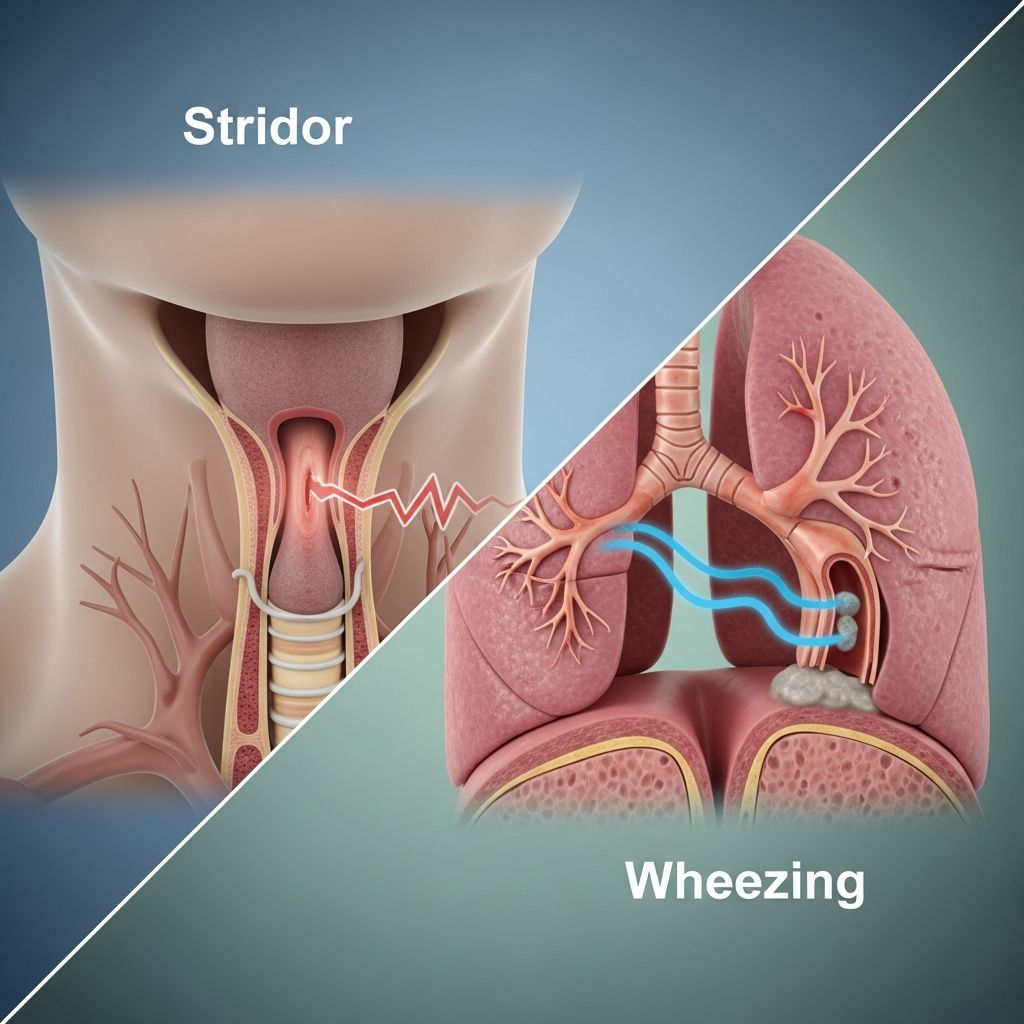
Noisy or labored breathing can be concerning and may indicate an underlying respiratory condition. Two common types of abnormal breath sounds that people experience are stridor and wheezing. While both are high-pitched sounds that suggest something is wrong with the airway, they originate from different parts of the respiratory system and indicate different medical conditions. Understanding the distinctions between these two sounds is essential for accurate diagnosis and appropriate treatment. Whether you’re experiencing these symptoms yourself or noticing them in a family member, knowing what each sound means can help guide you toward the right medical care.
What is Stridor?
Stridor is a high-pitched, whistling or squeaking sound that occurs when a person breathes in or out. This abnormal breath sound originates from the upper airway, specifically in the region that includes the larynx (voice box) and the trachea (windpipe). The sound is caused by disrupted airflow through a partially obstructed upper airway. Stridor typically sounds like a continuous, rough, high-pitched whistle or crowing sound, and doctors are most likely to hear it when a patient breathes in, though it can occur during both inhalation and exhalation depending on the underlying cause.
Characteristics of Stridor
Stridor has several distinctive characteristics that help healthcare providers identify it:
– High-pitched, whistle-like or squeaking quality- Continuous sound that persists throughout the breathing cycle- Can be heard predominantly on inspiration (inhalation) in many cases- Often loudest when listening over the anterior (front) part of the neck- May be audible without a stethoscope in severe cases
Common Causes of Stridor
Stridor results from blockage or narrowing in the upper airway. Several conditions can cause this obstruction:
– Foreign object aspiration: One of the most common causes, where a foreign body becomes lodged in the airway- Viral croup: An infection of the upper airway that is particularly common in children- Epiglottitis: Swelling of the cartilage that covers the windpipe, blocking airflow- Tonsillitis: Inflammation and swelling of the tonsils- Airway injury: Trauma to the throat or windpipe- Vocal cord dysfunction or paralysis: Problems with vocal cord movement- Tumors: Growths in the voice box or throat area- Allergic reactions: Swelling due to severe allergies- Throat abscess: A pocket of pus in the throat area- Inhalation of smoke or chemicals: Irritation and swelling from toxic exposure
What is Wheezing?
Wheezing is a continuous, high-pitched, musical breathing sound that stems from the lower airway. Unlike stridor, which originates in the upper airway, wheezing occurs when air moves through narrowed or obstructed lower airways in the chest, including the bronchi and smaller airways. Wheezing is typically easier to hear when a person breathes out (exhales), though it can sometimes be audible during both inhalation and exhalation. The sound may range from a sibilant, musical quality to a more coarse or squeaky character, and it indicates that the smaller airways in the lungs are restricted or partially blocked.
Characteristics of Wheezing
Related Stories



Wheezing has distinct characteristics that differentiate it from stridor:
– High-pitched, musical or sibilant quality- Continuous sound during breathing- Most often heard when a person breathes out (exhales)- Can sometimes be heard when breathing in and out- May be audible without a stethoscope in some cases- Indicates narrowed or constricted lower airways
Common Causes of Wheezing
Wheezing typically indicates partial blockage or narrowing of the lower airways. Numerous conditions can cause wheezing:
– Asthma: The most common cause of wheezing in both children and adults- Allergies: Allergic reactions can trigger airway constriction- Respiratory syncytial virus (RSV): A viral infection that causes wheezing as its main symptom- Chronic obstructive pulmonary disease (COPD): Long-term airway obstruction and inflammation- Emphysema: Damage to the air sacs in the lungs- Chronic bronchitis: Long-term inflammation of the bronchi- Pneumonia: Lung infection that can narrow airways- Congestive heart failure: Fluid buildup in the lungs- Sleep apnea: Periodic breathing interruptions during sleep- Gastroesophageal reflux disease (GERD): Acid reflux that irritates airways- Foreign body aspiration: Objects in the lower airways- Anaphylaxis: A severe, life-threatening allergic reaction
Key Differences Between Stridor and Wheezing
| Characteristic | Stridor | Wheezing |
|---|---|---|
| Location | Upper airway (larynx and trachea) | Lower airways (bronchi and smaller airways in lungs) |
| Sound Quality | Whistling, squeaking, or crowing | Musical, sibilant, or squeaky |
| When Heard | Predominantly on inhalation | Predominantly on exhalation |
| Audible Location | Loudest over anterior neck | Heard throughout chest |
| Primary Causes | Foreign objects, infections, swelling | Asthma, allergies, COPD, infections |
| Common Conditions | Croup, foreign body obstruction | Asthma, RSV, allergies |
Associated Symptoms
Symptoms Accompanying Stridor
When experiencing stridor, individuals may have additional symptoms depending on the underlying cause:
– Difficulty breathing or shortness of breath- Hoarseness or voice changes- Throat pain or discomfort- Fever (if infection is present)- Cough- Drooling or difficulty swallowing- Anxiety or distress related to breathing difficulty
Symptoms Accompanying Wheezing
Wheezing may be accompanied by various other respiratory symptoms:
– Shortness of breath- Chest tightness- Coughing, especially at night- Fatigue or reduced exercise tolerance- Difficulty sleeping due to breathing problems- Rapid or labored breathing
When to Seek Medical Attention
Both stridor and wheezing warrant medical evaluation, but certain situations require immediate emergency care. Seek emergency medical attention immediately if you experience:
– Severe difficulty breathing- Blue lips or fingernails- Loss of consciousness or confusion- Severe chest pain- Inability to speak in complete sentences- Choking sensation or feeling of throat closure- New onset of noisy breathing- Symptoms not improving with standard treatments
Any new or persistent abnormal breath sounds should be evaluated by a healthcare provider to determine the underlying cause and appropriate treatment.
Treatment Approaches
Stridor Treatment
Treatment for stridor depends on the underlying cause and severity:
– Foreign object removal: May require the Heimlich maneuver or professional medical extraction- Medications: Corticosteroids to reduce inflammation, antibiotics if infection is present- Oxygen therapy: To maintain adequate oxygen levels- Surgical intervention: May be necessary for tumors, severe swelling, or permanent airway obstruction- Voice rest: For vocal cord-related causes
Wheezing Treatment
Treatment for wheezing focuses on addressing the underlying cause:
– Asthma medications: Inhalers (bronchodilators, corticosteroids) to open airways- Allergy management: Antihistamines and avoidance of triggers- Antibiotics: For bacterial infections- Oxygen therapy: When oxygen saturation is low- Heart failure management: For wheezing caused by cardiac conditions- Lifestyle modifications: Avoiding triggers, smoking cessation
Related Breathing Sounds
Stertor
Stertor is another type of abnormal breathing sound that is sometimes confused with stridor. Stertor is a low-pitched snoring or rattling sound that occurs above the voice box (larynx). It is commonly heard in people who are congested due to the common cold, flu, allergies, or enlarged tonsils. Less commonly, stertor results from structural problems in the nasal cavity. Unlike stridor, which is high-pitched and continuous, stertor is typically low-pitched and may vary in intensity.
Crackles and Rales
Crackles (also called rales) are another category of abnormal breath sounds that differ from both stridor and wheezing. These are discontinuous, popping or crackling sounds heard typically during inhalation. They may indicate fluid in the lungs, pneumonia, or other conditions affecting the smaller airways and air sacs.
Diagnostic Approaches
Healthcare providers use several methods to evaluate abnormal breath sounds:
– Physical examination: Listening with a stethoscope to identify the type and location of abnormal sounds- Patient history: Understanding when symptoms started, what triggers them, and associated conditions- Imaging studies: Chest X-rays or CT scans to visualize airway obstruction- Endoscopy: Direct visualization of the airway using a flexible tube with a camera- Pulmonary function tests: Measuring how well the lungs work- Oxygen saturation monitoring: Checking blood oxygen levels
Frequently Asked Questions
Q: Can stridor go away on its own?
A: Some cases of stridor caused by mild viral infections like croup may resolve without treatment as the infection clears. However, stridor caused by foreign body obstruction, severe swelling, or vocal cord issues typically requires medical intervention. Any persistent stridor should be evaluated by a healthcare provider.
Q: Is wheezing always a sign of asthma?
A: No, while asthma is a common cause of wheezing, many other conditions can cause this sound, including allergies, respiratory infections, COPD, heart disease, and foreign body aspiration. A healthcare provider must evaluate the underlying cause.
Q: Is stridor a symptom of RSV?
A: Stridor is not a common symptom of RSV (respiratory syncytial virus). Wheezing is the main symptom and helps with the diagnosis of RSV. However, some RSV infections can cause croup, which produces stridor-like sounds.
Q: Can both stridor and wheezing occur at the same time?
A: Yes, in some cases both sounds can be present, indicating obstruction at multiple airway levels. This requires thorough evaluation to determine all contributing causes.
Q: How are abnormal breath sounds diagnosed?
A: Healthcare providers diagnose abnormal breath sounds through physical examination with a stethoscope, patient history, and various tests such as imaging studies, endoscopy, and pulmonary function tests to determine the underlying cause.
Q: When should I call 911 for abnormal breathing sounds?
A: Call 911 immediately if you experience severe difficulty breathing, blue lips or fingernails, confusion, inability to speak, or if symptoms develop suddenly and severely. New onset stridor especially requires urgent medical evaluation.
References
- Stridor vs Wheezing: Understanding Noisy Breathing — BuzzRx. 2025. https://www.buzzrx.com/blog/stridor-vs-wheezing
- Stridor (Noisy Breathing) Symptoms & Causes — Cleveland Clinic. 2024. https://my.clevelandclinic.org/health/diseases/23303-stridor
- Breath sounds: MedlinePlus Medical Encyclopedia — U.S. National Library of Medicine. 2024. https://medlineplus.gov/ency/article/007535.htm
- Stridor, Wheezes / Rhonchi, Crackles / Rales and Pleural Rub — Ausmed. 2024. https://www.youtube.com/watch?v=ObZFU3YUqyE
- Lung Sounds: Wheezing, Crackling, Stridor, and More — WebMD. 2024. https://www.webmd.com/lung/lung-sounds
Similar Articles








Read full bio of Sneha Tete