Stroke Rehabilitation: Recovery and Return to Independence
Comprehensive guide to stroke rehabilitation programs and recovery pathways for optimal functional outcomes.
Understanding Stroke Rehabilitation
Stroke is a leading cause of disability in adults, affecting nearly 800,000 individuals each year. While many survivors experience persistent difficulty with daily tasks following their stroke, rehabilitation services offer critical opportunities for recovery and functional improvement. More than two-thirds of stroke survivors receive rehabilitation services after hospitalization, making it an essential component of the continuum of stroke care.
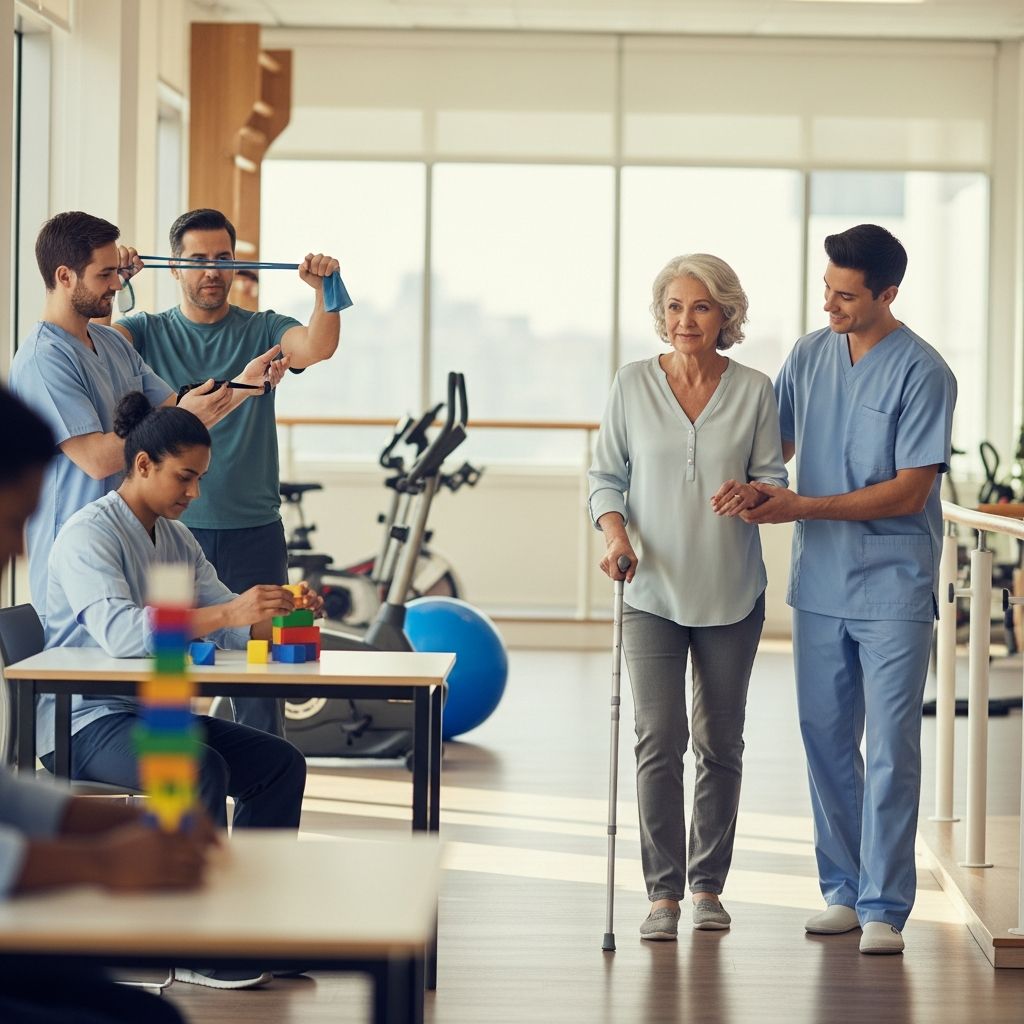
Stroke rehabilitation is a coordinated process designed to help survivors regain independence, restore function, and improve their quality of life. This comprehensive approach involves a multidisciplinary team of healthcare professionals working together to address the physical, cognitive, emotional, and social needs of stroke survivors and their caregivers.
The Multidisciplinary Rehabilitation Team
Effective stroke rehabilitation requires collaboration among various healthcare professionals, each bringing specialized expertise to support the survivor’s recovery journey. The rehabilitation team typically includes:
- Physicians specializing in neurology and physical medicine and rehabilitation
- Physical therapists who address mobility, balance, and movement
- Occupational therapists focusing on activities of daily living and functional independence
- Speech-language pathologists treating communication and swallowing disorders
- Nurses providing ongoing care and monitoring
- Psychologists addressing emotional and cognitive challenges
- Social workers assisting with discharge planning and community resources
- Recreation therapists facilitating meaningful activities and social participation
- Nutritionists ensuring proper dietary support during recovery
- Caregivers, family members, and the patient, whose active participation is essential
Communication and coordination among these team members are paramount in maximizing the effectiveness and efficiency of rehabilitation. Without seamless collaboration, isolated efforts to rehabilitate the stroke survivor are unlikely to achieve their full potential.
Phases of Stroke Rehabilitation
Stroke rehabilitation occurs across multiple phases of care, each with specific goals and therapeutic approaches.
Acute Hospitalization Phase
During the acute hospitalization phase, typically lasting only 4 days on average for ischemic stroke, initial rehabilitation efforts focus on preventing complications and preparing for discharge. Before leaving the hospital, all patients should undergo formal assessment of their rehabilitation needs, often conducted by occupational therapy, physical therapy, and speech-language pathology services.
Early mobilization after stroke is recommended in clinical practice guidelines worldwide, as it helps prevent complications such as blood clots, muscle weakness, and contractures. Positioning of the hemiplegic shoulder in maximum external rotation for 30 minutes daily can help prevent shoulder contracture. Serial casting or static adjustable splints may also be beneficial in preventing elbow or wrist contractures during this critical early phase.
Postacute Rehabilitation Phase
Following acute hospitalization, stroke survivors may transition to various rehabilitation settings depending on their medical needs and functional status. The largest proportion of stroke patients are referred to skilled nursing facilities (32%), followed by inpatient rehabilitation facilities (22%) and home health or community-based care (15%). Patients should remain in an inpatient setting if they require skilled nursing services, regular physician contact, and multiple therapeutic interventions.
Related Stories



Research demonstrates that subjects receiving care in inpatient rehabilitation facilities (IRFs) experienced significantly higher functional gains compared to those in skilled nursing facilities or receiving home-based care. Additionally, patients receiving more than 3 hours of therapy daily made significantly more functional gains than those receiving less intensive therapy, highlighting the importance of adequate rehabilitation dose and duration.
Chronic Recovery Phase
The chronic recovery phase extends beyond the immediate postacute period and may involve outpatient therapy, community-based programs, and ongoing self-management strategies. During this phase, focus shifts toward community reintegration, return to work or leisure activities, and long-term maintenance of functional gains.
Evidence-Based Rehabilitation Interventions
Contemporary stroke rehabilitation is grounded in scientific evidence demonstrating which interventions most effectively promote recovery and functional improvement.
Interventions with Strong Evidence
Several therapeutic approaches have demonstrated strong evidence for improving performance in activities of daily living and functional mobility:
- Mirror Therapy: Uses visual feedback through a mirror to facilitate motor learning and improve upper extremity function
- Task-Oriented Training: Focuses on practicing specific functional activities relevant to the individual’s goals
- Mental Imagery: Engages cognitive processes to enhance motor planning and movement preparation
- Balance Training: Systematically improves postural control and reduces fall risk
- Self-Management Strategies: Empowers patients to actively participate in their recovery process
- Multidisciplinary Three-Stage Rehabilitation Program: Provides coordinated, phased care across the recovery continuum
- Constraint-Induced Therapy: Shows strong evidence specifically for improving instrumental activities of daily living performance
Interventions with Moderate Evidence
Additional therapeutic approaches supported by moderate-strength evidence include cognitive-behavioral therapy (CBT) to address balance self-efficacy and improve confidence in movement. Long-term group interventions have demonstrated benefits for improving mobility in community settings, providing both therapeutic benefit and social support. Wearable upper extremity sensory devices paired with training games during inpatient rehabilitation can enhance social participation by improving communication and interaction abilities.
Problem-solving therapy combined with cognitive-behavioral approaches or integrated with education and family support programs addresses both practical challenges and emotional responses to stroke-related changes.
Early Supported Discharge Services
Early supported discharge (ESD) represents an innovative model that reduces inpatient length of stay while maintaining or improving functional outcomes. Research demonstrates that appropriately resourced ESD services for selected stroke patients can reduce long-term dependency, lower admission rates to institutional care, and decrease overall hospital stays without adversely affecting mood or subjective health status of patients and caregivers.
ESD services have been associated with shorter hospital lengths of stay, lower overall costs of care, reduced risk of institutionalization, and no adverse effects on functional recovery. However, the appropriateness of ESD depends on careful patient selection and adequate community resources to support the transition home.
Intensity and Duration of Rehabilitation
The dose and intensity of rehabilitation therapy significantly impact outcomes. Evidence from the AVERT trial 2016 suggests that shorter, more frequent therapy sessions may improve chances of regaining independence compared to longer, less frequent sessions. For example, research indicates that 10-minute interventions delivered 10 times daily showed more favorable outcomes than longer, more intense, less frequent therapy sessions when controlling for age and severity.
Many rehabilitation facilities have restructured their therapy models based on this evidence. The Johns Hopkins Acute Hospital Rehabilitation Intensive Service (ARISE) model, for instance, implements frequent, brief therapeutic sessions throughout the day to maximize motor learning and functional improvement based on this scientific evidence.
Adequate rehabilitation resources, appropriate dose, and sufficient duration are essential aspects of stroke care and should remain priorities even as healthcare systems evolve and face cost pressures. The long-term benefits of comprehensive rehabilitation—including reduced risk of downstream medical morbidity, depression, loss of autonomy, and reduced functional dependence—justify investment in quality rehabilitation programs.
Factors Affecting Rehabilitation Outcomes
Several patient factors consistently influence poststroke outcomes and should guide rehabilitation planning:
- Age: While age is a factor, it should not exclude older adults from rehabilitation
- Cognitive Function: Impacts learning ability and participation in therapy
- Functional Level at Stroke Onset: Pre-stroke functional status influences recovery potential
- Stroke Severity: Associated with acute discharge disposition and final functional level
- Continence Status: Shows associations with poststroke outcomes, though less consistently than other factors
- Location of Brain Injury: Left-sided brain injury and other anatomical factors influence recovery patterns
Interestingly, in recent years, lengths of stay in inpatient rehabilitation facilities have decreased significantly, yet patient satisfaction remains high and recovery may actually proceed more rapidly, suggesting that rehabilitation efficiency has improved.
Caregiver Support and Education
Caregivers play a vital role in stroke recovery and require education, support, and resources to fulfill their responsibilities effectively. Evidence-based approaches for caregiver support include educational programs that provide practical information about stroke, recovery expectations, and home management strategies.
Family support organizer programs and structured problem-solving interventions help caregivers navigate challenges that arise during the recovery process. These programs address both practical care tasks and the emotional burden that caregiving can impose, helping maintain caregiver health and reducing caregiver depression and stress.
Optimizing Rehabilitation Success
Successful stroke rehabilitation depends on several key factors working together harmoniously. Clear communication among all team members ensures coordinated, goal-directed care. Regular reassessment allows the rehabilitation plan to evolve as the patient progresses and priorities shift.
Patient and family engagement in the rehabilitation process enhances motivation, adherence, and outcomes. When survivors and their loved ones understand the rationale behind therapeutic interventions and actively participate in goal-setting, they invest more fully in the recovery process.
Individualized treatment plans tailored to each survivor’s unique deficits, abilities, and goals yield better outcomes than generic approaches. The rehabilitation program should address not only physical impairments but also cognitive, emotional, social, and vocational needs relevant to the individual’s circumstances.
Frequently Asked Questions
Q: When should stroke rehabilitation begin?
A: Rehabilitation often begins during the acute hospitalization phase, even while the patient is in the hospital. Early mobilization and positioning are recommended to prevent complications. Formal rehabilitation services typically intensify after the acute phase, with the specific timing and setting depending on the patient’s medical stability and rehabilitation needs.
Q: How long does stroke rehabilitation typically last?
A: Stroke rehabilitation is not a fixed-duration process. While acute hospitalization averages 4 days and inpatient rehabilitation may last weeks, recovery continues into the chronic phase for months or even years. Many survivors benefit from long-term community-based programs and ongoing self-management strategies to maintain and continue building on functional gains.
Q: Can rehabilitation help with stroke recovery years after the event?
A: Yes, research supports that stroke rehabilitation can benefit survivors even years after their stroke. Long-term group interventions and community-based programs have demonstrated effectiveness in improving mobility and function during the chronic recovery phase.
Q: What should I expect during inpatient rehabilitation?
A: During inpatient rehabilitation, you can expect multiple therapy sessions daily, including physical therapy, occupational therapy, and speech-language pathology services as needed. You’ll work with a multidisciplinary team toward individualized goals, receive education about your condition, and prepare for discharge to home or community settings.
Q: How can family members support the rehabilitation process?
A: Family members can support recovery by attending education sessions, learning recommended techniques, providing emotional support, encouraging participation in therapy, helping with practice of therapeutic exercises at home, and advocating for the survivor’s needs within the healthcare team.
Q: What happens after discharge from inpatient rehabilitation?
A: After discharge, survivors may transition to outpatient therapy, home health services, or community-based programs depending on their needs. Follow-up appointments with physicians and therapists help monitor progress, adjust treatments, and address any new concerns that arise during community reintegration.
References
- Occupational Therapy Practice Guidelines for Adults With Stroke — American Journal of Occupational Therapy, American Occupational Therapy Association. 2023-10-15. https://research.aota.org/ajot/article/77/5/7705397010/24977/Occupational-Therapy-Practice-Guidelines-for
- Guidelines for Adult Stroke Rehabilitation and Recovery — American Heart Association/American Stroke Association. 2016-06-01. https://www.ahajournals.org/doi/10.1161/str.0000000000000098
- Guidelines for Adult Stroke Rehabilitation and Recovery: A Guideline for Healthcare Professionals from the American Heart Association — Johns Hopkins University, Stroke Journal. 2016-06-01. https://pure.johnshopkins.edu/en/publications/guidelines-for-adult-stroke-rehabilitation-and-recovery-a-guideli
- Acute Hospital Rehabilitation Intensive Service (ARISE) Model of Care — Johns Hopkins Medicine, Sheikh Khalifa Stroke Institute. 2024. https://www.hopkinsmedicine.org/neurology_neurosurgery/centers_clinics/khalifa-stroke-institute
Similar Articles








Read full bio of medha deb