Stroke vs Heart Attack: Key Differences & Symptoms
Learn the critical differences between strokes and heart attacks, recognize warning signs, and know when to seek emergency care.
Stroke vs. Heart Attack: Understanding the Critical Differences
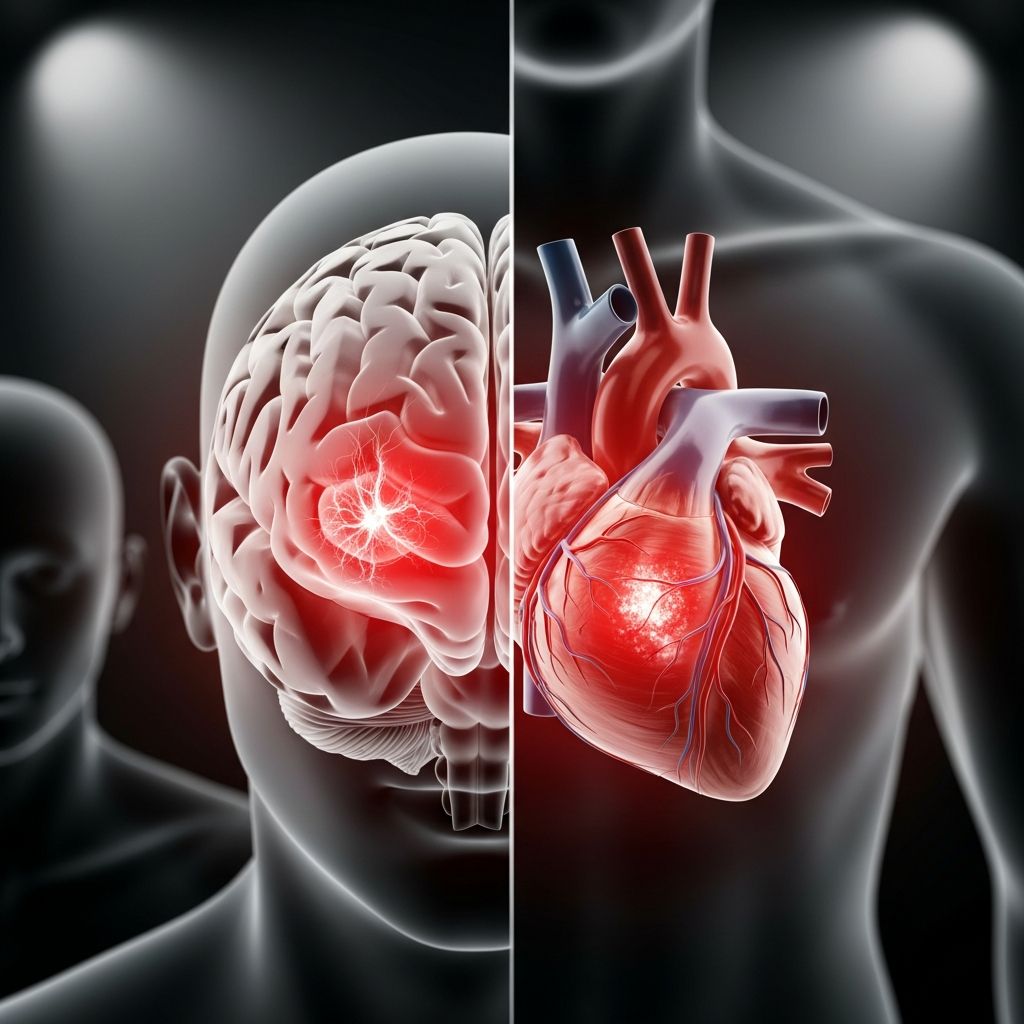
Strokes and heart attacks are both life-threatening medical emergencies that require immediate treatment, yet they are distinctly different conditions affecting different organs. While both involve blocked blood flow and can have overlapping symptoms, understanding their differences—including cause, symptoms, and emergency response—is essential for recognizing when to seek help. A stroke affects the brain, whereas a heart attack affects the heart. Knowing these distinctions can literally be the difference between life and death, as each condition demands rapid, targeted medical intervention.
What is a Heart Attack?
A heart attack occurs when blood flow to the heart is suddenly blocked, typically due to a blood clot forming in a coronary artery. This blockage prevents oxygen-rich blood from reaching the heart muscle, causing cells to begin dying within minutes. Heart attacks are primarily caused by coronary artery disease, where plaque buildup narrows the arteries supplying the heart. The lack of oxygen to the heart muscle can lead to serious complications, including heart failure, irregular heartbeat (arrhythmia), or even sudden cardiac death if immediate treatment is not provided.
What is a Stroke?
A stroke, sometimes called a “brain attack,” occurs when blood flow to the brain is suddenly interrupted. There are two main types of strokes. An ischemic stroke (approximately 87% of all strokes) happens when a blood clot blocks a blood vessel in the brain. A hemorrhagic stroke occurs when a blood vessel in the brain ruptures or bursts, causing bleeding into the surrounding brain tissue. In both cases, brain cells die within minutes due to lack of oxygen, potentially resulting in permanent brain damage affecting speech, movement, cognitive function, and other critical functions controlled by the affected brain region.
Key Differences Between Stroke and Heart Attack
Organ Affected
The most fundamental difference is which organ is impacted:
- Heart Attack: Damages the heart muscle through blocked coronary arteries
- Stroke: Damages brain tissue through blocked or burst cerebral blood vessels
Cause of the Event
While both involve blood flow blockage, the underlying causes differ:
- Heart Attack: Typically caused by a blood clot blocking a coronary artery, often related to atherosclerosis (plaque buildup)
- Stroke: Caused by either a clot (ischemic stroke) blocking a cerebral artery or a ruptured blood vessel (hemorrhagic stroke)
Type of Damage
The consequences of each condition manifest differently:
- Heart Attack: Damage to heart muscle tissue can result in heart failure, irregular heart rhythms, or weakened heart function
- Stroke: Brain cell damage can affect speech, movement, memory, cognition, vision, and other neurological functions depending on the stroke location
Emergency Response Priority
Treatment approaches emphasize different urgency factors:
- Heart Attack: Restoring blood flow to the heart muscle to prevent permanent cardiac damage is the priority
- Stroke: Restoring oxygen to the brain and preventing additional brain cell death is critical; the FAST test helps identify stroke symptoms quickly
Heart Attack Symptoms to Recognize
Heart attack symptoms can develop suddenly or gradually over hours or even days. Recognizing these warning signs is crucial for seeking timely emergency care:
Related Stories



Classic Heart Attack Symptoms
- Chest discomfort or pain: Most heart attacks involve uncomfortable pressure, squeezing, fullness, or pain in the center of the chest that lasts more than a few minutes or comes and goes
- Upper body discomfort: Pain or discomfort in one or both arms, the back, neck, jaw, or stomach
- Shortness of breath: May occur with or without chest discomfort
- Cold sweats: Breaking out in a cold sweat without obvious cause
- Nausea or vomiting: Digestive symptoms without explanation
- Lightheadedness or dizziness: Feeling faint or dizzy
Heart Attack Symptoms in Women
Women often experience different or additional symptoms that may be overlooked or misinterpreted, delaying critical treatment:
- Shortness of breath with or without chest discomfort
- Back or jaw pain
- Unusual or extreme fatigue
- General weakness
- Nausea or indigestion
- Dizziness or fainting
- Chest discomfort that is mild or completely absent
Stroke Symptoms: The FAST Test
Recognizing stroke symptoms quickly is vital because brain cells die rapidly when deprived of oxygen. The FAST test is a simple tool to identify potential stroke victims:
FAST Acronym
- F – Face Drooping: Ask the person to smile and look for facial drooping, usually on one side
- A – Arm Weakness: Have them raise both arms; check for arm drift or weakness, typically on one side
- S – Speech Difficulty: Ask them to repeat a simple phrase; listen for slurred or abnormal speech
- T – Time: If any of these signs appear, call 911 immediately—time is critical in stroke treatment
Additional Stroke Symptoms
Beyond FAST symptoms, people experiencing a stroke may also have:
- Sudden numbness or weakness, especially on one side of the body
- Sudden confusion or difficulty understanding speech
- Trouble seeing in one or both eyes, including sudden vision loss
- Sudden difficulty walking, loss of balance, or lack of coordination (especially in cerebellar strokes, which are often harder to recognize)
- Sudden, severe headache with no known cause
- Dizziness
Stroke Symptoms in Women
Women may experience additional or atypical stroke symptoms that are sometimes overlooked:
- General weakness or fatigue
- Confusion, disorientation, or memory problems
- Nausea or vomiting
- Hiccups
- Racing heartbeat or palpitations
- Chest discomfort
Comparing Symptoms: Heart Attack vs. Stroke
| Heart Attack Symptoms | Stroke Symptoms |
|---|---|
| Chest discomfort, pressure, squeezing, or pain | Drooping face or facial paralysis (usually one side) |
| Upper body discomfort (arms, upper back, stomach, neck) | Arm weakness (usually one side) |
| Shortness of breath | Difficulty speaking or understanding speech |
| Cold sweat | Severe headache with no known cause |
| Lightheadedness | Trouble seeing |
| Nausea or vomiting | Trouble walking or loss of balance |
Can Someone Have Both a Stroke and a Heart Attack Simultaneously?
While uncommon, it is possible for someone to experience both a stroke and a heart attack at the same time. This could occur in individuals with severe cardiovascular disease, particularly those with atrial fibrillation or other cardiac conditions that increase clot formation risk. Additionally, certain medications used to treat one condition could theoretically increase risk for the other in susceptible individuals. If someone shows symptoms of both conditions, medical professionals will prioritize treatment based on the severity of each condition and the individual’s overall health status.
Why Time Matters: The “Golden Hour”
Both stroke and heart attack treatment depend critically on rapid intervention. Medical professionals emphasize the “golden hour”—the first 60 minutes after symptom onset—because:
- For Heart Attacks: Prompt treatment restores blood flow, limiting damage to heart muscle and improving survival rates
- For Strokes: Rapid treatment with clot-busting medications (thrombolytics) or mechanical clot removal can minimize brain damage and disability
Every minute counts. Delays in seeking treatment significantly increase the risk of death, permanent disability, or severe complications from either condition.
Risk Factors and Prevention
Understanding shared and unique risk factors can help with prevention:
Shared Risk Factors
- High blood pressure
- High cholesterol
- Diabetes
- Smoking
- Obesity
- Sedentary lifestyle
- Family history of cardiovascular disease
Condition-Specific Risk Factors
- Heart Attack: Age, gender, previous heart attacks, stress
- Stroke: Atrial fibrillation, previous stroke, severe headache conditions
Frequently Asked Questions
Q: What should I do if I suspect someone is having a heart attack?
A: Call 911 immediately. Have the person sit down and rest while waiting for emergency services. If they have prescribed aspirin, they may chew one while awaiting help (unless contraindicated). Do not delay calling emergency services.
Q: What should I do if I suspect someone is having a stroke?
A: Call 911 immediately and note the time symptoms began. Use the FAST test to identify stroke signs, but do not attempt home treatment. Rapid hospital transport is essential for effective stroke therapy, which must begin within a specific timeframe of symptom onset.
Q: Are heart attacks and strokes hereditary?
A: Yes, family history increases risk for both conditions. If you have relatives who experienced heart attacks or strokes, inform your healthcare provider and discuss preventive measures, lifestyle modifications, and appropriate screening.
Q: Can young people have heart attacks or strokes?
A: Yes, while these conditions are more common with age, they can occur in younger individuals, particularly those with risk factors like smoking, drug use, high blood pressure, high cholesterol, diabetes, or family history.
Q: How can I reduce my risk of heart attack and stroke?
A: Maintain a healthy diet, exercise regularly, manage blood pressure and cholesterol, avoid smoking, limit alcohol, manage stress, maintain healthy weight, and control diabetes if present. Regular medical check-ups and following healthcare provider recommendations are also important.
References
- Heart Attack, Stroke and Cardiac Arrest Symptoms — American Heart Association. 2024. https://www.heart.org/en/about-us/heart-attack-and-stroke-symptoms
- Stroke vs Heart Attack: How to Tell the Difference — Solace Health. 2024. https://www.solace.health/articles/stroke-vs-heart-attack-differences
- Is It a Stroke or a Heart Attack? — Healthline. 2024. https://www.healthline.com/health/stroke-vs-heart-attack
- Are Strokes and Heart Attacks the Same? — Hackensack Meridian Health. 2023. https://www.hackensackmeridianhealth.org/en/healthu/2023/05/03/are-strokes-and-heart-attacks-the-same
- The Difference Between a Heart Attack and a Stroke — Lifework Behavioral Health. 2024. https://lifework.edu/blog/heart-attack-vs-stroke
Similar Articles








Read full bio of medha deb