Stucco Keratosis: Expert Guide To Diagnosis & Treatment
Benign skin lesions with a stuck-on appearance, common on distal limbs in older fair-skinned men.
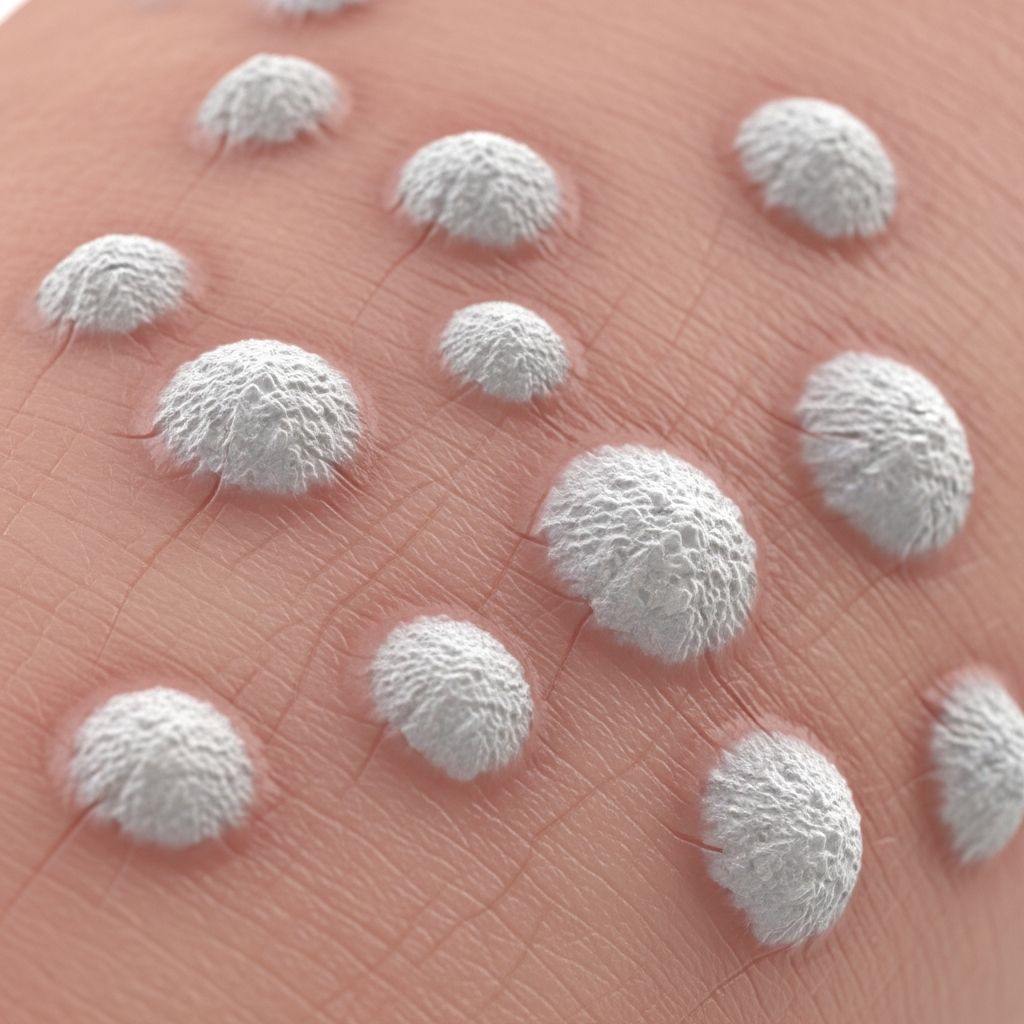
Stucco keratosis is a type of benign, papular skin lesion that has a characteristic ‘stuck on’ appearance and commonly affects the distal limbs of elderly men.
What is stucco keratosis?
Stucco keratosis, also known as keratosis alba, keratoelastoidosis verrucosa, or verruca dorsi manus et pedis, represents acquired, focal abnormalities of skin keratinisation. These lesions are small, superficial, wart-like growths that appear firmly attached to the skin surface, resembling small pieces of stucco plaster. They are typically asymptomatic and harmless, often going unnoticed until observed during routine skin checks.
Prevalence is estimated at 7–20%, potentially underestimated due to their inconspicuous nature. The condition peaks in individuals aged 40–60 years, with males affected four times more frequently than females. It predominantly occurs in fair-skinned people.
Who gets stucco keratosis (demographics)?
Stucco keratosis most commonly affects fair-skinned individuals over 40 years old, with peak incidence between 40–60 years. Males are four times more likely to develop these lesions compared to females. The condition is more prevalent in older adults, aligning with age-related skin changes.
- Age: Primarily over 40 years, peaking at 40–60.
- Sex: More common in men (4:1 ratio).
- Skin type: Fair-skinned individuals.
- Prevalence: 7–20% in at-risk populations.
Clinical features (presentation) of stucco keratosis
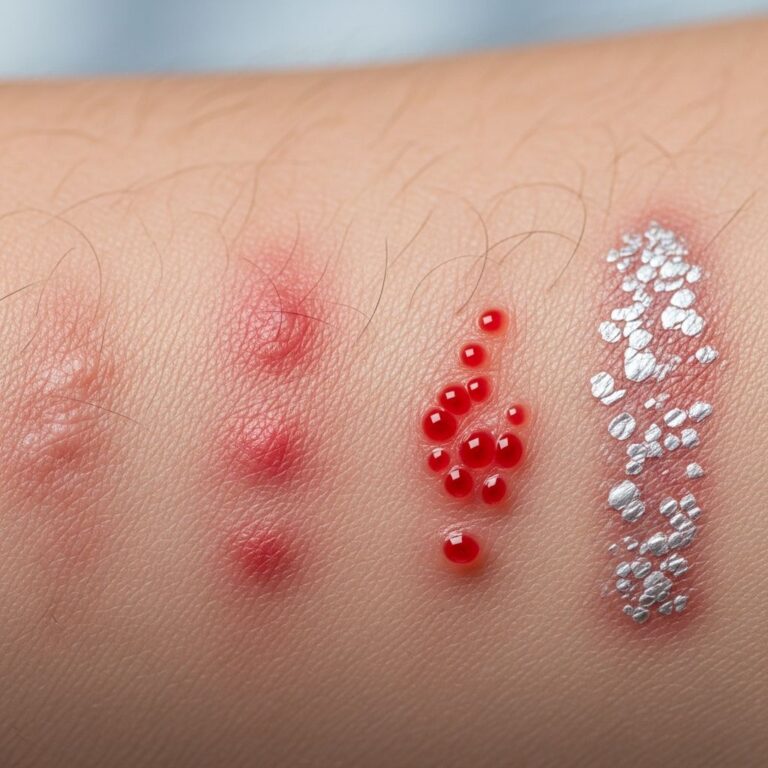
Lesions are small (1–5 mm), white to grey-brown, dry, scaly papules with a rough, ‘stuck-on’ surface. They cluster on the dorsal surfaces of the feet and ankles, occasionally extending to the lower legs, thighs, or hands. The appearance is often compared to a gritty, adherent plaque that can be scraped off with minor friction.
Key characteristics:
- Size: 1–5 mm diameter.
- Colour: White, grey, tan, brown, or black.
- Texture: Rough, warty, stuck-on.
- Symmetry: Often bilateral and multiple.
- Sites: Distal lower limbs (ankles, feet dorsum), rarely hands or face.
Lesions are usually asymptomatic but may cause cosmetic concern or mild irritation from friction. They do not itch, bleed, or grow rapidly.
Variation in skin types
In fair skin types (Fitzpatrick I–II), lesions appear as prominent white-grey papules. On darker skin (Fitzpatrick IV–VI), they may present as subtle hyperpigmented or skin-toned plaques, sometimes mistaken for other keratoses. Dry, ichthyotic skin exacerbates visibility.
Images
Typical images show multiple small, adherent, whitish papules on the ankle and foot dorsum, with a rough surface resembling cemented gravel.
Diagnosis of stucco keratosis
Diagnosis is clinical, based on characteristic appearance and location. No biopsy is routinely needed for typical cases, as lesions are benign and distinctive. Dermoscopy reveals a mosaic-like pattern with keratin crypts and ridges.
Differential diagnoses
| Condition | Key Distinguishing Features |
|---|---|
| Seborrheic keratosis | Larger, broader-based, ‘stuck-on’ plaques; horn cysts on histology; more truncal. |
| Actinic keratosis | Red, scaly, tender; sun-exposed; pre-malignant risk. |
| Lichen spinulosus | Follicular spines; trunk/extremities; younger patients. |
| Porokeratosis | Thread-like border; annular; genetic. |
| Verruca plana | Flat warts; HPV-driven; face/hands. |
| Multiple filiform keratosis | Thread-like projections; perioral/periungual. |
Histology, if performed, shows compact orthokeratosis, papillomatosis, and acanthosis without horn cysts or basaloid cells, distinguishing from seborrheic keratosis. Recent genetic studies identify PIK3CA mutations, linking it to seborrheic keratosis variants.
Related Stories



Complications of stucco keratosis
Stucco keratosis is entirely benign with no malignant potential. Complications are rare but include:
- Cosmetic distress from visible clustering.
- Mechanical irritation or friction in shoe areas.
- Diagnostic confusion leading to unnecessary biopsies.
Management and treatment of stucco keratosis
Treatment is unnecessary unless for cosmesis. Options include:
- Curettage: Simple scraping under local anaesthesia; most common.
- Cryotherapy: Liquid nitrogen freezing; quick for multiple lesions.
- Topical therapies: Salicylic acid, urea, or retinoids for mild cases.
- Laser ablation: CO2 or erbium for precise removal.
- Electrosurgery: Cautery for small clusters.
No systemic treatment exists; recurrence is possible post-removal. Patient education emphasizes benign nature.
Prevention of stucco keratosis
Prevention is challenging due to unknown etiology, but strategies target risk factors:
- Sun protection: Broad-spectrum SPF 50+ on exposed limbs.
- Moisturize dry skin to reduce ichthyosis.
- Avoid chronic friction from ill-fitting shoes.
- Regular skin checks for early detection.
No proven preventive measures fully eliminate risk.
Outcome and prognosis
Excellent; lesions persist chronically but remain harmless. Removal is curative for treated sites, though new lesions may develop with age. No impact on life expectancy or systemic health.
Frequently Asked Questions (FAQs)
Q: Is stucco keratosis cancerous?
A: No, it is a completely benign condition with no malignant potential.
Q: Does stucco keratosis itch or hurt?
A: Typically asymptomatic; rarely irritated by friction.
Q: Who is most at risk for stucco keratosis?
A: Fair-skinned men over 40, especially with sun exposure history.
Q: Can stucco keratosis be prevented?
A: Not fully, but sun protection and skin hydration help mitigate risks.
Q: Is treatment always needed?
A: No, only for cosmetic reasons; it is harmless.
Q: What causes stucco keratosis?
A: Unknown, but linked to sun exposure, aging, genetics, and skin friction.
References
- Causes and Treatments of Stucco Keratosis Skin Condition — Skin Cancer Specialists. 2023. https://skincancer-specialists.com/blog/stucco-keratosis-causes-treatment/
- Stucco Keratosis Uncovered: Understanding and Managing — Clinikally. 2024. https://www.clinikally.com/blogs/news/stucco-keratosis-uncovered-understanding-and-managing-this-common-skin-condition
- Stucco Keratosis — Bray Podiatry. 2023. https://www.braypodiatry.com/stucco-keratosis
- Stucco keratosis (keratosis alba) — Dermatology Advisor. 2024. https://www.dermatologyadvisor.com/home/decision-support-in-medicine/dermatology/stucco-keratosis-keratosis-alba/
- Stucco Keratosis — DermNet NZ (Primary Dermatology Resource). 2024-10-15. https://dermnetnz.org/topics/stucco-keratosis
- Stucco Keratosis — Cleaver Dermatology. 2023. https://www.cleaverdermatology.com/stucco-keratosis
- Stucco keratosis — Primary Care Dermatology Society. 2021-11-19. https://www.pcds.org.uk/clinical-guidance/stucco-keratosis
Similar Articles








Read full bio of medha deb