Stye Treatment: Home Remedies and Medical Options
Complete guide to treating styes: from warm compresses to medical interventions.
Understanding Styes and Treatment Options
A stye, medically known as a hordeolum, is a painful and often bothersome inflammation that develops on the eyelid or at the base of the eyelashes. This condition occurs when an oil gland in the eyelid becomes blocked, allowing bacteria to accumulate and create an infection. The resulting bump resembles an acne pimple and can cause significant discomfort, redness, and swelling. While styes are generally not dangerous and typically resolve within one to two weeks on their own, several treatment options can help speed up recovery and alleviate symptoms.
Home Remedies for Stye Relief
Many people successfully manage stye symptoms at home without medical intervention. These natural approaches are safe, effective, and often provide immediate relief while supporting the body’s natural healing process.
Warm Compresses: The Most Effective Home Treatment
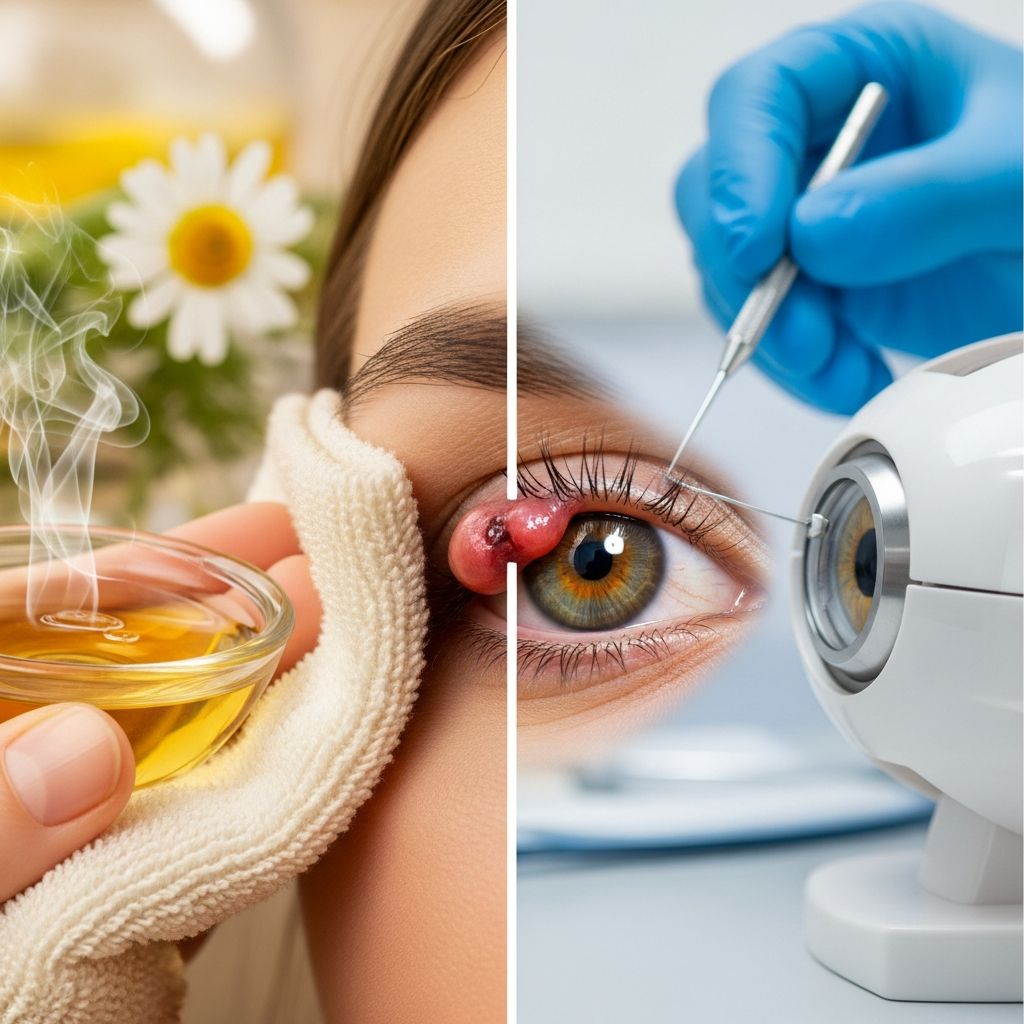
Applying a warm compress is widely considered the most effective home remedy for treating a stye. The warmth helps promote drainage by softening the blockage and encouraging the stye to open naturally. To use this method effectively, apply a clean, warm washcloth to your closed eye for 5 to 10 minutes. The water should be warm but not scalding to avoid burns. After applying the compress, gently massage the eyelid to further encourage drainage. For optimal results, repeat this process 2 to 3 times daily. Healthcare professionals recommend applying warm compresses for 10 to 15 minutes, 3 to 4 times daily, particularly for more persistent cases.
Proper Eyelid Hygiene
Maintaining excellent eyelid hygiene is crucial for both treating current styes and preventing future ones. Clean the eyelid margins regularly using diluted baby shampoo or a commercial lid scrub solution. This practice reduces debris and bacterial load around the affected area. Always use clean hands when touching the eye area and avoid sharing towels, eye makeup, or contact lenses with others, as styes can spread through contaminated items.
Over-the-Counter Pain Management
Pain associated with styes can be managed effectively using over-the-counter nonsteroidal anti-inflammatory drugs (NSAIDs) such as ibuprofen or acetaminophen. These medications not only relieve pain but also help reduce inflammation and swelling around the affected eye. Follow the dosage instructions on the package, and consult a pharmacist if you have questions about which medication is best for you.
OTC Stye Remedies
Many drugstores carry specialized ointments, solutions, and medicated pads designed to provide relief from stye symptoms. While these products won’t heal the stye completely, they can ease discomfort and provide a soothing effect. Always apply these remedies with clean hands to avoid introducing additional bacteria to the area.
When Home Remedies Aren’t Enough
While most styes respond well to conservative home care, some require medical intervention. Certain situations warrant a visit to your eye doctor or healthcare provider.
Signs You Need Medical Attention
Seek professional medical care if you experience any of the following:
- Vision problems or difficulty seeing
- The eyelid swells shut
- Blood oozing from the eyelid or stye
- Stye symptoms that don’t improve after one week of home treatment
- Severe pain that interferes with daily activities
- Signs of spreading infection
Antibiotic Treatment
Eye doctors frequently prescribe antibiotics for styes that don’t resolve with conservative treatment or show signs of secondary infection. Antibiotic eye drops or topical creams are typically the first choice and are applied directly to the eyelid margin 2 to 4 times daily. Common antibiotic options include erythromycin 0.5% and bacitracin ointment. In cases where the infection has spread beyond the eyelid or involves preseptal cellulitis, oral antibiotics may be prescribed. These typically include amoxicillin-clavulanate (500–875 mg orally twice daily) or doxycycline (100 mg orally once or twice daily). Doxycycline is particularly beneficial for patients with associated meibomian gland dysfunction or rosacea. Treatment courses typically last 7 to 10 days.
Related Stories



It is important to use the correct antibiotic for the specific bacterium causing the infection. Patients should not reuse old antibiotics, as the bacteria may have developed resistance, and the wrong medication could worsen the condition.
Steroid Injections
For particularly stubborn styes, doctors may recommend steroid injections directly into the affected area. Intralesional corticosteroid injections, such as triamcinolone acetonide (0.05–0.2 mL of 10–40 mg/mL solution), help reduce inflammation and expedite the healing process. Topical steroid creams and eye drops may also be beneficial, but patients should consult with their eye doctor before using these treatments.
Surgical Options for Persistent Styes
When conservative and medical management fail to resolve a stye within 1 to 2 weeks, surgical intervention may be necessary. These procedures are performed by ophthalmologists and offer more definitive solutions for severe or chronic cases.
Incision and Drainage
If a stye develops into a significant abscess or fails to resolve with other treatments, an eye doctor may perform a minor surgical procedure involving incision and drainage. This procedure involves making a small cut to allow pus to drain, providing immediate relief and promoting rapid healing. The procedure is quick, relatively painless, and often results in significant symptom improvement within hours.
Managing Recurrent Styes
For patients who experience frequent stye recurrences, addressing underlying risk factors is essential. Long-term lid hygiene practices, including regular warm compresses and cleaning routines, are critical. In chronic cases, low-dose doxycycline (20–40 mg once daily) may be prescribed as a preventive measure. This approach addresses any underlying meibomian gland dysfunction or blepharitis that may predispose the eyelid to recurrent infections.
Understanding Stye Complications
While rare, untreated or recurrent styes can lead to more serious complications. In some cases, a stye can evolve into a chalazion, a chronic, noninfectious granulomatous lesion that may require different treatment approaches. Even more rarely, a stye can cause a systemic infection that spreads to other areas of the body, particularly in individuals with compromised immune systems. In such instances, oral or intravenous antibiotics may become necessary.
Prevention Strategies
Preventing styes is far easier than treating them. Implement these strategies to reduce your risk of developing this painful condition:
- Practice excellent hand hygiene before touching your eyes
- Remove eye makeup completely before bedtime
- Replace eye makeup regularly and don’t share makeup with others
- Clean contact lenses properly and follow all care instructions
- Maintain eyelid hygiene with regular gentle cleaning
- Avoid touching or rubbing your eyes excessively
- Replace eye makeup applicators frequently
- Use clean towels and pillowcases
Treatment Timeline and Expectations
Most styes follow a predictable course. The condition typically develops over a few days due to gland blockage and bacterial colonization. In most cases, the lesion progresses to form a small abscess that either drains spontaneously or resolves with conservative treatment within one to two weeks. With proper home care and warm compress application, many styes resolve completely without requiring medical intervention. However, particularly large styes or those complicated by secondary infections may require medical treatment to prevent complications and speed recovery.
Treatment Comparison Table
| Treatment Method | Effectiveness | Timeline | Cost | Best For |
|---|---|---|---|---|
| Warm Compresses | High for mild cases | 3-5 days | Minimal | Initial treatment, all cases |
| OTC Pain Medication | Moderate for symptoms | Hours | Low | Pain and swelling relief |
| Topical Antibiotics | High for infected styes | 7-10 days | Moderate | Secondary infections |
| Oral Antibiotics | High for severe cases | 7-10 days | Moderate | Spreading infections |
| Steroid Injections | Very high for inflammation | 3-7 days | High | Persistent, painful styes |
| Surgical Drainage | Very high, immediate relief | Hours | High | Abscess, failed conservative treatment |
Frequently Asked Questions About Stye Treatment
Q: How long does a stye typically last?
A: Most styes resolve within one to two weeks on their own. However, with proper treatment using warm compresses and good hygiene, recovery can be expedited. Some persistent styes may take longer and require medical intervention.
Q: Can I wear contact lenses while I have a stye?
A: It’s best to avoid wearing contact lenses while you have an active stye. Contacts can irritate the condition and potentially spread the infection. Switch to glasses temporarily and resume contact lens use only after the stye has completely healed.
Q: Is a stye contagious?
A: While the stye itself isn’t contagious from person to person, the bacteria that cause it can spread through contaminated items like eye makeup, towels, or contact lens cases. Practice good hygiene and avoid sharing personal items to prevent spreading infection.
Q: Can I pop or squeeze a stye like a pimple?
A: No, you should never attempt to pop or squeeze a stye. This can spread the infection, cause scarring, and worsen the condition. Let the stye drain naturally with warm compress treatment or allow a healthcare professional to perform drainage if necessary.
Q: When should I see a doctor about my stye?
A: Seek medical attention if your stye doesn’t improve after one week of home treatment, if it causes vision problems, if the eyelid swells shut, if there’s bleeding, or if you experience severe pain. Also consult a doctor if you have frequent recurrent styes.
Q: Are there any complications from untreated styes?
A: While rare, untreated styes can lead to complications such as chalazion formation, preseptal cellulitis, or in very rare cases, systemic infection. This is why seeking timely medical attention for severe or persistent styes is important.
Q: What’s the difference between a stye and a chalazion?
A: A stye (hordeolum) is an acute, painful bacterial infection of an eyelid oil gland. A chalazion is a chronic, noninfectious inflammation that can develop if a stye is left untreated. Chalazia are typically painless but may require different treatment approaches.
References
- How to treat or get rid of a stye — Medical News Today. 2023-01-10. https://www.medicalnewstoday.com/articles/327418
- Hordeolum (Stye) – StatPearls — National Center for Biotechnology Information (NCBI), National Library of Medicine. 2024-01-15. https://www.ncbi.nlm.nih.gov/books/NBK459349/
- Stye (sty) – Diagnosis & treatment — Mayo Clinic. 2024-11-30. https://www.mayoclinic.org/diseases-conditions/sty/diagnosis-treatment/drc-20378022
Similar Articles








Read full bio of Sneha Tete