Subchorionic Hematoma: Causes, Symptoms & Treatment
Understanding subchorionic hematoma: causes, symptoms, and effective treatment options for pregnant women.
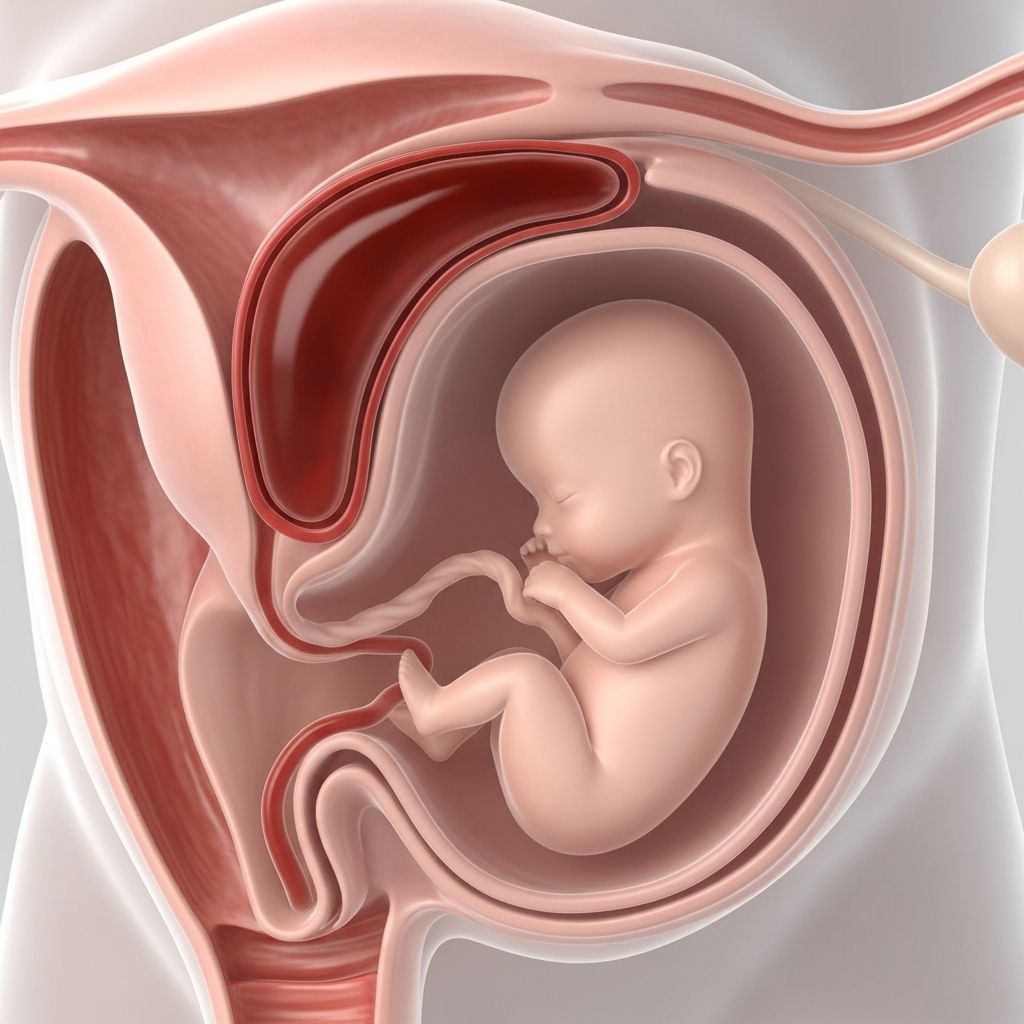
A subchorionic hematoma is when blood collects under the chorion membrane during pregnancy. This membrane attaches the mother’s uterine wall to her baby’s amniotic sac. The most common symptom is vaginal bleeding, though some people experience no symptoms at all. Most subchorionic hematomas resolve on their own without causing pregnancy complications, offering reassurance to expectant mothers who receive this diagnosis.
What is a Subchorionic Hematoma?
A subchorionic hematoma, also called subchorionic hemorrhage or subchorionic bleeding, is when blood forms between the wall of your uterus and the chorionic membrane during pregnancy. The chorionic membrane is the outermost layer separating your baby’s amniotic sac from the wall of your uterus. This blood collection represents a partial detachment of the chorion membrane from the uterine wall, which can range from small to large in size.
The amniotic sac, or the bag of waters, is where your baby develops in your uterus. When the chorionic membrane separates from the uterine wall, blood accumulates in the space between these structures, creating what healthcare providers call a subchorionic hematoma. Despite its clinical-sounding name, this condition is quite common and frequently benign.
Subchorionic hematoma and subchorionic hemorrhage are the most common cause of vaginal bleeding in patients who are 10 to 20 weeks gestational age and make up about 11% of cases. This prevalence means that many pregnant women will encounter this diagnosis, making it important to understand what it means for their pregnancy.
Symptoms and Diagnosis
Common Symptoms
The most common symptom of a subchorionic hematoma is vaginal bleeding in the first half of pregnancy. The bleeding can range from heavy with clotting to light spotting. Some women experience vaginal discharge or the discharge of tissue from the vagina. However, it’s important to note that many people experience no bleeding at all, and the hematoma is discovered during a routine ultrasound.
Most women present with light vaginal bleeding, but some are asymptomatic with incidental ultrasound findings. Pain and cramping in the lower abdomen may occur, though this is usually not the case. Some women report no longer experiencing symptoms of early pregnancy, such as nausea or breast tenderness, which can be concerning but doesn’t necessarily indicate a problem with the pregnancy.
How Diagnosis is Made
Diagnosis of a subchorionic hematoma is typically made through ultrasound imaging. During a routine prenatal ultrasound, the healthcare provider can visualize the blood collection between the chorion membrane and the uterine wall. If you experience any bleeding during pregnancy, your healthcare provider will perform an ultrasound to determine the cause and rule out any serious complications.
The size and location of the hematoma can be assessed through ultrasound, which helps healthcare providers determine the appropriate management plan. In some cases, the hematoma may be discovered incidentally during a regular prenatal scan when the pregnant woman has no symptoms.
Related Stories



Causes and Risk Factors
Understanding the Causes
Healthcare providers are not entirely sure what causes the separation of the chorion membrane from the uterine wall to occur. However, certain conditions may put you at a higher risk of developing a subchorionic hematoma. The etiology of subchorionic hematoma remains unclear, but it’s thought to occur due to partial detachment of the chorion membranes from the wall of the uterus.
Risk Factors Associated with Subchorionic Hematoma
Several factors have been associated with a subchorionic hematoma:
- Malformation of the uterus
- History of recurrent miscarriages
- History of pelvic infections
- Trauma to the abdomen
- Early-onset preeclampsia
- Severe high blood pressure or maternal hypertension
- In vitro fertilization (IVF)
- Maternal abuse of vasoactive drugs such as cocaine or amphetamines
On rare occasions, there will be an underlying cause such as a maternal coagulation disturbance, history of trauma, severe maternal hypertension or early-onset preeclampsia. There is also a case report of a large subchorionic hematoma occurring after thrombolytic therapy during pregnancy.
Possible Complications
Subchorionic bleeding may increase your chances of pregnancy complications. Some of the possible complications include preterm labor, early miscarriage, and in rare cases, more serious pregnancy problems. However, it’s crucial to understand that most subchorionic hematomas resolve on their own without intervention and don’t cause complications to the pregnancy.
The risk of complications may depend on the size of the hematoma and other individual pregnancy factors. Larger hematomas may carry a higher risk of adverse outcomes compared to smaller ones. However, many women with even large hematomas go on to have successful pregnancies.
Treatment and Management Options
General Management Principles
Most subchorionic hematomas go away on their own, much like a bruise under the skin dissolves. Your healthcare provider will evaluate your hematoma and determine if treatment is necessary based on several factors, including the size of the hematoma and how far along you are in pregnancy. Treatment and management should focus on specific patient complaints, gestational age, and whether the patient is hemodynamically stable or unstable.
Many subchorionic hematomas will slowly dissolve without treatment. When this occurs, a mother may experience dark red or brown vaginal discharge. Unfortunately, there are not any medications which can aid in the healing of the clot.
Before 20 Weeks Gestation
When a subchorionic bleed is suspected prior to 20 weeks’ gestation, healthcare providers typically recommend reduced activity and advise against any travel. Your doctor may recommend that you reduce your activity levels and any travel. If you’re bleeding, cramping, or having contractions, they may recommend hospitalization.
During this early stage of pregnancy, conservative management with monitoring and follow-up ultrasound scans is often the recommended approach. Regular ultrasounds help track the progression of the hematoma and ensure the baby is developing normally.
After 20 Weeks Gestation
After 20 weeks of pregnancy, management may shift to include more active monitoring and preparation for potential complications. Your doctor will teach you the signs and symptoms of early labor. Your treatment may include RhoGAM (if you are Rh-negative and your baby is Rh-positive), sonograms about once a month or more often to check your baby’s growth, and preterm labor treatment if you start having contractions.
Hospitalization may be necessary, especially if bleeding occurs after 24 weeks. Maternal education regarding signs and symptoms of preterm labor becomes increasingly important at this stage of pregnancy.
Specific Treatment Approaches
Some possible treatments for subchorionic hematomas include:
- RhoGAM injection: If you are Rh-negative and your baby is Rh-positive, you will be offered an injection of anti-D immunoglobulin. Those patients who present with vaginal bleeding and are RhD negative should be given anti-D immune globulin for protection against alloimmunization in subsequent pregnancies. If you have had bleeding after 12 weeks of pregnancy and are rhesus negative, you will be offered this injection, side effects of which include uncommon symptoms like chills, fever, headache, and tiredness.
- Progesterone pessaries: You may be offered progesterone pessaries to insert into the vagina, although the benefits of this for subchorionic hematoma have not been proven. However, if you have had a previous miscarriage and have any bleeding in early pregnancy, progesterone pessaries can help improve the outcome of the pregnancy and will be offered.
- Regular ultrasound monitoring: Sonograms are used to assess fetal growth, usually about once a month, but sometimes more often, based on the appearance and size of the suspected bleed and other maternal factors.
- Preterm labor treatment: If contractions occur after 20-22 weeks, treatment for preterm labor may be initiated.
- Hospitalization: In cases of significant bleeding or other complications, hospitalization may be recommended.
Treatments should be tailored to the patient, the type and severity of their symptoms, as well as the size and location of the subchorionic hematoma. Evidence for other treatment options is limited, so healthcare providers typically focus on symptom management and close monitoring.
Recovery and Healing Time
There is no set amount of time for how long it takes a subchorionic hematoma to heal. In some cases, it will shrink in size on its own over a few weeks without causing any complications. Other times the hematoma can be large and problematic. Your healthcare provider may be able to predict if your subchorionic hematoma will resolve after an evaluation and ultrasound.
The healing process is similar to how a bruise on your skin heals naturally over time. As the hematoma resolves, the blood is gradually reabsorbed by the body. During this process, you may notice changes in your vaginal discharge, including darker colors as old blood is expelled.
When to Contact Your Healthcare Provider
Contact your healthcare provider immediately if you experience bleeding during pregnancy. Finding the cause of vaginal bleeding as early as possible is always better. Additionally, seek immediate medical attention if you experience:
- Heavy vaginal bleeding with large clots
- Severe abdominal or pelvic pain
- Dizziness or fainting
- Signs of preterm labor, such as regular contractions before 37 weeks
- Vaginal discharge of tissue
- Loss of pregnancy symptoms accompanied by severe symptoms
Frequently Asked Questions
Q: What is the difference between a subchorionic hematoma and a miscarriage?
A subchorionic hematoma is bleeding between the chorion membrane and the uterine wall, while a miscarriage is the loss of the pregnancy itself. Having a subchorionic hematoma does not mean you will have a miscarriage, though bleeding is a symptom of both conditions. Your healthcare provider can determine what is happening through ultrasound imaging.
Q: Can a subchorionic hematoma affect my baby?
Most subchorionic hematomas do not cause harm to the baby and resolve on their own. However, in rare cases, a large hematoma may increase the risk of complications such as preterm labor or miscarriage. Your healthcare provider will monitor both you and your baby throughout your pregnancy.
Q: Is bed rest recommended for a subchorionic hematoma?
While complete bed rest is not always necessary, reduced activity and avoiding strenuous exercise are typically recommended, especially in the early stages of pregnancy. Your healthcare provider will give you specific recommendations based on the size of your hematoma and other individual factors.
Q: Are there medications that can help a subchorionic hematoma heal faster?
Unfortunately, there are no medications that can directly aid in the healing of a subchorionic hematoma clot. Most hematomas dissolve naturally over time. Progesterone may be offered if you have a history of miscarriage, but its effectiveness specifically for subchorionic hematoma has not been proven.
Q: Will I need more frequent ultrasounds if I have a subchorionic hematoma?
Yes, your healthcare provider will likely recommend more frequent ultrasounds than typical prenatal care to monitor the size and progression of the hematoma and ensure your baby is developing normally. These are usually scheduled about once a month or more frequently depending on the circumstances.
Q: Can I exercise with a subchorionic hematoma?
Your healthcare provider will recommend reducing your activity levels. Strenuous exercise and activities that could cause abdominal trauma should be avoided. Light walking and gentle movement are usually acceptable, but you should follow your specific healthcare provider’s recommendations.
Q: What does it mean if I have dark brown discharge with a subchorionic hematoma?
Dark brown or red discharge may indicate that the hematoma is healing and old blood is being expelled from your body. This is generally a positive sign. However, you should always inform your healthcare provider about any changes in discharge or bleeding.
Outlook and Prognosis
The outlook for pregnancies affected by subchorionic hematoma is generally positive. Most women with subchorionic hematomas go on to have healthy pregnancies and deliver healthy babies. The key to successful outcomes is early detection, appropriate monitoring, and close follow-up with your healthcare provider. In most cases, a subchorionic hematoma is managed by an obstetrician and gynecologist, who follows up with serial ultrasounds and monitoring.
While subchorionic bleeding may increase your chances of pregnancy complications, it rarely causes serious health complications. Many hematomas resolve completely within the first trimester or early second trimester, allowing pregnancies to progress normally.
Key Takeaways
A subchorionic hematoma is a common cause of vaginal bleeding in early pregnancy that typically requires careful monitoring rather than aggressive intervention. Most cases resolve on their own without treatment. Regular ultrasounds, reduced activity levels, and close communication with your healthcare provider are essential components of managing this condition. If you experience any bleeding during pregnancy, contact your healthcare provider promptly for evaluation and diagnosis.
References
- Subchorionic Haematoma — Chelsea and Westminster Hospital NHS Trust. 2024. https://www.chelwest.nhs.uk/your-visit/patient-leaflets/womens-services/subchorionic-haematoma
- Subchorionic Hemorrhage — StatPearls, National Center for Biotechnology Information (NCBI) Bookshelf. 2024. https://www.ncbi.nlm.nih.gov/books/NBK559017/
- Subchorionic Hematoma – Patient Education — San Diego Perinatal Maternal Fetal Medicine. 2024. https://sandiegoperinatal.com/patient-education/pregnancy-complications/subchorionic-hematoma/
- What You Should Know About Subchorionic Hematoma in Pregnancy — WebMD. 2024. https://www.webmd.com/baby/what-is-a-subchorionic-hematoma
- Subchorionic Hematoma: Causes, Symptoms & Treatment — Cleveland Clinic. 2024. https://my.clevelandclinic.org/health/symptoms/23511-subchorionic-hematoma
Similar Articles








Read full bio of Sneha Tete