Subconjunctival Hemorrhage: Causes, Timeline, And What To Do
Discover the causes, symptoms, and management of subconjunctival hemorrhage, a common yet alarming eye condition that resolves on its own.
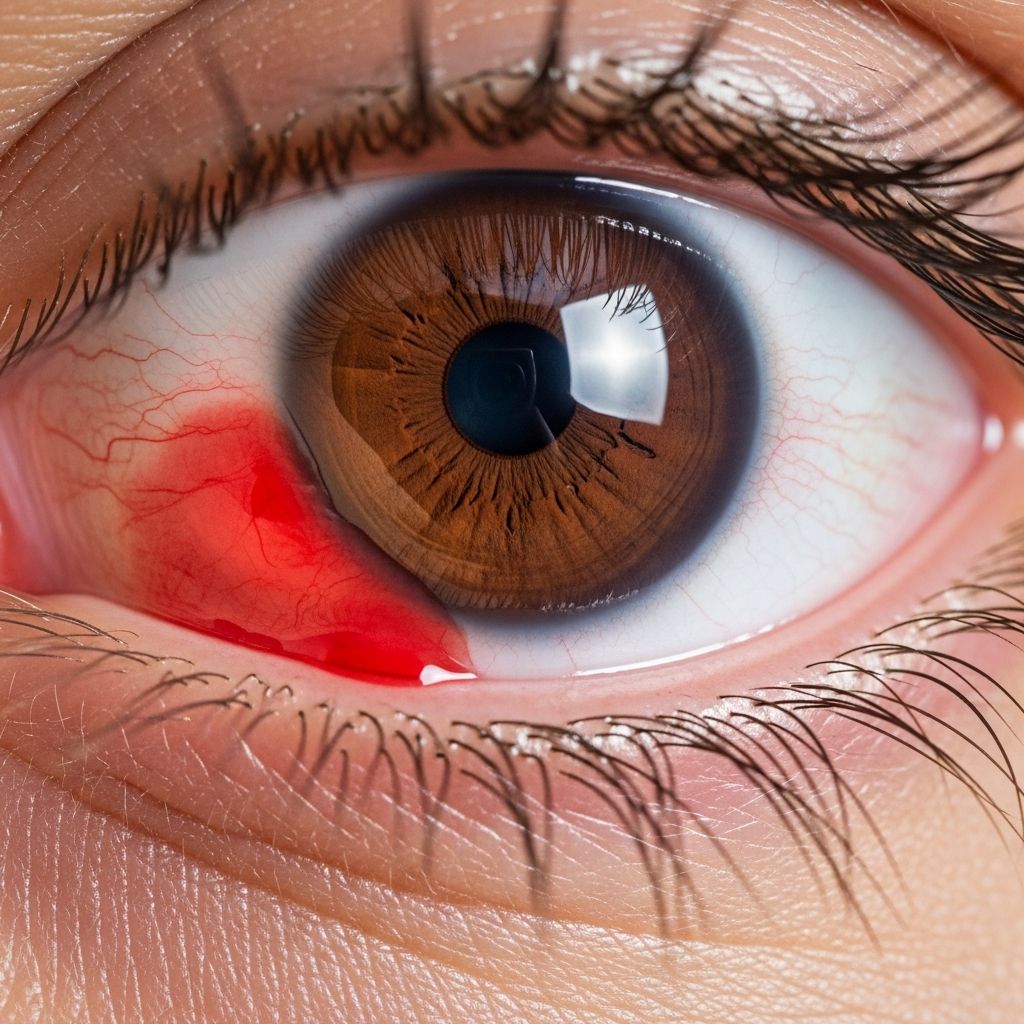
A subconjunctival hemorrhage occurs when a small blood vessel breaks beneath the clear membrane covering the white part of the eye, leading to a visible red patch that can alarm those affected. This condition is typically benign, painless, and resolves without intervention, though understanding its features helps differentiate it from more serious eye issues.
Understanding the Eye’s Anatomy Involved
The eye’s outer layer consists of the sclera, the firm white structure, covered by the conjunctiva, a thin, transparent tissue that protects and lubricates the surface. Tiny blood vessels, or capillaries, run within this conjunctival layer, and when one ruptures, blood pools in the space between the conjunctiva and sclera, creating the characteristic red appearance without penetrating deeper into the eye. This separation ensures that vision remains unaffected, as the blood stays superficial.
Key anatomical points include:
- Conjunctiva: Provides a barrier and contains fragile vessels prone to bursting under pressure.
- Sclera: The opaque white backdrop that makes the hemorrhage starkly visible.
- Capillaries: Minute vessels susceptible to strain from everyday activities.
Recognizing the Telltale Signs
The primary indicator is a sudden, bright red blotch on the sclera, often discovered upon glancing in a mirror or noted by others. Unlike skin bruises that shift colors gradually, this hemorrhage retains a vivid crimson hue initially due to the conjunctiva’s transparency, fading to shades of orange and yellow over days as the body reabsorbs the blood.
Most cases are asymptomatic beyond the visual change, but some report:
- Mild scratchiness or awareness of the eye during blinking.
- Slight fullness or irritation on the surface, akin to minor grittiness.
- No impact on sight, pain, or discharge in typical presentations.
Any associated pain, vision blurring, or persistent swelling signals a need for professional evaluation, as these deviate from standard patterns.
Factors That Trigger Vessel Rupture
Subconjunctival hemorrhages often arise from sudden pressure spikes that overwhelm delicate capillaries. Common precipitants include:
- Vigorous coughing, sneezing, or vomiting.
- Straining during heavy lifting or bowel movements.
- Eye rubbing or minor trauma, such as accidental pokes.
Systemic contributors play a role too, particularly in recurrent instances:
| Risk Factor | Description | Prevalence Insight |
|---|---|---|
| Hypertension | High blood pressure weakens vessel walls | Common in adults over 50 |
| Blood thinners | Medications like aspirin or anticoagulants | Increases bleed likelihood |
| Diabetes | Vascular fragility from poor control | Associated in chronic cases |
| Aging | Natural thinning of conjunctival tissues | Frequent in elderly |
Spontaneous occurrences without obvious triggers are not uncommon, especially in older populations where vessels become more fragile.
Observing the Natural Progression
Healing follows a predictable timeline, mirroring bruise resolution but accelerated by the eye’s rich vascular supply.
- Days 1-3: Intense red, flat or slightly raised patch expands slightly.
- Days 4-10: Color shifts to darker red or purple as hemoglobin breaks down.
- Weeks 2-3: Fades to yellow-green, then clears completely.
Related Stories



Full resolution typically spans 1-3 weeks, with no scarring or residue. Monitoring color changes reassures patients of normal progress.
When to Consult an Eye Specialist
While most hemorrhages self-resolve, prompt care is essential if:
- Pain accompanies the red patch.
- Vision changes, such as blurriness or doubles, emerge.
- Swelling spreads beyond the eye or chemosis (conjunctival ballooning) appears.
- Recurrences happen frequently, suggesting underlying conditions.
- Blood covers the entire sclera or elevates bullously, hinting at trauma or deeper issues.
Diagnosis involves a slit-lamp exam to rule out infections, glaucoma, or scleral perforation. Blood pressure checks and clotting profiles may follow for recurrent cases.
Everyday Management Strategies
Treatment emphasizes patience and comfort:
- Artificial tears: Lubricate to ease irritation without steroids or antibiotics, as infection is absent.
- Cold compresses: Initially reduce minor swelling.
- Avoid rubbing: Prevents worsening or new bleeds.
- Manage triggers: Control blood pressure and review medications with physicians.
No surgical intervention is needed; the body efficiently clears the blood.
Preventive Measures for Eye Wellness
Reducing recurrence involves lifestyle tweaks:
- Maintain optimal blood pressure through diet, exercise, and monitoring.
- Use medications judiciously, consulting doctors on anticoagulants.
- Protect eyes from trauma with goggles during activities.
- Stay hydrated and manage constipation to minimize straining.
- Regular eye exams detect vascular risks early.
For high-risk individuals, like those on blood thinners, awareness empowers proactive steps.
Debunking Common Myths
Misconceptions can heighten unnecessary worry:
- Myth: It always signals a grave disease. Fact: Mostly benign, isolated events.
- Myth: Vision loss is imminent. Fact: Superficial location spares sight.
- Myth: Immediate treatment required. Fact: Observation suffices for uncomplicated cases.
Education dispels fears, promoting calm management.
Frequently Asked Questions
Is subconjunctival hemorrhage dangerous?
Generally no; it’s harmless and clears naturally, but consult a doctor for atypical symptoms.
How long does it take to disappear?
1-3 weeks typically, with color fading progressively.
Can it affect my eyesight?
Rarely; blood stays on the surface, not impacting the cornea or interior.
Why does it happen suddenly?
Pressure surges from coughing or straining burst fragile vessels.
Should I stop my blood-thinning meds?
No; discuss with your healthcare provider first.
Long-Term Outlook and Monitoring
Prognosis is excellent, with full recovery sans complications in nearly all instances. Recurrent episodes merit systemic workup to address hypertension or coagulopathies. Integrating eye health into routine checkups safeguards against overlooks.
This condition underscores the eye’s vulnerability to minor stresses yet remarkable self-repair capacity. Awareness fosters confidence in navigating such episodes.
References
- Subconjunctival Hemorrhage – The Eye Center — The Eye Center. Accessed 2026. https://theeyecenter.com/eye-health-education/subconjunctival-hemorrhage/
- Subconjunctival Hemorrhage — Advantage Eye Care. Accessed 2026. https://advantageeyecare.net/articles/418208-subconjunctival-hemorrhage
- 9 Key Subconjunctival Hemorrhage Symptoms to Recognize — Northwest Eye Clinic. 2025-07-29. https://nweyeclinic.com/9-key-subconjunctival-hemorrhage-symptoms-to-recognize/
- Subconjunctival Hemorrhage: Symptoms & Treatments — Eduardo Bessermd. Accessed 2026. https://www.eduardobessermd.com/blog/subconjunctival-hemorrhage-symptoms-and-treatment
- Subconjunctival Hemorrhage – StatPearls — NCBI Bookshelf / NIH. Accessed 2026. https://www.ncbi.nlm.nih.gov/books/NBK551666/
- Subconjunctival Hemorrhage: Symptoms, Causes & Treatment — Cleveland Clinic. Accessed 2026. https://my.clevelandclinic.org/health/diseases/17713-subconjunctival-hemorrhage
Similar Articles








Read full bio of medha deb