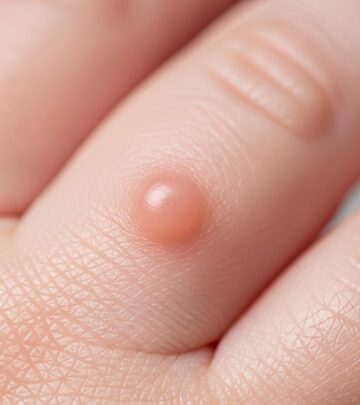
Subcutaneous Fat Necrosis of the Newborn Pathology
Comprehensive pathology overview of subcutaneous fat necrosis in newborns, including causes, histopathology, complications, and management strategies.
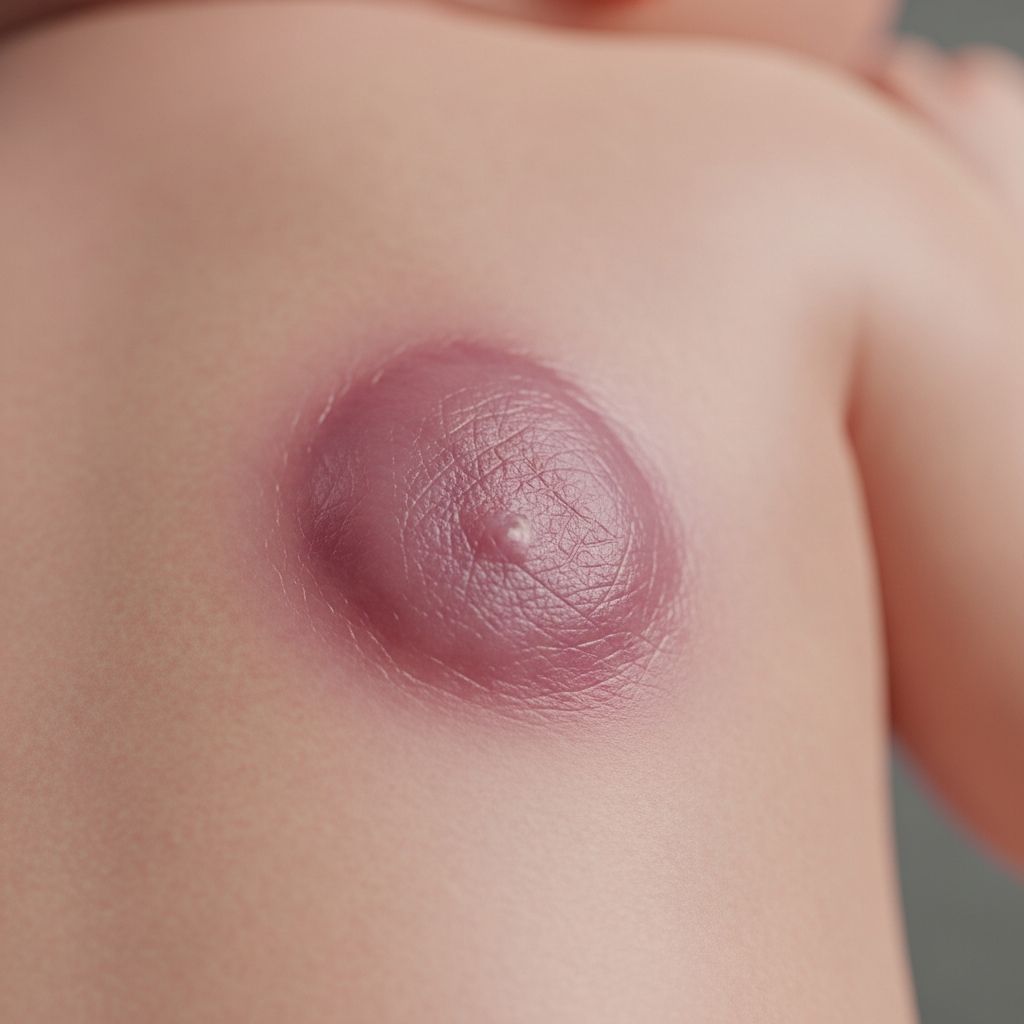
Subcutaneous fat necrosis of the newborn — pathology
Authors
Dr Nitin Modi, Dermatopathologist, Queensland, Australia. Revised by Dr Eunice Ophay, Dermatologist, Brisbane, Australia. Draft reviewed by Associate Professor Paul Cherian, Dermatopathologist, Brisbane, Australia.
DermNet NZ Editor-in-Chief
Dr Amanda Oakley, Dermatologist, Hamilton, New Zealand.
Introduction
Subcutaneous fat necrosis of the newborn (SCFN), also known as adiponecrosis subcutanea neonatorum or subcutaneous fat necrosis neonatorum, is a rare, self-limiting form of panniculitis that primarily affects term or post-term infants. This condition manifests as firm, erythematous nodules or plaques in the subcutaneous adipose tissue, typically appearing within the first four weeks of life. While generally benign and resolving spontaneously within months, SCFN can lead to serious complications such as hypercalcemia, which requires vigilant monitoring and intervention to prevent life-threatening issues like renal failure or seizures.
The pathology of SCFN involves necrosis of subcutaneous fat, often triggered by perinatal stressors including hypothermia, birth trauma, hypoxia, or therapeutic hypothermia for hypoxic-ischemic encephalopathy. Brown adipose tissue, rich in saturated fatty acids and involved in thermogenesis, is particularly susceptible, leading to fat crystallization and inflammation under hypoxic conditions.
Histopathology of subcutaneous fat necrosis of the newborn
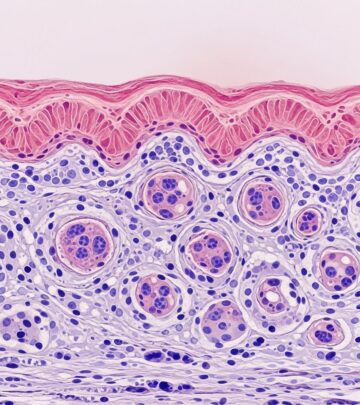
Histopathological examination is the gold standard for confirming SCFN diagnosis, revealing characteristic features in skin biopsies from affected areas. The key pathological hallmark is extensive necrosis of adipocytes in the subcutaneous fat layer, with a lobular panniculitis pattern without significant involvement of the dermis or epidermis.
Microscopic findings include:
- Necrotic adipocytes: Fat cells undergo coagulation necrosis, appearing as anucleate, ghost-like cells with hypereosinophilic cytoplasm.
- Needle-shaped clefts: Pathognomonic radial eosinophilic needle-like crystals or clefts within swollen adipocytes, resulting from crystallized fatty acids. These clefts are refractile and measure 5–15 μm in length.
- Multinucleated giant cells: Foreign body-type giant cells surrounding necrotic fat lobules, indicating a granulomatous inflammatory response.
- Inflammatory infiltrate: Mixed infiltrate of lymphocytes, histiocytes, and occasional eosinophils at the periphery of necrotic lobules. Septal fibrosis may appear in later stages.
- Preserved lobular architecture: Unlike other panniculitides, vascular thrombosis or vasculitis is absent, distinguishing SCFN from infectious or embolic processes.
Biopsies from early lesions show more acute necrosis, while resolving lesions demonstrate fibrosis and lipid-laden macrophages. Special stains like Oil Red O highlight neutral fat in viable adipocytes, contrasting with necrotic areas.
Clinical-pathological correlation
Clinically, SCFN presents as purple-red, indurated nodules (1–20 mm) on cheeks, buttocks, thighs, arms, and back, sparing palms and soles. These correlate pathologically with subcutaneous lobular involvement. Ultrasound imaging supports diagnosis non-invasively, showing hyperechoic subcutaneous masses with or without calcification, avoiding biopsy risks in fragile neonates.
Associated metabolic derangements, particularly hypercalcemia (occurring in 50–70% of cases, often delayed 1–6 months), stem from extrarenal 1,25-dihydroxyvitamin D production by granulomatous tissue and prostaglandin-mediated bone resorption. Serum calcium levels >2.6 mmol/L demand urgent correction.
Differential diagnosis
Pathological mimics include:
| Condition | Key Distinguishing Pathology |
|---|---|
| Poststeroid panniculitis | Lacks needle-like clefts; drug history. |
| Neonatal cold injury | Diffuse fat necrosis without crystals; hypothermia history. |
| Sclerema neonatorum | Diffuse, needle-like crystals but in premature infants with systemic illness; poor prognosis. |
| Subcutaneous fat necrosis due to oxalosis | Calcium oxalate crystals; metabolic screen. |
| Infectious panniculitis | Neutrophils, organisms on culture/stains. |
Sclerema neonatorum differs by its diffuse involvement and onset within 24–48 hours in sick premies, while SCFN is focal in healthy-term infants.
Complications
Beyond hypercalcemia, SCFN pathology links to:
- Thrombocytopenia: Consumptive coagulopathy from fat emboli.
- Hypertriglyceridemia: Lipolysis of necrotic fat.
- Hypoglycemia: Rare, stress-related.
- Nephrocalcinosis: Chronic hypercalcemia deposits, as seen in medullary pyramids on ultrasound.
- Long-term: Hypercalcemia persisting 4–6 months post-resolution, mandating serial monitoring.
Treatment and management
SCFN management targets symptoms and complications. Nodules regress spontaneously in 1–3 months, but pathology-driven hypercalcemia requires aggressive therapy:
- Hydration: IV fluids at 1.5–2x maintenance to promote calciuresis.
- Diuretics: Furosemide (1 mg/kg/h IV) ± saline diuresis.
- Diet: Low-calcium/vitamin D formula.
- Corticosteroids: Prednisolone 1–2 mg/kg/day for inflammation/hypercalcemia.
- Calcitonin: 4–8 IU/kg/day SC/IM if refractory; rapid onset, averts bisphosphonates.
- Bisphosphonates: Pamidronate 0.5–1 mg/kg IV for resistant cases; monitor hypocalcemia.
Surgical excision is reserved for large, painful nodules. Multidisciplinary care (neonatology, dermatology, endocrinology) ensures outcomes, with calcium normalization guiding discharge.
Prognosis
Excellent with early detection; skin lesions resolve without atrophy or scarring. Hypercalcemia subsides by 6 months, but nephrocalcinosis may persist. Long-term follow-up (calcium, renal function, growth) for 6–12 months is essential.
Frequently asked questions
What causes subcutaneous fat necrosis of the newborn pathologically?
Perinatal stress induces hypoxia in brown fat, leading to saturated fatty acid crystallization, adipocyte necrosis, and granulomatous inflammation with needle-like clefts.
How is SCFN diagnosed pathologically?
Skin biopsy shows lobular panniculitis with necrotic adipocytes containing pathognomonic eosinophilic needle-shaped clefts and multinucleated giant cells.
Why does hypercalcemia develop in SCFN?
Granulomatous tissue produces 1,25-vitamin D, and cytokines promote bone resorption, peaking weeks after skin resolution.
What is the treatment for SCFN hypercalcemia?
Hyperhydration, furosemide, low-calcium diet, steroids; escalate to calcitonin or pamidronate if needed. Monitor 4–6 months.
Does SCFN leave scars?
No, lesions resolve completely without atrophy or pigmentation changes.
References
- Neonatal subcutaneous fat necrosis with hypercalcemia treatment — PMC/NCBI. 2018-09-27. https://pmc.ncbi.nlm.nih.gov/articles/PMC6146218/
- Subcutaneous fat necrosis of the newborn — DermNet NZ. Recent update (post-2023). https://dermnetnz.org/topics/subcutaneous-fat-necrosis-of-the-newborn
- Subcutaneous Fat Necrosis of the Newborn — MD Searchlight. Recent. https://mdsearchlight.com/child-health/subcutaneous-fat-necrosis-of-the-newborn/
- Successfully Treating Hypercalcemia Secondary to Subcutaneous Fat Necrosis — The International Journal of Clinical Pediatrics. 2016. https://www.theijcp.org/index.php/ijcp/article/view/420/358
- Subcutaneous Fat Necrosis of the Newborn — StatPearls/NCBI Bookshelf. 2023-07-17. https://www.ncbi.nlm.nih.gov/books/NBK557745/
Similar Articles




Read full bio of medha deb