Subdermal Contraceptive Implants: Comprehensive Guide
Complete overview of implant-based contraception, effectiveness, and what to expect
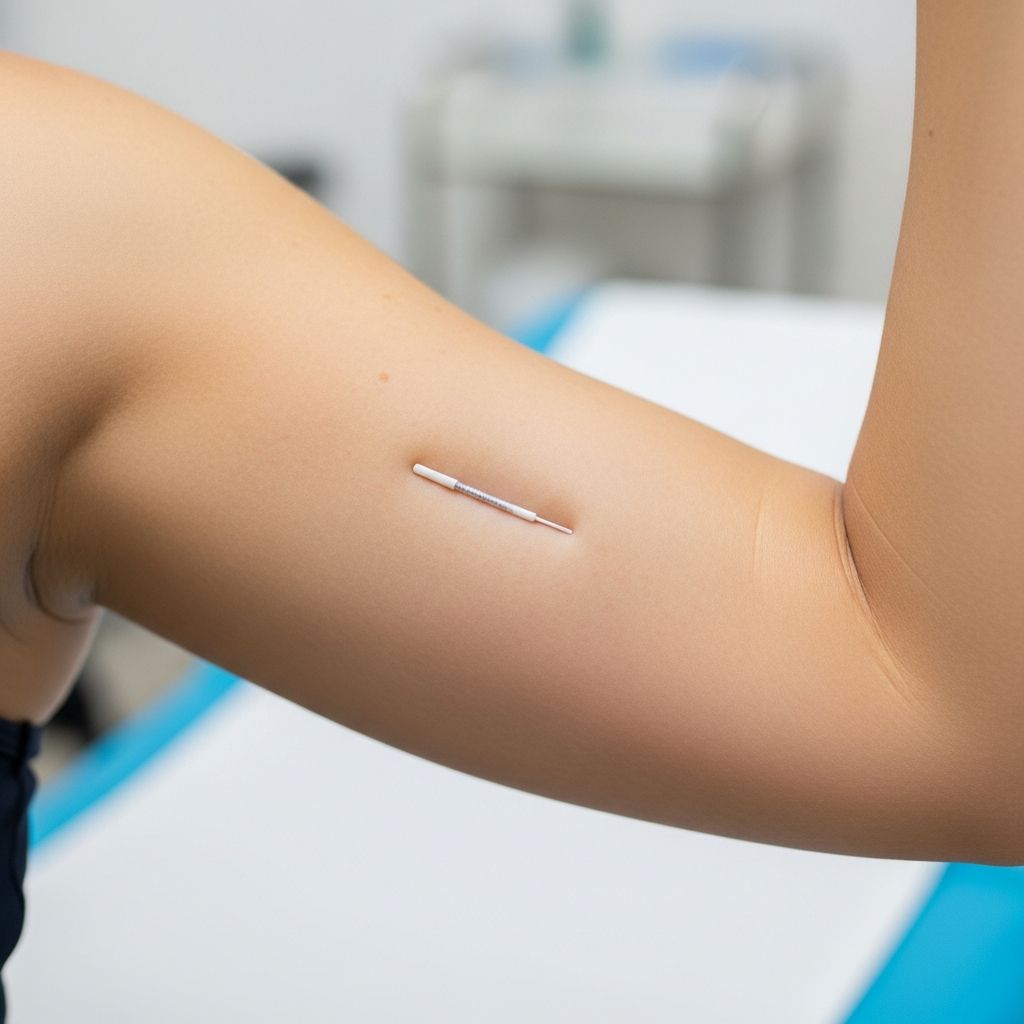
Contraceptive implants represent one of the most effective reversible birth control methods available to women today. These small, flexible devices are placed beneath the skin of the upper arm and continuously release hormones to prevent pregnancy. Unlike other contraceptive methods that require regular maintenance or daily attention, the implant operates silently in the background for up to three to five years, making it an attractive option for women seeking long-term, worry-free contraception.
What Is a Contraceptive Implant?
A subdermal contraceptive implant is a thin, matchstick-sized rod made of flexible plastic that is inserted just beneath the skin of a woman’s upper arm. The most commonly used implant in clinical practice is Nexplanon, which contains 68 milligrams of etonogestrel (ENG), a synthetic form of the hormone progestin. This small device measures approximately 4 centimeters in length and operates as a hormone-releasing system that prevents pregnancy through multiple biological mechanisms.
The implant is radio-opaque, meaning it can be visualized on X-ray imaging, which helps clinicians locate and remove it if necessary. The device is housed within a flexible polymer core that slowly releases the progestin hormone into the bloodstream at a controlled rate over its lifespan. This design ensures consistent hormone levels throughout the duration of use, providing predictable contraceptive protection without the variability associated with daily pill use or monthly injections.
How the Contraceptive Implant Functions
The contraceptive implant prevents pregnancy through three distinct biological mechanisms. First, the progestin hormone suppresses the release of luteinizing hormone (LH) from the pituitary gland, which prevents the ovaries from releasing an egg during ovulation. Second, the hormone thickens the cervical mucus, creating a hostile environment that impedes sperm from reaching the egg. Third, progestin alters the endometrium (the uterine lining), causing it to thin and atrophy, which prevents any fertilized egg from successfully implanting in the uterus. Together, these three mechanisms create multiple layers of contraceptive protection, explaining the implant’s exceptional effectiveness rate.
Insertion Procedure and Clinical Placement
Implant insertion requires a brief office-based procedure performed by a trained healthcare provider. The entire process typically takes only a few minutes. The clinician begins by cleaning the insertion site on the upper arm with an antiseptic solution. A local anesthetic is administered to numb the area, after which a small incision (usually less than 3 millimeters) is made in the skin.
Using a specialized insertion device called a trocar, the healthcare provider carefully places the implant just beneath the skin in the subcutaneous tissue. The provider may palpate the arm to confirm proper placement by feeling the rod beneath the skin. Some patients report minimal discomfort during insertion beyond the initial anesthetic injection, though individual pain experiences vary. The small incision typically does not require stitches and heals naturally within a few days.
Contraceptive implants can be inserted any time if the healthcare provider is reasonably certain the patient is not pregnant. For maximum effectiveness and to prevent any potential exposure of a developing pregnancy to hormonal contraceptives, insertion is often scheduled to begin during the first few days of the menstrual cycle.
Related Stories



Removal Procedure and Return to Fertility
After three years of use, the implant must be removed by a trained healthcare provider, though evidence suggests the implant may remain effective for up to five years in some cases. If desired, a new implant can be inserted immediately after removal in the same location or at a different site on the arm. Importantly, the implant can be removed at any time before the three-year mark if the patient changes their contraceptive preferences or decides to pursue pregnancy.
Implant removal is a straightforward procedure similar to insertion. The healthcare provider locates the implant by palpating the arm or using ultrasound imaging to guide the procedure. After administering local anesthesia, a small incision is made above the implant, and the device is gently extracted from the subcutaneous tissue. The removal procedure typically takes approximately one minute, though removal may be more complex if the implant has migrated slightly within the arm.
One of the most significant advantages of the contraceptive implant is the rapid return to fertility following removal. Pregnancy can occur as soon as the first week following implant removal. Studies demonstrate that normal menstrual periods return in 83.5 to 94.4 percent of women within a few months after removal. There is no evidence that the implant causes birth defects or teratogenic effects, and pregnancy with the implant in place is not detrimental to the woman, fetus, or pregnancy outcome, though removal is recommended if pregnancy is discovered.
Contraceptive Effectiveness and Reliability
The contraceptive implant is exceptionally effective at preventing pregnancy. Clinical studies demonstrate that fewer than one implant user out of 100 becomes pregnant in the first year with typical use. More broadly, the implant achieves a contraceptive efficacy rate exceeding 99 percent, making it one of the most reliable reversible contraceptive methods available alongside intrauterine devices (IUDs).
This high efficacy rate reflects the implant’s unique advantage: once inserted, it requires no user compliance or periodic maintenance to maintain effectiveness. Unlike oral contraceptive pills, which depend on consistent daily use and can be compromised by missed doses, drug interactions, or gastrointestinal absorption issues, the implant delivers steady hormone levels independent of user behavior. This distinction explains why implants achieve such high real-world effectiveness rates, even though the theoretical maximum effectiveness is similar to other hormonal methods.
Benefits Beyond Pregnancy Prevention
While pregnancy prevention is the primary indication for contraceptive implants, many women experience additional health benefits. Approximately half of women using the implant experience a reduction in menstrual cramps (dysmenorrhea) and lighter menstrual periods. Some women develop amenorrhea (cessation of menstruation), which many perceive as an additional benefit, though others find it concerning if they are unprepared for this change.
The implant is safe for use during breastfeeding. Progestin-only contraceptive methods, such as the implant, do not appear to negatively affect breastfeeding outcomes or infant health, making it an appropriate choice for postpartum women who wish to breastfeed while maintaining contraceptive protection.
Potential Side Effects and Adverse Reactions
While the contraceptive implant is generally well-tolerated, some women experience side effects. The most common side effect involves irregular menstrual bleeding patterns. Between 3.8 and 46.2 percent of implant users experience some form of bleeding irregularities, ranging from amenorrhea (no periods) to metrorrhagia (irregular bleeding), menorrhagia (heavy bleeding), or sporadic spotting.
Other reported side effects include:
- Weight gain or weight fluctuations
- Breast tenderness or soreness
- Mood changes, emotional instability, or depressive symptoms
- Headaches or migraines
- Acne or skin changes
- Nausea
- Lower abdominal pain
- Hair loss
- Decreased libido
- Pain or discomfort at the implant insertion site
- Neuropathy or nerve-related sensations
- Follicular cysts
Most side effects are mild and resolve over time as the body adjusts to the hormone levels. However, approximately 20 percent of implant users receive a prescription for oral contraceptive pills during implant use to manage abnormal bleeding patterns. For women experiencing problematic bleeding while using the implant, healthcare providers may recommend mifepristone combined with estrogen or doxycycline, which have been shown to be significantly more effective than placebo in stopping bleeding.
Complications and Safety Considerations
Serious complications from contraceptive implants are rare. However, patients should be aware of potential risks associated with insertion and removal procedures:
- Infection: Infection at the insertion or removal site is possible but uncommon. Signs of infection include increasing redness, warmth, pus, or systemic symptoms such as fever.
- Pain and paresthesias: Some patients experience persistent pain or nerve-related sensations (paresthesias) following insertion or removal.
- Bleeding and hematoma: Minor bleeding and bruising at the insertion site are common and typically resolve without intervention.
- Scarring: Very rarely, prominent scarring may occur at the insertion site.
- Implant migration: In rare cases, the implant may shift slightly within the arm tissue, potentially making removal more challenging and sometimes requiring removal under ultrasound guidance or X-ray visualization.
- Vascular complications: Vascular disorders such as deep vein thrombosis have been rarely described but represent extremely uncommon complications.
Who Should Not Use the Contraceptive Implant
Certain medical conditions and circumstances preclude the use of contraceptive implants or require careful consideration before placement. Women who meet the following criteria should not use the implant:
- Are pregnant or suspect they may be pregnant
- Currently have or have a personal history of breast cancer
- Have active liver disease or serious liver dysfunction
- Have abnormal vaginal bleeding that has not been medically evaluated and diagnosed
Additionally, the implant may be less effective for women taking certain anticonvulsant (anti-seizure) medications or antiretroviral drugs used in HIV treatment, as these medications can accelerate the metabolism of progestin and reduce contraceptive efficacy. Women using these medications should discuss alternative contraceptive options with their healthcare provider or consult regarding the need for backup contraception.
A pelvic examination is not necessary before implant insertion, as conditions contraindicated for implant use are unlikely to be detected during routine pelvic examination. However, healthcare providers should explore medical history thoroughly to identify any relevant conditions or medication interactions.
Implant Safety in Special Populations
Research demonstrates that contraceptive implants are safe for use in adolescents and young women. Studies comparing implant use between age groups show similar continuation rates among teenagers, though women in older age groups were more likely to request early removal due to bleeding irregularities.
Implants are also safe for use in the postpartum period and for women who are breastfeeding. Progestin-only methods do not appear to compromise milk production or infant health outcomes, making implants an excellent choice for women seeking immediate postpartum contraception while continuing to breastfeed.
Comparison with Other Long-Acting Reversible Contraceptives
The contraceptive implant shares a similar effectiveness profile and duration of action with intrauterine devices (IUDs). Both methods are among the most effective contraceptive options available and require professional insertion and removal. However, they differ in mechanism of action, duration of protection, and side effect profiles. IUDs function primarily through local uterine effects, while implants deliver systemic hormone levels. The choice between these methods depends on individual patient preferences, medical history, and tolerance for potential side effects.
Frequently Asked Questions
Does the contraceptive implant protect against sexually transmitted infections?
No. The implant does not provide protection against sexually transmitted infections (STIs). Condoms are the only contraceptive method that provides protection against STIs. Women using the implant should use condoms consistently if there is any risk of STI exposure.
Is the implant visible under the skin?
The implant is typically not visually obvious but can usually be felt by palpating the upper arm. Some women report that the implant is more palpable than others depending on arm composition and implant positioning.
Can I use the implant while breastfeeding?
Yes. The implant is safe for use while breastfeeding and does not negatively affect milk production or infant health.
What happens if I become pregnant while using the implant?
Pregnancy is uncommon with the implant due to its high efficacy. If pregnancy does occur, the implant should be removed. There is no evidence that the implant causes birth defects or harms the developing fetus.
How soon after removal can I become pregnant?
Pregnancy can occur as soon as the first week following implant removal.
Can the implant be removed early if I change my mind?
Yes. The implant can be removed at any time after placement if you wish to discontinue contraception, become pregnant, or switch to another birth control method.
Conclusion
The contraceptive implant represents a highly effective, long-acting, and reversible contraceptive option for women seeking reliable pregnancy prevention. With efficacy rates exceeding 99 percent and minimal ongoing user requirements after insertion, the implant provides practical contraceptive protection for up to three to five years. While menstrual irregularities represent the most common side effect and may influence acceptability for some women, many experience additional benefits including lighter periods or reduced menstrual cramps. For women without contraindications and who seek a hands-off approach to contraception, the implant merits serious consideration as part of comprehensive reproductive healthcare planning.
References
- Contraceptive Implants — Kaiser Family Foundation. 2024. https://www.kff.org/womens-health-policy/contraceptive-implants/
- Safety and Benefits of Contraceptives Implants — National Center for Biotechnology Information (PMC). 2022. https://pmc.ncbi.nlm.nih.gov/articles/PMC8229462/
- Birth Control Implant: How It Works, Side Effects & Benefits — Cleveland Clinic. 2024. https://my.clevelandclinic.org/health/articles/24564-contraceptive-implant
- Implants | Contraception – Risks and Side Effects — Centers for Disease Control and Prevention. 2024. https://www.cdc.gov/contraception/hcp/usspr/implants.html
- Contraceptive Implant Fact Sheet — Contraceptive Choice Project, Washington University School of Medicine. 2015. https://contraceptivechoice.wustl.edu/app/uploads/2015/07/Implant-Fact-Sheet.pdf
- NEXPLANON (etonogestrel implant) Label — U.S. Food and Drug Administration. 2015. https://www.accessdata.fda.gov/drugsatfda_docs/label/2015/021529s011lbl.pdf
Similar Articles








Read full bio of medha deb