Subgaleal Hemorrhage: Causes, Symptoms & Treatment
Understanding subgaleal hemorrhage in newborns: recognition, diagnosis, and emergency management.
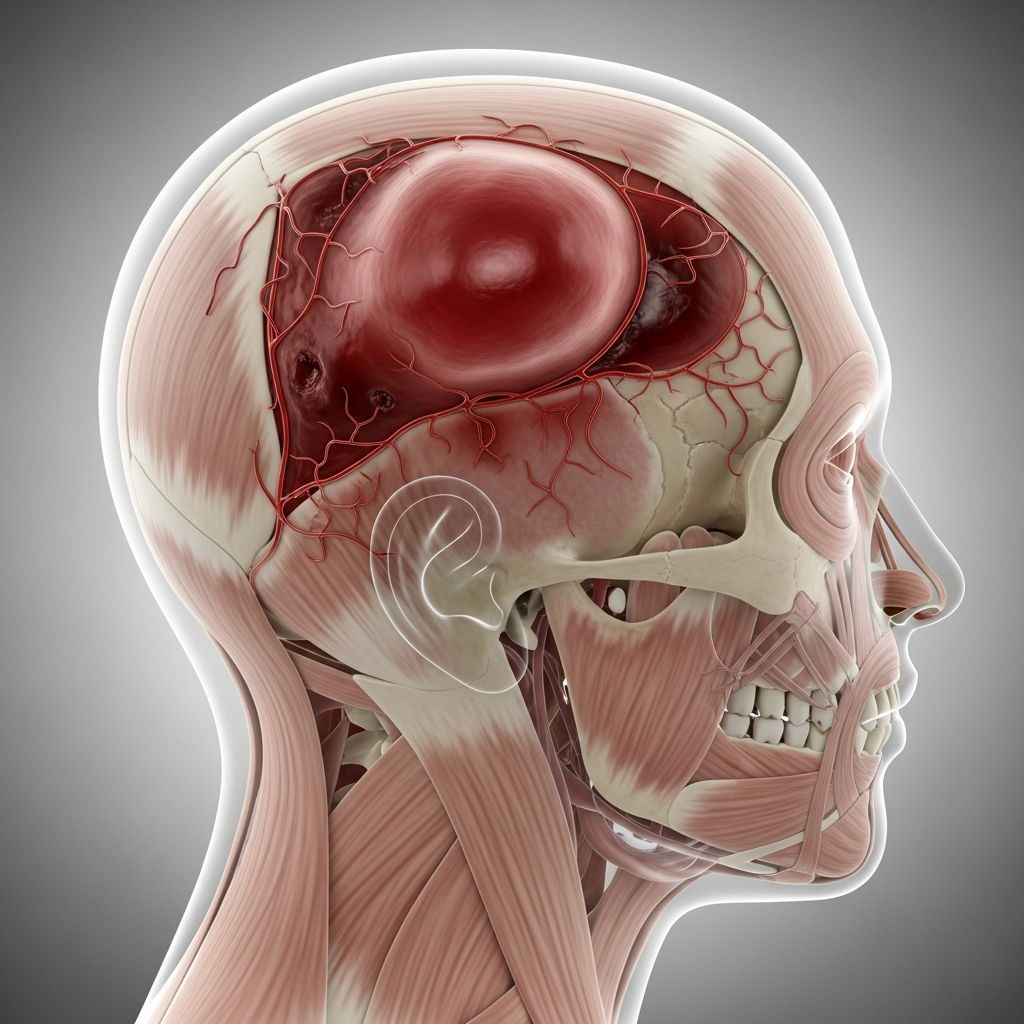
Understanding Subgaleal Hemorrhage
Subgaleal hemorrhage is a rare but potentially life-threatening condition that occurs in newborns when blood accumulates between the scalp and the skull. This serious birth injury results from the rupture of emissary veins, which are small blood vessels that connect the deep venous sinuses of the brain to the superficial scalp veins. Although uncommon, subgaleal hemorrhage demands immediate recognition and aggressive medical intervention due to its potential for rapid deterioration and death.
The subgaleal space represents a potential cavity located between the epicranial aponeurosis of the scalp and the periosteum of the skull. This anatomical compartment is particularly significant because it extends across the entire cranial vault, from the orbital margins anteriorly to the nuchal ridge posteriorly, and laterally to the temporal fascia. In term babies, this space has the capacity to hold up to 260 milliliters of blood, which represents a massive volume relative to a newborn’s total circulating blood volume of approximately 90 milliliters per kilogram of body weight.
Anatomy and Pathophysiology
To understand the severity of subgaleal hemorrhage, it is essential to comprehend the anatomical characteristics of the subgaleal space. Unlike other potential spaces in the head, the subgaleal compartment has no anatomical barriers or natural tamponade mechanisms to limit bleeding. This means that once hemorrhage begins, blood can accumulate extensively without any physical limitation from surrounding tissues.
The critical consequence of this anatomical reality is that neonates can lose between 50 to 70 percent of their total circulating blood volume into the subgaleal space. Such massive blood loss leads to hypovolemic shock, severe anemia, disseminated intravascular coagulation, and potentially death. Up to one-quarter of babies who require neonatal intensive care for subgaleal hemorrhage do not survive, making this condition one of the most serious birth injuries.
Causes and Risk Factors
Subgaleal hemorrhage is most commonly associated with assisted vaginal delivery techniques, particularly vacuum extraction and forceps delivery. The mechanical trauma imposed by these delivery instruments on the newborn’s head and scalp during difficult or prolonged labor can rupture the delicate emissary veins, initiating the hemorrhage. Inappropriate placement of the vacuum extractor is identified as a significant contributor to failed vacuum extraction attempts and subsequent subgaleal hemorrhage.
However, it is important to note that subgaleal hemorrhage is not limited exclusively to assisted deliveries. The condition may also occur spontaneously during normal vaginal delivery or even following cesarean section delivery. This broader spectrum of causation underscores the importance of vigilant monitoring of all newborns, particularly those born after any delivery complications.
Common risk factors include:
– Vacuum extraction delivery- Forceps delivery- Prolonged or difficult labor- Low Apgar scores at birth- Need for resuscitation- Maternal trauma or accidents during pregnancy
Clinical Presentation and Recognition
Early recognition of subgaleal hemorrhage is crucial for improving survival outcomes. The clinical presentation of this condition is variable, but healthcare providers should maintain suspicion in newborns with a 5-minute Apgar score of less than 7 with no clear evidence of asphyxia, especially if delivery was prolonged or involved vacuum extraction. The mean time for diagnosis of subgaleal hemorrhage is between 1 to 6 hours after birth.
The physical appearance of subgaleal hemorrhage presents distinctive characteristics that differentiate it from other forms of neonatal head bleeding. The swelling appears as a diffuse, boggy mass that crosses the midline of the head and is gravity-dependent in nature. As the hemorrhage progresses, the head circumference may increase, and in severe cases, swelling of the eyelids and displacement of the ears may occur due to the accumulation of blood in the dependent areas.
Related Stories



The presence of fluctuance early in the clinical course, whether or not the swelling is progressive, represents an important distinguishing feature of subgaleal hemorrhage. Because blood spreads through a large tissue plane in this condition, massive blood loss may occur before clinical signs of hypovolemia become apparent, making early detection essential.
Differential Diagnosis
It is important to distinguish subgaleal hemorrhage from other forms of scalp trauma and hemorrhage that can occur during delivery, as the management and prognosis differ significantly.
Caput Succedaneum involves the accumulation of serosanguinous fluid in the subcutaneous layer of the scalp. This condition may extend over suture lines and cross the midline, potentially causing confusion with subgaleal hemorrhage. However, caput succedaneum does not typically extend into the subgaleal space and usually resolves spontaneously within 12 to 18 hours without intervention.
Cephalohematoma results from the rupture of blood vessels located between the periosteum and the skull, causing bleeding into the area beneath the periosteum but not into the subgaleal space. This condition presents as a localized swelling that is typically confined by suture lines and does not cross the midline, distinguishing it clearly from subgaleal hemorrhage.
Diagnostic Approach
The diagnosis of subgaleal hemorrhage begins with a thorough history-taking process and comprehensive physical examination. All healthcare providers caring for a newborn must be immediately notified if assisted delivery devices were used during birth, allowing for regular examination and careful monitoring.
Monitoring protocols require a minimum of 8 hours of continuous observation for all babies following difficult vacuum extractions or forceps deliveries, regardless of Apgar score or the need for resuscitation. This observation period should include at least hourly recording of vital signs, careful examination of the head, and measurement of head circumference. The location and characteristics of any swelling should be documented and reassessed hourly if concerns are present.
Laboratory and Imaging Studies
When subgaleal hemorrhage is suspected, hemoglobin measurement should be performed as soon as possible and monitored every 4 to 8 hours. Coagulation studies should be obtained simultaneously and repeated at regular intervals. While clinical diagnosis can be made based on history and physical examination alone, optimal imaging for subgaleal hemorrhage is achieved through computed tomography (CT) or magnetic resonance imaging (MRI). Skull radiographs can be obtained to identify any accompanying skull fractures.
Management and Treatment
The management of subgaleal hemorrhage centers on prompt recognition, careful monitoring, and aggressive resuscitation and support. There is no specific definitive treatment for subgaleal hemorrhage other than appropriate resuscitation, intensive care management, and the massive quantities of blood products often urgently required to maintain circulation and prevent hypovolemic shock.
Pressure wrapping of the head has been advocated by some clinicians, but this approach has significant limitations. The large subaponeurotic space is difficult to wrap effectively except with a cap that is attached under the chin. Moreover, pressure wrapping might be disadvantageous if cerebral edema were present, potentially compromising cerebral perfusion.
Key Management Priorities:
– Secure intravenous access (rapid umbilical venous catheter may be optimal)- Aggressive fluid resuscitation with blood products- Continuous cardiorespiratory monitoring- Head circumference measurement and reassessment- Blood pressure monitoring and perfusion assessment- Consideration of elective intubation- Treatment of any associated coagulopathy- Careful monitoring of bilirubin levels
After initial stabilization, investigation for possible congenital coagulopathy should be undertaken, as underlying bleeding disorders may have contributed to the hemorrhage or may complicate recovery. Bilirubin levels must be carefully monitored, as the massive blood transfusions often required can lead to elevated bilirubin levels requiring phototherapy or exchange transfusion.
Prognosis and Outcomes
The prognosis for subgaleal hemorrhage depends critically on the speed and effectiveness of recognition and treatment. Early identification, careful monitoring, prompt and aggressive administration of blood products to avoid hypovolemic shock, and treatment of any associated coagulopathy are the keys to improving outcomes and achieving intact survival. Many cases of subgaleal hemorrhage that result in death or severe neurological disability are preventable with heightened awareness and appropriate management protocols.
Survivors of subgaleal hemorrhage may experience long-term neurological sequelae, including developmental delays, cerebral palsy, seizure disorders, and cognitive impairment, depending on the severity of the initial hemorrhage and the presence of associated anoxic-ischemic brain injury.
Prevention Strategies
Prevention of subgaleal hemorrhage begins with appropriate obstetrical technique during assisted deliveries. Proper placement of vacuum extractors and appropriate application of forceps reduce the risk of this complication. Healthcare providers should maintain a low threshold for abandoning operative vaginal delivery in favor of cesarean section when delivery is not progressing appropriately or when there is risk of subgaleal hemorrhage.
Increased awareness of subgaleal hemorrhage among all clinicians involved in newborn care is essential for earlier identification, referral, and treatment, with resultant improved outcomes. Educational programs and clinical protocols emphasizing the recognition of this condition can significantly reduce morbidity and mortality.
Frequently Asked Questions
Q: What is the difference between subgaleal hemorrhage and other types of birth-related head bleeding?
A: Subgaleal hemorrhage occurs between the scalp covering and the skull bone, allowing blood to accumulate in a large space without natural limitation. In contrast, cephalohematoma is confined between the periosteum and skull bone and is typically limited by suture lines. Caput succedaneum involves fluid accumulation in the skin layers and resolves quickly without treatment.
Q: How quickly does subgaleal hemorrhage typically develop after birth?
A: Subgaleal hemorrhage typically develops and becomes apparent within 1 to 6 hours after birth. However, it can progress rapidly, and significant blood loss may occur before obvious signs of shock become evident, making early recognition critical.
Q: What are the warning signs that a newborn may have subgaleal hemorrhage?
A: Warning signs include low Apgar scores without evidence of asphyxia, progressive scalp swelling that crosses the midline, boggy or fluctuant texture to the swelling, swelling of the eyelids, displacement of the ears, increasing head circumference, rapid heart rate, poor perfusion, and signs of shock such as pale color or weak pulses.
Q: Is subgaleal hemorrhage always associated with assisted delivery?
A: While subgaleal hemorrhage is most commonly associated with vacuum extraction and forceps delivery, it can also occur spontaneously during normal vaginal delivery or even after cesarean section delivery, though these cases are less common.
Q: What is the mortality rate for subgaleal hemorrhage?
A: Approximately one-quarter of babies requiring neonatal intensive care for subgaleal hemorrhage do not survive. However, with early recognition and aggressive treatment, many cases can be managed successfully, emphasizing the critical importance of awareness and rapid intervention.
Q: Can subgaleal hemorrhage be prevented?
A: While not all cases can be prevented, the risk can be reduced through appropriate obstetrical technique during assisted deliveries, proper placement of vacuum extractors, and judicious decision-making regarding when to abandon operative vaginal delivery in favor of cesarean section.
References
- Neonatal subgaleal hemorrhage: diagnosis and management — National Center for Biotechnology Information (NCBI). 2001. https://pmc.ncbi.nlm.nih.gov/articles/PMC81073/
- Management of Subgaleal Haemorrhage in Neonatal Transport — Paediatric Infant Perinatal Emergency Retrieval (PIPER), Royal Children’s Hospital. 2024. https://www.rch.org.au/uploadedFiles/Main/Content/piper/PIPER%20Neonatal%20-%20Management%20of%20Subgaleal%20Haemorrhage%20in%20Neonatal%20Transport.pdf
- Birth Injury Types & Causes — Cleveland Clinic. 2024. https://my.clevelandclinic.org/health/diseases/birth-injury
Similar Articles








Read full bio of Sneha Tete