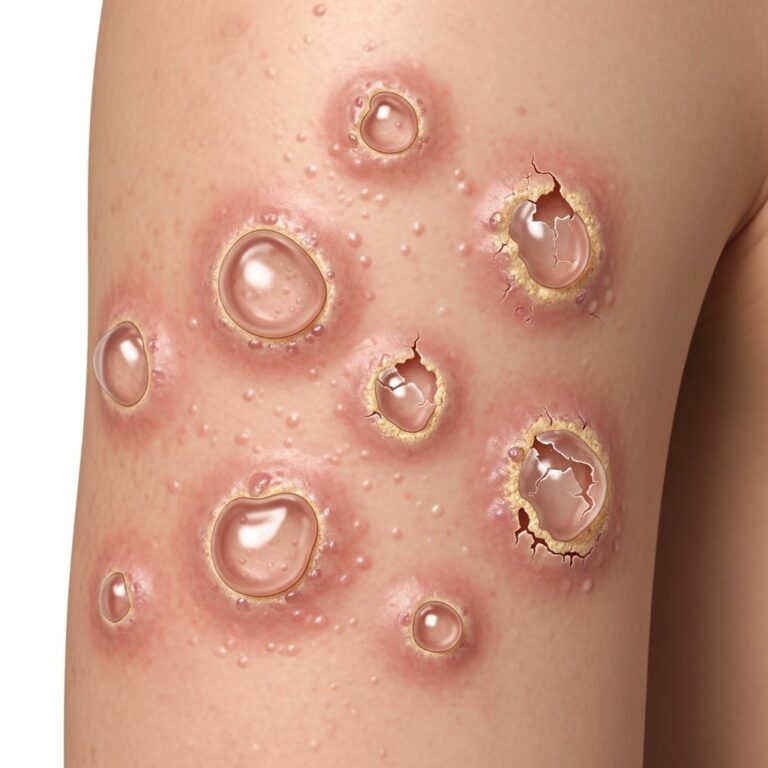
Subungual Haemorrhage Images: 7 Key Photos For Diagnosis
Explore detailed images and clinical insights into subungual haemorrhage, a common nail injury from trauma causing blood pooling under the nail.
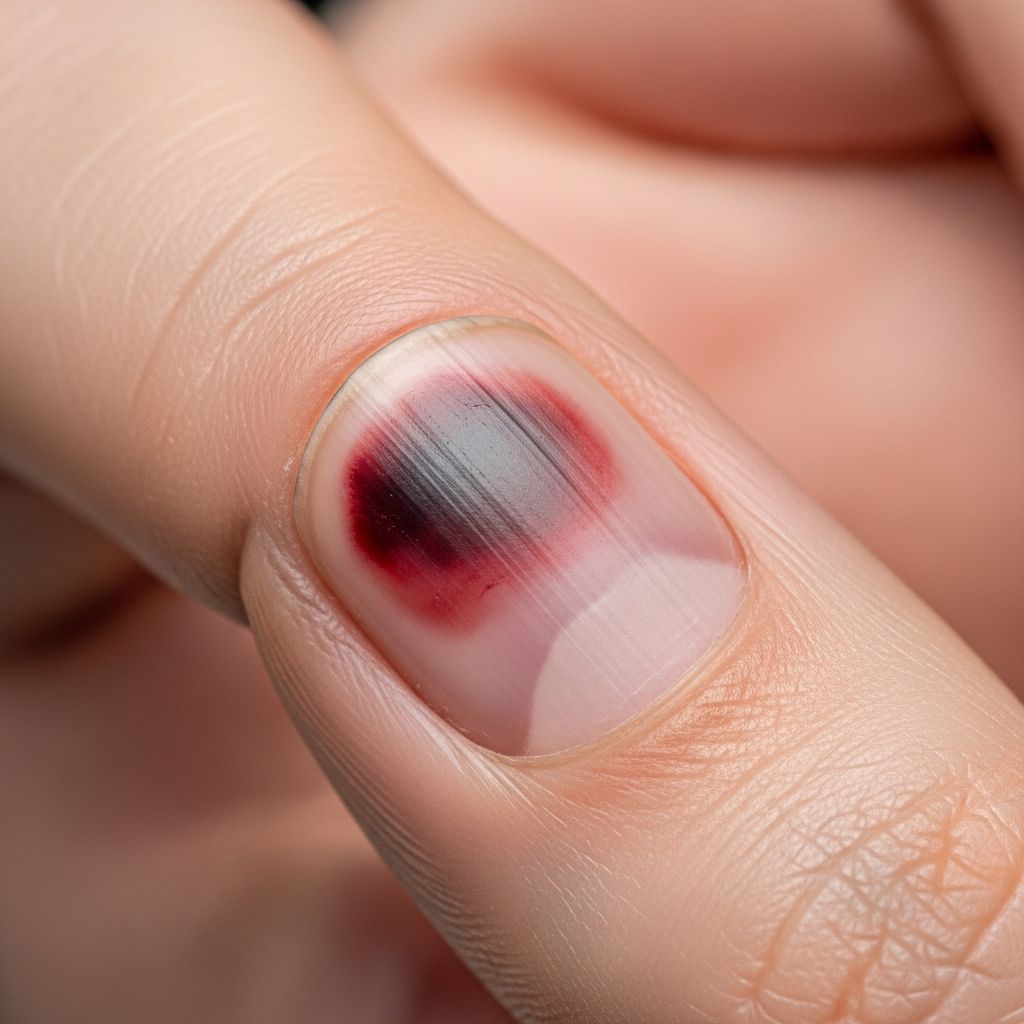
Subungual haemorrhage, also known as subungual hematoma, refers to bleeding beneath the fingernail or toenail plate, typically resulting from acute trauma to the nail unit. This condition manifests as a reddish-brown to dark purple-black discolouration under the nail, often accompanied by throbbing pain due to pressure buildup from pooled blood. While most cases resolve spontaneously without intervention, severe instances may require drainage to alleviate discomfort and prevent complications like nail deformity or infection.
This image gallery showcases various presentations of subungual haemorrhage, highlighting differences in size, location, extent, and associated features. These visuals aid dermatologists, podiatrists, and general practitioners in accurate diagnosis and management. Images are sourced from clinical cases demonstrating typical and atypical appearances post-trauma.
What is Subungual Haemorrhage?
Subungual haemorrhage occurs when blood vessels in the nail bed rupture due to blunt force, crush injury, or repetitive microtrauma, leading to blood accumulation in the confined space between the nail plate and nail bed. Common precipitants include slamming a finger in a door, dropping a heavy object on the toe, or sports-related impacts. The enclosed nature of the nail unit causes rapid pressure increase, resulting in intense, throbbing pain that may persist until the blood resorbs or is drained.
Clinically, it presents as a well-demarcated, linear or blotchy discolouration starting proximally and migrating distally with nail growth. Small haemorrhages (<25% nail involvement) are often asymptomatic after initial pain, while larger ones demand prompt evaluation to rule out fractures or nail bed lacerations. Rarely, persistent or recurrent discolouration warrants investigation for underlying pathology like subungual melanoma.
Causes of Subungual Haemorrhage
- Acute Trauma: Direct crush injuries, such as hammer blows to fingers or stubbing toes, account for the majority of cases. Blood extravasates from disrupted capillaries in the nail bed.
- Repetitive Microtrauma: Seen in runners (runner’s toe), cyclists, or occupations involving frequent toe compression, leading to gradual haemorrhage buildup.
- Sports Injuries: High-impact activities like soccer, basketball, or martial arts frequently cause distal phalanx contusions.
- Iatrogenic: Post-procedure complications from nail surgery or aggressive manicures.
- Rare Associations: Underlying nail tumours (e.g., squamous cell carcinoma, melanoma) mimicking trauma-induced haemorrhage, especially if longitudinal and non-resolving.
Symptoms and Clinical Presentation
Patients typically report immediate severe pain following injury, described as throbbing or pulsating due to pressure on sensitive nail bed nerves. The affected digit swells, with tenderness maximising at the nail tip. Visually, a dark red, maroon, purple, or black patch appears under the nail, often spanning part or all of the nail surface.
Associated signs include:
- Nail plate opacity or yellowing from onycholysis (nail detachment).
- Thickened hyponychium (distal nail bed skin) from subnail blood.
- Erythema and swelling of periungual tissues shortly post-injury.
- In severe cases, nail plate fracture or avulsion.
Pain intensity correlates with hematoma size; haemorrhages covering >50% of the nail often necessitate intervention.
Diagnosis
Diagnosis is primarily clinical, based on history of trauma and characteristic nail discolouration. Physical exam assesses nail plate integrity, nail fold inflammation, digital deformity, and neurovascular status. Key red flags prompting imaging include:
- Deformity suggesting distal phalanx fracture.
- Inability to actively flex/extend the digit.
- Discolouration >25-50% of nail surface with persistent pain.
- Signs of infection: pus, red streak, fever.
Radiographs confirm fractures; point-of-care ultrasound detects nail bed lacerations or large fluid collections. Dermoscopy may differentiate haemorrhage from melanoma by showing uniform globules without polymorphic vessels.
Treatment and Management
Conservative management suffices for small, non-painful haemorrhages: RICE protocol (Rest, Ice, Compression, Elevation) plus NSAIDs (e.g., ibuprofen) reduces swelling and pain. Patients should protect the nail from further trauma.
Related Stories



For symptomatic large haemorrhages, trephination (nail trephination) is the gold standard, preferred over nail avulsion due to lower infection risk and better cosmesis. Performed under digital nerve block, methods include:
| Method | Description | Advantages |
|---|---|---|
| Electrocautery | Heated wire or CO2 laser burns hole(s) in nail plate | Self-limiting (cools on blood contact), sterile, quick |
| 18-21G Needle | Twisted through nail to drain blood | Simple, bedside procedure |
| Paperclip/Hot Wire | Sterile heated paperclip | Low-tech, effective in resource-limited settings |
Post-procedure: bandage, elevate 12-24 hours, avoid water exposure. Splinting for 3 days if tender. Nail avulsion reserved for unstable nails, large lacerations, or fractures requiring repair.
Follow-up monitors for infection, permanent dystrophy, or non-resolving pigment.
Images of Subungual Haemorrhage
This section features annotated clinical images illustrating diverse presentations. Each caption describes key features, size estimates, and clinical context.
Image 1: Acute Crush Injury Thumbnail
Proximal subungual haemorrhage covering 60% of thumbnail post-hammer injury. Note sharp demarcation, surrounding ecchymosis, and mild nail plate fracture. Patient reported severe throbbing pain unrelieved by analgesics.
Image 2: Runner’s Toe Distal Phalanx
Multiple linear haemorrhages in great toenail from repetitive downhill running. Distal migration pattern evident; minimal pain, resolving spontaneously over 4 weeks.
Image 3: Partial Nail Trephination
Intra-procedural image showing electrocautery creating hole in discoloured toenail. Dark blood egress relieves pressure; post-procedure pain resolution immediate.
Image 4: Large Hematoma with Onycholysis
Nearly complete great toenail involvement with onycholysis and hyponychial thickening. X-ray confirmed distal phalanx fracture; treated with trephination and splinting.
Image 5: Resolving Haemorrhage
3-week follow-up: proximal migration of brown-black band as new nail grows. No deformity; full resolution expected by 6 months.
Image 6: Pediatric Fingertip Injury
Index finger subungual haemorrhage in child after door slam. Swelling prominent; managed conservatively due to small size (<20%).
Image 7: Recurrent Microtrauma
Bilateral toenail haemorrhages in cyclist; splattered pattern from shoe pressure. Addressed by footwear modification.
Complications
- Infection: Paronychia or felon if untreated.
- Nail Dystrophy: Permanent ridging, splitting post-severe trauma.
- Misdiagnosis: Melanoma mimicry in non-traumatic cases.
- Chronic Pain: Rare, from nail bed scarring.
Prevention
- Wear protective footwear/gloves during high-risk activities.
- Proper nail trimming to avoid ingrown edges.
- Graduate running shoe replacement for athletes.
Frequently Asked Questions (FAQs)
Q: Does subungual haemorrhage require antibiotics?
A: No, unless signs of infection (pus, fever, red streak) develop. Prophylaxis not routine post-trephination.
Q: How long does it take for the nail to grow out?
A: Fingernails: 4-6 months; toenails: 12-18 months. Discolouration migrates distally with growth.
Q: When should I seek emergency care?
A: If deformity, inability to move digit, worsening pain, or >25% nail involvement.
Q: Can I drain it myself at home?
A: Strongly discouraged; risks infection, further damage. Seek professional trephination.
Q: Is subungual haemorrhage a sign of cancer?
A: Rarely; investigate if no trauma history, irregular borders, or persistent >3 months.
References
- Subungual Hematoma (Bleeding Under Nail): Causes and Treatments — WebMD. 2023. https://www.webmd.com/skin-problems-and-treatments/bleeding-under-nail
- Subungual Hematoma – Treatment — Emergency Care BC. 2024. https://emergencycarebc.ca/clinical_resource/clinical-summary/subungual-hematoma-treatment/
- Subungual Hematoma Drainage — StatPearls, NCBI Bookshelf, NIH. 2023-10-01. https://www.ncbi.nlm.nih.gov/books/NBK482508/
- Subungual haemorrhage — DermNet NZ. 2024. https://dermnetnz.org/topics/subungual-haemorrhage
- Subungual Hematoma: Bleeding & Bruising Under the Nail — Cleveland Clinic. 2023. https://my.clevelandclinic.org/health/diseases/subungual-hematoma
Similar Articles








Read full bio of medha deb