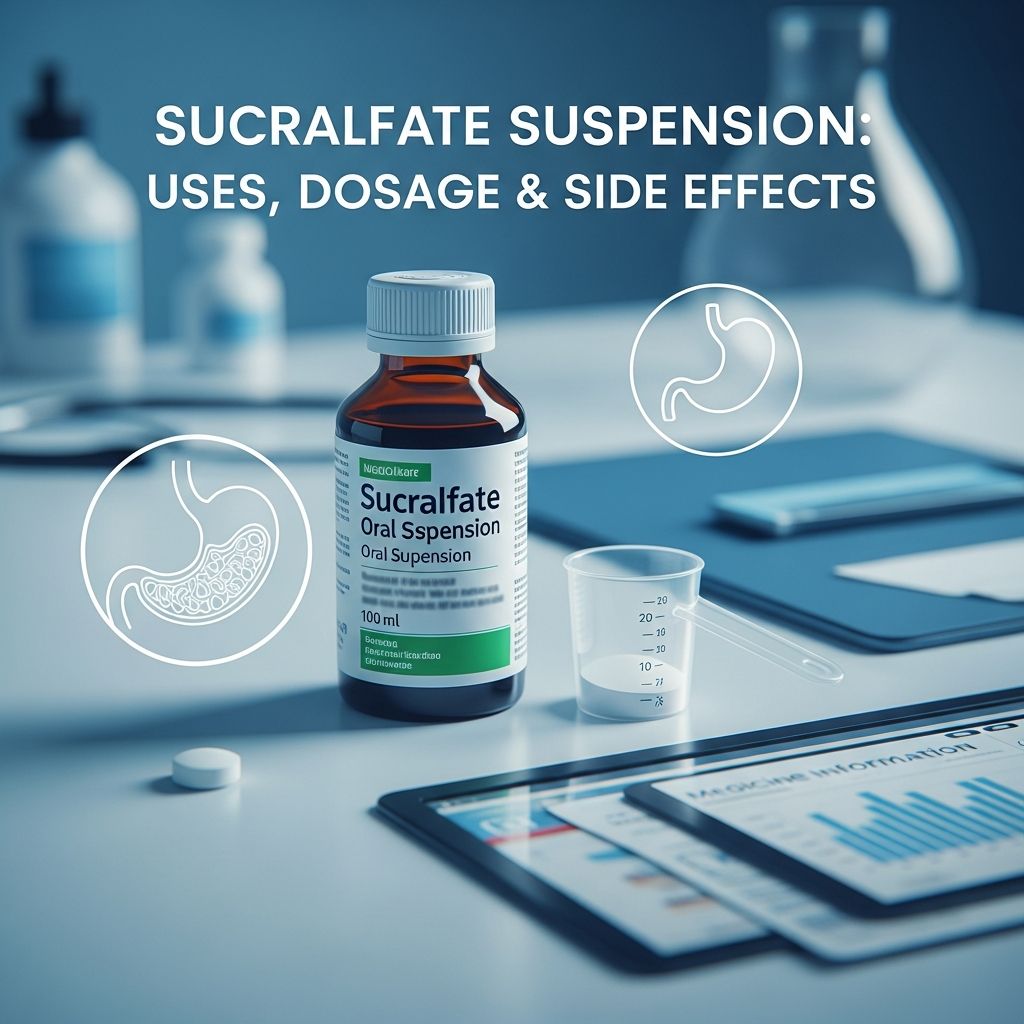
Sucralfate Suspension: Uses, Dosage & Side Effects
Complete guide to sucralfate suspension: benefits, dosing, side effects, and medication interactions.
Sucralfate Suspension: A Comprehensive Treatment Guide for Stomach Ulcers
Sucralfate suspension is an oral medication used to treat active duodenal ulcers in the upper portion of the small intestine. This medication works by forming a protective barrier over ulcerated areas, shielding them from stomach acid and digestive enzymes to promote healing. Understanding how sucralfate suspension works, proper administration techniques, and potential side effects is essential for patients seeking effective ulcer treatment and management.
What Is Sucralfate Suspension?
Sucralfate suspension is a pharmaceutical formulation containing sucralfate, a basic aluminum salt of sucrose octasulfate. The suspension form is specifically designed for patients who may have difficulty swallowing tablets or who require more flexible dosing options. When ingested, sucralfate disintegrates in the acidic environment of the stomach and adheres to both normal and damaged mucous membranes, forming a protective gel-like coating.
The medication works through multiple mechanisms to facilitate ulcer healing. It prevents peptic acid from breaking down tissue by blocking the enzyme-substrate complex formation, effectively adsorbing pepsin and reducing its concentration. Additionally, sucralfate creates a physical barrier between stomach contents and the mucous membrane, offering comprehensive protection from acid and enzymatic damage. One gram of sucralfate can neutralize 14 to 16 milliequivalents of gastric acid, providing substantial acid-neutralizing capacity.
Approved Uses and Indications
Primary Indication: Duodenal Ulcers
Sucralfate suspension is FDA-approved for the short-term treatment of active duodenal ulcers, with treatment duration typically extending up to eight weeks. This medication has demonstrated efficacy comparable to established treatments such as cimetidine and intensive antacid therapy. Following active ulcer treatment, maintenance therapy may continue to prevent ulcer recurrence, typically at reduced dosages.
Additional Clinical Applications
Beyond its primary indication, sucralfate suspension demonstrates effectiveness in treating several other gastrointestinal and mucosal conditions. Healthcare providers may prescribe sucralfate suspension for patients experiencing dyspepsia associated with nonsteroidal anti-inflammatory drug (NSAID) therapy, where it reduces symptom frequency and intensity while preventing gastric erosion. The medication’s protective properties also make it suitable for managing oral ulcers associated with Behçet disease, particularly when used as a topical suspension in combination with corticosteroids.
Sucralfate suspension has shown efficacy in treating chemotherapy-induced mucositis, radiation proctitis, and various epithelial wounds. During pregnancy, sucralfate suspension is recommended by the American College of Gastroenterology for managing gastroesophageal reflux disease, making it a safer alternative to other medications during this sensitive period. The medication’s minimal systemic absorption contributes to its favorable safety profile across diverse patient populations.
How Sucralfate Suspension Works
Mechanism of Action
Sucralfate suspension operates through several complementary mechanisms to promote ulcer healing. The medication’s primary action involves forming a protective polyanion gel layer that adheres to ulcerated tissue, creating a physical barrier against gastric acid and pepsin. This barrier prevents further tissue damage while creating an optimal environment for natural healing processes.
Related Stories



The anti-peptic effects of sucralfate suspension are particularly significant. By preventing the formation of enzyme-substrate complexes, sucralfate interferes with pepsin’s ability to hydrolyze tissue. Simultaneously, it adsorbs pepsin molecules directly, reducing their concentration and enzymatic activity within the stomach. This dual-action approach addresses two critical factors in ulcer pathophysiology.
Additionally, sucralfate enhances the stomach’s natural protective mechanisms by promoting bicarbonate production and fostering tissue growth, regeneration, and repair. These biological effects support the body’s inherent healing capacity, ensuring lasting recovery rather than merely temporary symptom relief.
Dosage and Administration
Standard Dosing Recommendations
For active duodenal ulcers, the typical adult dosage is one gram administered four times daily on an empty stomach. Active treatment usually continues for four to eight weeks, depending on ulcer severity and individual patient response. Following successful treatment of active ulcers, patients may transition to maintenance therapy consisting of one gram twice daily to prevent recurrence.
The suspension formulation is supplied as one gram per ten milliliters of liquid, providing convenient dosing for various patient populations. Healthcare providers may adjust dosing based on individual patient needs, medical conditions, and treatment response.
Proper Administration Technique
Correct administration is essential for maximizing sucralfate suspension’s therapeutic effectiveness. Patients must shake the bottle thoroughly before each dose to ensure uniform medication distribution throughout the liquid. Using a specially marked oral syringe, spoon, or dropper provided by the pharmacy ensures accurate dosage measurement, as household spoons lack the precision required for consistent dosing.
Sucralfate suspension must be taken on an empty stomach, at least one hour before meals or two hours after eating. This timing requirement ensures optimal medication absorption and formation of the protective mucous membrane coating. Taking sucralfate suspension at consistent times each day helps establish a regular routine and maximizes therapeutic benefits. Patients should continue taking their medication as prescribed unless specifically directed otherwise by their healthcare provider, even if ulcer symptoms resolve, as consistent use promotes complete healing.
Important Administration Considerations
Patients must understand that complete ulcer healing may require four to eight weeks of consistent treatment. Premature discontinuation of medication can result in incomplete healing and ulcer recurrence. If symptoms persist or worsen after four weeks of treatment, patients should consult their healthcare provider immediately to reassess their treatment plan.
Potential Side Effects
Common Side Effects
Many patients tolerate sucralfate suspension well with minimal adverse effects. The most frequently reported common side effects include constipation, dry mouth, upset stomach, gas, and nausea. These effects are typically mild and transient, resolving as the body adjusts to the medication. If common side effects persist or worsen, patients should notify their healthcare provider or pharmacist for guidance on management strategies.
Serious Side Effects
While serious adverse reactions are rare, patients should remain vigilant for unusual symptoms. Serious side effects requiring immediate medical attention include allergic reactions, though truly severe allergic responses to sucralfate are uncommon. Patients experiencing rash, itching, swelling of the face or throat, or difficulty breathing should seek emergency medical care immediately.
Patients with diabetes require special consideration, as sucralfate oral suspension contains glucose. Blood glucose monitoring may be necessary, and diabetic patients should discuss this aspect with their healthcare provider before starting treatment. Additionally, patients with a history of renal impairment should have their renal function monitored periodically during sucralfate therapy.
Drug Interactions and Medication Management
Significant Drug Interactions
Several medications interact with sucralfate suspension, potentially reducing their effectiveness or causing complications. Patients taking fluoroquinolone antibiotics such as ciprofloxacin or ofloxacin must space these medications separately from sucralfate, as concurrent administration reduces antibiotic absorption and effectiveness. Similarly, digoxin, used for treating irregular heartbeat and certain heart conditions, demonstrates reduced absorption when taken simultaneously with sucralfate.
Cimetidine, a medication used for heartburn and acid reflux, may have reduced effectiveness if taken at the same time as sucralfate suspension. Antacids containing calcium, aluminum, or magnesium can interfere with sucralfate’s protective mechanisms and should be taken at least thirty minutes before or after sucralfate doses.
Managing Multiple Medications
Patients taking multiple medications must work with their healthcare provider or pharmacist to develop an appropriate dosing schedule that prevents problematic interactions. Many medications require spacing from sucralfate suspension to maintain therapeutic effectiveness. Patients should inform their healthcare provider about all medications, supplements, and over-the-counter products they are taking before starting sucralfate therapy to identify potential interactions early.
Precautions and Contraindications
Important Patient Information
Patients must inform their healthcare provider of all existing medical conditions before beginning sucralfate suspension therapy. Those with a history of allergic reactions to sucralfate or any of its components should avoid this medication. Patients with severe renal impairment should use sucralfate cautiously, as increased aluminum absorption may occur in this population.
Pregnant and breastfeeding patients should discuss sucralfate suspension use with their healthcare provider, although the medication has demonstrated safety during pregnancy, particularly for GERD management. The minimal systemic absorption of sucralfate makes it generally acceptable in these populations, but individualized medical guidance remains important.
Monitoring Requirements
Unlike many medications, sucralfate suspension requires minimal therapeutic monitoring due to its minimal systemic absorption. However, diabetic patients should continue regular blood glucose monitoring, as the suspension formulation contains glucose. Patients with renal impairment should have periodic renal function assessments to ensure safe medication use.
Special Dosage Forms and Alternative Treatments
Rectal Administration
Beyond oral suspension, sucralfate tablets can be prepared as retention enemas for treating rectal complications. The American Society of Colon and Rectal Surgeons recognizes sucralfate retention enemas as effective treatment for rectal bleeding from chronic radiation proctitis. Preparation involves mixing two tablets with 4.5 milliliters of water to create a paste-like enema, offering an alternative route for patients unable to tolerate oral medication.
Topical Applications
Sucralfate suspension and other formulations can be applied topically for treating mucosal ulcers and specific skin conditions, extending the medication’s clinical utility beyond oral administration.
Frequently Asked Questions
Q: How long does it take for sucralfate suspension to work?
A: Complete ulcer healing typically requires four to eight weeks of consistent treatment. While some symptom relief may occur sooner, continuing medication as prescribed ensures thorough healing and prevents recurrence.
Q: Can I take sucralfate suspension with food?
A: No, sucralfate suspension must be taken on an empty stomach, at least one hour before meals or two hours after eating. Food interferes with the medication’s ability to form a protective coating over ulcers.
Q: What should I do if I miss a dose?
A: Take the missed dose as soon as you remember, unless nearly time for the next scheduled dose. Never double-dose to make up for a missed dose. Maintain as consistent a schedule as possible for optimal results.
Q: Is sucralfate suspension safe during pregnancy?
A: Yes, the American College of Gastroenterology recommends sucralfate suspension for treating GERD during pregnancy due to its minimal systemic absorption. However, always consult your healthcare provider before starting any medication during pregnancy.
Q: Can sucralfate suspension treat all types of ulcers?
A: Sucralfate suspension is specifically FDA-approved for duodenal ulcers. While healthcare providers may prescribe it for other conditions, its primary indication involves ulcers in the first part of the small intestine. Additional treatment with antibiotics may be necessary if ulcers result from H. pylori infection.
Q: What if my symptoms persist after four weeks of treatment?
A: Contact your healthcare provider immediately if symptoms persist or worsen after four weeks of consistent sucralfate suspension use. Your provider may recommend alternative treatments or additional diagnostic testing to evaluate your condition.
Conclusion
Sucralfate suspension represents an effective, well-tolerated treatment option for duodenal ulcers and related gastrointestinal conditions. By forming a protective barrier over ulcerated tissue while promoting the body’s natural healing mechanisms, sucralfate suspension addresses the underlying pathophysiology of ulcer disease. Success requires consistent adherence to prescribed dosing schedules, proper administration technique on an empty stomach, and awareness of potential drug interactions. Patients who maintain open communication with their healthcare providers regarding their treatment progress, potential side effects, and other medications can maximize therapeutic benefits while minimizing risks. For those struggling with ulcer symptoms, sucralfate suspension offers a reliable pathway toward healing and improved gastrointestinal health.
References
- Sucralfate – StatPearls — National Center for Biotechnology Information (NCBI), U.S. National Library of Medicine. 2024. https://www.ncbi.nlm.nih.gov/books/NBK551527/
- Sucralfate: MedlinePlus Drug Information — U.S. National Library of Medicine. 2024. https://medlineplus.gov/druginfo/meds/a681049.html
- CARAFATE (sucralfate) Oral Suspension — U.S. Food and Drug Administration. 2017. https://www.accessdata.fda.gov/drugsatfda_docs/label/2017/019183s019lbl.pdf
- Sucralfate Suspension – Oral — MyHealth Alberta. 2024. https://myhealth.alberta.ca/Health/medications/Pages/conditions.aspx?hwid=fdb0535
- Sucralfate (Carafate): Uses, Side Effects, Interactions — WebMD. 2024. https://www.webmd.com/drugs/2/drug-5254-68/sucralfate-oral/sucralfate-oral/details
Similar Articles








Read full bio of Sneha Tete