Sudden Cardiac Arrest: Causes, Symptoms & Treatment
Understanding cardiac arrest: Learn causes, symptoms, emergency response, and survival strategies.
Understanding Sudden Cardiac Arrest
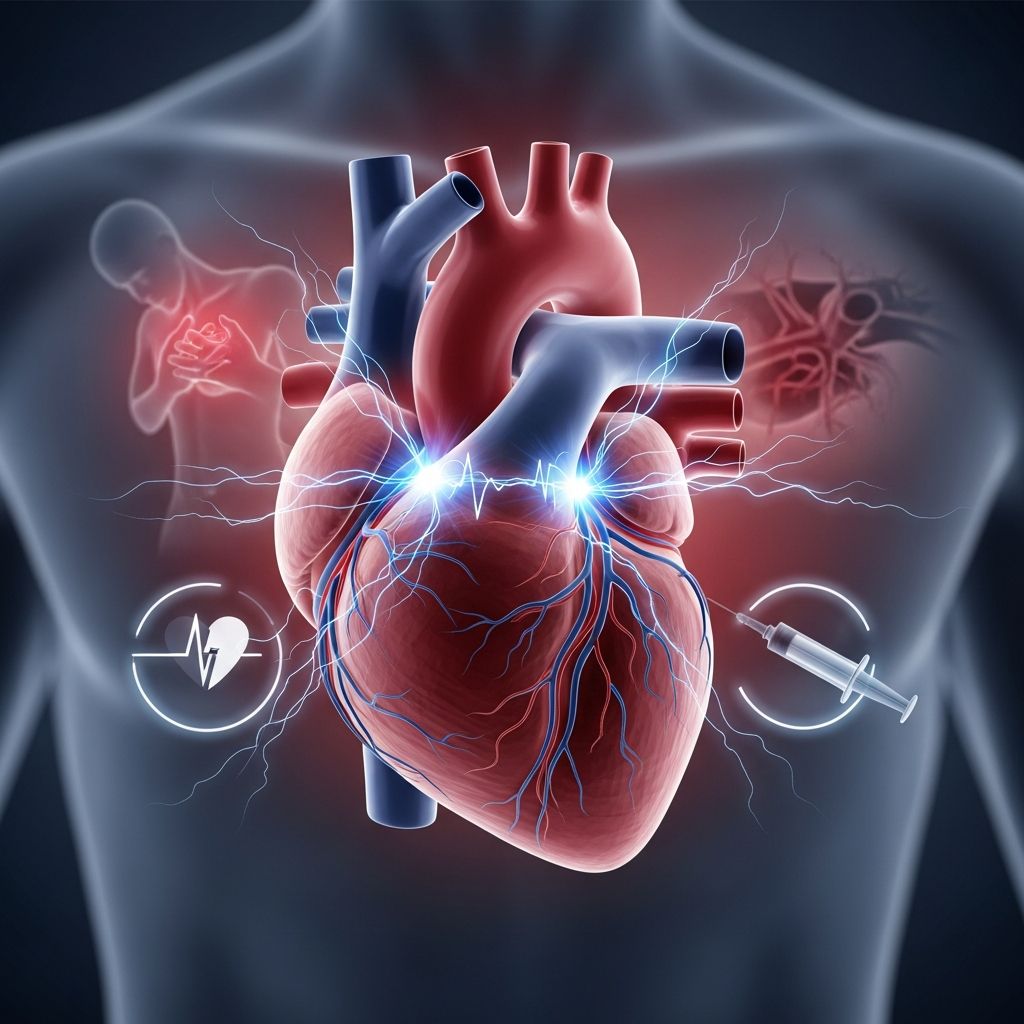
Sudden cardiac arrest occurs when your heart’s electrical system malfunctions, causing the heart to stop pumping blood effectively. This life-threatening emergency develops when an electrical disturbance makes your heart beat dangerously fast or irregularly, preventing it from delivering oxygen-rich blood to your brain and body. When your heart stops beating, you lose consciousness almost immediately, and without emergency intervention, sudden cardiac arrest can be fatal within minutes. This condition demands immediate recognition and action, as survival rates depend heavily on how quickly bystanders and emergency personnel respond.
What Happens During Cardiac Arrest
During cardiac arrest, your heart stops its normal pumping function entirely. The ventricles, which are the heart’s lower chambers, may flutter or quiver in a condition called ventricular fibrillation, meaning blood stops circulating throughout your body. Within moments of the heart stopping, oxygen delivery to your organs becomes critically compromised. Your brain, which requires constant oxygen flow to function, begins suffering damage almost immediately. In the first few minutes of cardiac arrest, the most critical concern is that blood flow to the brain will be reduced so drastically that a person loses consciousness. Without emergency medical intervention, this condition leads to death within an estimated eight minutes. Brain damage can occur after just five minutes of lost oxygen supply.
Recognizing Cardiac Arrest Symptoms
Identifying sudden cardiac arrest is crucial for initiating life-saving treatment. When someone experiences cardiac arrest, they will suddenly collapse and become unconscious. Additional signs that indicate cardiac arrest include:
– Sudden loss of consciousness- No pulse or undetectable pulse- No breathing or gasping for air- Loss of color in the face- Unresponsiveness to stimuli
Some individuals may experience chest pain before losing consciousness, though once unconscious, they cannot feel pain. Notably, people may experience chest discomfort after receiving CPR during recovery efforts. The abrupt nature of cardiac arrest distinguishes it from a gradual medical decline, making it a true emergency that requires immediate action.
Causes of Sudden Cardiac Arrest
Cardiac arrest results from an electrical malfunction in the heart rather than a simple mechanical failure. Several underlying conditions and risk factors can trigger sudden cardiac arrest, including:
– Coronary artery disease- Previous heart attacks- Heart failure- Arrhythmias (irregular heartbeats)- High blood pressure- High cholesterol- Diabetes- Hypertrophic cardiomyopathy- Congenital heart defects
Understanding these risk factors is essential for prevention and allows individuals to work with healthcare providers to manage conditions that could trigger cardiac arrest.
Emergency Response: Immediate Action Steps
When you witness someone collapsing into unconsciousness or suspect sudden cardiac arrest, immediate action is critical. Here is what you should do:
– Call 911 or your local emergency services number immediately- Start CPR if you are trained to do so- Send someone to locate an AED (Automated External Defibrillator)- Follow dispatcher instructions while waiting for emergency personnel to arrive- Continue CPR until the person starts breathing or paramedics take over
The faster someone receives help, the better their chances of survival with good health outcomes. Survival rates can be as high as 90% if treatment starts within the first minutes after sudden cardiac arrest. However, the survival rate drops by approximately 10% for each minute that passes without treatment.
Cardiopulmonary Resuscitation (CPR)
CPR is a critical emergency technique that keeps enough oxygen in the lungs and delivers it to the brain until the heart’s normal rhythm can be restored. There are two main types of CPR that can be performed:
Related Stories



Hands-Only CPR
Hands-only CPR involves performing chest compressions without rescue breaths. Studies demonstrate that hands-only CPR can be as effective as CPR with breaths during the first few minutes of a cardiac arrest event in adults, particularly in scenarios outside of hospitals. This method is often easier for untrained bystanders to perform and is increasingly recommended for public use.
Traditional CPR with Rescue Breaths
Traditional CPR combines chest compressions with rescue breaths to provide both circulation and oxygenation. This method requires more training but provides comprehensive resuscitation support.
Performing CPR involves these key steps:
– Position the person on their back on a firm surface- Place the heel of one hand on the center of the chest- Place your other hand on top and interlock your fingers- Push hard and fast at least 100-120 compressions per minute- Maintain this rhythm until emergency personnel arrive or the person shows signs of life
Providing chest compressions can become physically exhausting very quickly. If other people are present, they should take turns performing compressions to maintain effectiveness. You should keep performing CPR until the person starts breathing or a paramedic arrives to take over care.
Defibrillation and AED Use
An Automated External Defibrillator (AED) offers the best chance of rescuing a patient experiencing cardiac arrest. Defibrillation works by delivering an electric shock through paddles placed on the chest that stops abnormal heart impulses and restores the normal electrical patterns that enable the heart to beat. The shorter the time until defibrillation occurs, the greater the chance the patient will survive.
Once emergency personnel arrive at the scene, they can use professional defibrillators to deliver more precise electrical therapy. The current travels directly to the heart through the paddles. This intervention stops the abnormal impulses causing the dangerous heartbeat and restores normal impulses that enable the heart to pump on its own. Multiple shocks may be necessary before the heart resumes independent function.
Hospital Emergency Treatment
Once emergency personnel arrive and begin treatment, they implement comprehensive emergency protocols. Through an intravenous line placed in the patient’s arm, emergency medical professionals administer medications called antiarrhythmics. These medications work to restore and stabilize the heart’s electrical rhythm. After successful defibrillation, most people require hospitalization to recover from the acute effects of cardiac arrest and to identify and treat the underlying cause of the emergency.
Long-Term Prevention and Treatment Options
Preventing future episodes of sudden cardiac arrest requires a comprehensive approach to managing underlying heart conditions and risk factors. Treatments that can prevent cardiac arrest or lower your risk of experiencing a second episode include:
Medications
Healthcare providers may prescribe various medications to reduce the risk of sudden cardiac arrest, particularly for patients who have experienced heart attacks, heart failure, or arrhythmias. Common medications include ACE inhibitors, beta blockers, calcium channel blockers, antiarrhythmics, and statin medications for patients with high cholesterol and coronary artery disease.
Implantable Cardioverter-Defibrillator (ICD)
An ICD is a device implanted under the skin that constantly monitors your heart’s rhythm. When it detects a very fast or abnormal heart rhythm, it delivers a small but powerful shock to the heart muscle to return it to normal rhythm. The device records data from each episode that your doctor can review to assess your cardiac status. ICDs may be combined with pacemakers to treat other underlying irregular heart rhythms.
Interventional Procedures and Surgery
Patients with coronary artery disease may need interventional procedures such as angioplasty or bypass surgery to improve blood flow to the heart muscle and reduce the risk of cardiac arrest. Patients with other conditions like hypertrophic cardiomyopathy or congenital heart defects may require surgical intervention to correct the underlying problem. Additional procedures to treat abnormal heart rhythms include electrical cardioversion and catheter ablation.
Lifestyle Changes for Prevention
You can help prevent cardiac arrest by actively managing your risk factors and living a healthy lifestyle. Key prevention strategies include:
– Managing high blood pressure through medication and lifestyle modifications- Controlling cholesterol levels through diet and medication as prescribed- Managing diabetes with appropriate treatment and monitoring- Exercising regularly as recommended by your healthcare provider- Following a heart-healthy diet low in saturated fats and sodium- Maintaining a healthy weight- Avoiding smoking and excessive alcohol consumption- Managing stress through appropriate techniques- Taking medications as prescribed by your healthcare provider
Recovery After Cardiac Arrest
Surviving sudden cardiac arrest marks the beginning of a lengthy recovery process for many patients. The extent of recovery depends significantly on how long your brain was deprived of oxygen during the arrest. Many survivors experience some degree of brain damage, ranging from mild cognitive effects to more severe neurological impact.
After successful resuscitation and hospitalization, healthcare providers will assess you for organ damage resulting from oxygen deprivation. They will conduct diagnostic tests to determine the specific cause of your cardiac arrest and provide appropriate treatment for the underlying condition. Healthcare providers will establish a follow-up care schedule and may recommend cardiac rehabilitation programs to support your recovery.
During recovery, it is essential to maintain regular communication with your healthcare team. Be sure to report any new symptoms or concerns about your recovery progress. Participating in cardiac rehabilitation programs, adhering to prescribed medications, and following lifestyle recommendations significantly improves long-term outcomes.
Understanding Sudden Cardiac Death
Sudden cardiac death refers to cardiac arrest that occurs without someone providing rescue interventions like CPR and defibrillation. This distinction is critical because it highlights how the actions of bystanders and emergency responders directly determine whether a cardiac arrest event results in survival or death. With immediate treatment and proper emergency response, rescue is still possible even in the most dire circumstances.
Frequently Asked Questions
Q: What is the difference between cardiac arrest and a heart attack?
A: Cardiac arrest is an electrical problem where the heart stops beating effectively, while a heart attack is a circulation problem where the heart muscle doesn’t receive enough blood flow. A heart attack can trigger cardiac arrest, but they are distinct medical emergencies requiring different immediate responses.
Q: How long can someone survive without treatment during cardiac arrest?
A: Sudden cardiac arrest can be fatal if it lasts longer than eight minutes without CPR. Brain damage can begin after just five minutes without oxygen, making immediate action critical for survival and recovery.
Q: What is the survival rate for cardiac arrest?
A: Survival can be as high as 90% if treatment starts within the first minutes after sudden cardiac arrest. However, the survival rate drops by approximately 10% for each minute that passes without treatment.
Q: Can CPR alone save someone in cardiac arrest?
A: While CPR is essential for maintaining oxygen circulation, it is the combination of CPR plus defibrillation that provides the best chance of rescuing a patient. CPR keeps blood and oxygen circulating until defibrillation can restore normal heart rhythm.
Q: What should I do if I see someone collapse?
A: Call 911 or your local emergency number immediately. If you are trained in CPR, begin chest compressions while someone else locates an AED. Follow instructions from the emergency dispatcher while waiting for help to arrive.
Q: Are there warning signs before sudden cardiac arrest?
A: Some people may experience chest pain before losing consciousness, though sudden cardiac arrest often occurs without warning. This is why managing risk factors like high blood pressure, high cholesterol, and diabetes is so important for prevention.
References
- Sudden Cardiac Arrest: Causes & Symptoms — Cleveland Clinic. 2024. https://my.clevelandclinic.org/health/diseases/21736-cardiac-arrest
- Sudden Cardiac Arrest (SCA) & SCD — Cleveland Clinic Abu Dhabi. 2024. https://www.clevelandclinicabudhabi.ae/en/health-hub/health-resource/diseases-and-conditions/sudden-cardiac-arrest-and-sudden-cardiac-death
- CPR: What It Is & How To Perform It — Cleveland Clinic. 2024. https://my.clevelandclinic.org/health/treatments/17680-cardiopulmonary-resuscitation-cpr
- Resuscitation Protocol is Saving Lives Through Standardization and Ongoing Research — Consult QD, Cleveland Clinic. 2024. https://consultqd.clevelandclinic.org/resuscitation-protocol-is-saving-lives-through-standardization-and-ongoing-research
- American Heart Association Guidelines for CPR and Emergency Cardiovascular Care — American Heart Association. 2024. https://www.heart.org/en/professional/quality-improvement/resuscitation-quality-programs
Similar Articles








Read full bio of medha deb