Sunburn: Symptoms, Treatment, Prevention Guide 2025
Understand sunburn risks, effective treatments, prevention strategies, and long-term sun damage effects for healthier skin.
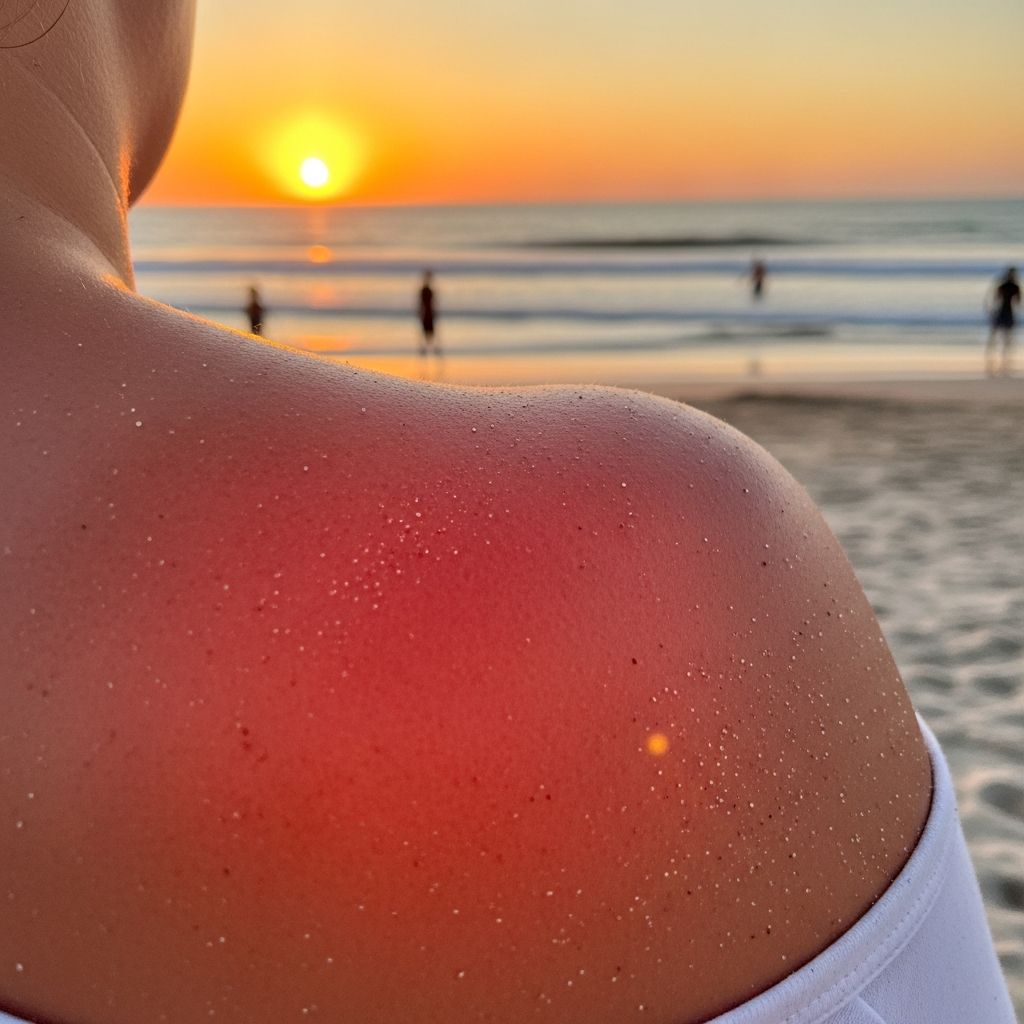
Sunburn is the most common problem caused by too much sun exposure to unprotected skin. This article covers sunlight’s effects on skin, risks, treatment, prevention, and benefits of sunshine.
Understanding sunlight and the skin
Sunlight consists of visible light and ultraviolet (UV) radiation, including UVA and UVB rays. UVB rays primarily cause sunburn, while both UVA and UVB contribute to skin aging and cancer risk. UV rays penetrate the skin, damaging DNA in skin cells, triggering inflammation and repair processes.
The skin’s outer layer, the epidermis, absorbs most UV radiation. Fair skin with less melanin offers minimal natural protection, making it more susceptible. Darker skin has more melanin, providing some shield but not immunity.
Who is at risk from the sun?
Anyone can experience sun damage, especially those with outdoor jobs, hobbies, or sunbathing habits. Risk increases near the equator, at high altitudes, or between 10 AM and 4 PM when UV rays are strongest. Other sources like sunbeds and sunlamps also pose dangers.
- People with fair skin, red or blonde hair, blue eyes
- Children and babies with delicate skin
- Individuals on medications increasing photosensitivity (e.g., antibiotics, diuretics)
- Those with a history of sunburn or skin cancer
Tourist areas report higher sunburn rates despite awareness campaigns.
What is sunburn?
Sunburn is an acute inflammatory reaction from excessive UV exposure. White skin turns pink or red, hot, and painful; severe cases blister. Darker skin may feel hot without visible color change, followed by peeling.
Symptoms appear 2-6 hours post-exposure, peak at 12-24 hours, and resolve in 4-7 days with scaling. Severe sunburn may cause vesicles, bullae, headache, chills, nausea. Degrees include mild (erythema), moderate (edema, pain), severe (blistering, systemic symptoms).
How to treat sunburn
Treatment focuses on symptom relief and preventing further damage. Seek shade immediately.
- Cool the skin: Apply cool compresses, baths, or showers for 10-15 minutes several times daily.
- Moisturize: Use aloe vera gel, calamine lotion, or fragrance-free moisturizers. Avoid petroleum-based products.
- Pain relief: Take ibuprofen or aspirin to reduce inflammation and pain. Drink plenty of fluids to stay hydrated.
- Protect blisters: Do not pop; cover loosely. Avoid local anesthetics.
For severe cases with fever, confusion, or extensive blistering (>20% body), seek medical help for fluids and monitoring. Healing takes 3-7 days; peeling is normal.
What other problems may be caused by too much sun?
Beyond sunburn, acute effects include heat exhaustion (fatigue, dizziness) and heatstroke (high fever, confusion)—emergency conditions. Chronic exposure causes photoaging: wrinkles, leathery skin, age spots.
| Acute Effects | Chronic Effects |
|---|---|
| Sunburn, heat rash | Premature aging, actinic keratosis |
| Photosensitivity reactions | Skin cancers (melanoma, basal/squamous cell) |
What are the effects of long-term sun damage?
Cumulative UV exposure accelerates skin aging and raises skin cancer risk. Each sunburn doubles melanoma risk; over 5 lifetime sunburns significantly increase odds. Nearly 90% of skin cancers link to UV exposure.
Related Stories



Photoaging thins skin, causes dyspigmentation, telangiectasia. Actinic keratoses are precancerous; untreated, they may progress to squamous cell carcinoma. Early detection via self-checks is vital.
How can I avoid getting sunburnt?
Prevention is key. Balance sun avoidance with vitamin D needs.
- Timing: Avoid sun 10 AM-4 PM.
- Shade: Use umbrellas, trees.
- Cover up: Wear hats, long sleeves, pants (UPF 50+ fabrics).
- Sunglasses: UV-protective with wraparound style.
- Sunscreen: Broad-spectrum SPF 30+, water-resistant. Apply 2mg/cm² (teaspoon per body part), reapply every 2 hours, after swimming/sweating.
For children, use SPF 50+, cover up first.
More tips for protecting skin from sun damage
- Check medications for photosensitivity.
- Avoid sunbeds entirely—they emit concentrated UVA.
- Use lip balm with SPF.
- Be cautious near snow, water, sand (reflect 80% UV).
- Reapply sunscreen after toweling.
Wear daily SPF 30+ year-round, even cloudy days (UV penetrates clouds).
The Solar UV Index
The UV Index forecasts UV intensity (0-11+). Check weather apps or sites.
| UV Index | Protection Needed |
|---|---|
| 0-2 (Low) | Sunscreen, hat if outdoors long |
| 3-5 (Moderate) | Seek shade midday, SPF 30+, cover up |
| 6-7 (High) | Minimize exposure, full protection |
| 8-10 (Very High) | Avoid outdoors midday |
| 11+ (Extreme) | No outdoor exposure |
Higher index at altitude/equator.
Benefits of sunshine
Sunshine boosts vitamin D production for bone health, immunity. 10-15 minutes midday exposure (without burning) suffices for most. Supplements aid if deficient. Balance protection with safe exposure.
Frequently Asked Questions (FAQs)
Q: How long does sunburn last?
A: Mild sunburn lasts 3-5 days; severe up to 7 days with peeling.
Q: Can dark skin get sunburn?
A: Yes, though less visible; it feels hot and peels.
Q: Is coconut oil good for sunburn?
A: No, it traps heat; use aloe or moisturizers.
Q: Does sunscreen prevent all damage?
A: High SPF reduces 97% UVB; combine with clothing.
Q: When to see a doctor for sunburn?
A: If blistering >20% body, fever, vomiting, confusion.
References
- Sun and Sunburn: Risks, Treatment, and Protection — Patient.info. 2025. https://patient.info/skin-conditions/sun-and-sunburn
- Sunburn – StatPearls — NCBI Bookshelf. 2023-10-05. https://www.ncbi.nlm.nih.gov/books/NBK534837/
- How to treat sunburn at home — Patient.info. 2025-07-22. https://patient.info/features/skin-conditions/how-to-treat-sunburn-at-home
- New study reveals how controlling sunburn-triggered inflammation may prevent skin cancer — University of Chicago Medicine. 2025-11. https://www.uchicagomedicine.org/forefront/cancer-articles/2025/november/sunburn-inflammation-study
- Sunburn: Causes, Symptoms, and Treatment — Patient.info Doctor. 2025. https://patient.info/doctor/dermatology/sunburn
Similar Articles








Read full bio of medha deb