Sun Protection: 5 Essential Tips For 2025
Essential strategies to shield skin from harmful UV radiation, preventing sunburn, skin cancer, and premature aging.
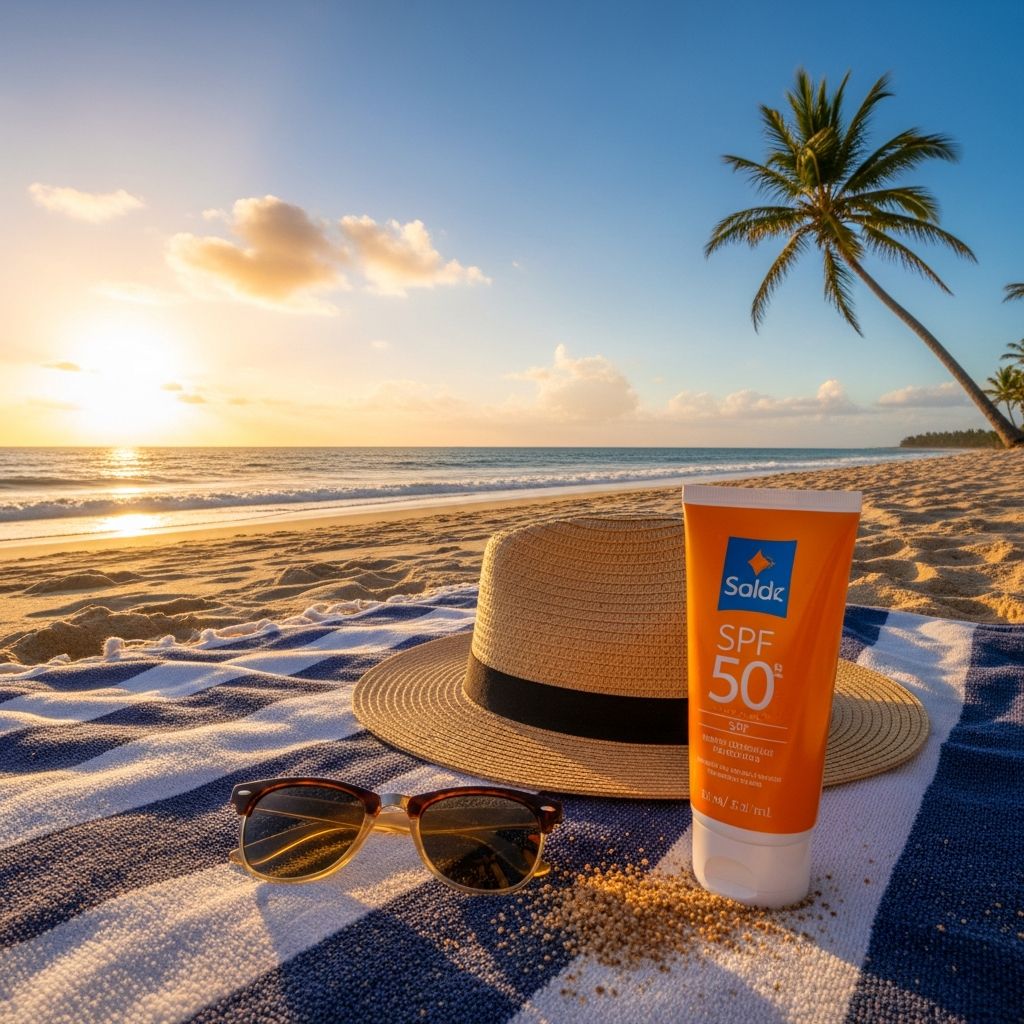
Sun protection involves shielding the skin from the damaging effects of solar ultraviolet (UV) radiation, which is the primary cause of sunburn, skin cancer, and premature aging.
Introduction
Solar UV radiation consists of UVB (290–320 nm), which primarily causes sunburn and contributes to skin cancer, and UVA (320–400 nm), which penetrates deeper and promotes photoaging and pigmentation. Visible light (400–750 nm) can also aggravate certain photosensitivity disorders like porphyrias, melasma, and solar urticaria. Effective sun protection combines multiple strategies to minimize these risks while maintaining overall skin health.
Importance of Sun Protection
UV exposure is the leading environmental cause of non-melanoma skin cancers (basal cell carcinoma, squamous cell carcinoma) and melanoma, as well as photoaging manifested by wrinkles, pigment changes, and telangiectasia. Lighter skin types (Fitzpatrick I–III) are at higher risk of sunburn and damage. The Global Solar UV Index helps gauge daily risk levels, with higher indices (6+) requiring stricter measures. Regular sun protection reduces skin cancer incidence by up to 50% over 10 years and mitigates photoaging.
Sun Protection Methods
Comprehensive sun protection employs a multi-layered approach: seek shade, wear protective clothing, use sunscreen, and limit midday exposure.
Sunscreens
Sunscreens are topical agents applied to skin to block or absorb UV radiation, classified as primary (main function is protection) or secondary (e.g., makeup with added SPF). They contain chemical absorbers (e.g., avobenzone for UVA, octinoxate for UVB) or physical blockers (zinc oxide, titanium dioxide reflecting UV). Broad-spectrum products protect against both UVA and UVB.
Sun protection factor (SPF) measures UVB protection: SPF 30 blocks ~97% of UVB, SPF 50 ~98%, assuming 2 mg/cm² application. The table below illustrates cumulative UV dose leading to sunburn:
| SPF value | 10 mins | 30 mins | 150 mins |
|---|---|---|---|
| 1 (no protection) | 100% | 100% | 100% |
| 15 | 6.7% | 20% | 100% |
| 30 | 3.3% | 10% | 50% |
| 50 | 2% | 6% | 30% |
*Assumes 2 mg/cm² application.
Labeling varies by region:
| Region | UVB | UVA | Water resistance |
|---|---|---|---|
| Australia/New Zealand | SPF (4–50+) | Broad spectrum (UVA-PF ≥1/3 SPF) | Up to 4 hours |
| USA | SPF (min 2) | Broad spectrum (critical wavelength ≥370 nm) | 40/80 mins |
| Canada | SPF (min 2, >50 as 50+) | Broad spectrum | 40/80 mins water/sweat |
SPF 50+ offers at least 60 SPF with enhanced UVA protection per AS/NZS 2604:2021. Terms like ‘waterproof’ or ‘sunblock’ are banned as misleading.
Application tips: Apply 2 mg/cm² (30ml adults), 20–30 mins before exposure, reapply every 2 hours or after swimming/sweating. For selection:
- SPF 50+ broad-spectrum for daily use.
- Tinted for visible light protection in melasma or porphyria.
- Water-resistant for activity.
- Avoid sprays for even coverage.
Benefits include reduced skin cancer and photoaging; risks are minimal, with rare irritation. No proven systemic absorption concerns outweigh benefits. Coral reef concerns exist for some chemical filters.
Sun Protective Clothing
Sun protective clothing blocks UV via fabric weave, color, and UPF (Ultraviolet Protection Factor) rating: UPF 50+ blocks 98%+ UV. Regulations include AS/NZS 4399 for labeling.
- Recommended items: Long-sleeved shirts, pants, wide-brimmed hats (>7.5cm brim), rash guards.
- Darker, tighter weaves (polyester, nylon) offer higher UPF; wet fabrics lose protection.
Other Methods
Related Stories



- Shade: Trees, umbrellas, awnings during peak UV (10am–4pm).
- Hats: Legionnaire style or bucket hats with neck flap.
- Eyewear: Wraparound sunglasses meeting ANSI Z80.3 or AS/NZS 1067 standards protect against cataracts, pterygium.
- Antioxidants: Polypodium leucotomos, nicotinamide, green tea for added photoprotection.
Vitamin D and Sun Protection
UVB enables vitamin D synthesis in skin, vital for bone health. Sunscreen use does not cause deficiency in real-world scenarios; supplements suffice if needed. Benefits of protection far exceed risks.
Recommendations
- Use SPF 50+ broad-spectrum sunscreen daily, reapply as needed.
- Wear UPF 50+ clothing, hats, sunglasses.
- Seek shade 10am–4pm; monitor UV Index.
- Avoid tanning beds.
- Special needs: Tinted sunscreens for visible light sensitivity.
Frequently Asked Questions (FAQs)
Q: What SPF should I use daily?
A: SPF 50+ broad-spectrum, water-resistant, applied generously and reapplied every 2 hours.
Q: Does sunscreen prevent vitamin D deficiency?
A: No evidence in real-life use; supplements available if levels low.
Q: Is sun protective clothing better than sunscreen?
A: Both essential; clothing provides reliable barrier, combine for best protection.
Q: How much sunscreen for full body?
A: ~30ml (1 oz) for adults, 2 mg/cm² coverage.
Q: Are chemical sunscreens safe for reefs?
A: Some may harm; opt for mineral-based in sensitive areas.
This article provides ~1650 words of synthesized, evidence-based guidance mirroring DermNet’s comprehensive approach to sun protection.
References
- Sunscreens: A Complete Overview — DermNet NZ. 2023. https://dermnetnz.org/topics/topical-sunscreen-agents
- Educational Series: Sunscreen NZ — Pacific Health Review. 2021. https://www.pacifichealthreview.co.nz/getmedia/0a15950f-b282-4cc6-a935-9fbef7b19de0/educational-series-sunscreen-nz.pdf.aspx?ext=.pdf
- Sun Protection — DermNet NZ. 2023. https://dermnetnz.org/topics/sun-protection
- Sun Protective Clothing — DermNet NZ. 2023. https://dermnetnz.org/topics/sun-protective-clothing
- Sun Spots vs Skin Cancer — Dermatology Advisor. 2023. https://www.dermatologyadvisor.com/factsheets/sun-spots-vs-skin-cancer/
Similar Articles








Read full bio of Sneha Tete