Sunburn: Causes, Symptoms, Treatment, And Prevention Guide
Erythema and oedema from excessive UV exposure: causes, symptoms, treatment, and prevention strategies.
Introduction
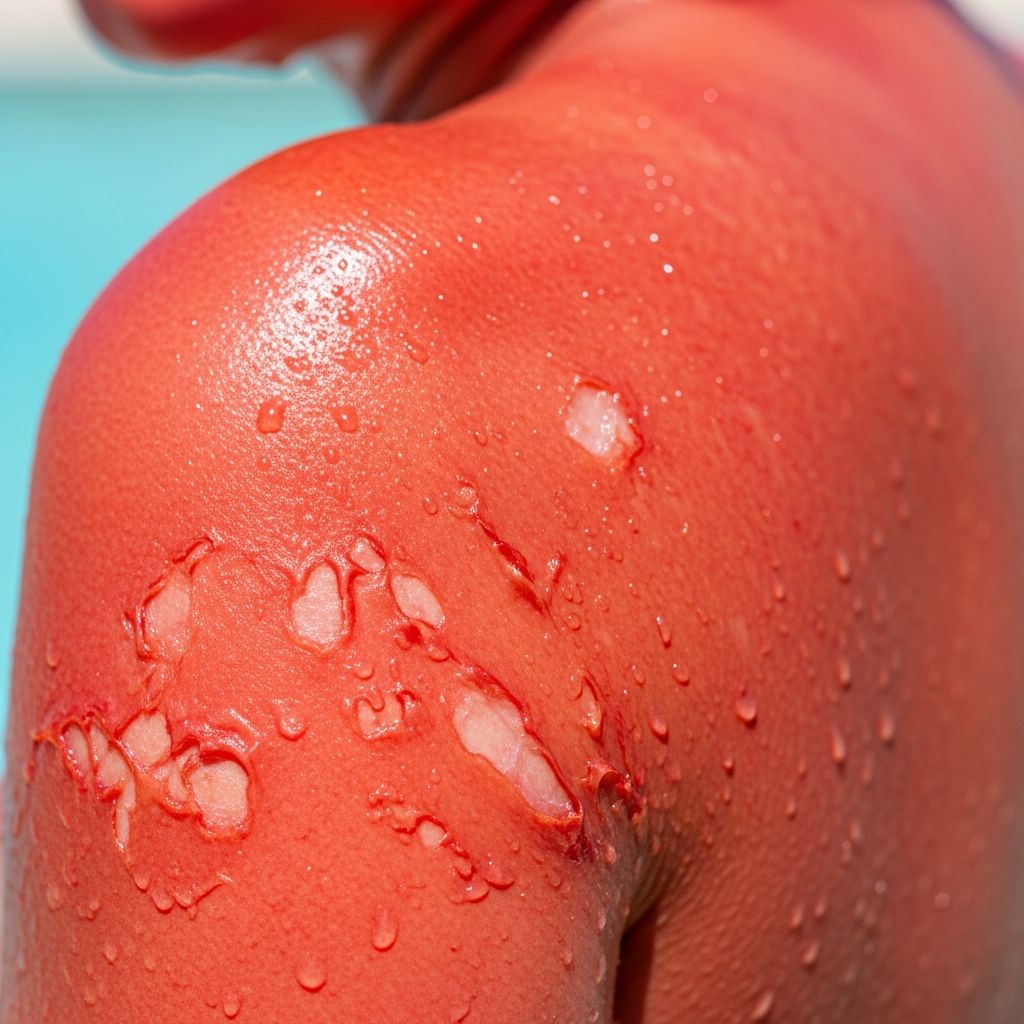
Sunburn is an acute inflammatory skin condition characterized by
erythema
(redness) andoedema
(swelling) resulting from excessive exposure to the sun’s ultraviolet (UV) radiation. This damage occurs primarily from UVB rays (280–315 nm), which penetrate the skin and trigger cellular changes, including the formation of sunburn cells—apoptotic keratinocytes—and a depletion of immune cells like Langerhans and mast cells. While commonly associated with natural sunlight, sunburn can also result from artificial UV sources such as solariums or tanning beds. At a cellular level, UV radiation induces DNA damage, vasodilation, and release of inflammatory mediators, leading to the familiar painful burn.The condition varies in severity based on exposure duration, skin type, and environmental factors. Mild cases resolve within days, but severe sunburn can mimic second-degree burns, causing blistering, dehydration, and systemic effects. Importantly, each sunburn episode contributes to cumulative skin damage, significantly elevating the risk of
skin cancer
, premature aging, and other photodamage. Understanding sunburn is crucial for prevention, as it is entirely avoidable with proper sun protection measures.Causes
Sunburn arises from overexposure to
ultraviolet radiation (UVR)
, part of the electromagnetic spectrum with wavelengths shorter than visible light. UVR is categorized into UVA (315–400 nm), UVB (280–315 nm), and UVC (<280 nm), with uvc mostly absorbed by the ozone layer.UVB
is the primary culprit for sunburn, as it causes direct DNA damage and erythema, whileUVA
contributes to deeper penetration, tanning, and photoaging.Key risk factors amplifying sunburn incidence include:
- Time of day and season: UV intensity peaks between 10 AM and 4 PM, with 65% of daily UVR occurring from 10 AM to 2 PM; higher in summer and at high altitudes.
- Geographic location: Proximity to the equator increases UV exposure.
- Skin phototype: Fair-skinned individuals (Fitzpatrick types I-II) burn easily due to low melanin.
- Reflective surfaces: Water, sand, snow reflect up to 80% of UVR, intensifying exposure.
- Photosensitizing agents: Medications like tetracyclines, thiazides, sulfonamides, and St. John’s wort heighten sensitivity.
- Artificial sources: Tanning beds emit UVA/UVB, accelerating burns and aging.
The
Fitzpatrick skin phototype
classifies susceptibility based on melanin content and UV response:| Type | Description | Burn/Tan Tendency |
|---|---|---|
| I | Very fair; red or blonde hair, blue eyes | Always burns, never tans |
| II | Fair; blonde or light brown hair | Usually burns, tans minimally |
| III | Medium; brown hair | Sometimes burns, tans gradually |
| IV | Olive; dark hair | Rarely burns, tans easily |
| V | Brown; dark hair/eyes | Very rarely burns, tans deeply |
| VI | Black; very dark skin | Never burns, deeply pigmented |
Demographics
Sunburn affects all ages and ethnicities but disproportionately impacts those with lighter skin phototypes (I-III), who comprise a significant portion of skin cancer cases worldwide. Children and adolescents are particularly vulnerable due to thinner skin and higher outdoor activity, with repeated childhood sunburns tripling melanoma risk later in life. Globally, skin cancer—linked to UV overexposure—is the most common cancer, with over 5 million cases annually in the US alone. Fair-skinned populations in high-UV regions like Australia and New Zealand report the highest incidence, underscoring the role of genetics and environment. Occupational groups (e.g., outdoor workers) and recreational sun-seekers also face elevated risks.
Clinical Features
Symptoms typically emerge
2-6 hours
post-exposure, peak at12-24 hours
, and resolve in3-5 days
for mild cases.[10] Severity correlates with dose and skin type.- Mild sunburn: Tender erythema, warmth, itching.
- Moderate: Marked redness, pain, swelling, nausea, chills.
- Severe: Blisters, fever, hypotension, confusion; akin to second-degree burns.
Progression includes peeling and desquamation
4-7 days
later as damaged epidermis sheds. Ocular involvement (photokeratitis) may cause gritty eyes or corneal injury. Systemic effects in extensive burns: dehydration, electrolyte imbalance, shock.Treatment
Treatment focuses on symptom relief, as sunburn is self-limiting.
Prevention
remains paramount.Self-Management
- Cool baths or saline compresses (20 min, 3-4x daily) to reduce heat and pain.
- Moisturizers (e.g., aloe vera, calamine lotion) frequently; avoid petroleum-based products.
- Hydration: Drink plenty of water to counter fluid loss.
- Analgesics: NSAIDs (ibuprofen) for pain and inflammation.
- Avoid irritants: Loose clothing, no scratching/blister popping to prevent infection.
Related Stories



Medical Management
- Topical steroids (hydrocortisone 1%) for itching/inflammation.
- Oral steroids for severe cases.
- Antibiotics only if infected blisters.
- Hospitalization for extensive burns: IV fluids, pain control, infection prophylaxis.
Post-exposure: Oral
Polypodium leucotomas
may mitigate severity if taken early.Prevention
**Sun protection** is the cornerstone: seek shade (especially 10 AM-4 PM), wear protective clothing, hats, UV-blocking sunglasses. Use broad-spectrum
sunscreen
(SPF 30+), applying 2 mg/cm², reapplying every 2 hours or after swimming/sweating.- SPF: Indicates UVB protection time multiplier (e.g., SPF 30 = 30x longer).
- PA/Star rating: For UVA.
- Avoid DEET/insect repellents reducing SPF; water-resistant formulas preferred.
- Check UV Index via weather forecasts.
Tinted sunscreens protect against visible light for photosensitive conditions.
Long-term Consequences
Repeated sunburns cause
photoaging
(wrinkles, dyspigmentation) and dramatically raiseskin cancer
risk: one blistering sunburn doubles melanoma odds. Cumulative UV damage mutates DNA, leading to basal/squamous cell carcinomas and melanoma. Tanning beds further exacerbate risks. Early prevention preserves skin health and vitamin D balance.Frequently Asked Questions (FAQs)
Q: How long after sun exposure does sunburn appear?
A: Signs begin 2-6 hours post-exposure, peak at 12-24 hours, and subside in 72 hours for mild cases.[10]
Q: Is tanning safer than sunburn?
A: No, tanning indicates DNA damage and increases cancer risk similarly to burns.
Q: What SPF sunscreen is best?
A: Broad-spectrum SPF 30+; higher for fair skin or high UV.
Q: Can medications cause sunburn?
A: Yes, photosensitizers like tetracyclines and thiazides heighten risk.
Q: When to seek medical help for sunburn?
A: Severe blistering, fever, dehydration, or extensive area (>20% body).
References
- Understanding Sunburn Prevention and Management Strategies — US Pharmacist. 2022-08. https://www.uspharmacist.com/article/understanding-sunburn-prevention-and-management-strategies
- Managing cases of severe sunburn — GPonline. N/A. https://www.gponline.com/managing-cases-severe-sunburn/dermatology/article/672176
- Sunburn – DermNet — DermNet NZ. 2005 (updated). https://dermnetnz.org/topics/sunburn
- Sunscreens: A Complete Overview – DermNet — DermNet NZ. N/A. https://dermnetnz.org/topics/topical-sunscreen-agents
- Sunburn: Treatments, home remedies, and prevention — Medical News Today. N/A. https://www.medicalnewstoday.com/articles/176441
- Sunburn: Causes, Symptoms, and Treatment — Patient.info. N/A. https://patient.info/doctor/dermatology/sunburn
Similar Articles








Read full bio of Sneha Tete