Sunlight For Sleep: 4 Practical Strategies For Better Rest
Unlock better rest through daily natural light exposure: regulate rhythms, boost mood, and enhance overall health naturally.
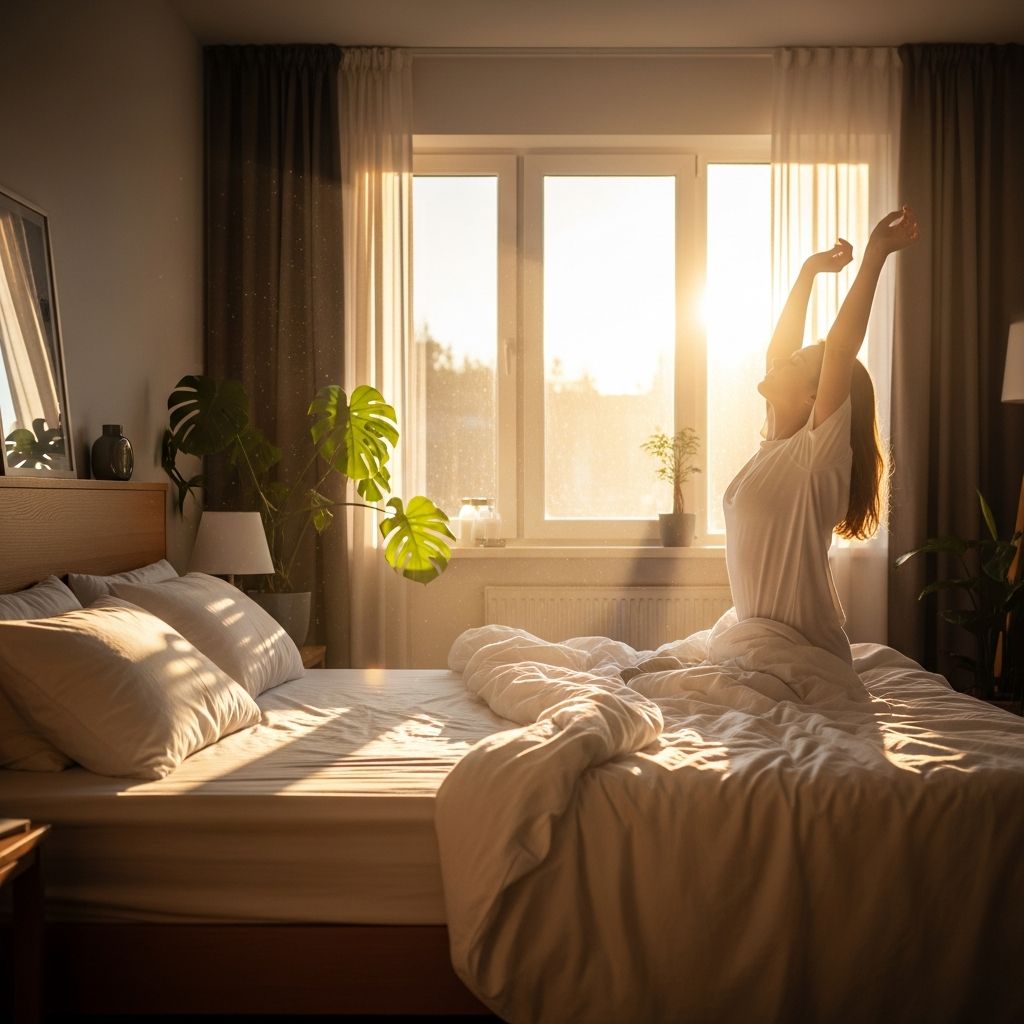
Natural sunlight serves as a fundamental regulator of human physiology, profoundly influencing sleep patterns, emotional balance, and ocular function. Exposure to daylight, particularly in the early hours, aligns the body’s internal timing system, fostering restorative sleep and heightened daytime vitality.
The Science Behind Light and Body Rhythms
Human biology operates on a circadian rhythm, a roughly 24-hour cycle governed by the suprachiasmatic nucleus (SCN) in the brain. This master clock receives direct input from light detected by specialized retinal cells called intrinsically photosensitive retinal ganglion cells (ipRGCs). These cells respond primarily to short-wavelength blue light abundant in daylight, signaling the SCN to adjust hormonal releases and behavioral patterns.
Daylight exposure, especially at intensities exceeding 1,000 lux typical outdoors, suppresses melatonin production during waking hours while promoting cortisol release for alertness. As evening approaches and light dims, melatonin rises naturally, preparing the body for sleep. Disruptions from insufficient daytime light or excessive artificial evening light desynchronize this rhythm, leading to fragmented sleep and fatigue.
Research demonstrates that each additional hour outdoors can shift sleep onset earlier by about 30 minutes, extending total sleep time and enhancing depth. High-intensity natural light advances sleep timing, reduces awakenings, and boosts slow-wave sleep, crucial for physical restoration.
Morning Light: Your Daily Reset Button
Beginning the day with 30-60 minutes of outdoor light within an hour of waking maximizes benefits. This practice, sometimes called “sun gating,” involves facing natural brightness without staring directly at the sun to avoid retinal damage. It rapidly signals the brain to halt overnight melatonin and ramp up alertness hormones.
- Regulates internal clock: Morning light strengthens circadian entrainment, making evenings feel naturally sleepy.
- Boosts energy: Increases cortisol appropriately, combating morning grogginess.
- Enhances focus: Improves cognitive performance throughout the day.
Studies on shift workers and those with delayed sleep phases show morning light therapy rivals pharmaceutical interventions, advancing sleep by hours without side effects.
How Daylight Enhances Sleep Depth and Duration
Beyond timing, natural light quality matters. Daylight’s full spectrum, rich in blue wavelengths, promotes deeper sleep stages. Evening fatigue builds from daytime brightness, shortening sleep latency and increasing slow-wave accumulation, which dissipates built-up sleep pressure.
Objective measures like EEG confirm that daytime high-lux exposure correlates with fewer nocturnal arousals and superior sleep efficiency. Conversely, late-day dimness or indoor-only routines weaken this effect, prolonging wakefulness at bedtime.
| Light Exposure Timing | Sleep Impact | Supporting Evidence |
|---|---|---|
| Morning (post-wake) | Advances sleep onset, increases duration | 30 min shift per outdoor hour |
| Daytime (high intensity) | Boosts slow-wave sleep, reduces latency | Improved quality via blue-enriched light |
| Evening (avoid bright) | Preserves melatonin rise | Dim light for onset |
Mood Elevation Through Natural Illumination
Sunlight’s influence extends to mental health. Bright morning exposure combats seasonal affective disorder (SAD) and general low mood by stimulating serotonin pathways. The same ipRGCs that tune sleep also modulate emotional centers, reducing anxiety and depressive symptoms.
For populations like the elderly or indoor workers, 10,000 lux equivalents from a morning walk match light therapy lamps, offering non-drug relief. Physical activity outdoors amplifies this, though light alone suffices.
Related Stories



Protecting Eye Health Amid Light Benefits
While sunlight aids systemic health, eyes require care. ipRGCs handle non-visual light tasks without image formation, but rods, cones, and the lens filter harmful UV. Never gaze directly at the sun; peripheral exposure suffices for circadian signals.
Consistent daylight viewing supports retinal health by maintaining normal photoreceptor function. Insufficient natural light may contribute to myopia progression in children, underscoring balanced exposure.
Practical Strategies for Daily Light Integration
Incorporate sunlight seamlessly:
- Wake and step outside for 10-30 minutes, even cloudy days provide 1,000-10,000 lux.
- Eat breakfast by a window or during a walk.
- Shift work? Use therapy lamps mimicking dawn spectra.
- Afternoon outings reinforce rhythm strength.
Track progress with wearables noting sleep scores post-exposure.
Avoiding Evening Light Pitfalls
Counterbalance daytime gains by minimizing blue light post-sunset. Screens emit disruptive wavelengths; use filters or dim environments. This preserves melatonin, ensuring light-dark cycles mimic nature.
Special Considerations for Varied Lifestyles
Shift Workers and Jet Lag
Strategic light timing realigns disrupted schedules. Morning bright light post-shift advances phases effectively.
Winter and Low-Light Regions
Maximize midday sun; supplement with verified lamps if needed. Consistency yields mood and sleep gains.
FAQs
What if it’s raining or dark outside?
Bright indoor lights or light boxes (2,500-10,000 lux) approximate benefits; aim for full spectrum.
How much morning light is ideal?
30-60 minutes at >1,000 lux; less is better than none.
Can too much sunlight harm sleep?
Evening exposure does; morning/afternoon optimizes.
Does this help children or elderly?
Yes, supports development and counters age-related declines.
Glasses or contacts interfere?
Minimal impact on ipRGCs; remove sunglasses outdoors for signals.
Embracing natural light transforms sleep from elusive to reliable, weaving wellness into daily routines through biology-aligned habits.
References
- Effects of light on human circadian rhythms, sleep and mood — PMC/NCBI. 2019-09-12. https://pmc.ncbi.nlm.nih.gov/articles/PMC6751071/
- The Benefits of Morning Sunlight and How to Make It a Habit — Oura. 2023-05-15. https://ouraring.com/blog/benefits-of-morning-sunlight/
- Sun Gating and Morning Light for Better Sleep — Banner Health. 2024-01-10. https://www.bannerhealth.com/healthcareblog/teach-me/sun-gating-and-morning-light-for-better-sleep
- More Sunlight Exposure May Improve Sleep — Stanford Lifestyle Medicine. 2023-08-20. https://lifestylemedicine.stanford.edu/more-sunlight-exposure-may-improve-sleep/
- Light & Sleep: Effects on Sleep Quality — Sleep Foundation. 2024-11-05. https://www.sleepfoundation.org/bedroom-environment/light-and-sleep
- Good Light, Bad Light, and Better Sleep — National Sleep Foundation. 2023-06-14. https://www.thensf.org/good-light-bad-light-and-better-sleep/
Similar Articles








Read full bio of medha deb