Sunscreen Vs. Sunblock: Expert Guide To Effective UV Protection
Uncover the key differences between sunscreen and sunblock to choose the best UV protection for your skin type and lifestyle needs.
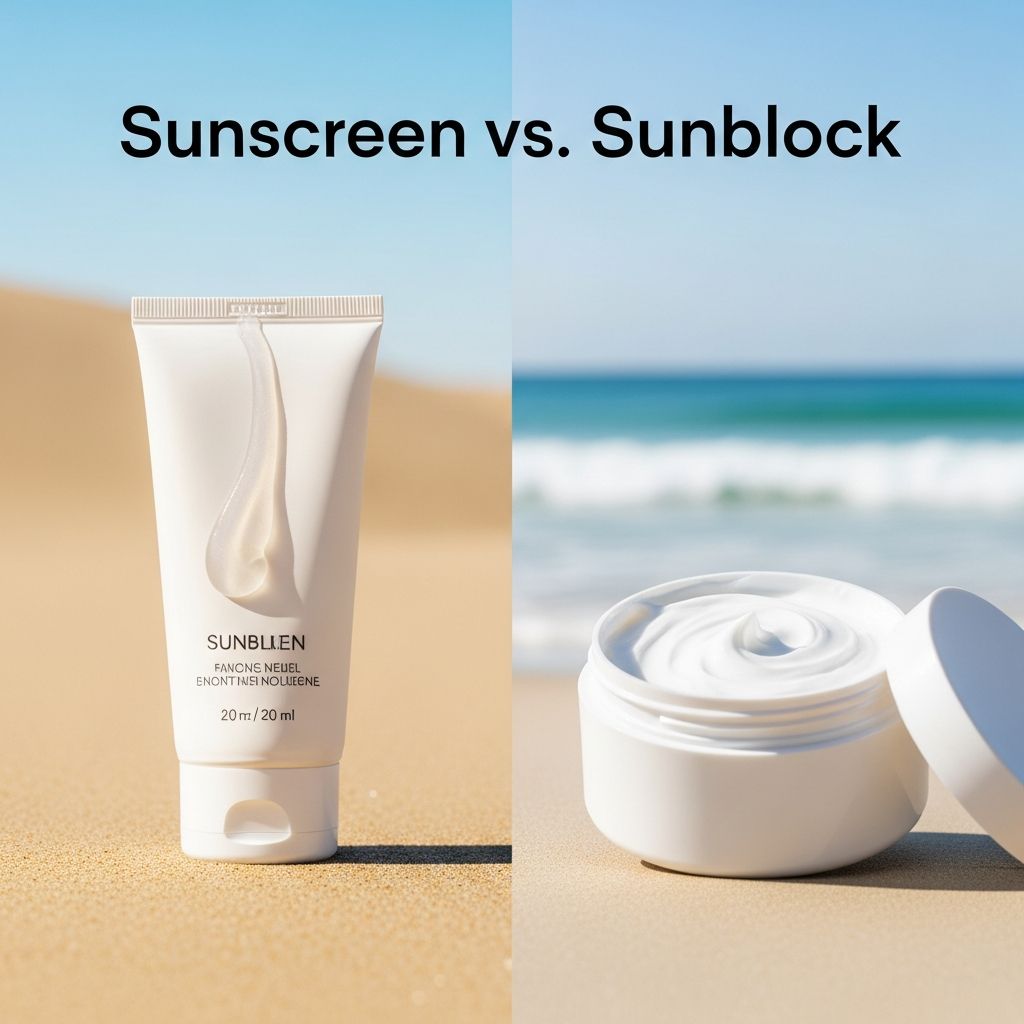
Sunscreen and sunblock both protect skin from harmful ultraviolet (UV) rays, but they differ in ingredients, mechanisms, texture, and application. Sunscreen uses chemical filters that absorb UV rays, converting them to heat, while sunblock employs physical minerals to reflect and scatter rays away from the skin.
What Is Sunscreen?
Sunscreen, often called chemical sunscreen, contains organic compounds that penetrate the skin’s upper layers. These ingredients absorb UVA and UVB rays before they cause damage, releasing the energy as heat. Common active ingredients include avobenzone, oxybenzone, octinoxate, octisalate, octocrylene, and homosalate, typically making up about 20% of the formula.
Sunscreen features a lightweight, fast-absorbing texture that blends invisibly without a white cast, making it ideal under makeup or for daily wear. However, it requires 15-30 minutes to activate after application, as the chemicals need time to bind to skin proteins.
What Is Sunblock?
Sunblock, also known as physical or mineral sunscreen, sits on the skin’s surface forming a protective barrier. Key ingredients are zinc oxide and titanium dioxide, usually around 15% concentration, which reflect, scatter, and block both UVA and UVB rays immediately upon application.
Sunblock has a thicker, sometimes creamy texture that can feel heavy or sticky and often leaves a visible white cast, especially on darker skin tones. Modern tinted or micronized formulas minimize this issue while providing broad-spectrum protection.
Sunscreen vs. Sunblock: Key Differences
The distinctions between sunscreen and sunblock impact suitability for different skin types, activities, and preferences. Here’s a detailed comparison:
| Aspect | Sunscreen (Chemical) | Sunblock (Physical/Mineral) |
|---|---|---|
| Ingredients | Avobenzone, oxybenzone, octinoxate, homosalate (absorb UV) | Zinc oxide, titanium dioxide (reflect UV) |
| How It Works | Absorbs UV rays, converts to heat | Reflects/scatters UV rays physically |
| Texture | Lightweight, quick-absorbing, invisible finish | Thicker, potentially greasy, white cast |
| Application Time | 15-30 minutes before sun exposure | Immediate protection |
| Skin Suitability | Best for oily/combination skin; may irritate sensitive skin | Gentle for all skin types, especially sensitive |
| Water Resistance | Often higher; good for swimming | Varies; some formulas less water-resistant |
This table highlights how sunscreen excels in cosmetic elegance for everyday use, while sunblock prioritizes gentle, instant defense.
How Do Sunscreen and Sunblock Work?
UV radiation includes UVA (aging rays, penetrate deep) and UVB (burning rays, cause DNA damage). Both products aim for broad-spectrum coverage against both.
- Sunscreen Mechanism: Chemical filters sink into the stratum corneum, absorbing photons and re-emitting them as longer-wave heat, preventing cellular damage. This process demands pre-application time.
- Sunblock Mechanism: Mineral particles create a microscopic shield, bouncing rays off like a mirror. No absorption into skin means no wait time and lower irritation risk.
Neither blocks 100% of rays; SPF 30 filters ~97% UVB, SPF 50 ~98%. Higher SPF offers diminishing returns but extended protection.
Ingredients in Sunscreen vs. Sunblock
Check labels to identify type:
- Sunscreen Actives (Chemical Filters):
- Avobenzone: UVA protection
- Oxybenzone: UVA/UVB, but potential hormone disruptor concerns
- Octinoxate/Octisalate: UVB absorbers
- Octocrylene/Homosalate: Stabilizers and UVB filters
- Sunblock Actives (Minerals):
- Zinc oxide: Broad-spectrum, anti-inflammatory
- Titanium dioxide: UVB-focused, sometimes UVA
Inactive ingredients like emollients affect texture. Chemical sunscreens may include preservatives raising allergy risks, while minerals are inert and reef-friendlier.
Texture and Finish: Sunscreen vs. Sunblock
Sunscreen glides on sheer, dries matte or dewy without residue, suiting oily or acne-prone skin by reducing shine. Sunblock’s opacity can pill under makeup or feel occlusive, though nano-particle versions rub in clearer.
Related Stories



For darker tones, opt for tinted mineral options to avoid ashy casts. Both can be formulated non-comedogenic to prevent pore clogging.
Which Is Better for Your Skin Type?
- Oily/Acne-Prone: Chemical sunscreens for mattifying effect.
- Sensitive/Eczema: Mineral sunblocks minimize irritation.
- Dry/Mature: Either, prioritize moisturizing bases.
- Combination: Lightweight hybrid formulas blending both.
Sunblock edges out for safety across types due to non-absorbed minerals; sunscreen wins for aesthetics.
Pros and Cons of Sunscreen
Pros:
- Invisible, makeup-friendly application
- Lightweight for daily/oily skin
- Often water/sweat-resistant
Cons:
- Wait time for efficacy
- Potential irritants/allergens
- Frequent reapplication needed
Pros and Cons of Sunblock
Pros:
- Instant, broad-spectrum protection
- Gentle, hypoallergenic
- Environmentally friendlier (no oxybenzone)
Cons:
- White cast/greasiness
- Thicker feel
- Potentially less water-resistant
SPF Ratings Explained
SPF measures UVB protection duration: SPF 30 extends safe exposure 30x natural time (e.g., 10 min burn becomes 300 min). Seek broad-spectrum for UVA. Reapply every 2 hours, or after swimming/sweating. American Academy of Dermatology recommends minimum SPF 30 daily.
Application Tips for Maximum Protection
- Apply generously: 1 oz (shot glass) for body, 1/4 tsp face.
- 15-30 min pre-exposure for chemical; immediate for physical.
- Reapply every 2 hours.
- Layer after moisturizer, before makeup.
- Don’t miss ears, neck, hands.
Combine with hats, shade for comprehensive defense.
Frequently Asked Questions (FAQs)
What’s the difference between sunscreen and sunblock?
Sunscreen chemically absorbs UV rays; sunblock physically blocks them with minerals.
Is sunblock better than sunscreen?
Not inherently; sunblock suits sensitive skin better, sunscreen for oily/cosmetic appeal. Choose broad-spectrum SPF 30+.
Can I use sunscreen and sunblock together?
Yes, hybrids exist combining both for enhanced protection.
Does sunscreen prevent aging?
Broad-spectrum formulas protect against UVA aging rays.
Is mineral sunscreen reef-safe?
Often yes, lacking oxybenzone/octinoxate harmful to corals.
References
- Sunscreen vs Sunblock: What’s the Difference? Which One Is Better? — Ultimaii. 2023. https://www.ultimaii.com/en/read/beauty/Sunscreen-vs-Sunblock-Whats-the-Difference-Which-One-Is-Better
- Sunblock vs. Sunscreen: What’s the Difference? — Colorescience. 2024. https://www.colorescience.com/blogs/blog/sunblock-vs-sunscreen
- Sunscreen vs Sunblock: What’s the Difference? — Vince Beauty. 2023. https://vincebeauty.com/blogs/vince-blog/sunscreen-vs-sunblock
- Sunblock vs. Sunscreen: Key Differences — Cleveland Clinic. 2024-05-15. https://health.clevelandclinic.org/sunblock-vs-sunscreen
- What’s the Difference Between Sunblock and Sunscreen? — Arizona Sun. 2023. https://www.arizonasun.com/blogs/arizona-sun-blog/what-s-the-difference-between-sunblock-and-sunscreen
Similar Articles








Read full bio of medha deb