Supernumerary Nipple: Causes, Diagnosis, And Treatment Guide
Understanding supernumerary nipples: congenital extra nipples along milk lines, their classification, clinical features, and management options.
A
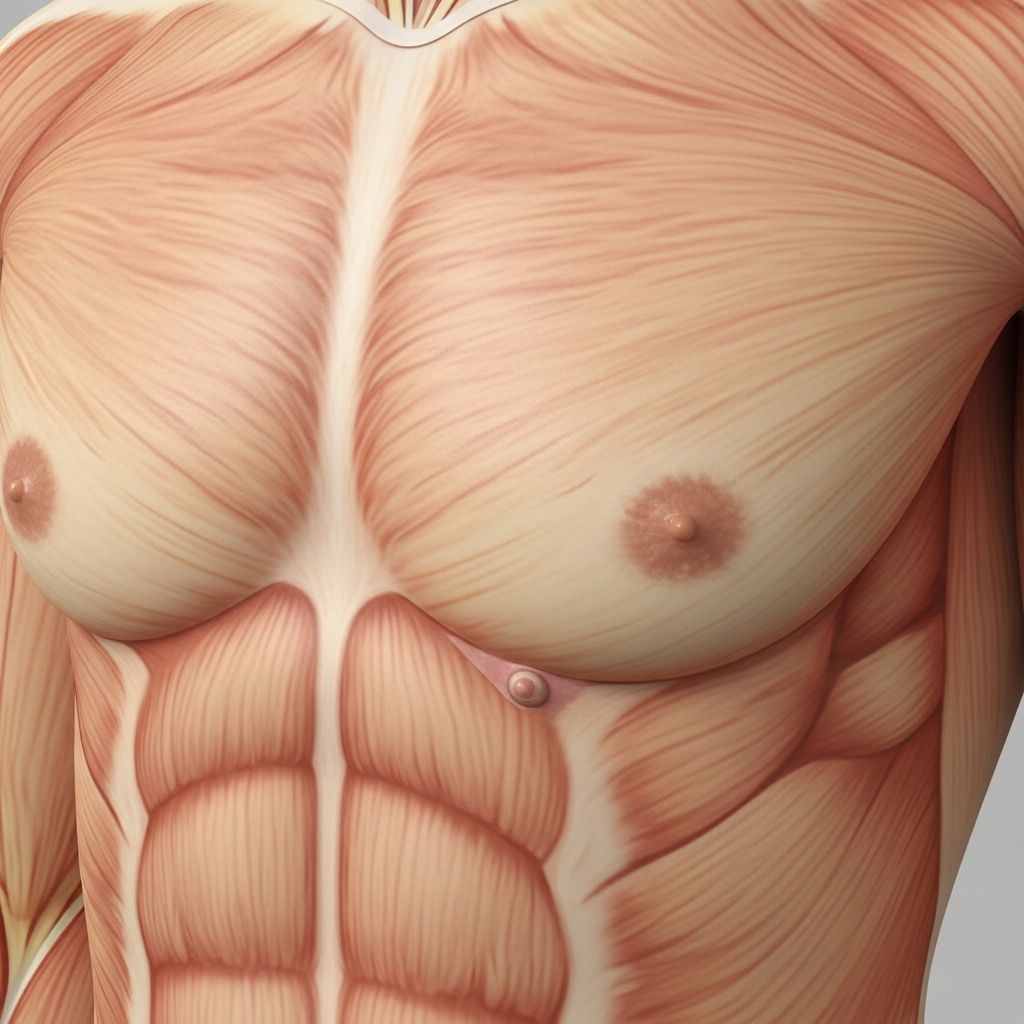
supernumerary nipple
is a minor congenital malformation of mammary tissue resulting in one or more extra nipples, often with associated areola or glandular tissue. Also called anaccessory nipple
,third nipple
,ectopic nipple
, orpolythelia
, it occurs in up to 6% of the population and follows the embryonic milk lines from axilla to groin.What is a Supernumerary Nipple?
Supernumerary nipples arise from incomplete regression of embryonic mammary ridges, known as milk lines. These ridges form bilaterally along the body’s vertical axis during weeks 4-8 of gestation, extending from the armpit (axilla) through the pectoral region to the groin. Normally, only the pectoral pair persists to form standard nipples; remnants elsewhere develop into supernumerary nipples.
They are present at birth but may be overlooked, resembling small moles, birthmarks, or nevi. Size varies from pinpoint to near-normal nipple dimensions, typically smaller. Colors range from pink to brown, with a central elevation or dimple. Puberty may cause hair growth, enlargement, tenderness, or even lactation if glandular tissue is present.
Prevalence estimates vary: 1-5% globally, up to 6% in U.S. populations, higher in males, and more frequent on the left side. Familial cases (about 6%) show autosomal dominant inheritance with incomplete penetrance.
Who Gets Supernumerary Nipples? (Epidemiology)
Supernumerary nipples affect all genders, ethnicities, and ages but are congenital. They occur in approximately 1-6% of people worldwide. Higher rates reported in certain cohorts: up to 32/203 (15.8%) in urologic malignancy patients vs. 2% controls, though causality unproven.
- Demographics: More common in males; left-sided predominance.
- Familial: ~6% hereditary, autosomal dominant.
- Syndromic: Associated with Simpson-Golabi-Behmel, urogenital sinus, Poland, or LEOPARD syndromes.
Rare reports link polythelia to urinary tract malformations or renal cancer risk, but evidence is disputed and not routine screening indicated.
Causes of Supernumerary Nipple
Embryologically, supernumerary nipples result from
failure of mammary ridge regression
. Milk lines thicken ectodermally; buds invaginate to form ducts and lobules. Normally, all but thoracic buds regress by week 8; persistence yields extras.Genetic factors suspected in familial cases, but most sporadic. No specific gene identified universally; Scaramanga gene linked to rare polythelia with breast cancer risk. Hormonal influences (estrogen, progesterone) affect postnatally if tissue present.
Clinical Features of Supernumerary Nipple
Typically asymptomatic, discovered incidentally or at puberty/pregnancy. Located along milk lines: 67% inframammary, 17% axillary, others abdominal/inguinal. Rarely off-line (neck, back, thigh, vulva ~5%).
- Appearance: Small (1-5mm), pink/brown papule with central nipple-like projection/dimple; possible areola, Montgomery glands, hair.
- Hormonal changes: Enlarges/tenders premenstrually; lactates postpartum if glandular.
- Multiple: Solitary usual; bilateral/multiple possible.
See DermNet images for examples: elevated central nipple amid pigmented areola.
Kajava Classification
Martin Kajava (1915) classified based on tissue components. Used for diagnosis and surgical planning.
Related Stories



| Category | Components | Description |
|---|---|---|
| 1 (True supernumerary nipple) | Nipple + areola + glandular tissue | Complete mini-breast. |
| 2 (Supernumerary nipple with areola) | Nipple + areola | No glands. |
| 3 (Supernumerary nipple only) | Nipple alone (polythelia) | Classic third nipple. |
| 4 (Supernumerary areola only) | Areola alone (polythelia areolaris) | No nipple. |
| 5 (Pseudomamma) | Areola + fat, no nipple/glands | Fat-filled disk. |
| 6 (Polythelia pilosa) | Hair tuft along milk line | Rare, hair only. |
| 7 (Posterior thoracic ectopic) | Glandular tissue only | Subcutaneous mass (poly mastia). |
Categories 1-3 most common clinically.
Dermoscopy of Supernumerary Nipple
Dermoscopy aids differentiation from melanoma/nevi. Key features:
| Dermoscopic Feature | Description |
|---|---|
| Peripheral network | Brownish interconnected lines on tan background at edges. |
| Central network-like structures | Similar network centrally. |
| Central white scar-like area | Sharply circumscribed white patch amid pigment. |
| Cleft-like appearance | Rim splitting tip symmetrically. |
| White cobblestone globules | Aggregated whitish angulated structures. |
| Central dimpling with plug | Round dimple with dark filling. |
| Fisheye-like (comedo-mimic) | Dark dots like comedo openings. |
Differential Diagnosis
- Melanocytic naevus/melanoma: Lacks nipple elevation/dimple; irregular pigment.
- Basal cell carcinoma: Pearly border, telangiectasia.
- Organoid naevus: Verrucous, epidermal features.
- Montgomery tubercle: Areolar gland, no milk line position.
- Syringoma/cylindroma: Multiple translucent papules.
Diagnosis
Clinical: History, exam along milk lines. Dermoscopy supportive. Histology gold standard: papillomatous epidermis, dermal smooth muscle, ducts/lobules akin to normal nipple.
No routine imaging; ultrasound if mass/lactation. Biopsy if atypical (ulceration, asymmetry).
Associated Conditions and Complications
Benevolent usually, but:
- Benign: Lactation, mastalgia, fibrocystic change.
- Malignant: Rare adenocarcinoma, Paget disease.
- Renal: Disputed link to malformations/cancer; one study higher prevalence in urologic tumors (p<0.001).
- Syndromes: As above.
Treatment
Often none needed. Options:
- Cosmetic excision: Simple elliptical/local; post-puberty ideal.
- Symptom relief: For pain/lactation; excision if recurrent.
- Malignancy suspicion: Wide excision, sentinel node if indicated.
Frequently Asked Questions (FAQs)
Q: Is a supernumerary nipple dangerous?
A: No, usually harmless, but monitor for changes; rare cancer risk like normal breast tissue.
Q: Can supernumerary nipples lactate?
A: Yes, if glandular tissue present; enlarges in pregnancy/puberty.
Q: Should I remove my third nipple?
A: Optional for cosmetics/discomfort; simple outpatient surgery.
Q: Are supernumerary nipples genetic?
A: Familial in 6%; autosomal dominant pattern.
Q: Do they indicate kidney problems?
A: Weak/disputed association; no routine screening advised.
References
- Supernumerary nipple dermoscopy — DermNet NZ. 2023. https://dermnetnz.org/topics/supernumerary-nipple-dermoscopy
- Supernumerary Nipple — DermNet NZ. 2023. https://dermnetnz.org/topics/supernumerary-nipple
- Third (supernumerary) nipple: Types, causes, and removal — Medical News Today. 2023-05-23. https://www.medicalnewstoday.com/articles/320710
- Supernumerary nipples and urologic malignancies — PubMed (J Urol). 1986-10. https://pubmed.ncbi.nlm.nih.gov/3791170/
- Supernumerary nipple image — DermNet NZ. 2023. https://dermnetnz.org/imagedetail/9198-supernumerary-nipple
- Third Nipple (Supernumerary Nipple): Causes, Types & Removal — Cleveland Clinic. 2023-08-17. https://my.clevelandclinic.org/health/diseases/25167-third-nipple
Similar Articles








Read full bio of medha deb