Suprapubic Catheter: Procedure, Care, and Management
Complete guide to suprapubic catheter insertion, use, maintenance, and potential complications.
What Is a Suprapubic Catheter?
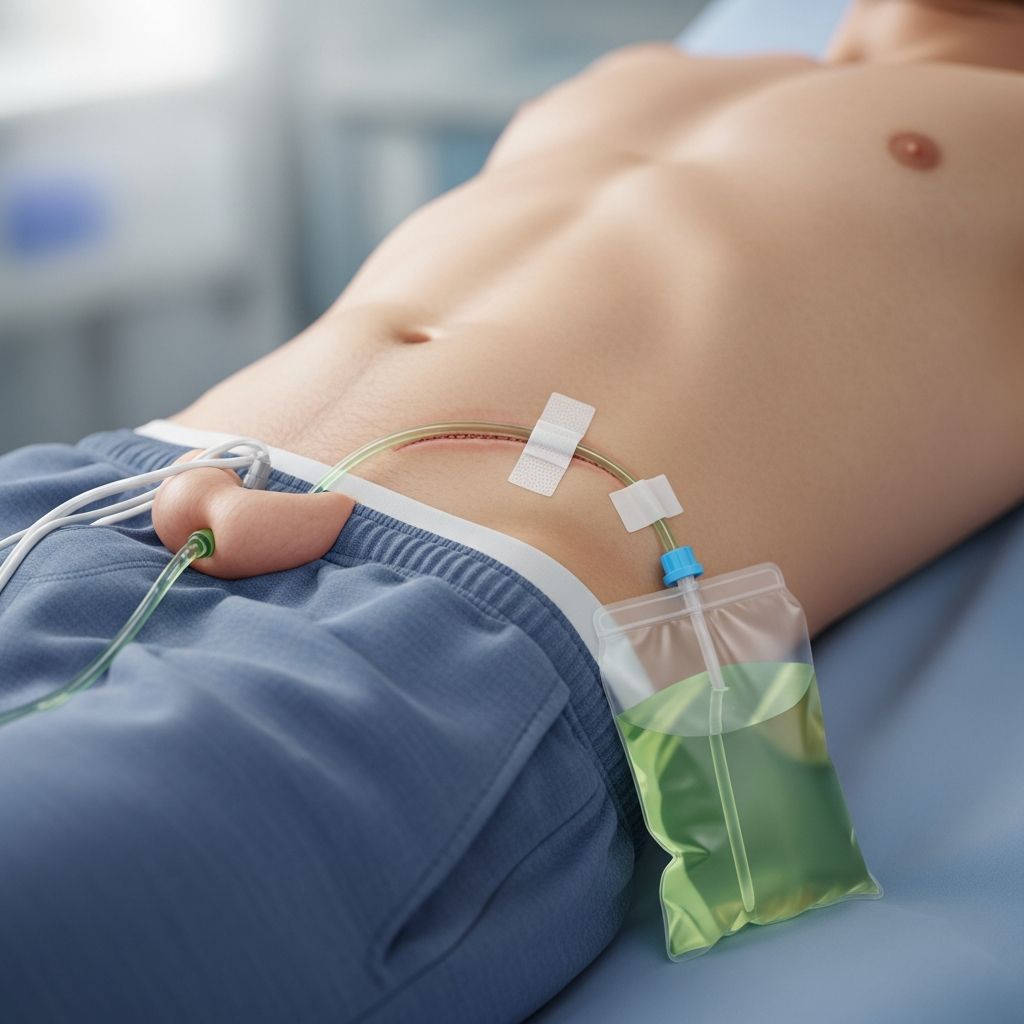
A suprapubic catheter (SPC) is a hollow flexible tube inserted directly into your bladder to drain urine when you cannot urinate on your own. Unlike traditional urethral catheters that pass through the urethra, a suprapubic catheter is positioned through a small opening in your lower abdomen, just above your pubic bone and a couple of inches below your navel. This alternative approach offers several advantages for patients requiring long-term catheterization.
The catheter works by creating a direct pathway from your bladder to the outside of your body, allowing urine to drain continuously into an external collection bag or through a valve mechanism. A small balloon at the tip of the catheter is inflated with sterile water to prevent the catheter from falling out or shifting position.
Why Might You Need a Suprapubic Catheter?
Your healthcare provider may recommend a suprapubic catheter for various medical conditions and situations that affect your ability to urinate normally.
Common Conditions Requiring Catheterization
A suprapubic catheter may be necessary if you have:
– Urinary retention (inability to urinate on your own)- Urinary incontinence or urine leakage- Pelvic organ prolapse- Spinal cord injuries or trauma- Lower body paralysis- Multiple sclerosis (MS)- Parkinson’s disease- Benign prostatic hyperplasia (BPH) or enlarged prostate- Bladder cancer- Urethral trauma or damage- Recent gynecological surgery such as prolapsed uterus repair or bladder surgery
Specific Use Cases
Suprapubic catheters are particularly beneficial for sexually active patients who require long-term catheterization, as this method avoids urethral complications. Additionally, wheelchair users or individuals who cannot perform self-catheterization often find suprapubic catheters easier to manage than other options. Some patients may continue to leak urine through the urethra even with a suprapubic catheter in place and may require additional procedures to address this issue.
How Is a Suprapubic Catheter Inserted?
The insertion procedure is typically performed under anesthesia to ensure your comfort and safety. Your healthcare team will prepare you carefully before proceeding with catheterization.
Pre-Procedure Preparation
Before your procedure, inform your medical team if you take blood-thinning medications such as warfarin, aspirin, clopidogrel, or other anticoagulants, as these may need to be adjusted. If you have an implanted device like a pacemaker, stent, or joint replacement, make sure your doctor is aware. Additionally, disclose any history of MRSA or other infections, as this information affects how your procedure will be managed.
The Stamey Procedure
If your bladder is distended (overfilled with urine), your doctor will likely use the Stamey procedure for catheter insertion. This technique involves the following steps:
– Preparing the bladder area with iodine and cleansing solution for sterility- Locating your bladder by gently palpating the area above the pubic bone- Applying local anesthesia to numb the insertion site- Using a specialized Stamey device with a metal obturator (guide) to insert the catheter through your skin into the bladder- Removing the obturator once the catheter reaches the bladder- Inflating a small balloon at the catheter’s tip with sterile water (typically 5 to 8 ml) to secure it in place- Cleaning the insertion area and closing the opening with stitches
Related Stories



Alternative Insertion Methods
Your surgical team may use ultrasound imaging or cystoscopy (a telescope inserted through your urethra) to ensure proper catheter placement. In some cases, your doctor may need to make a small incision in your lower abdomen rather than creating a simple puncture. General or spinal anesthesia may be used instead of local anesthesia, depending on your medical condition and the complexity of your case.
Drainage Management
After catheter insertion, urine drainage is managed through one of two methods. Your doctor may provide an external drainage bag attached to your leg for continuous urine collection. Alternatively, your catheter may have a valve that allows you to drain urine into a toilet whenever needed, offering greater flexibility and privacy.
How to Care for Your Suprapubic Catheter
Proper catheter care is essential to prevent infections, blockages, and other complications. Daily maintenance involves several key practices.
Daily Care Routine
Clean the area around your catheter insertion site daily with soap and warm water. Gently pat the area dry after cleaning. Check for any signs of redness, swelling, crusting, or unusual discharge around the catheter site. Keep the area clean and dry to prevent bacterial colonization and infection. If you use a drainage bag, empty it when it becomes one-third to one-half full to prevent backflow of urine into the bladder.
Fluid Intake and Hydration
Maintain adequate fluid intake to promote regular urine flow and reduce the risk of catheter blockages and infections. Drinking sufficient water helps flush your urinary system naturally. Aim to drink plenty of fluids throughout the day unless your healthcare provider advises otherwise due to other medical conditions.
Catheter Changes
Your suprapubic catheter typically needs to be changed every three to twelve weeks, depending on your specific situation and how quickly mineral deposits accumulate. Your doctor will usually arrange the first catheter change at the hospital. Subsequent changes can be performed by your district nurse, general practitioner, or at home if you have been trained by your medical team. Some patients and family members can learn to change their own catheters with proper instruction.
Changing Your Catheter at Home
If you are trained to change your catheter, gather all necessary supplies before beginning, including a new sterile catheter, sterile water for balloon inflation, drainage bag, and cleaning supplies. Wash your hands thoroughly before touching the catheter. Gently remove the old catheter by slowly pulling it out. Wait for urine to flow from the opening, then insert the new catheter carefully into the same opening. Inflate the balloon with sterile water and attach your drainage bag. If you experience difficulty during the procedure, contact your healthcare provider immediately.
Potential Complications and Risks
While suprapubic catheterization is generally safe, several complications can occur. Understanding these risks helps you recognize warning signs early.
Common Complications
Nearly all patients experience some blood-stained urine lasting a few days after catheter insertion or change. Between 1 in 2 and 1 in 10 patients develop recurrent urinary tract infections requiring antibiotic treatment. Catheter blockage by debris or blood clots affects between 1 in 2 and 1 in 10 patients and may require irrigation or unblocking procedures. Bladder spasms or bladder pain occurs in the same frequency range. Approximately 1 in 10 patients (10%) experience persistent urine leakage from the urethra, which may necessitate further treatment.
Serious Complications
Stone formation in the bladder occurs between 1 in 10 and 1 in 50 patients, potentially causing catheter blockage and requiring additional procedures to remove or crush the stones. Infection or abscess at the catheter insertion site affects between 1 in 10 and 1 in 50 patients. Damage to your bowel during insertion, while uncommon, is very serious and requires emergency surgery to repair.
Rare but Serious Risks
Between 1 in 50 and 1 in 250 patients may experience anesthetic or cardiovascular complications, including chest infections, pulmonary embolus, stroke, deep vein thrombosis, heart attack, or death.
When to Seek Medical Attention
Contact your healthcare provider immediately if you notice excessive bleeding at the insertion site that doesn’t stop with gentle pressure. Seek medical advice if you develop fever, chills, or signs of infection. Report severe pain around the catheter site that doesn’t improve with rest. If you cannot drain urine through your catheter, experience complete blockage, or the catheter becomes dislodged and falls out, contact your provider or visit the emergency room. Do not attempt to reinsert a removed catheter yourself, as the tract can close quickly.
Alternatives to Suprapubic Catheterization
Before recommending a suprapubic catheter, your healthcare team may discuss alternative options based on your specific condition.
Other Drainage Options
– Urethral catheter: A permanent catheter passed through your urethra into your bladder- Intermittent self-catheterization: Using a disposable catheter for men or women when your bladder becomes full, then removing it after emptying- Condom drainage device: For men, a sheath attached to the penis that collects urine in a drainage bag- Incontinence pads: Used to catch minor urine leakage- Urostomy: Surgical diversion of urine onto your skin surface
Living with a Suprapubic Catheter
Many patients successfully manage their daily lives with a suprapubic catheter. The key to success is following proper care guidelines, maintaining good hygiene, staying hydrated, and attending regular medical appointments. Most patients can return to normal activities, including work, exercise, and sexual activity, once they have recovered from the initial procedure and become accustomed to their catheter management routine.
Frequently Asked Questions
Q: How long can I keep a suprapubic catheter in place?
A: Suprapubic catheters are designed for long-term use and can remain in place indefinitely with proper care. However, the catheter itself needs to be changed every three to twelve weeks to prevent complications and maintain proper function.
Q: Can I shower or bathe with a suprapubic catheter?
A: Yes, you can shower with a suprapubic catheter. Keep the insertion site clean and dry. You may need to protect the area during bathing by using a waterproof cover. Consult your healthcare provider about specific bathing precautions.
Q: Is sexual activity possible with a suprapubic catheter?
A: Yes, one of the primary advantages of a suprapubic catheter over a urethral catheter is that it allows for sexual activity with minimal disruption. Many patients choose this method specifically for this reason.
Q: What should I do if my catheter becomes blocked?
A: If your catheter becomes blocked and urine stops draining, contact your healthcare provider immediately. Do not attempt to unblock it yourself. Your medical team can irrigate the catheter or insert a new one if necessary.
Q: How do I prevent catheter-related infections?
A: Maintain good hygiene by cleaning the insertion site daily with soap and water. Keep the area dry, stay well-hydrated, and attend all scheduled catheter changes. Report any signs of infection such as fever, unusual odor, or cloudy urine to your doctor immediately.
Q: Can the catheter fall out on its own?
A: The balloon at the tip of the catheter is designed to prevent it from falling out. However, if it does become dislodged, do not attempt to reinsert it. Contact your healthcare provider or emergency room immediately, as the tract can close quickly.
References
- Suprapubic Catheter: Insertion, Procedure, and Complications — Healthline. 2024. https://www.healthline.com/health/suprapubic-catheter
- Suprapubic Catheter: What Does This Procedure Involve? — British Association of Urological Surgeons. January 2025. https://www.baus.org.uk
- Suprapubic Catheter — Bladder and Bowel Community. 2024. https://www.bladderandbowel.org/catheter/suprapubic-catheter/
- Suprapubic Catheter Care — Florida Health Finder. 2024. https://quality.healthfinder.fl.gov/health-encyclopedia/HIE/60/000145
- Suprapubic Bladder Catheterization — StatPearls, National Center for Biotechnology Information. 2024. https://www.ncbi.nlm.nih.gov/books/NBK482179/
Similar Articles








Read full bio of medha deb