Surgical Mesh: 3 Types, Uses, Risks, And Recovery
Discover the essentials of surgical mesh: its role in repairs, types, benefits, risks, and latest advancements for informed health decisions.
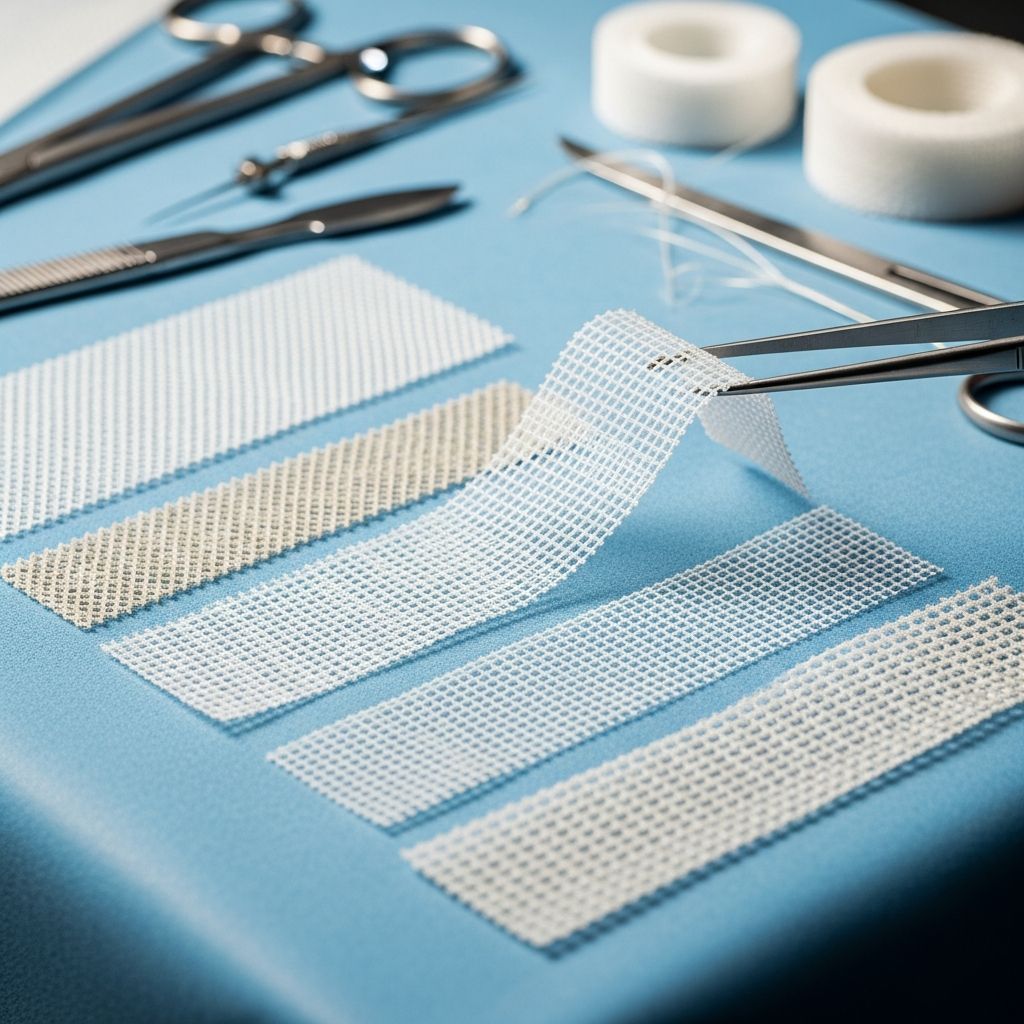
Surgical mesh serves as a vital medical implant that reinforces weakened or damaged tissues during operations, particularly for hernias and pelvic organ prolapse. This flexible, net-like material integrates with the body’s tissues to provide long-term structural support and reduce recurrence rates of these conditions.
Understanding the Fundamentals of Surgical Mesh
Surgical mesh functions as a supportive scaffold in procedures where natural tissues lack sufficient strength to hold repairs together. Composed of synthetic polymers or biological materials derived from animal tissues, it allows surrounding cells to grow into its structure, mimicking natural tissue reinforcement much like rebar strengthens concrete. Primarily deployed in abdominal and pelvic surgeries, mesh addresses defects where organs or fatty tissues protrude through muscle walls, a common issue in hernias.
The design of surgical mesh emphasizes biocompatibility, ensuring minimal adverse reactions while enduring physiological stresses such as abdominal pressure during coughing or standing. For women of reproductive age, pelvic meshes must tolerate forces up to 130 Newtons, highlighting the need for robust yet flexible materials.
Primary Applications in Modern Surgery
Hernia repair represents the most frequent use of surgical mesh, where it fortifies the abdominal wall to prevent organ protrusion. In open repair techniques, surgeons create an incision near the hernia site, position the mesh over the weakened area, and secure it with sutures, significantly lowering recurrence risks compared to suture-only methods.
- Inguinal hernias: Common in the groin; mesh reinforces the inguinal canal.
- Ventral hernias: Occur in the abdominal midline post-surgery or trauma.
- Hiatal hernias: Involve the diaphragm; mesh provides reinforcement at the esophageal hiatus.
Beyond hernias, mesh aids pelvic organ prolapse (POP) surgeries, supporting dropped bladder, uterus, or rectum. Procedures like sacrocolpopexy use abdominal mesh placement for durable fixes, especially effective when benefits outweigh risks. Stress urinary incontinence treatments often employ mid-urethral slings, lightweight meshes looped under the urethra to control leakage during physical activity.
Diverse Materials and Manufacturing Techniques
Surgical meshes vary by composition, influencing integration, strength, and absorption profiles. Synthetic options dominate, crafted from polypropylene—a durable plastic—for permanent support, or polylactic acid for temporary scaffolds that dissolve over time.
| Type | Material Examples | Absorption | Key Uses |
|---|---|---|---|
| Synthetic Non-Absorbable | Polypropylene, PTFE | Permanent | Hernia reinforcement, prolapse kits |
| Synthetic Absorbable | Polyglycolic acid | 6-12 months | Bridging large defects temporarily |
| Biologic | Porcine dermis, bovine pericardium | Remodels | Contaminated fields, high-risk infections |
Manufacturing distinguishes knitted meshes, formed from continuous threads for flexibility and porosity, from non-knitted sheets offering uniform strength. Monofilament structures reduce bacterial adhesion compared to multifilament weaves, enhancing infection resistance.
Step-by-Step Surgical Implantation Processes
Mesh implantation adapts to minimally invasive or open approaches. Laparoscopic methods involve small incisions and camera guidance, positioning mesh intraperitoneally or retro-muscularly. Robotic assistance enhances precision in complex pelvic cases.
In vaginal prolapse repairs, transvaginal mesh kits historically facilitated quick deployment but faced scrutiny due to erosion risks. Current preferences lean toward native tissue repairs or abdominal approaches for superior outcomes. Post-implantation, tissue ingrowth occurs over weeks, with inflammation transitioning to remodeling via fibroblasts and collagen deposition.
Related Stories



Key Advantages Driving Widespread Adoption
Mesh repairs demonstrate recurrence rates as low as 1-5% versus 10-20% for non-mesh techniques, per extensive clinical data. Tension-free placement distributes loads evenly, accelerating recovery and minimizing pain. Over 80% of U.S. hernia surgeries incorporate mesh, underscoring its efficacy in diverse patient populations.
- Durability under dynamic pressures like coughing or lifting.
- Customizability—meshes cut to fit specific defects.
- Shorter operative times in laparoscopic settings.
Potential Complications and Risk Factors
Despite benefits, mesh introduces risks including infection (1-8%), chronic pain (10-20%), and erosion into adjacent organs like bowel or vagina (2-10% in pelvic cases). Rejection manifests as excessive inflammation, granuloma formation, or mesh contraction causing dyspareunia.
Patient factors elevate risks: obesity, smoking, diabetes impair healing; contaminated wounds favor biologic over synthetic meshes. Vaginal mesh exposures may require excision, sometimes complex due to adhesions. FDA warnings since 2011 highlight disproportionate POP mesh complications, prompting product withdrawals.
Regulatory Perspectives and Safety Evolutions
The FDA classifies most meshes as Class II devices, mandating 510(k) clearance based on substantial equivalence to predicates. Post-market surveillance revealed transvaginal mesh POP risks exceeding benefits, leading to 2019 bans on such devices for prolapse, while hernia and sling uses remain approved with caveats.
Global bodies like Australia’s TGA echo these stances, emphasizing informed consent on risks like mesh-related pain persisting beyond 3 months in 15-20% of cases.
Innovations Enhancing Mesh Performance
Research advances lighter-weight meshes (<50 g/m²) to curb chronic pain via reduced foreign body response. Antimicrobial coatings—silver nanoparticles, triclosan—combat infections; stem cell integration modulates inflammation for smoother incorporation.
3D-printed bioresorbable meshes and self-adhering designs eliminate sutures, minimizing tissue trauma. Coated barriers prevent adhesions in intraperitoneal placements.
Making Informed Choices Before Surgery
Patients should discuss alternatives: native tissue repairs suit low-risk cases; watchful waiting for asymptomatic hernias. Surgeon experience matters—high-volume centers report fewer complications. Preoperative optimization (weight loss, glycemic control) bolsters success.
Frequently Asked Questions (FAQs)
What is the recovery like after mesh surgery?
Most resume light activities in 1-2 weeks; full recovery spans 4-6 weeks. Avoid heavy lifting for 6-8 weeks to allow integration.
Can mesh be removed if problems arise?
Yes, partial or total excision is feasible, though challenging in integrated cases. Success rates vary by complication type.
Is mesh safe for all hernia types?
No; contraindicated in active infections. Biologics preferred for contaminated fields.
How does mesh differ from sutures alone?
Mesh provides scaffold for tissue ingrowth, slashing recurrence by 50-75%.
Are there non-surgical mesh alternatives?
Trusses for hernias or pessaries for prolapse offer temporary relief without implantation.
Future Directions in Mesh Technology
Emerging smart meshes incorporate sensors for real-time monitoring of integration and strain. Regenerative meshes seeded with mesenchymal stem cells promise reduced inflammation and enhanced vascularization. Nanofiber electrospun meshes mimic extracellular matrix for superior biocompatibility.
Clinical trials explore antibiotic-eluting meshes, cutting infection by 60%. Personalized printing via patient CT scans optimizes fit, potentially halving complications. As materials science converges with tissue engineering, meshes evolve toward fully resorbable, bioactive implants vanishing post-healing.
(Word count: 1678)
References
- Surgical mesh — Wikipedia. 2024-02-01. https://en.wikipedia.org/wiki/Surgical_mesh
- Surgical Mesh Used for Hernia Repair — U.S. Food and Drug Administration (FDA). 2023-10-15. https://www.fda.gov/medical-devices/implants-and-prosthetics/surgical-mesh-used-hernia-repair
- Surgical Mesh: Uses, Procedure, Placement & Risks — Cleveland Clinic. 2024-01-20. https://my.clevelandclinic.org/health/treatments/surgical-mesh
- Surgery with Mesh — WakeMed. 2023-05-10. https://www.wakemed.org/wakemed-physician-practices/specialties/urogynecology/services-and-specialties/surgery-with-mesh
- Mesh in female pelvic reconstructive surgery — Mayo Clinic. 2024-03-12. https://www.mayoclinic.org/diseases-conditions/pelvic-organ-prolapse/in-depth/transvaginal-mesh-complications/art-20110300
- Past, Present and Future of Surgical Meshes: A Review — National Center for Biotechnology Information (PMC). 2017-09-28. https://pmc.ncbi.nlm.nih.gov/articles/PMC5618132/
Similar Articles








Read full bio of medha deb