Swallowing Exercises: Closure of the Larynx Exercises
Learn how larynx-closure exercises strengthen swallowing muscles and prevent aspiration.
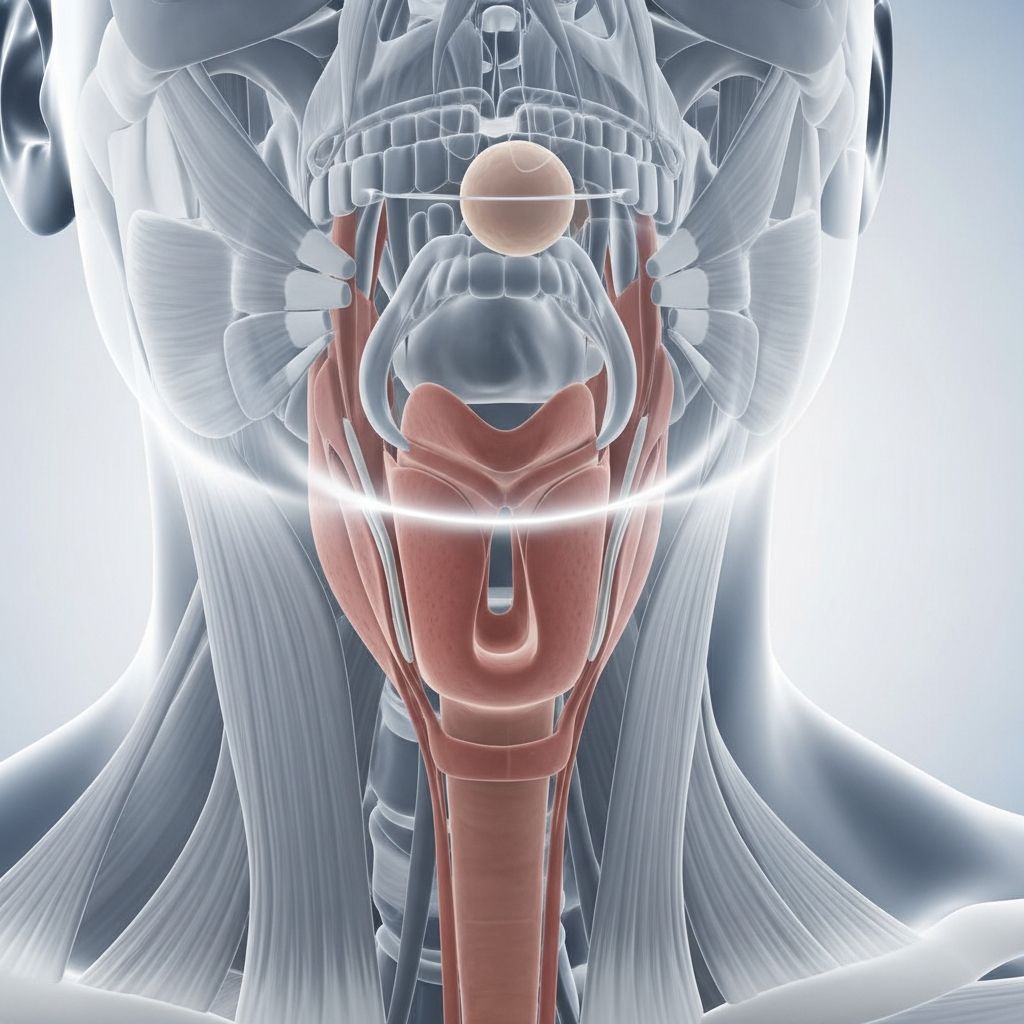
Swallowing is a complex physiological process that requires precise coordination among multiple muscle groups in your throat, pharynx, and esophagus. When these muscles function properly, they work together seamlessly to move food and liquid safely from your mouth to your stomach. However, when muscle weakness or dysfunction occurs in these regions, swallowing can become difficult and potentially dangerous. Larynx-closure exercises are specialized therapeutic interventions designed to strengthen the muscles responsible for protecting your airway during swallowing, thereby improving your ability to eat and drink safely.
Understanding Swallowing and the Larynx
The larynx, commonly known as the voice box, plays a crucial role in the swallowing process. Located in your throat, the larynx contains muscles and tissues that must close tightly when you swallow to prevent food, liquid, or saliva from entering your respiratory tract. This protective mechanism is essential for maintaining your airway’s integrity and preventing serious complications.
The swallowing process involves a series of coordinated muscular actions that occur in phases. When these muscles become weak or do not function properly, food particles may more easily enter your lungs instead of traveling down your esophagus to your stomach. This condition, known as aspiration, can lead to severe health consequences if not properly managed. Swallowing exercises, particularly those focused on larynx closure, can improve the strength, mobility, and control of these critical muscles, potentially helping you return to normal swallowing patterns.
Why You Might Need Larynx-Closure Exercises
If you experience difficulty swallowing, your healthcare provider or speech-language pathologist may recommend larynx-closure exercises. Difficulty swallowing is medically termed dysphagia, a condition that affects millions of people across different age groups and health backgrounds. Dysphagia can occur for various reasons, including neurological disorders, muscle weakness, post-surgical changes, radiation therapy effects, or age-related changes in muscle function.
Preventing Aspiration and Its Complications
One of the primary reasons larynx-closure exercises are prescribed is to prevent aspiration. Aspiration occurs when food, saliva, or material from your stomach enters your respiratory tract instead of going down your esophagus. This serious complication can lead to aspiration pneumonia, a potentially life-threatening infection of the lungs. By strengthening the muscles that close your larynx, these exercises help keep your airway protected during swallowing, significantly reducing your aspiration risk.
The connection between weak laryngeal muscles and aspiration risk is well-established in clinical practice. When the muscles that normally protect your airway are not functioning optimally, there is a much higher likelihood that food or liquid will slip into your lungs. This is particularly dangerous because aspiration can occur silently, meaning you might not even realize it has happened. Over time, repeated aspiration episodes can lead to serious respiratory infections that require hospitalization and intensive medical care.
Comprehensive Treatment Approach
Larynx-closure exercises are typically prescribed as part of a comprehensive treatment plan for dysphagia. This comprehensive approach usually includes dietary modifications, medications, and sometimes surgical interventions, depending on the underlying cause of your swallowing difficulty. Your healthcare team will work together to determine which exercises are most appropriate for your specific condition and swallowing problem.
Related Stories



Safety and Precautions
Swallowing exercises, including larynx-closure exercises, are generally very safe interventions with minimal risk of adverse effects. Most people can perform these exercises without complications when done correctly under proper guidance. However, there are important precautions to understand before beginning.
If you experience any pain or discomfort while performing these exercises, you should temporarily stop and immediately inform your healthcare provider or speech-language pathologist. Do not continue practicing these exercises unless they have been specifically prescribed for you by a qualified healthcare professional. Your speech-language pathologist can provide important information about any specific precautions you should take before starting your exercise program, particularly if you have other medical conditions that might affect your ability to perform certain exercises safely.
Types of Larynx-Closure Exercises
Your speech-language pathologist will demonstrate the specific exercises you should perform and explain the appropriate frequency for your individual situation. Different exercises target different aspects of laryngeal function and swallowing coordination. Here are the main larynx-closure exercises commonly prescribed:
The Supraglottic Swallow
The supraglottic swallow is one of the most commonly prescribed larynx-closure exercises. To perform this exercise, take a deep breath and hold it. Keep holding your breath while you swallow. Immediately after swallowing, cough forcefully. This exercise helps your larynx close more completely during the swallowing process. The act of holding your breath and coughing afterward helps strengthen the muscles and improve the timing of laryngeal closure. Repeat this exercise several times during each practice session. No food or liquid is necessary for this exercise, making it convenient to practice anywhere throughout your day.
The Super-Supraglottic Swallow
The super-supraglottic swallow is a more advanced variation of the supraglottic swallow that provides additional airway protection. To perform this exercise, inhale and hold your breath very tightly. Then bear down as if you are having a bowel movement while keeping your breath held. Maintain this breath-holding and bearing-down action while you swallow. This exercise should be repeated several times. Like the supraglottic swallow, no food or liquid is needed for this exercise.
It is important to note that this exercise should be done with caution and should not be performed by people with uncontrolled blood pressure. The bearing-down action can temporarily increase blood pressure, which could be dangerous for individuals with hypertension that is not well-controlled. Always discuss this exercise with your healthcare provider before beginning, especially if you have any history of high blood pressure or cardiovascular concerns.
Head-Turn Swallow Exercise
The head-turn swallow exercise works by positioning your head in a specific way to enhance laryngeal closure. To perform this exercise, hold your breath tightly. Turn your head to the left or to the right. While your head remains turned, let go of your breath and say “ah” in a sustained manner. Then relax and return your head to the center position. Repeat this exercise several times, alternating between turning your head to the left and to the right. This exercise helps close the larynx more effectively and may improve your overall swallowing function.
Additional Complementary Exercises
Your speech-language pathologist may also prescribe other swallowing exercises alongside the larynx-closure exercises. These complementary exercises might include effortful swallowing, which involves clenching your throat muscles and swallowing as hard as possible, or the Masako technique, which involves swallowing while your tongue is positioned between your front teeth and lips. These exercises work together to comprehensively address your swallowing difficulties from multiple angles.
Performing Your Exercise Program
To achieve the best results from your larynx-closure exercises, it is important to follow your speech-language pathologist’s instructions carefully. In most cases, you will be practicing larynx-closure exercises along with other types of swallowing exercises. When this occurs, perform all exercises in the same order each time and do not leave any exercises out. Your healthcare team will have planned a specific series of exercises that targets the particular source of your swallowing problem.
Consistency and adherence to your prescribed exercise program are critical for success. If you miss practice sessions, your progress will slow significantly. To maximize your chance of achieving a good outcome, work closely with all members of your healthcare team and properly follow the treatment plan they have developed specifically for your condition.
What to Expect After Exercise Sessions
The good news is that you can resume your normal activities immediately after completing your swallowing exercises. There is no recovery period needed, and these exercises do not cause fatigue or require rest afterward. This makes it convenient to incorporate them into your daily routine.
Tracking Your Progress
Keep detailed records of when you perform your swallowing exercises. This record serves two important purposes: it reminds you to do your exercises as prescribed by your healthcare provider, and it provides helpful feedback on your progress to your speech-language pathologist. When keeping your records, note what exercises you do, the time you do them, and any problems or difficulties you experience during practice. Share these records with your speech-language pathologist at your regular appointments so they can monitor your progress and make any necessary adjustments to your therapy program.
Monitoring and Adjustments
Your speech-language pathologist and medical team will continuously monitor your progress throughout your treatment. They may make changes to your exercise therapy if needed based on your response and improvements. This monitoring may include bedside swallowing examinations or imaging tests such as videofluoroscopy to objectively assess your swallowing function. It is important to understand that it may take several weeks before you notice significant improvements in your swallowing ability.
Improving Quality of Life
As your ability to swallow improves through consistent practice of your larynx-closure exercises, your risk of aspiration decreases significantly. This improvement opens up new possibilities for your diet and nutrition. Your speech-language pathologist may be able to modify your diet restrictions, allowing you to eat and drink certain types of foods and beverages that were previously unsafe for you. This dietary expansion can substantially improve your nutritional intake, overall health, and quality of life. Being able to eat normally again, without restrictions, can have profound psychological and social benefits as well as physical health benefits.
Long-Term Success and Maintenance
To achieve long-term success with your swallowing function, it is essential to continue practicing all your swallowing exercises as prescribed by your speech-language pathologist or healthcare provider. You will benefit most from faithfully following your prescribed therapy plan. The exercises work by gradually strengthening and retraining your swallowing muscles, but this improvement requires consistent, ongoing practice.
Think of larynx-closure exercises similar to physical therapy for other parts of your body: the benefits come from regular, consistent practice over time. Missing practice sessions or stopping your exercises prematurely will result in slower progress and potentially incomplete recovery of your swallowing function. By maintaining your commitment to your exercise program and working closely with your healthcare team, you give yourself the best chance of achieving optimal swallowing function and reducing your aspiration risk.
Frequently Asked Questions
Q: How long does it take to see improvement from larynx-closure exercises?
A: It may take several weeks of consistent practice before you notice significant improvements in your swallowing ability. However, the timeline varies depending on the underlying cause of your dysphagia, the severity of your swallowing difficulty, and your consistency with the prescribed exercises.
Q: Can I perform these exercises without food or liquid?
A: Yes, most larynx-closure exercises, including the supraglottic swallow and super-supraglottic swallow, can be performed without any food or liquid. This makes them convenient to practice anywhere throughout your day.
Q: Are there any people who should not do the super-supraglottic swallow exercise?
A: Yes, people with uncontrolled blood pressure should not perform the super-supraglottic swallow exercise because the bearing-down action can temporarily increase blood pressure. Always discuss this exercise with your healthcare provider before beginning.
Q: What should I do if I experience pain during these exercises?
A: If you experience any pain or discomfort while performing larynx-closure exercises, you should stop temporarily and immediately inform your healthcare provider or speech-language pathologist. Do not continue the exercises until you have discussed the pain with your healthcare team.
Q: How often should I practice these exercises?
A: Your speech-language pathologist will determine the specific frequency that is appropriate for your individual situation. However, consistency is key, and you should practice as often as prescribed to achieve the best results.
Q: Can I stop doing these exercises once my swallowing improves?
A: You should continue practicing all your swallowing exercises as prescribed by your healthcare provider. To maintain your improved swallowing function and prevent regression, ongoing practice is typically recommended. Discuss any changes to your exercise routine with your speech-language pathologist before making them.
References
- Swallowing Exercises: Closure of the Larynx Exercises — University of Rochester Medical Center. 2024. https://www.urmc.rochester.edu/encyclopedia/content?contenttypeid=135&contentid=373
- Swallowing and Breathing Exercises for Muscular Dystrophy — MyMDTeam. 2024. https://www.mymdteam.com/resources/swallowing-and-breathing-exercises-for-muscular-dystrophy
- Swallowing Exercises for Head and Neck Cancer — Johns Hopkins Medicine. 2024. https://www.youtube.com/watch?v=vlDmYevYZPQ
- Throat Opening Exercises for Swallowing Disorders — Johns Hopkins Medicine. 2024. https://www.youtube.com/watch?v=aZTXHwmOK6Q
Similar Articles








Read full bio of medha deb