Swimmer’s Itch: Essential Guide To Prevention And Relief
Understanding swimmer's itch: causes, symptoms, prevention, and effective relief strategies for this common waterborne skin condition.
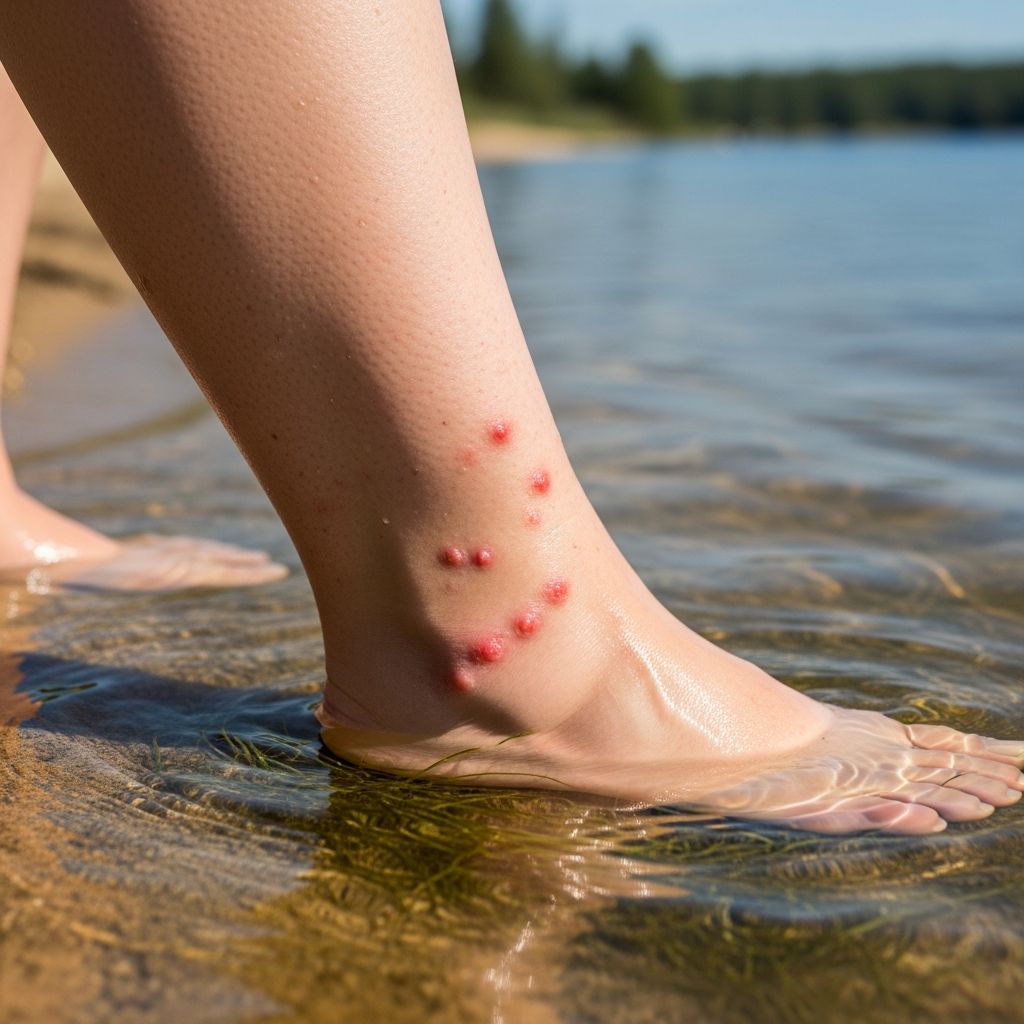
Swimmer’s itch, also known as cercarial dermatitis, is a common, non-contagious skin condition triggered by an allergic reaction to microscopic parasitic larvae in freshwater or saltwater. It manifests as an intensely itchy rash after exposure to infested waters, typically resolving within 1-2 weeks without formal treatment.
What is Swimmer’s Itch?
Swimmer’s itch is a temporary inflammatory skin response caused by cercariae, the larval stage of certain schistosome parasites that normally infect birds, mammals, or aquatic animals. These larvae mistakenly penetrate human skin during swimming or wading but cannot mature or survive in humans, dying shortly after penetration and provoking an immune-mediated rash. Unlike true schistosomiasis, which affects humans as definitive hosts, swimmer’s itch is a dead-end infection for these avian or mammalian schistosomes.
The condition is prevalent in warm, shallow waters of lakes, ponds, and sometimes oceans where intermediate host snails release free-swimming cercariae. Symptoms arise from the host’s hypersensitivity to parasite antigens, with repeated exposures leading to faster and more severe reactions due to sensitization.
Who Gets Swimmer’s Itch?
Anyone swimming or wading in contaminated waters can develop swimmer’s itch, but certain groups face higher risks:
- Children: Young children are particularly susceptible as they play in shallow, parasite-rich waters.
- Frequent swimmers: Repeated exposure sensitizes the immune system, causing quicker onset and intensified symptoms.
- Individuals not toweling off: Leaving skin wet after exiting water allows larvae more time to penetrate.
Geographically, outbreaks occur worldwide in summer months, especially in regions with high waterfowl populations like the Great Lakes, European lakes, and Hawaiian waters.
Causes
Swimmer’s itch results from cercarial penetration of the skin in parasite-infested waters. The lifecycle involves:
- Definitive hosts (birds like ducks/geese or mammals like muskrats) excrete schistosome eggs into water via feces.
- Eggs hatch into miracidia that infect intermediate host snails.
- Snails release thousands of cercariae into shallow, warm waters.
- Cercariae seek warm-blooded hosts; in humans, they burrow into skin but die, eliciting allergy.
Factors promoting cercarial abundance include stagnant warm water, abundant snails, and waterfowl overpopulation. Saltwater cases are rarer but reported in ocean beaches with seabirds.
Signs and Symptoms
Symptoms typically begin minutes to 48 hours post-exposure, varying by sensitization:
- Initial: Tingling, burning, or prickling where larvae entered.
- 12-24 hours: Maculopapular rash with small red pimples.
- Days 2-3: Pimples evolve into itchy blisters or papules; severe cases show wheals.
- Duration: Peak itching 2-3 days, resolving in 7-14 days.
Rash distribution follows water exposure sites: legs, feet, arms, torso. Intensity increases with exposure frequency—first-timers may delay 1-2 weeks, while sensitized individuals react within hours. Secondary bacterial infection risks from scratching include pustules or cellulitis.
Diagnosis
Diagnosis is clinical, based on:
- History of recent freshwater/saltwater exposure.
- Characteristic rash pattern (clustered papules/blisters on exposed skin).
- Timing: rapid onset post-swim in sensitized patients.
Differential includes seabather’s eruption, jellyfish stings, or contact dermatitis. Rarely, skin biopsy reveals dead cercariae, but unnecessary for typical cases. Severe or prolonged rashes warrant medical evaluation to rule out infection.
Management and Treatment
No specific cure exists; treatment targets symptom relief as the condition is self-limited. Symptomatic measures include:
Related Stories



| Method | Description | Frequency |
|---|---|---|
| Corticosteroid cream (1% hydrocortisone) | OTC anti-inflammatory reduces itch/inflammation. | 3-4 times daily. |
| Cool compresses | Damp cloth or ice pack soothes burning. | 20 min, 4x/day. |
| Antihistamines (loratadine, diphenhydramine) | Oral relief for widespread itch; Benadryl for severe cases (age >1). | As needed. |
| Baths/Pastes | Epsom salts, baking soda, colloidal oatmeal (Aveeno). | Daily soaks. |
Avoid scratching to prevent infection. Prescription corticosteroids or antibiotics may be needed for extreme cases or secondary infections. Rash fades as dead parasites resorb.
Prevention
Preventive strategies reduce exposure risk:
- Vigorous toweling: Dry skin immediately and rigorously post-swim to dislodge cercariae.
- Avoid shallow waters: Stay in deeper water; parasites concentrate in shallows.
- Timing: Swim midday when UV kills larvae; avoid dusk/dawn peaks.
- Protection: Wear rash guards, wetsuits, or waterproof barrier creams (DEET ineffective).
- Post-swim rinse: Shower with soap; launder swimwear in hot water.
Public health efforts include snail control and waterfowl management, though challenging.
Outlook
Swimmer’s itch is benign, resolving completely without scarring in 1-3 weeks. Sensitization may cause future outbreaks to worsen initially but often attenuates over time. Rare complications: bacterial superinfection requiring antibiotics. Seek care if rash persists >2 weeks, pus develops, fever occurs, or itch is unmanageable.
Frequently Asked Questions
Q: Is swimmer’s itch contagious?
A: No, it is not contagious; caused by dead parasites unable to replicate in humans.
Q: How long does swimmer’s itch last?
A: Typically 7-14 days; itching peaks early then fades.
Q: Can I get swimmer’s itch from pools?
A: No, chlorinated pools kill parasites; risk is only in natural untreated waters.
Q: Does swimmer’s itch only occur in freshwater?
A: Primarily freshwater, but saltwater cases occur with marine bird schistosomes.
Q: When should I see a doctor for swimmer’s itch?
A: If rash lasts >2 weeks, blisters pus-filled, or severe swelling/fever develops.
Q: Are home remedies effective?
A: Yes, corticosteroid creams, oatmeal baths, and antihistamines provide reliable relief.
References
- Swimmer’s Itch (Cercarial Dermatitis) — Cleveland Clinic. 2023. https://my.clevelandclinic.org/health/diseases/21783-swimmers-itch-cercarial-dermatitis
- Swimmer’s itch – Diagnosis and treatment — Mayo Clinic. 2023-10-26. https://www.mayoclinic.org/diseases-conditions/swimmers-itch/diagnosis-treatment/drc-20355049
- Swimmer’s Itch — Hawaii State Department of Health. 2024. https://health.hawaii.gov/docd/disease_listing/swimmers-itch/
- Swimmers Itch in Kids — Children’s Hospital Colorado. 2024. https://www.childrenscolorado.org/conditions-and-advice/conditions-and-symptoms/symptoms/swimmers-itch-lakes-and-oceans/
- Swimmer’s itch – Symptoms and causes — Mayo Clinic. 2023-10-26. https://www.mayoclinic.org/diseases-conditions/swimmers-itch/symptoms-causes/syc-20355043
- Swimmer’s Itch: Care Instructions — Alberta Health Services. 2023. https://myhealth.alberta.ca/Health/aftercareinformation/pages/conditions.aspx?hwid=acc8341
- Swimmer’s itch — Public Health Wales. 2024. https://phw.nhs.wales/services-and-teams/environmental-public-health/water-quality/swimmers-itch/
Similar Articles








Read full bio of medha deb