Sympathetic Nervous System: Fight-or-Flight Response
Understanding your body's automatic stress response and how it prepares you for action.
What Is the Sympathetic Nervous System?
The sympathetic nervous system (SNS) is one of two main divisions of the autonomic nervous system, which controls involuntary body processes like heart rate, digestion, and blood pressure. Your autonomic nervous system operates largely without conscious thought, allowing your body to respond automatically to threats and stressors in your environment. The SNS is specifically responsible for activating your body’s rapid stress response, commonly known as the fight-or-flight response. This system originates in the spinal cord and works by sending signals from the dorsal hypothalamus to activate arousal responses throughout your body.
Understanding how your sympathetic nervous system functions is essential for recognizing why your body reacts the way it does during stressful situations. Whether facing a genuine physical threat or experiencing everyday psychological stress, your SNS springs into action to prepare you for action, either to confront the threat or escape from it.
The Fight-or-Flight Response Explained
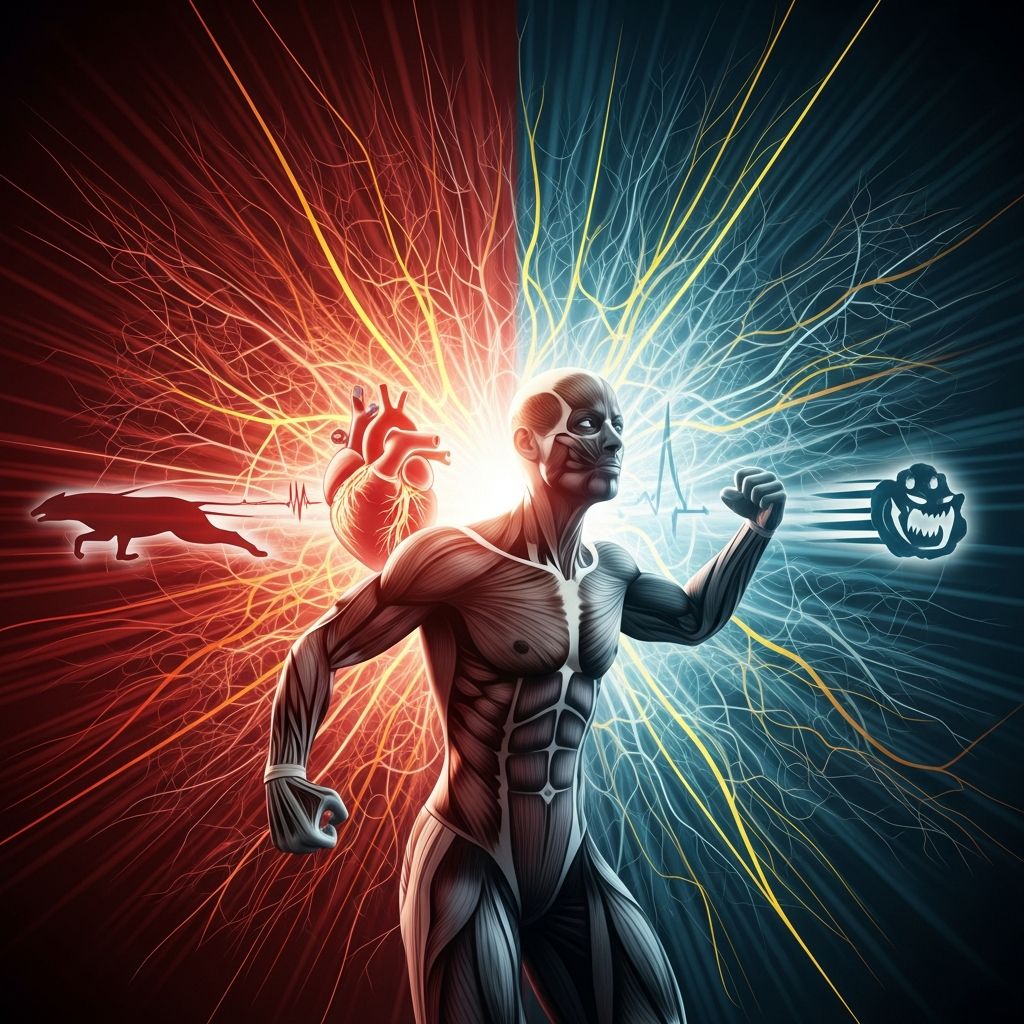
The fight-or-flight response, also called the acute stress response, is your body’s automatic reaction to something mentally or physically threatening. This response was first described in the 1920s by American physiologist Walter Cannon, who observed how animals mobilize their resources when facing danger. What Cannon discovered was that when threatened, the body undergoes a coordinated series of physiological changes designed to maximize your chances of survival.
When your SNS is activated by a perceived threat, it triggers a cascade of hormonal and neurological changes that prepare your body for immediate action. Your heart rate accelerates, breathing becomes rapid and shallow, and blood redirects from your digestive system toward your muscles and vital organs. This rapid mobilization of resources happens within seconds, before you’ve even consciously processed the threat. This evolutionary mechanism was invaluable to our ancestors, allowing them to quickly respond to predators and life-threatening situations.
Historical Context
The concept of fight-or-flight has evolved significantly since Cannon’s original theory. While Cannon focused on the aggressive or fleeing responses, modern psychology has expanded this framework to include additional response patterns. Researchers now recognize that beyond simply fighting or fleeing, individuals may also freeze or fawn when encountering threats. These expanded responses acknowledge that human stress reactions are more complex and varied than a binary fight-or-flight model suggests.
Physiological Changes During Fight-or-Flight
When your sympathetic nervous system activates, it orchestrates numerous simultaneous changes throughout your body. These physiological shifts happen automatically and prepare your body for intense physical action. Here are the key changes that occur:
- Increased heart rate: Your heart beats faster to pump more blood to your muscles and vital organs, providing them with oxygen and nutrients needed for action.
- Dilated pupils: Your pupils expand to improve your vision and help you see potential threats more clearly.
- Slowed digestion: Your digestive system temporarily shuts down, redirecting energy away from processes that aren’t immediately necessary for survival.
- Stimulated sweat glands: Increased sweating helps cool your body as it prepares for intense physical exertion.
- Relaxed bladder: Your urinary system relaxes, which may explain why people sometimes experience urinary urgency during extreme stress.
- Heightened alertness: Your senses become more acute, allowing for quicker reactions to environmental stimuli.
- Increased blood pressure: Blood vessels constrict and your heart pumps more forcefully, elevating blood pressure to redirect blood flow toward muscles and the brain.
- Faster breathing rate: Your respiratory rate increases to supply more oxygen to your body.
- Released adrenaline: A burst of adrenaline enters your bloodstream, giving you a sudden surge of energy.
Related Stories



These coordinated changes represent millions of years of evolutionary refinement, designed to maximize your physical capabilities when facing danger. Your body essentially transforms into a high-performance machine optimized for survival.
The Role of Neurotransmitters and Hormones
Your sympathetic nervous system relies on specific neurotransmitters and hormones to communicate signals throughout your body. These chemical messengers are crucial for triggering and maintaining the fight-or-flight response. Understanding these key players helps explain how quickly and powerfully your body can respond to threats.
Key Neurotransmitters
Norepinephrine (noradrenaline): This neurotransmitter activates your body and brain during the fight-or-flight response, promoting alertness and focus. It helps your central nervous system ramp up and prepare for action or escape.
Epinephrine (adrenaline): Produced by the adrenal medulla, epinephrine increases heart rate, dilates air passages, and constricts blood vessels to help your body prepare for stressful or dangerous situations. The rush of adrenaline is responsible for that intense feeling of energy and heightened awareness during moments of acute stress.
Acetylcholine: While primarily associated with the parasympathetic nervous system, acetylcholine also plays a supporting role in motivation, arousal, muscle function, and pupil dilation during the sympathetic response.
Stress Hormones
Beyond neurotransmitters, several hormones contribute to the fight-or-flight response. Cortisol is released during stress and helps mobilize glucose for energy. Catecholamines—which include both epinephrine and norepinephrine—are secreted by the adrenal medulla and amplify the sympathetic response throughout your body. Additionally, hormones like testosterone, estrogen, and neurotransmitters such as dopamine and serotonin all influence how your organism reacts to stress.
Modern Triggers of the Fight-or-Flight Response
While the fight-or-flight response evolved to handle genuine physical threats like encountering predators, modern life activates this same system in very different contexts. Today, our SNS can be triggered by psychological stressors that pose no actual physical danger. Common modern triggers include:
- Public speaking or performance situations
- Work deadlines and professional conflicts
- Relationship conflicts or personal disagreements
- Financial concerns or money worries
- Social interactions or anxiety about judgment
- Unexpected or shocking news
- Traffic incidents or aggressive drivers
- Health concerns or medical appointments
- Changes in routine or uncertainty about the future
The challenge with modern stressors is that your body reacts with the same intensity as it would to a genuine physical threat, even though you don’t need to fight or flee from your boss or a difficult conversation. This mismatch between your body’s response and the actual demands of the situation can create significant health problems over time.
Understanding the Three Stages of Stress Response
Psychologists recognize that the stress response follows a predictable pattern with three distinct stages, a concept known as the general adaptation syndrome. Understanding these stages helps explain why chronic stress can be so damaging to your health.
Alarm Stage
The alarm stage is the initial fight-or-flight response. Your central nervous system is ramped up, and your body mobilizes all available resources to handle the perceived threat. This is when you experience the most dramatic physiological changes—rapid heartbeat, sweating, and heightened alertness.
Resistance Stage
If the stressor continues, your body enters the resistance stage, during which it attempts to normalize and recover from the initial elevated response. Your body releases various hormones to sustain this elevated state while attempting to maintain homeostasis. However, your body remains in a heightened state of readiness rather than fully relaxing.
Exhaustion Stage
If the first two stages persist repeatedly over extended periods, as occurs with chronic stress, your body eventually reaches the exhaustion stage. During this phase, your body’s resources become depleted, and your ability to cope diminishes. This can lead to physical and mental health problems, including fatigue, depression, weakened immune function, and increased susceptibility to illness.
Expanded Response Patterns: Beyond Fight-or-Flight
Modern psychology has expanded the original fight-or-flight concept to recognize that humans have more than two ways of responding to threats. Research has identified four primary stress response patterns, sometimes remembered by the acronym “4 Fs”:
| Response Type | Definition | Example Behavior |
|---|---|---|
| Fight | Responding to a perceived threat with aggression or confrontation | Arguing with someone or standing up assertively |
| Flight | Responding to a perceived threat by running away or escaping | Leaving a situation, avoiding confrontation, or calling in sick to work |
| Freeze | Responding to a perceived threat by becoming immobile, mute, or unable to act | Feeling paralyzed during a stressful situation or “blanking out” during a presentation |
| Fawn | Responding to a perceived threat by trying to please people to avoid conflict | Over-accommodating others’ needs or avoiding expressing your true opinions |
These varied responses reflect the complexity of human stress reactions. Some people naturally tend toward one response pattern, while others may cycle through different responses depending on the situation.
The Problem of Chronic Sympathetic Activation
While the fight-or-flight response is essential for surviving genuine threats, problems arise when your SNS remains chronically activated. People living with chronic stress or anxiety often struggle to regulate their sympathetic nervous system, meaning their body may continuously exist in “fight or flight” mode. This chronic activation can have serious consequences for your physical and mental health.
Effects of Chronic SNS Activation
When your sympathetic nervous system remains persistently active, it can lead to numerous health problems:
- Sustained elevated blood pressure and increased risk of cardiovascular disease
- Chronic muscle tension and tension headaches
- Weakened immune system function and increased susceptibility to illness
- Sleep disturbances and insomnia
- Digestive problems and gastrointestinal issues
- Anxiety and panic disorders
- Depression and mood disturbances
- Difficulty concentrating and cognitive problems
- Irritability and emotional dysregulation
Behavioral Consequences
People with chronically activated SNS may respond to everyday situations with exaggerated stress reactions. A work meeting, a conversation with a partner, or a minor disagreement might trigger aggressive responses, speechlessness, or an overwhelming need to leave the situation. This makes it difficult to function effectively in daily life and can strain relationships and professional performance.
The Parasympathetic Nervous System: Your Built-in Brake
Your body has an internal mechanism to counteract the fight-or-flight response: the parasympathetic nervous system (PNS). While your SNS is the accelerator, your PNS is the brake. After a threat passes, your parasympathetic nervous system activates the “rest and digest” response, helping return your body to homeostasis and a state of calm. This recovery process typically takes 20 to 60 minutes, depending on the intensity of the stress and individual factors.
The parasympathetic system releases acetylcholine, which counteracts the effects of adrenaline and noradrenaline. This allows your heart rate to slow, your breathing to become deeper and more regular, and your digestive system to resume normal function. Understanding this natural recovery system emphasizes the importance of stress management techniques that activate your parasympathetic response.
Strategies for Managing the Sympathetic Nervous System
Since chronic SNS activation can damage your health, learning to regulate your stress response is essential. Several evidence-based techniques can help activate your parasympathetic nervous system and restore balance:
- Deep breathing exercises: Slow, deep breathing directly signals your parasympathetic nervous system to activate, lowering heart rate and blood pressure.
- Progressive muscle relaxation: Systematically tensing and releasing muscle groups helps release physical tension accumulated during stress.
- Meditation and mindfulness: Regular meditation practice trains your brain to remain calm and reduces overall sympathetic activation.
- Physical exercise: Regular aerobic and strength training helps metabolize stress hormones and promotes overall nervous system balance.
- Adequate sleep: Quality sleep allows your body to recover from daily stressors and regulate neurotransmitter levels.
- Social connection: Spending time with supportive friends and family activates your parasympathetic response and reduces stress.
- Yoga and tai chi: These practices combine physical movement, breathing, and mindfulness to activate relaxation responses.
- Time in nature: Spending time outdoors has been shown to reduce stress hormones and activate parasympathetic responses.
- Professional support: Therapy, particularly cognitive-behavioral therapy (CBT) and other evidence-based approaches, can help address chronic stress and anxiety.
Frequently Asked Questions
Q: How quickly does the fight-or-flight response activate?
A: The fight-or-flight response activates within seconds of perceiving a threat. Your sympathetic nervous system can trigger physiological changes before you’ve consciously processed the danger, which is why you might feel your heart racing or experience a surge of adrenaline seemingly instantaneously.
Q: Can I have a constantly activated sympathetic nervous system?
A: Yes. People with chronic stress, anxiety disorders, or trauma histories may have a chronically elevated sympathetic tone. This means their SNS remains partially activated even when no genuine threat exists, leading to persistent high blood pressure, muscle tension, sleep problems, and other health issues.
Q: What’s the difference between the sympathetic and parasympathetic nervous systems?
A: The sympathetic nervous system activates your fight-or-flight response, increasing heart rate and preparing you for action. The parasympathetic nervous system does the opposite, activating your rest-and-digest response, slowing heart rate, and promoting relaxation and recovery.
Q: Why do I sometimes “freeze” during stressful situations instead of fighting or fleeing?
A: Freezing is a normal stress response recognized by modern psychology. In some situations, particularly those involving extreme fear or perceived helplessness, your nervous system may activate the freeze response, which can include becoming immobile or unable to speak.
Q: How long does it take to recover from a fight-or-flight response?
A: Once the threat passes, your parasympathetic nervous system typically takes 20 to 60 minutes to fully calm your body and return it to baseline. This timeline varies depending on the intensity of the stress and individual differences in nervous system sensitivity.
Q: Can relaxation techniques actually lower my sympathetic nervous system activation?
A: Yes. Techniques like deep breathing, meditation, yoga, and progressive muscle relaxation directly activate your parasympathetic nervous system, counteracting sympathetic activation. Regular practice of these techniques can reduce your overall sympathetic tone and improve stress resilience.
References
- Sympathetic Nervous System — Simply Psychology. 2024. https://www.simplypsychology.org/sympathetic-nervous-system.html
- Understanding Your Sympathetic Nervous System’s Fight or Flight Response — Polar. 2024. https://www.polar.com/blog/sympathetic-nervous-system/
- Fight-or-flight response — Wikipedia. 2024. https://en.wikipedia.org/wiki/Fight-or-flight_response
- The Fight-or-Flight Response — Child and Family Institute. 2024. https://childfamilyinstitute.com/factsheets/phobias-panic-disorders/fight-or-flight/
- Physiology, Stress Reaction — NCBI Bookshelf (StatPearls). National Center for Biotechnology Information, U.S. National Library of Medicine. 2024. https://www.ncbi.nlm.nih.gov/books/NBK541120/
- Stress effects on the body — American Psychological Association. 2024. https://www.apa.org/topics/stress/body
Similar Articles








Read full bio of Sneha Tete