Syphilis: Symptoms, Stages, Causes, Treatment
Comprehensive guide to syphilis: Understand its causes, stages, symptoms, diagnosis, treatment, and prevention strategies for this curable STI.
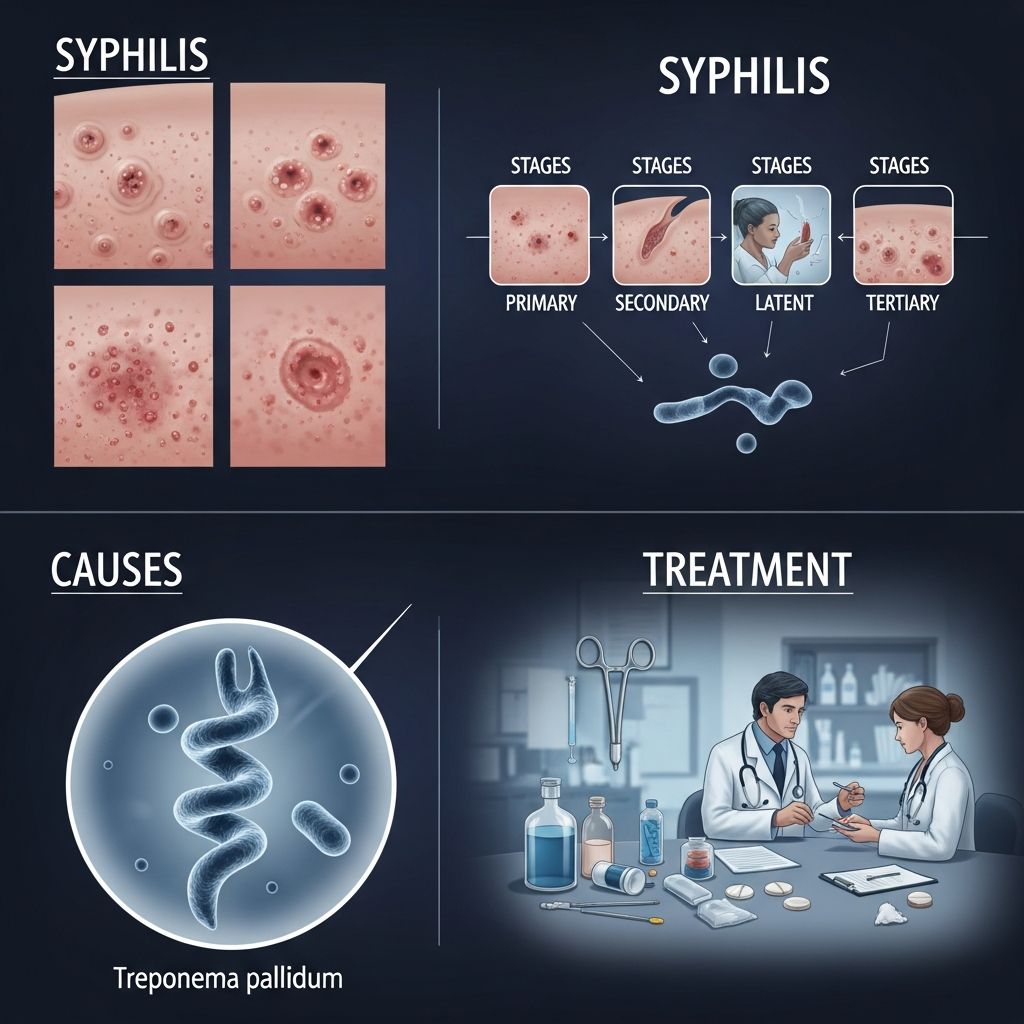
Syphilis is a sexually transmitted infection (STI) caused by the bacterium Treponema pallidum, which can lead to serious health complications if left untreated. The disease progresses through distinct stages—primary, secondary, latent, and tertiary—each with unique symptoms, and it is fully curable with antibiotics like penicillin when detected early.
What Is Syphilis?
Syphilis, often called “the great imitator” due to its varied presentations mimicking other conditions, is a systemic bacterial infection caused by the spirochete Treponema pallidum subspecies pallidum. This motile, gram-negative bacterium invades through broken skin or mucous membranes, primarily during sexual contact, but can also transmit from mother to child during pregnancy, causing congenital syphilis.
The infection develops in stages: primary (localized sore), secondary (systemic rash and flu-like symptoms), latent (asymptomatic), and tertiary (organ damage). Without treatment, it can affect any organ, including the heart, brain, and nervous system, potentially leading to death.
Incidence has risen sharply over the past 15 years, particularly among men who have sex with men (MSM) aged 25–35, with about 40% co-infected with HIV. Cases involve high-risk behaviors like condomless sex and drug use.
Syphilis Causes and Risk Factors
Syphilis spreads mainly through direct contact with infectious sores (chancres) during vaginal, anal, or oral sex. The bacterium enters via cuts or mucous membranes in the genitals, mouth, anus, or rectum. It is highly contagious in primary and secondary stages when moist lesions are present.
Other transmission routes include:
- Congenital: From pregnant person to fetus, leading to stillbirth, newborn death, or lifelong disabilities.
- Rarely: Blood transfusion (screening has minimized this) or needlestick injuries in healthcare settings.
Risk factors include multiple sexual partners, unprotected sex, HIV co-infection, MSM status, and living in high-prevalence areas. Communicability persists with visible lesions but wanes after the first year in early latent stages.
Syphilis Stages and Symptoms
Syphilis evolves over time if untreated, with overlapping stages and potential relapses. Incubation averages 21 days (10–90 days).
Primary Syphilis
The first sign is a chancre: a painless, firm, round ulcer 0.5–2 cm at the infection site (genitals, anus, mouth, etc.). It may go unnoticed in hidden areas like the cervix or rectum. Regional lymph nodes enlarge. The sore heals in 3–6 weeks without scarring, but infection persists.
- Multiple or painful chancres possible, especially with HIV.
- Differentials: Herpes, chancroid.
Secondary Syphilis
Occurs 4–10 weeks post-chancre: a symmetric maculopapular rash (50–70% cases) on trunk, palms, soles—highly infectious if moist. Accompanied by fever, sore throat, headache, lymphadenopathy, mucous patches, condyloma lata (wart-like genital lesions), alopecia, or hepatitis.
Related Stories



- Symptoms resolve in weeks to months but relapse possible up to 4 years.
- Differential: Primary HIV, drug eruptions.
Latent Syphilis
Asymptomatic phase post-secondary symptoms. Early latent (<1–2 years): infectious, relapse risk. Late latent (>1–2 years): noninfectious except to fetus. No clinical signs, detected only by serology.
Tertiary Syphilis
Rare (affects ~25–30% untreated): 10–30 years later, causes gummas (soft tumors), cardiovascular syphilis (aortitis), neurosyphilis (meningitis, tabes dorsalis, paralysis). Life-threatening organ damage occurs.
Neurosyphilis, Ocular, and Otic Syphilis
Can occur at any stage, especially advanced. Symptoms: headache, vision/hearing loss, dementia, stroke. HIV patients at higher risk; requires lumbar puncture for diagnosis.
Congenital Syphilis
Transmitted in utero; untreated leads to 40% fetal death. Newborn signs: rash, snuffles, bone deformities (saddle nose), Hutchinson teeth, interstitial keratitis. Screening/treatment in pregnancy prevents most cases.
How Syphilis Spreads
Primarily sexually via chancres or secondary lesions. Not spread through casual contact, toilet seats, or swimming pools. Infectious periods: primary/secondary lesions, early latent. Use condoms to reduce (not eliminate) risk.
Syphilis Diagnosis
Combines history, exam, and tests:
- Darkfield microscopy: Visualizes spirochetes from chancre fluid (gold standard early).
- Serology: Nontreponemal (VDRL/RPR—quantitative, monitors treatment); Treponemal (FTA-ABS/TPPA—confirms).
- CSF analysis for neurosyphilis.
Follow-up titers at 3, 6, 12, 24 months ensure cure (4-fold decline).
Syphilis Treatment
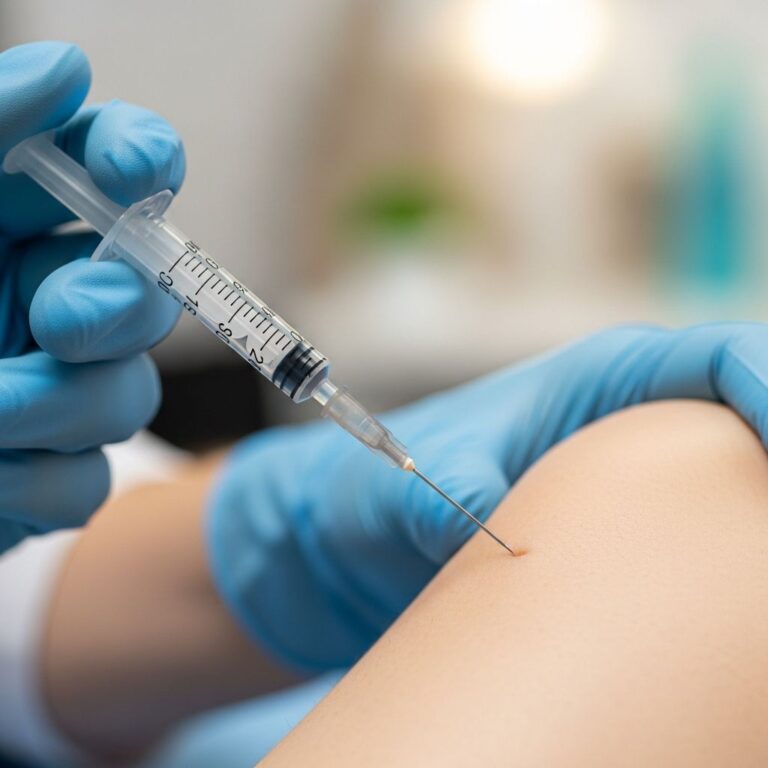
Penicillin G benzathine IM is first-line:
| Stage | Treatment |
|---|---|
| Primary/Secondary/Early Latent | Single 2.4 million units IM |
| Late Latent/Tertiary | 3 weekly 2.4 million units IM |
| Neurosyphilis | IV Penicillin G 18–24 million units/day, 10–14 days |
| Pregnancy | Same as above; desensitize if allergic |
| Penicillin Allergic (non-pregnant) | Doxycycline 100mg BID x14–28 days |
Treat partners from past 3–12 months. Jarisch-Herxheimer reaction (fever post-treatment) common—manage supportively.
Syphilis Prevention
- Consistent condom use.
- Regular STI screening, especially high-risk groups/MSM/HIV+.
- Prenatal screening/treatment.
- Partner notification/tracing.
- Avoid sex until cured and follow-up clear.
Public health efforts focus on education amid rising cases.
Complications of Untreated Syphilis
Up to 1/3 develop late issues: blindness, insanity, aortic aneurysm, death. Congenital: developmental delays, deafness.
When to See a Doctor
Any sore, rash (esp. palms/soles), flu-like symptoms post-risk. Pregnant individuals: routine screening at first visit, third trimester, delivery if high-risk.
Frequently Asked Questions (FAQs)
What is the incubation period for syphilis?
A: 10–90 days, average 21 days until chancre appears.
Is syphilis curable?
A: Yes, with timely antibiotics; early stages respond best.
Can syphilis be spread by kissing?
A: Yes, if oral chancre or mucous patches present.
How is syphilis tested during pregnancy?
A: Blood tests at initiation, 28–32 weeks, delivery for at-risk.
What does a syphilis chancre look like?
A: Painless, firm, round ulcer healing in 3–6 weeks.
References
- Syphilis: presentations in general medicine — PMC – NIH. 2016-07-01. https://pmc.ncbi.nlm.nih.gov/articles/PMC4952975/
- About Syphilis — Centers for Disease Control and Prevention (CDC). 2024-01-01. https://www.cdc.gov/syphilis/about/index.html
- Syphilis — MedlinePlus Medical Encyclopedia. 2024-01-01. https://medlineplus.gov/ency/article/000861.htm
- What Is Syphilis? — JAMA Network. 2023-06-20. https://jamanetwork.com/journals/jama/fullarticle/2804366
- Syphilis — Iowa Department of Health and Human Services. 2024-01-01. https://hhs.iowa.gov/health-prevention/providers-professionals/center-acute-disease-epidemiology/epi-manual/reportable-diseases/syphilis
Similar Articles








Read full bio of medha deb