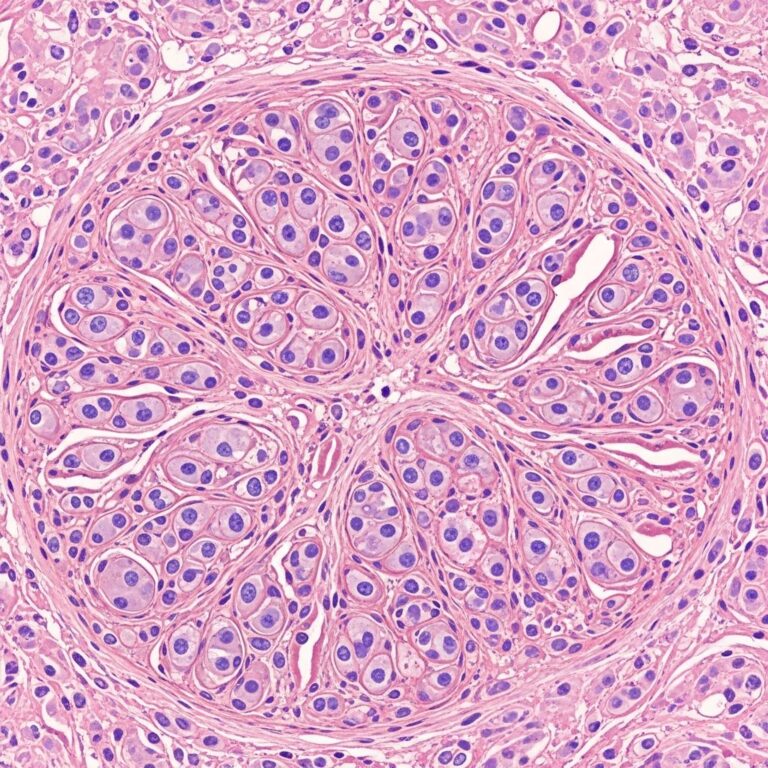
Syringofibroadenoma Pathology: Structure, Diagnosis
Understanding syringofibroadenoma: histological features, diagnostic criteria, and differential diagnosis.
Understanding Syringofibroadenoma Pathology
Syringofibroadenoma is a benign adnexal tumor of eccrine origin, also known as syringofibroadenoma of Mascaro, named after the physician who first described this condition in 1963. This rare cutaneous neoplasm presents distinctive histopathological features that distinguish it from other adnexal tumors and inflammatory skin conditions. Understanding the pathological characteristics of syringofibroadenoma is essential for accurate diagnosis and appropriate clinical management.
Clinical Characteristics and Presentation
Eccrine syringofibroadenoma (ESFA) is an infrequent benign adnexal cutaneous lesion characterized by hyperplastic epithelium with differentiation into eccrine ducts, displaying diverse clinical presentations. The lesions primarily occur in the acral regions (hands and feet) of elderly individuals, though they can also manifest on the back, abdomen, buttocks, and other body areas.
Clinically, syringofibroadenoma presents with varied morphologies, including:
- Solitary or multiple papules
- Plaques of varying sizes
- Nodular lesions
- Symmetrical or linear distribution patterns
- Isolated lesions or grouped presentations
The age of presentation ranges from 16 to 80 years, with the majority of cases occurring in patients aged 61 to 80 years. The lesions are typically painless and may persist for extended periods, sometimes over a decade, before clinical evaluation and diagnosis.
Histopathological Features
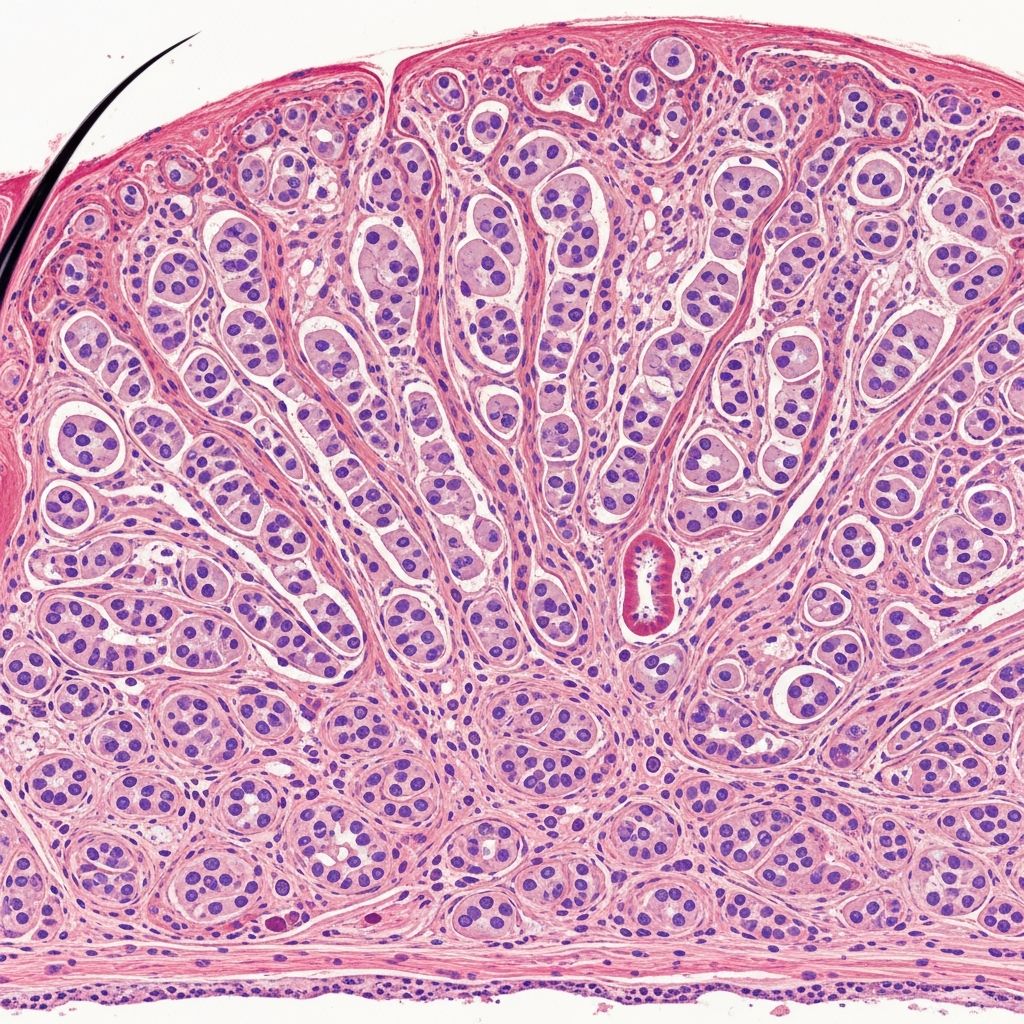
The histological examination of syringofibroadenoma reveals distinctive architectural and cellular characteristics that form the foundation for accurate diagnosis. At scanning power magnification, the lesion demonstrates a clear epidermal proliferative process originating from multiple points along the epidermis.
Epithelial Architecture
The most characteristic feature of syringofibroadenoma is the presence of vertically oriented anastomosing strands of basaloid epithelium arising from multiple points along the epidermis. These interconnected cell chains extend downward into the dermis, creating a distinctive interconnected network pattern. The basaloid cells are notably smaller than adjacent keratinocytes and demonstrate mild variation in size, contributing to the characteristic appearance of the lesion.
Ductal Differentiation
A defining feature of syringofibroadenoma is the presence of ductal differentiation within the basaloid cell strands. Small ductal structures and cystic changes are observed within these interconnected cell chains, with eccrine acrosyringeal differentiation being the hallmark of this tumor. The presence of ductal lumens and eccrine duct formation distinguishes syringofibroadenoma from other basaloid tumors of the skin.
Stromal Component
Syringofibroadenoma is characterized by notable intervening fibrovascular stroma between the epithelial strands. This fibrous and vascular component is particularly prominent and may vary in density. Additionally, the lesion may demonstrate a mild superficial lymphocytic infiltrate, though this is not a constant feature. The stroma provides essential structural support and distinguishes this tumor from other adnexal neoplasms.
Cellular Features
Histological examination typically reveals the following cellular characteristics:
- Absence of mitotic figures or developmentally abnormal cells in benign variants
- Mild nuclear variation without significant atypia
- Hyperkeratosis of the overlying epidermis in some cases
- Acanthosis (epidermal thickening) in reactive forms
- Sparse pigmented dendritic melanocytes in pigmented variants
Related Stories



Classification and Subtypes
Syringofibroadenoma exists in multiple clinical and pathological variants. Based on Starink’s classifications, modified by French, five distinct subtypes have been identified:
1. Solitary Eccrine Syringofibroadenoma
This represents the most common presentation, consisting of a single lesion typically occurring in elderly patients on acral sites.
2. Multiple ESFA Associated with Hidrotic Ectodermal Dysplasia
This variant is associated with Clouston syndrome and Schopf’s syndrome, characterized by palmoplantar keratoderma, hypodontia, hypotrichosis, nail dystrophy, and multiple periocular and eyelid apocrine hydrocystomas.
3. Eccrine Syringofibroadenomatosis
Multiple lesions occur without association with established cutaneous findings or systemic syndromes, representing a primary generalized form of the condition.
4. Non-Familial Unilateral Linear Eccrine Syringofibroadenoma
Also termed naevoid syringofibroadenoma (ES), this variant presents as linear, unilateral lesions without familial or systemic associations.
5. Reactive Eccrine Syringofibroadenoma
Reactive ESFA demonstrates identical histological features to primary ESFA but occurs adjacent to or in association with various inflammatory diseases, bullous dermatoses, or other cutaneous conditions. This form does not typically undergo malignant transformation and may respond to symptomatic treatment and regular follow-up without requiring surgical intervention.
Differential Diagnosis
Accurate diagnosis of syringofibroadenoma requires careful histopathological examination to distinguish it from morphologically similar conditions. The following entities must be considered in the differential diagnosis:
Basal Cell Carcinoma (Fibroepithelioma Type)
Fibroepithelioma of Pinkus shows focal changes typical of basal cell carcinoma, including peripheral palisading and clefting artifact, with a characteristically loose fibrous stroma. Unlike syringofibroadenoma, BCC lacks the prominent ductal differentiation and demonstrates malignant cytological features including increased mitotic activity and nuclear atypia.
Eccrine Poroma
Eccrine poroma presents a more uniform small epithelial cell proliferation with vertical thick columns of cells extending into the dermis. While both lesions demonstrate eccrine differentiation, poroma lacks the distinctive anastomosing strand pattern and fibrovascular stroma characteristic of syringofibroadenoma. Additionally, poroma typically shows less stromal component and different architectural organization.
Acrosyringeal Naevus
This lesion can be distinguished from syringofibroadenoma by strong periodic acid-Schiff (PAS) positivity and a prominent plasma cell infiltrate. Acrosyringeal naevus lacks the fibrovascular stroma and basaloid cell strands that define syringofibroadenoma.
Syringofibroadenocarcinoma
Syringofibroadenocarcinoma represents malignant transformation of syringofibroadenoma. This lesion is identified as an area of transformation within an existing syringofibroadenoma where a malignant phenotype emerges, displaying cytological atypia, increased mitotic figures, and infiltrative growth patterns. This malignant variant requires more aggressive treatment and close clinical follow-up.
Other Differential Diagnoses
Depending on clinical presentation and location, the following conditions should be considered:
- Malignant melanoma (especially in pigmented variants)
- Pigmented basal cell carcinoma
- Seborrheic keratosis
- Squamous cell carcinoma
- Hidradenitis suppurativa (in reactive cases)
- Dyshidrotic eczema (in palmoplantar presentations)
Diagnostic Methodology
Establishing a definitive diagnosis of syringofibroadenoma requires comprehensive evaluation combining clinical assessment, dermoscopy, and histopathological examination.
Clinical Evaluation
Initial clinical assessment should include detailed history regarding lesion duration, associated symptoms, location, and any underlying inflammatory or neoplastic conditions. Long-lasting skin lesions showing modification warrant biopsy for histopathological examination to exclude malignant transformation.
Dermoscopic Examination
Dermoscopy may reveal variable patterns depending on lesion type and associated features. In pigmented variants, radiate striae and pseudopods on the periphery may be observed, potentially mimicking melanocytic lesions. Plantar lesions may demonstrate clustered or non-specific punctate blood vessels on a dark red background with yellow-white scales.
Biopsy and Histopathology
Histopathological examination is essential for definitive diagnosis. An incisional or excisional biopsy should be performed to obtain adequate tissue for comprehensive evaluation. The tissue must be examined at multiple magnifications to identify the characteristic vertically oriented anastomosing strands, ductal differentiation, and fibrovascular stroma. Special stains and immunohistochemical studies may be employed to confirm eccrine differentiation and exclude malignancy.
Immunohistochemical Features
Immunohistochemical analysis provides additional diagnostic confirmation in syringofibroadenoma. The lesion demonstrates positive staining for epithelial membrane antigen (EMA), confirming eccrine duct differentiation. This immunohistochemical profile helps distinguish syringofibroadenoma from other basaloid tumors and confirms the eccrine rather than apocrine origin of the neoplasm.
Malignant Potential and Transformation
While syringofibroadenoma is fundamentally a benign lesion, malignant transformation to syringofibroadenocarcinoma has been documented, particularly in long-lasting lesions. The mechanisms of malignant transformation remain unclear. Several risk factors may increase susceptibility to transformation, including prolonged lesion duration, previous radiation exposure, and immunosuppression.
Reactive ESFA typically does not undergo malignant transformation, whereas primary syringofibroadenoma may demonstrate carcinomatous changes. Long-standing lesions showing clinical modification warrant careful histopathological examination to exclude in situ or invasive carcinoma. Regular clinical follow-up and patient counseling regarding warning signs are essential for lesions with transformation potential.
Treatment and Management
Management of syringofibroadenoma depends on lesion type, symptoms, and transformation risk.
Surgical Excision
Complete surgical excision with adequate margins (typically 1 cm) represents the definitive treatment for syringofibroadenoma. Excision provides both therapeutic benefit and adequate tissue for comprehensive histopathological examination to exclude malignant transformation or in situ carcinoma.
Reactive ESFA Management
For reactive ESFA associated with inflammatory conditions, symptomatic treatment of the primary dermatological condition may be effective. Scholars suggest that symptomatic treatment and regular clinical follow-up can be sufficient for managing reactive ESFA, and surgical resection may not be necessary for all cases. Treatment of underlying inflammatory conditions (such as dyshidrotic eczema or other dermatoses) may lead to improvement of reactive syringofibroadenoma.
Surveillance and Follow-up
For lesions managed conservatively, regular clinical follow-up is essential to monitor for clinical modification or signs of malignant transformation. Dermoscopic monitoring and photographic documentation may assist in tracking lesion changes over time.
Clinical Significance and Prognosis
Syringofibroadenoma, despite its benign nature, carries clinical significance due to its potential for malignant transformation, diagnostic mimicry of other conditions, and association with systemic syndromes in certain variants. The prognosis for benign syringofibroadenoma following adequate surgical excision is excellent, with low recurrence rates and no systemic manifestations in non-syndromic forms.
However, vigilance is necessary when evaluating long-standing skin lesions, as malignant transformation, though rare, has been documented. Patients with syringofibroadenoma associated with ectodermal dysplasia syndromes require comprehensive systemic evaluation and genetic counseling when appropriate.
Frequently Asked Questions
Q: What is the difference between syringofibroadenoma and eccrine poroma?
A: The primary differences lie in epithelial architecture and stromal composition. Syringofibroadenoma features vertically oriented anastomosing strands with prominent fibrovascular stroma and ductal differentiation, while eccrine poroma shows uniform epithelial cell proliferation with vertical columns and minimal stromal component. Poroma also lacks the interconnected strand pattern characteristic of syringofibroadenoma.
Q: Can syringofibroadenoma undergo malignant transformation?
A: Yes, malignant transformation to syringofibroadenocarcinoma can occur, particularly in long-lasting lesions. However, reactive ESFA typically does not transform. Any long-standing lesion showing clinical modification warrants biopsy and histopathological examination to exclude malignant transformation.
Q: Is surgical excision always necessary for syringofibroadenoma?
A: For reactive ESFA associated with inflammatory conditions, symptomatic treatment and regular clinical follow-up may be sufficient without surgical intervention. However, definitive surgical excision is recommended for primary syringofibroadenoma and provides opportunities for comprehensive histopathological examination.
Q: What are the histological hallmarks of syringofibroadenoma?
A: The key histological features include vertically oriented anastomosing basaloid epithelial strands originating from multiple points along the epidermis, ductal eccrine differentiation with small ducts and cystic structures, and prominent intervening fibrovascular stroma.
Q: How is syringofibroadenoma associated with systemic syndromes?
A: Multiple ESFA can occur as part of hereditary conditions such as Clouston syndrome (hidrotic ectodermal dysplasia), characterized by palmoplantar keratoderma, hypodontia, hypotrichosis, and nail dystrophy. Genetic counseling may be appropriate for syndromic presentations.
References
- Syringofibroadenoma Pathology — DermNet. 2024. https://dermnetnz.org/topics/syringofibroadenoma-pathology
- Pigmented Eccrine Syringofibroadenocarcinoma Simulating Malignant Melanoma — Anais de Dermatologia, Brazilian Society of Dermatology. 2024. https://www.anaisdedermatologia.org.br
- Eccrine Syringofibroadenoma: A Rare Tumor in Dermatopathology — SAS Publishers. 2023. https://saspublishers.com/article/8344/download/
- A Case of Reactive Eccrine Syringofibroadenoma Associated with Dyshidrotic Eczema — National Center for Biotechnology Information (NCBI/PMC). 2024. https://pmc.ncbi.nlm.nih.gov/articles/PMC10691370/
- Reactive Eccrine Syringofibroadenoma with Foci of Squamous Cell Carcinoma In Situ — Acta Dermatovenerologica Croatica. 2022. https://actadermatovenerologicacroatica.hr
- Sweat Gland Lesions — DermNet. 2024. https://dermnetnz.org/topics/sweat-gland-lesions
- Adnexal Tumours — DermNet. 2024. https://dermnetnz.org/topics/adnexal-tumour
Similar Articles








Read full bio of medha deb