Syringoma: What It Is, Symptoms, Causes & Treatment
Complete guide to syringoma: Understanding benign skin growths, symptoms, and treatment options.
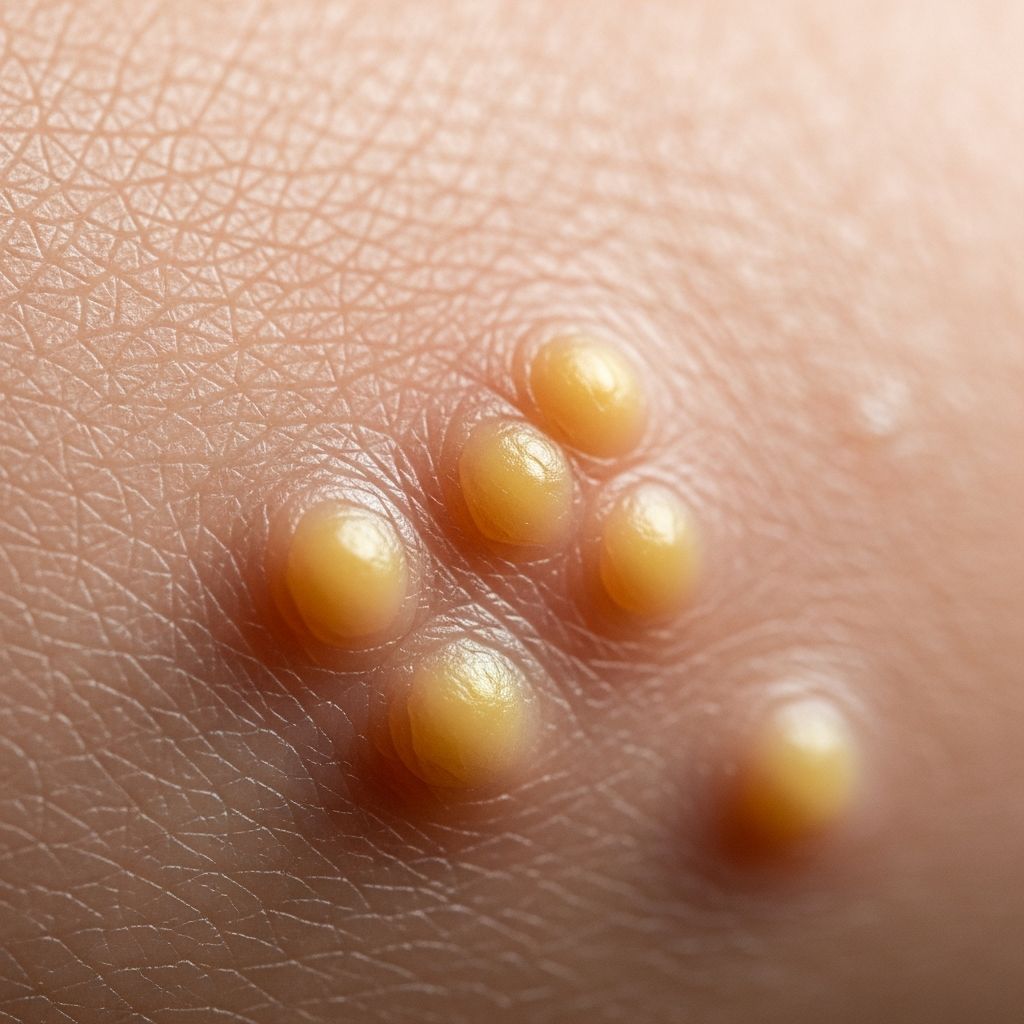
What Is a Syringoma?
A syringoma is a benign (non-cancerous) skin growth that develops from the cells of your sweat glands. These small, harmless bumps typically appear as clusters on your skin, most commonly around the eyes, upper cheeks, and neck area. Syringomas are completely harmless and pose no health risk, though many people seek treatment for cosmetic reasons.
The condition is characterized by an overgrowth of sweat gland cells, which create small, firm bumps on the skin’s surface. In individuals with darker skin tones, syringomas may appear more pale or yellowish compared to the surrounding skin, while in lighter skin tones they often blend in with the natural skin color or appear slightly raised.
Syringoma Symptoms
Most syringomas are asymptomatic, meaning they don’t cause any discomfort or other noticeable symptoms beyond their physical appearance. However, some individuals may experience:
– Small, round, firm bumps that are typically 1 to 3 millimeters in width- Multiple bumps grouped together in similar sizes, shapes, and colors- Bumps that are yellowish, clear-colored, or the same color as your surrounding skin- Mild itching, especially when you sweat, though this is relatively uncommon
The primary concern for most people with syringomas is the cosmetic impact rather than any physical symptoms. The bumps are visible and may become more noticeable over time, which is often why individuals seek dermatological evaluation and treatment.
Causes of Syringoma
The exact cause of syringoma formation is not completely understood, but several factors and conditions have been associated with their development:
Associated Risk Factors
– Genetics and family history of syringomas- Age, as they become more common with advancing years- Heat and humidity exposure- Excessive sweating (hyperhidrosis)- Down syndrome and other genetic conditions- Hormonal changes- Sun exposure and skin damage
While these factors may increase your likelihood of developing syringomas, anyone can develop these benign growths at any age. The condition is more prevalent in adults and becomes increasingly common after age 20.
Syringoma Diagnosis
Diagnosing syringoma is typically straightforward and usually requires a simple office visit with a dermatologist or healthcare provider. In most cases, the diagnosis can be made through visual examination alone, as the characteristic appearance of the bumps is quite distinctive.
Diagnostic Methods
Your healthcare provider may use one or more of the following approaches:
– Clinical examination: Visual inspection of the bumps and their location- Biopsy: If there is any doubt about the diagnosis, your doctor may remove a small tissue sample to examine under a microscope to confirm the diagnosis- Dermoscopy: Using a specialized magnifying device to examine the bumps in detail
A biopsy involves removing a tiny piece of tissue from the affected area, which is then analyzed microscopically to confirm that the growth is indeed a syringoma and not another skin condition. This is rarely necessary but may be performed if the appearance is atypical or if your healthcare provider wants to rule out other conditions.
Related Stories



Syringoma Treatment Options
Since syringomas are benign and harmless, treatment is entirely optional and based on personal preference and cosmetic concerns. However, several effective treatment methods are available for those who wish to remove or reduce the appearance of these bumps.
Non-Surgical Treatments
Medications
Several topical and oral medications can help manage the appearance of syringomas:
– Retinoids and retinoid-based creams- Trichloroacetic acid (TCA)- Acitretin and isotretinoin (oral medications)- Topical lotions formulated to reduce bump appearance
These medications work by promoting skin cell turnover or inhibiting sweat gland activity, which can help reduce the visibility of syringomas over time. Results are typically gradual and may require ongoing use.
Professional Medical Treatments
Laser Therapy
Laser therapy is one of the most popular and effective treatment options for syringomas. In this procedure, specialized light beams are applied to the skin to target and destroy the bumps or significantly reduce their appearance. Laser treatment has several advantages, including a lower risk of scarring compared to other methods and the ability to treat multiple bumps in one session. Results are usually visible after one to three treatments, depending on the number and size of the syringomas.
Electrosurgery (Diathermy)
Also known as diathermy or deep heating, electrosurgery uses an electric current to produce heat beneath your skin that removes the bumps. This in-office procedure is relatively quick and effective. The electrical energy is precisely directed to destroy the syringoma tissue while minimizing damage to surrounding healthy skin.
Surgical Excision
This involves using a surgical knife to carefully cut off the syringoma. While effective, excision may not be the best option for individuals with darker skin tones, as it can cause long-lasting pigment changes or post-inflammatory hyperpigmentation. Recovery typically takes one to two weeks, during which the area must be kept clean and protected.
Dermabrasion
This method scrubs off the outer layers of your skin using a specialized device, revealing new skin layers beneath that are free of bumps. Dermabrasion works particularly well for superficial syringomas and can be combined with other treatments for optimal results.
Cryotherapy
This relatively newer treatment option involves freezing the bumps with liquid nitrogen, causing them to gradually fall off. Cryotherapy is a simple procedure that can be performed in the office with minimal discomfort. Multiple sessions may be needed for complete removal of all syringomas.
Botulinum Toxin
Recent evidence suggests that botulinum toxin A can be effective either as a standalone treatment or in combination with laser therapy. This approach works by reducing sweat gland activity in the treated area, which can help prevent new syringomas from forming and reduce the appearance of existing ones.
Treatment Comparison Table
| Treatment Method | Effectiveness | Recovery Time | Risk of Scarring | Cost Range |
|---|---|---|---|---|
| Laser Therapy | High | 1-2 weeks | Low | $$-$$$ |
| Electrosurgery | High | 1-2 weeks | Moderate | $-$$ |
| Surgical Excision | Very High | 2-3 weeks | Moderate-High | $$ |
| Dermabrasion | Moderate-High | 1-2 weeks | Low | $-$$ |
| Cryotherapy | Moderate-High | 1 week | Low | $-$$ |
| Topical Medications | Low-Moderate | None | None | $ |
Important Treatment Considerations
When considering syringoma treatment, keep these important points in mind:
– Do not attempt to remove syringomas yourself, as this can lead to scarring, infection, and other complications- Treatment is usually successful, but syringomas often reappear after treatment, requiring ongoing management- Scarring and changes in skin color may occur with certain treatment methods- Darker skin tones may be more prone to post-inflammatory hyperpigmentation with certain treatments- Multiple treatment sessions may be necessary for complete removal
Syringoma Complications
While syringomas themselves are harmless, complications can arise from treatment attempts:
– Scarring at the treatment site- Changes in skin pigmentation or discoloration- Recurrence of syringomas despite treatment- Infection if the area is not properly cared for after treatment- Post-inflammatory hyperpigmentation, especially in darker skin tones- Temporary redness, swelling, or sensitivity
Prevention and Management
While syringomas cannot be completely prevented, the following measures may help reduce your risk or manage existing ones:
– Reduce stress levels through relaxation techniques and lifestyle modifications- Apply sunscreen daily with SPF 30 or higher to protect skin from UV damage- Regularly clean and gently scrub your skin to maintain skin health- Consult your healthcare provider about treatments for active sweat glands or hyperhidrosis- Avoid excessive heat and humidity exposure when possible- Maintain a healthy skincare routine appropriate for your skin type
When to See a Doctor
You should contact a dermatologist or healthcare provider in the following situations:
– You want to confirm that a skin bump is indeed a syringoma and not another skin condition- You have any pain, discomfort, or widespread syringomas- You are considering treatment options- You have already received treatment and the area is not healing properly- You notice signs of infection, such as oozing, increased redness, or warmth at the treatment site- The bumps are growing rapidly or changing in appearance
Frequently Asked Questions
Q: Are syringomas dangerous or cancerous?
A: No, syringomas are completely benign (non-cancerous) growths. They pose no health risk and will not develop into cancer. They are purely cosmetic concerns for most people.
Q: Can syringomas be prevented?
A: While you cannot completely prevent syringomas, reducing stress, wearing sunscreen, and maintaining good skin hygiene may help lower your risk of developing them or reduce their severity.
Q: Why do syringomas keep coming back after treatment?
A: Syringomas tend to recur because the underlying sweat gland cells that produce them remain active. Treatment removes existing bumps but doesn’t permanently prevent new ones from forming. Ongoing or repeat treatments may be necessary.
Q: Is treatment for syringoma covered by insurance?
A: Since syringomas are benign and cosmetic in nature, most insurance plans do not cover treatment costs. However, some plans may cover treatment if there is a medical reason beyond cosmetic concerns. Check with your insurance provider.
Q: How long does it take to see results from treatment?
A: Results vary depending on the treatment method. Laser therapy and electrosurgery may show visible improvement within 1-2 weeks, while topical medications may take several weeks to months to produce noticeable results.
Q: Can I treat syringomas at home?
A: No, you should not attempt to treat syringomas at home. Attempting to remove them yourself can lead to infection, scarring, and other complications. Always seek treatment from a qualified dermatologist.
Q: Do syringomas hurt?
A: Syringomas are typically painless. Some people may experience mild itching, especially when sweating, but pain is not a common symptom. If you experience pain, consult your healthcare provider.
Q: How do I know if I have syringoma or milia?
A: While syringomas and milia are both benign skin growths, they have different causes and appearances. Syringomas are growths of sweat gland cells, while milia are caused by trapped keratin. A dermatologist can easily distinguish between them through visual examination.
References
- Syringoma: Causes, Symptoms, and Treatment — WebMD. Updated 2024. https://www.webmd.com/skin-problems-and-treatments/syringoma-causes-treatment
- Syringoma Picture Image on MedicineNet.com — MedicineNet. https://www.medicinenet.com/image-collection/syringoma_picture/picture.htm
- Syringoma – Symptoms, Causes & Treatment — Rash ID. https://www.rash-id.com/diseases/syringoma/2be267d2-b472-42d0-99cb-097267a1c99b
- Syringoma: Understanding & Managing This Skin Condition — SehatHub. https://sehathub.com/syringoma
- Pictures of Skin Diseases and Problems – Syringoma — eMedicineHealth. https://www.emedicinehealth.com/image-gallery/syringoma_picture/images.htm
- Syringoma Symptoms, Doctors, Treatments, Advances & More — MediFind. https://www.medifind.com/conditions/syringoma/5102
Similar Articles








Read full bio of medha deb