Systemic Inflammatory Reactions: Expert Insights & Treatments
Comprehensive guide to systemic inflammatory reactions in dermatology, covering mechanisms, clinical features, and management strategies.
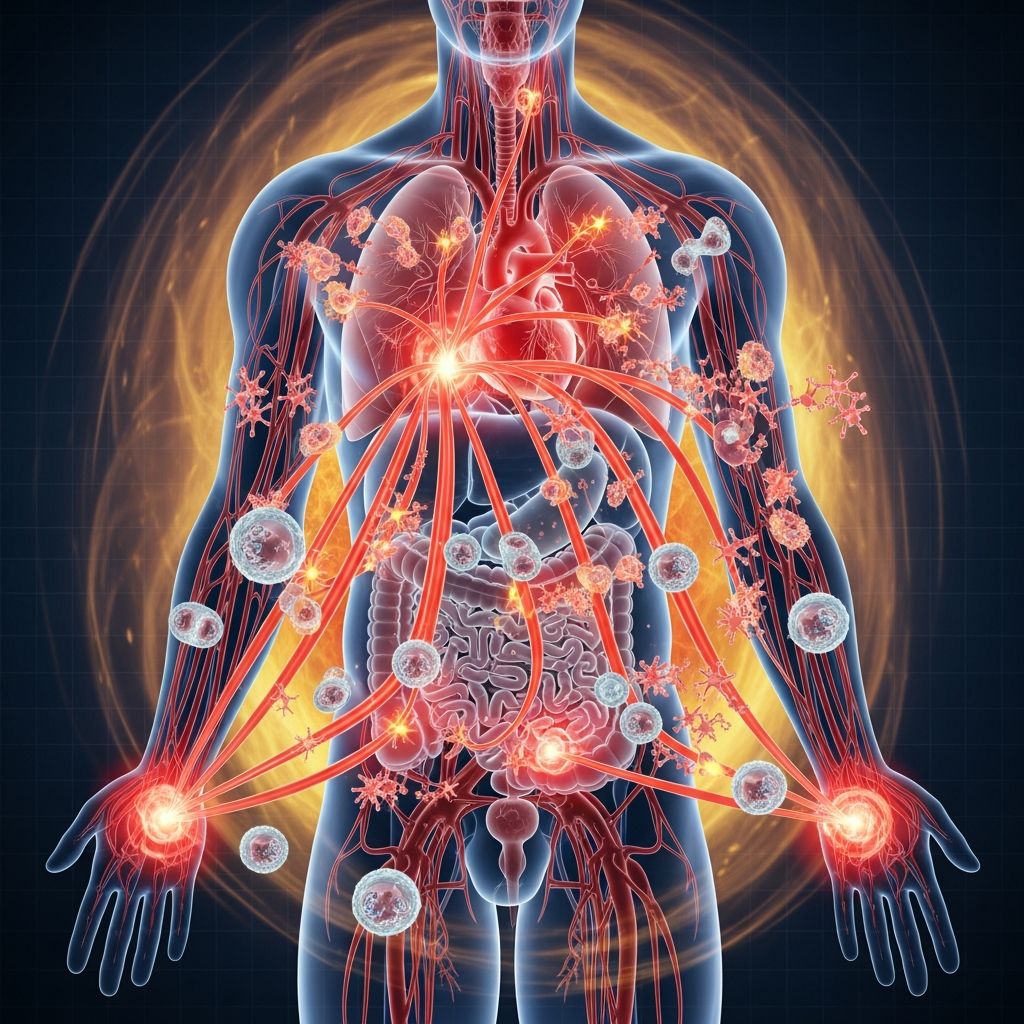
Systemic inflammatory reactions encompass a range of conditions where the body’s innate and adaptive immune responses lead to widespread inflammation, often manifesting with prominent cutaneous features. These reactions can arise from autoinflammatory disorders, drug hypersensitivities, infections, or vaccinations, highlighting the skin as a critical window into systemic pathology. Understanding these entities is essential for dermatologists, as early recognition can prevent severe complications.
Introduction to Systemic Inflammation
Systemic inflammation involves the activation of immune pathways, including pattern recognition receptors that detect damage-associated molecular patterns (DAMPs) and pathogen-associated molecular patterns (PAMPs). This triggers cytokine release, such as interleukin-1 (IL-1), leading to fever, tachycardia, and skin eruptions. In dermatology, these reactions often present as generalized rashes, neutrophilic dermatoses, or lichenoid patterns, distinguishing them from purely localized skin diseases.
Key drivers include inflammasomes—multiprotein complexes that activate caspase-1 and process pro-IL-1β into its active form. Dysregulation results in autoinflammatory syndromes, where innate immunity dominates without autoantibodies. Recent cases, such as post-vaccination lichenoid eruptions with systemic symptoms, underscore emerging triggers like mRNA vaccines.
Autoinflammatory Syndromes
Autoinflammatory syndromes are characterized by recurrent episodes of unprovoked inflammation due to innate immune dysregulation. Unlike autoimmune diseases, they lack specific autoantibodies or antigen-driven responses, instead featuring overactive inflammasomes and IL-1 signaling.
Clinical hallmarks include periodic fevers, serositis, arthritis, and skin lesions such as urticaria-like rashes, pustules, or erythema. Hereditary forms, like familial Mediterranean fever, involve mutations in MEFV genes, leading to pyrin inflammasome hyperactivity. Polygenic disorders, including pustular psoriasis, amplify neutrophil survival via IL-1β.
- Hereditary periodic fever syndromes: Recurrent fevers with abdominal pain, chest pain, and erysipelas-like erythema.
- Neutrophilic dermatoses: Sweet syndrome or pyoderma gangrenosum with systemic fever and neutrophilia.
- Monogenic syndromes: Cryopyrin-associated periodic syndromes (CAPS) with urticarial rashes responsive to IL-1 blockers.
Diagnosis excludes infection, malignancy, and allergy via genetic testing and inflammatory markers. Treatment prioritizes biologics like anakinra (IL-1 receptor antagonist), offering dramatic responses over corticosteroids.
Serum Sickness and Immune Complex Reactions
Serum sickness represents a type III hypersensitivity where immune complexes deposit in vessel walls, activating complement and causing vasculitis. Classically triggered by heterologous sera, modern causes include monoclonal antibodies for rheumatoid arthritis, psoriasis, or cancer.
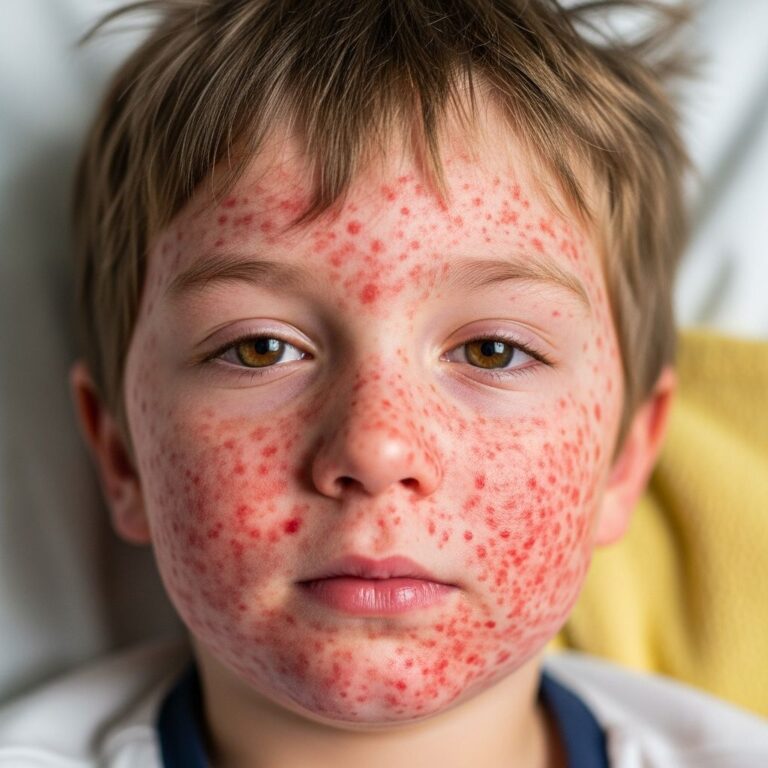
The triad of fever, evanescent rash (morbilliform or urticarial), and arthralgia/arthritis emerges 7–14 days post-exposure. Additional features: facial edema, lymphadenopathy, and renal involvement (proteinuria). Labs show low C3/C4, elevated ESR/CRP.
| Major Criteria | Minor Criteria |
|---|---|
| More than seven days since trigger | Acute kidney injury |
| Persistent fever | Skin rash |
| Joint pain/swelling | Restricted mouth opening |
| Presence of antibodies | Low complement levels |
Management: Discontinue offender, supportive care, antihistamines, and corticosteroids for severe cases. Prognosis is excellent with prompt intervention.
Related Stories



Lichenoid Drug Eruptions and Vaccine Reactions
Lichenoid eruptions mimic idiopathic lichen planus but arise from type IV hypersensitivity to drugs or vaccines. Features: violaceous papules, Wickham striae, pruritus, and interface dermatitis on histology with lymphocytic infiltrate.
Post-Pfizer-BioNTech vaccine cases report generalized papular erythematous rashes 7–14 days post-dose, with systemic signs like tachycardia, tachypnea, and low-grade fever—termed systemic inflammatory response syndrome (SIRS). Triggers include antihypertensives, biologics, and now mRNA vaccines, linking to autoimmunity via molecular mimicry.
A 53-year-old developed dermatographia, pityriasiform rash, and episodic SIRS 12 days post-vaccination. Hydrocortisone resolved symptoms rapidly; biopsy confirmed lichenoid reaction. Negative infectious/autoimmune workup supported vaccine causality.
- Incidence: Rare, but rising with vaccination campaigns.
- Management: Topical/systemic steroids; avoid rechallenge.
Cutaneous Manifestations in Rheumatic and Systemic Diseases
Rheumatoid arthritis (RA) features extra-articular skin signs: rheumatoid nodules, vasculitis, and drug-induced eruptions from DMARDs/biologics like psoriasis or lichenoid reactions.
Systemic sclerosis (SSc) involves fibrosis, Raynaud phenomenon, and sclerodactyly with inflammatory phases treatable by immunosuppressants and vasodilators. Inflammatory bowel disease (IBD) shows pyoderma gangrenosum, erythema nodosum, and aphthae.[10]
Skin reflects systemic disease: palmar erythema in liver disease, butterfly rash in lupus.
Inflammasomes in Inflammatory Skin Diseases
Inflammasomes drive chronic conditions like psoriasis and contact dermatitis. In psoriasis, IL-1 family cytokines sustain plaques; antagonists are trialed. Allergic contact dermatitis involves NLRP3 inflammasome activation post-hapten exposure, priming adaptive immunity.
Diagnosis and Differential Diagnosis
Approach: History (triggers, timing), exam (rash morphology), labs (CBC, CRP, complements, autoantibodies), biopsy. Differentials: Infections (viral exanthems), malignancies (paraneoplastic), pure autoimmune (SLE).
Treatment Strategies
- Symptomatic: Antipyretics, NSAIDs, topical steroids.
- Immunomodulatory: Systemic corticosteroids, colchicine for periodic fevers.
- Biologics: Anakinra, canakinumab for IL-1 driven syndromes; anti-TNF for IBD-related.
- Supportive: Hydration, wound care for ulcers.
Frequently Asked Questions (FAQs)
Q: What are common triggers for systemic inflammatory skin reactions?
A: Drugs, vaccines, infections, and genetic mutations in autoinflammatory syndromes.
Q: How is serum sickness diagnosed?
A: By clinical triad plus low complements and immune complexes; biopsy shows vasculitis.
Q: Are post-vaccine lichenoid eruptions dangerous?
A: Usually self-limited but can involve SIRS; steroids provide rapid relief.
Q: What role do inflammasomes play?
A: They activate IL-1, amplifying inflammation in psoriasis, dermatitis, and autoinflammatory diseases.
Q: When to use biologics?
A: In refractory autoinflammatory syndromes targeting IL-1 pathway.
This article synthesizes dermatologic insights into systemic inflammation, aiding clinicians in pattern recognition and therapy. Early intervention improves outcomes across these interconnected conditions.
References
- Lichenoid cutaneous skin eruption and associated systemic inflammatory response following Pfizer‐BioNTech mRNA COVID‐19 vaccine administration — Pei‐Yee Onn et al. 2021-09-15. https://pmc.ncbi.nlm.nih.gov/articles/PMC8488450/
- Inflammasomes and inflammatory skin diseases — DermNet NZ. Recent update. https://dermnetnz.org/topics/inflammasomes-and-inflammatory-skin-diseases
- Autoinflammatory syndromes — DermNet NZ. Recent update. https://dermnetnz.org/topics/autoinflammatory-syndromes
- Rheumatoid arthritis and the skin — DermNet NZ. Recent update. https://dermnetnz.org/topics/rheumatoid-arthritis-and-the-skin
- Serum sickness — DermNet NZ. Recent update. https://dermnetnz.org/topics/serum-sickness
- Systemic sclerosis — DermNet NZ. Recent update. https://dermnetnz.org/topics/systemic-sclerosis
Similar Articles








Read full bio of medha deb