Tacalcitol For Psoriasis: Uses, Safety, And How It Works
Effective topical treatment for plaque psoriasis using tacalcitol ointment (Curatoderm) to reduce skin cell overproduction and plaques.

Tacalcitol, marketed as Curatoderm ointment, is a topical vitamin D analogue specifically designed to treat plaque psoriasis in adults and children aged over 12 years. It works by slowing the rapid overproduction of skin cells, reducing inflammation, redness, scaling, and plaques commonly affecting elbows, knees, scalp, and lower back.
| Type of medicine | A topical vitamin D analogue |
|---|---|
| Used for | Plaque psoriasis in adults and children over 12 years |
| Also called | Curatoderm® |
| Available as | Ointment |
About tacalcitol
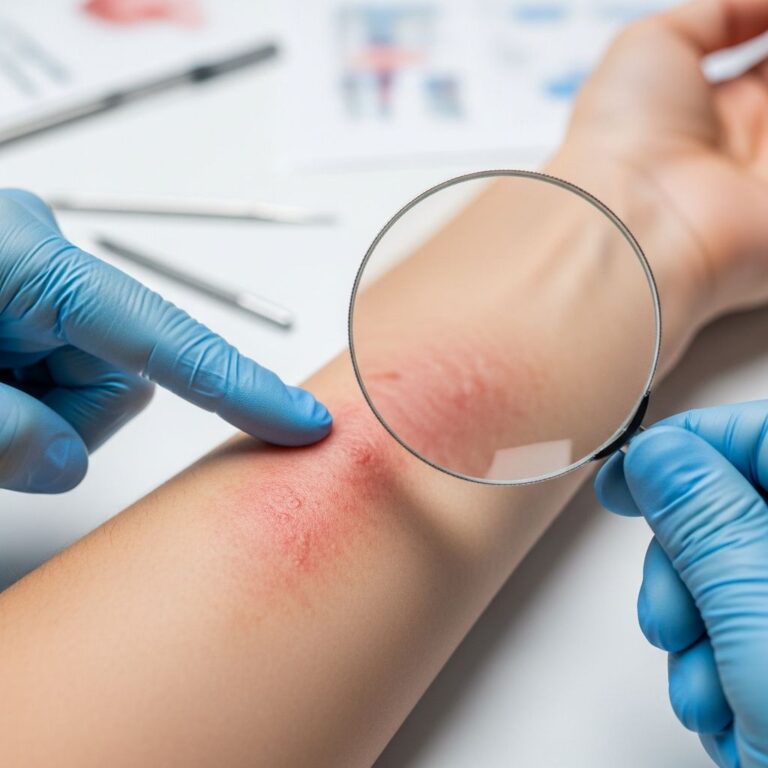
Plaque psoriasis is the most prevalent form of psoriasis, characterized by red, inflamed patches covered with silvery-white scales known as plaques. These plaques most frequently appear on the elbows, knees, scalp, and lower back, though they can develop anywhere on the body. Plaques vary in size, may itch or cause discomfort, and can flare up periodically.
The underlying cause of psoriasis involves an accelerated lifecycle of skin cells. Normally, skin cells mature and are shed over about a month, but in psoriasis, this process accelerates dramatically, completing in just 3-4 days. This rapid turnover leads to a buildup of immature cells on the skin’s surface, forming the characteristic plaques. Genetic factors, immune system dysregulation, and environmental triggers like stress, infections, or injuries contribute to this condition.
Tacalcitol addresses this pathology by mimicking the action of vitamin D, a crucial nutrient for skin health. As a synthetic vitamin D3 analogue (1α,24-dihydroxyvitamin D3), tacalcitol binds to vitamin D receptors on keratinocytes—the primary skin cells in the epidermis. This interaction inhibits excessive cell proliferation and differentiation, normalizes skin cell growth, reduces inflammation, and promotes shedding of built-up scales. Clinical evidence supports its efficacy: in a multicenter phase IV study of 157 patients with chronic plaque psoriasis affecting 7-20% body surface area (BSA), once-daily tacalcitol ointment reduced the Psoriasis Area and Severity Index (PASI) score by 67% over 6 months, with BSA declining from 13.3% to 8.8%. Erythema, infiltration, and desquamation scores also markedly improved, demonstrating sustained control without hypercalcemia or serious adverse events.
Tacalcitol is particularly suitable for mild to moderate plaque psoriasis covering up to 20% BSA. It offers a non-steroidal option, making it ideal for long-term maintenance therapy where minimizing corticosteroid side effects is key. Unlike systemic treatments, its topical application limits systemic absorption when used as directed (≤10g daily).
Before using tacalcitol
Consult your doctor before starting tacalcitol to ensure suitability. Provide full medical history, including:
- Pregnancy, breastfeeding, or plans to conceive—tacalcitol’s safety in these scenarios is not fully established.
- Diagnosis of erythrodermic or pustular psoriasis—these severe variants require specialist oversight, as tacalcitol is indicated only for stable plaque psoriasis.
- Hypercalcemia or calcium metabolism disorders—tacalcitol may elevate calcium levels if overused.
- Concurrent medications or topicals, including over-the-counter, herbal, or complementary therapies, to avoid interactions.
- History of allergies to tacalcitol or similar vitamin D analogues.
Your doctor may perform baseline blood tests for calcium levels and monitor periodically, especially in long-term use. Avoid use on infected or broken skin unless advised.
How to use tacalcitol
Follow the manufacturer’s patient information leaflet (PIL) closely. Key guidelines include:
- Apply a thin layer of ointment once daily, ideally at bedtime to minimize daytime mess and allow overnight absorption.
- For scalp psoriasis, apply at night and shampoo out in the morning.
- Limit to ≤10g per day (about a fingertip unit per affected area) to prevent systemic effects like elevated calcium.
- Wash hands thoroughly post-application to avoid spreading to unaffected skin, face, or mucous membranes.
- Do not cover with bandages unless instructed, as this increases absorption.
Related Stories



Storage: Keep at room temperature (below 25°C), away from heat, moisture, and children. Discard 3 months after opening.
Getting the most from your treatment
Maximize benefits with these strategies:
- Attend all follow-up appointments for progress assessment via PASI scoring or BSA measurement.
- If using emollients, apply first, allow 15-30 minutes absorption, then tacalcitol.
- For facial use (if prescribed), apply sparingly and avoid eyes—facial skin is thinner, heightening irritation risk.
- Expect initial improvement in 2-4 weeks, peaking at 6-8 weeks. Continue as prescribed for full effect, even if symptoms ease.
- Combine with lifestyle measures: gentle skin care, sun avoidance (tacalcitol increases photosensitivity), stress reduction, and trigger avoidance.
- For maintenance, once cleared, reduce to 2-3 times weekly to prevent relapse, as supported by long-term studies showing safety up to 12 months.
Improvement metrics: Studies report 50-70% PASI reduction in 4-6 weeks, sustained long-term with good adherence.
Possible side effects
Tacalcitol is generally well-tolerated, with most effects local and transient. Common side effects (affecting >1 in 100 users):
| Side Effect | Description | Management |
|---|---|---|
| Skin irritation (redness, itching, burning, tingling) | Mild, occurs early; resolves with continued use | Reduce frequency if severe; consult doctor |
| Dry skin or worsening psoriasis temporarily | Short-lived flare | Moisturize; persists >1 week, seek advice |
| Hypercalcemia (rare, <1% with proper use) | Fatigue, nausea, thirst | Blood tests monitor; stop if suspected |
Rare (<1/1000): Allergic reactions (rash, swelling), folliculitis. No serious systemic events in trials. Report persistent or severe symptoms to your doctor. When used sparingly on small areas, fire risk from fabrics is minimal.
How to store tacalcitol
- Store below 25°C in original packaging.
- Do not use after expiry; discard opened tubes after 3 months.
- Keep out of reach of children and pets.
Frequently Asked Questions (FAQs)
Q: How quickly does tacalcitol work for psoriasis?
A: Visible improvement often starts within 1-2 weeks, with significant reduction in plaques by 4-6 weeks and optimal results at 8 weeks. Continue use for sustained control.
Q: Can children under 12 use tacalcitol?
A: No, it is approved for ages 12+ due to limited pediatric data. Consult a pediatric dermatologist for alternatives.
Q: Is tacalcitol safe for long-term use?
A: Yes, studies up to 12 months show safety and efficacy for maintenance, with no hypercalcemia when ≤10g/day.
Q: Can I use tacalcitol with steroid creams?
A: Possibly, under doctor guidance; apply separately with time gaps to avoid irritation.
Q: What if I overuse tacalcitol?
A: Excess (>10g/day) risks hypercalcemia. Stop and seek medical help if symptoms like nausea occur.
Further information and support
For personalized advice, contact your GP, pharmacist, or dermatologist. Psoriasis support groups offer coping strategies. Official PIL available via emc.
References
- Tacalcitol ointment for long-term control of chronic plaque psoriasis in dermatological practice — Lambert J, Trompke C. Dermatology. 2002-04-01. https://pubmed.ncbi.nlm.nih.gov/12077538/
- Tacalcitol for psoriasis (Curatoderm) — Patient.info. 2024-10-05. https://patient.info/medicine/tacalcitol-for-psoriasis-curatoderm
- Curatoderm 4μg/g Ointment – Patient Information Leaflet — medicines.org.uk. Accessed 2026. https://www.medicines.org.uk/emc/product/6389/pil
- Long-term efficacy and safety of tacalcitol ointment in patients with psoriasis vulgaris — British Journal of Dermatology. 2002. https://academic.oup.com/bjd/article-abstract/146/3/414/6634384
- Tacalcitol — DrugBank Online. Accessed 2026. https://go.drugbank.com/drugs/DB13689
Similar Articles








Read full bio of medha deb