Tacrolimus Ointment (Protopic) for Eczema Treatment
Complete guide to tacrolimus ointment: uses, dosage, side effects, and eczema management.
About Tacrolimus Ointment
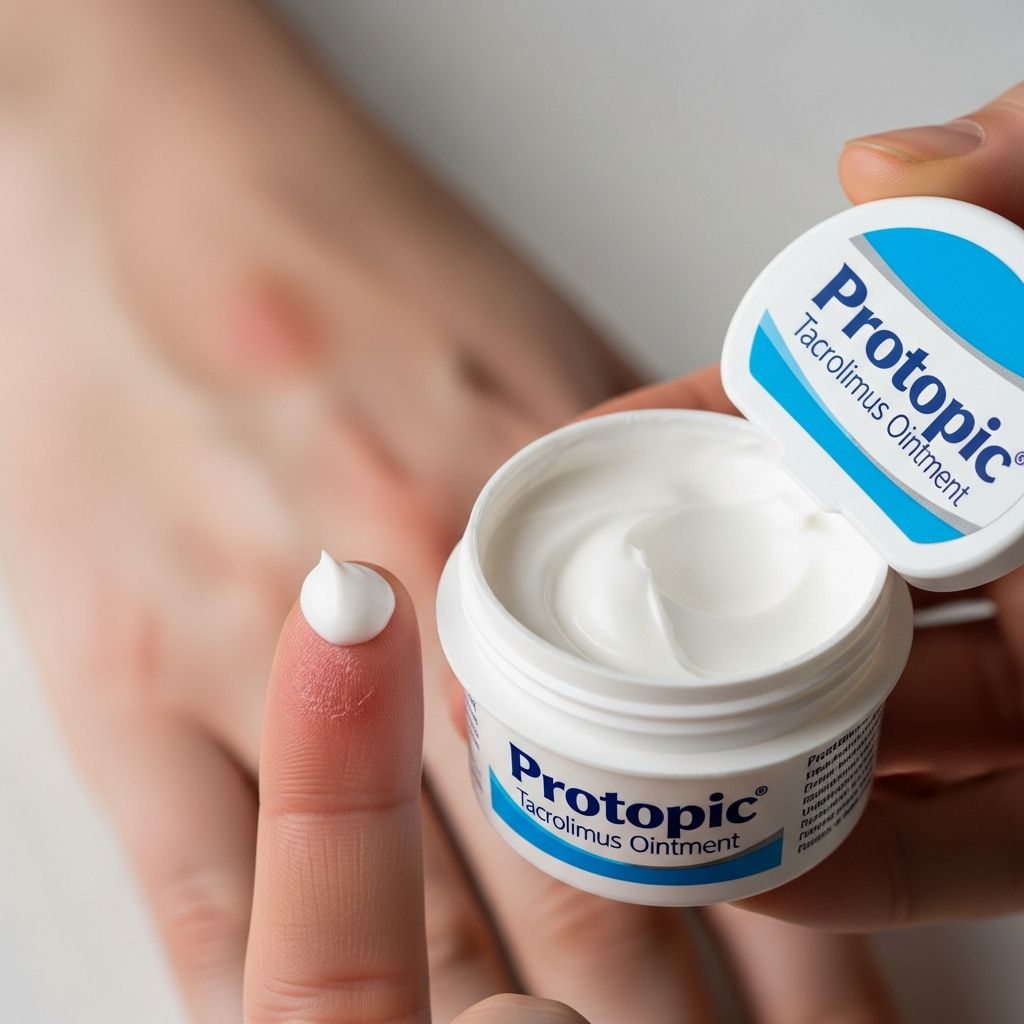
Tacrolimus ointment, commonly known by its brand name Protopic, is a topical immunomodulator used to treat moderate-to-severe eczema (atopic dermatitis) in adults and children over 2 years of age. Unlike traditional steroid creams or ointments, tacrolimus works by suppressing the immune system’s inflammatory response that causes eczema symptoms. This medication represents an important alternative treatment option for patients who have not responded well to other therapeutic approaches or who require alternatives to prolonged steroid use.
Tacrolimus ointment is applied directly to affected skin areas and is available in two strengths: 0.03% and 0.1%. The medication helps reduce inflammatory skin reactions, including itching, redness, and swelling associated with atopic dermatitis. Since it is a prescription-only medication, it must be obtained through a healthcare provider who can determine whether it is appropriate for your specific condition.
What Tacrolimus Ointment Is Used For
Tacrolimus ointment is primarily prescribed for individuals with moderate-to-severe eczema (atopic dermatitis) who have not responded adequately to other treatments. Atopic dermatitis is a chronic skin condition characterized by intense itching, redness, inflammation, and dry skin that often resembles an allergic reaction. The condition significantly impacts quality of life and can be triggered or worsened by various environmental factors, stress, and allergens.
The medication is typically recommended as a second-line treatment, meaning it is usually prescribed after initial treatments such as topical corticosteroids have been tried or have proven inadequate. Healthcare providers may also recommend tacrolimus ointment when patients need to reduce their use of steroid-based treatments or when steroids are contraindicated. Additionally, topical tacrolimus can sometimes be prescribed off-label for other inflammatory skin conditions, though this should only be done under medical supervision.
How Tacrolimus Ointment Works
Tacrolimus functions as a calcineurin inhibitor, which means it works by suppressing specific immune system responses that trigger inflammation in atopic dermatitis. When you have eczema, your immune system overreacts to certain triggers and causes excessive inflammation in the skin. This inflammatory response leads to the characteristic symptoms of intense itching, redness, and skin barrier dysfunction.
By inhibiting calcineurin, tacrolimus prevents T-cells (a type of immune cell) from activating and releasing inflammatory chemicals that cause skin irritation. This mechanism allows the skin to heal and reduces the severity of eczema symptoms without the systemic effects associated with oral immunosuppressive medications. The localized application means that the medication works primarily at the site of application, with minimal absorption into the bloodstream, making it a safer option for long-term management compared to systemic treatments.
Who Can Use Tacrolimus Ointment
Tacrolimus ointment is approved for use in adults and children aged 2 years and older who do not have a weakened immune system. The 0.03% strength is suitable for use in children, while both 0.03% and 0.1% strengths can be used by adults and children 16 years and older. Patients younger than 2 years of age should not use tacrolimus ointment, as safety and efficacy have not been established in this age group.
It is crucial that patients do not have a compromised or weakened immune system, as tacrolimus works by modulating immune function. Individuals with immunodeficiency conditions, those taking immunosuppressive medications for other reasons, or those with a history of certain cancers should inform their healthcare provider before using tacrolimus ointment. Additionally, the medication should not be used on areas of skin that could be infected or on pre-malignant or malignant skin conditions.
Related Stories



Available Strengths and Dosage Forms
Tacrolimus ointment is available in two concentrations designed to meet different treatment needs:
- 0.03% ointment: The lower strength, suitable for use in children 2 to 15 years old and for initial treatment in adults
- 0.1% ointment: The higher strength, available for adults and teenagers 16 years and older
Both formulations are provided as ointments for topical application. The choice between strengths depends on the patient’s age, the severity of eczema, and the body area being treated. Your healthcare provider will determine which strength is most appropriate for your individual circumstances.
How to Apply Tacrolimus Ointment
Proper application technique is essential for maximizing the effectiveness of tacrolimus ointment and minimizing potential side effects:
- Frequency: Apply a thin layer of ointment to affected areas of skin twice daily, typically in the morning and evening.
- Application areas: Use the ointment only on areas of skin with eczema; avoid applying to healthy skin.
- Restricted areas: Do not apply tacrolimus ointment to lips, the inside of your nose, or near your eyes, as these are sensitive areas.
- Avoid infected areas: Never apply the ointment to any area of skin that could be infected, as it may impair healing.
- Hand hygiene: Wash your hands thoroughly with soap and water after application, unless you are treating your hands.
- Skin condition: Apply only to clean, dry, and intact skin for optimal absorption and effectiveness.
If you forget to apply the ointment at your regular time, apply it as soon as you remember and then continue with your normal application schedule. Do not use a double dose to make up for a missed application. The key to successful treatment is consistency and adherence to your healthcare provider’s prescribed regimen.
Getting the Most from Your Treatment
To maximize the effectiveness of tacrolimus ointment therapy, follow these important guidelines:
- Regular appointments: Keep all scheduled appointments with your doctor so they can monitor your progress and adjust treatment as needed.
- Expected timeline: You should expect to see some improvement in your skin within one week of starting treatment, with eczema becoming largely clear within a few additional weeks.
- Continue treatment: Do not stop using the ointment prematurely; continue application until your eczema has completely cleared.
- Dose adjustments: Your doctor may reduce how often you apply the ointment or lower the strength as your symptoms improve.
- Short-term use: Tacrolimus ointment is intended for short-term use, typically up to six weeks of continuous application.
- Maintenance therapy: Some patients with frequent eczema flares may be prescribed the ointment for use on two days each week to prevent recurrence, with at least 2-3 days between applications.
Possible Side Effects
Like all medications, tacrolimus ointment can cause side effects. Most side effects are mild and occur at the application site:
| Side Effect | Description | When to Seek Help |
|---|---|---|
| Burning sensation or stinging | A common local symptom that typically occurs during the first few days of treatment | Generally disappears within one week; if persistent, contact your doctor |
| Itching | Localized itching at the application site | Should improve within one week; persistent itching requires medical attention |
| Redness and warmth | Increased redness or flushing of the treated area | Contact your doctor if these symptoms continue or become troublesome |
| Increased skin sensitivity | Heightened sensitivity to heat and cold | Inform your doctor if sensitivity is bothersome |
| Tingling or rash | Localized tingling sensations or development of rash | Report to your doctor if symptoms persist |
| Local skin infections or cold sores | Secondary skin infections or herpes simplex reactivation | Seek immediate medical attention |
While rare, serious side effects have been reported, including skin cancer and lymphoma in some patients using tacrolimus ointment. This is why strict adherence to prescribed usage is critical, and the medication should only be applied to affected areas for the duration recommended by your healthcare provider. Avoid prolonged use beyond what is medically advised, and report any unusual skin changes to your doctor immediately.
Important Precautions and Interactions
Before using tacrolimus ointment, inform your healthcare provider about any relevant medical conditions or medications you are taking:
- Do not use if you have a weakened or compromised immune system
- Inform your doctor if you have a history of skin cancer or pre-malignant skin conditions
- Avoid alcohol consumption, particularly on your face, as it can cause flushing, redness, and heat sensations when combined with tacrolimus use
- Report any signs of skin infection before starting treatment
- Discuss any other topical or systemic medications you are using
When to Contact Your Doctor
Seek medical attention if any of the following occur:
- Your eczema symptoms do not improve within 6 weeks of starting tacrolimus ointment
- Your symptoms worsen at any time during treatment
- You experience severe or persistent burning, itching, or other side effects
- You develop signs of skin infection
- You notice unusual changes in your skin appearance
- You are unable to tolerate the medication due to side effects
Your healthcare provider may need to reassess your treatment plan if your eczema is not responding adequately to tacrolimus ointment, and a different medication may be recommended.
Frequently Asked Questions
Q: How long does it take for tacrolimus ointment to work?
A: You should expect to see some improvement within one week of starting treatment, with your eczema largely clearing within a few additional weeks of continued use. However, individual response times may vary.
Q: Can I use tacrolimus ointment for long-term maintenance?
A: Tacrolimus ointment is intended for short-term use, typically up to six weeks of continuous daily application. For patients with frequent flares, it may be prescribed for use on two days each week to prevent recurrence, with at least 2-3 days between applications.
Q: Is tacrolimus ointment safe for children?
A: Yes, tacrolimus ointment is approved for children aged 2 years and older. Only the 0.03% strength is used in children aged 2 to 15, while both strengths are available for children 16 and older.
Q: Can I apply tacrolimus ointment to any area of my body?
A: Tacrolimus can be applied to most areas of skin affected by eczema, but avoid sensitive areas such as lips, the inside of your nose, and areas near your eyes. Do not apply to areas with skin infections or pre-malignant conditions.
Q: What should I do if I forget to apply a dose?
A: Apply the ointment as soon as you remember and then continue with your normal application schedule. Do not use a double dose to compensate for a missed application.
Q: Can I use tacrolimus ointment with other eczema treatments?
A: Discuss any other medications or topical treatments with your healthcare provider before using tacrolimus ointment to ensure safe combined use and to avoid potential interactions.
Q: What is the difference between 0.03% and 0.1% tacrolimus ointment?
A: The 0.03% strength is recommended for children and as initial treatment, while the 0.1% strength is available for adults and older adolescents. Your doctor will determine which strength is appropriate for your individual needs.
References
- Protopic (Tacrolimus): Uses, Side Effects, Dosage & More — GoodRx. 2024. https://www.goodrx.com/tacrolimus/what-is
- Tacrolimus (Topical Route) – Side Effects & Dosage — Mayo Clinic. 2024. https://www.mayoclinic.org/drugs-supplements/tacrolimus-topical-route/description/drg-20068159
- PROTOPIC (Tacrolimus) Ointment 0.03% Ointment 0.1% – Prescribing Information — Astellas Pharma US. https://astellas.us/docs/protopic.pdf
- Tacrolimus Ointment – Patient Information — Patient.info. 2024. https://patient.info/medicine/tacrolimus-ointment-protopic
- Tacrolimus Topical: MedlinePlus Drug Information — National Library of Medicine. 2024. https://medlineplus.gov/druginfo/meds/a602020.html
Similar Articles








Read full bio of medha deb