Tacrolimus: Essential Guide To Preventing Organ Rejection
Essential guide to tacrolimus (Advagraf, Prograf, Modigraf): uses, dosage, side effects, and monitoring for transplant patients.
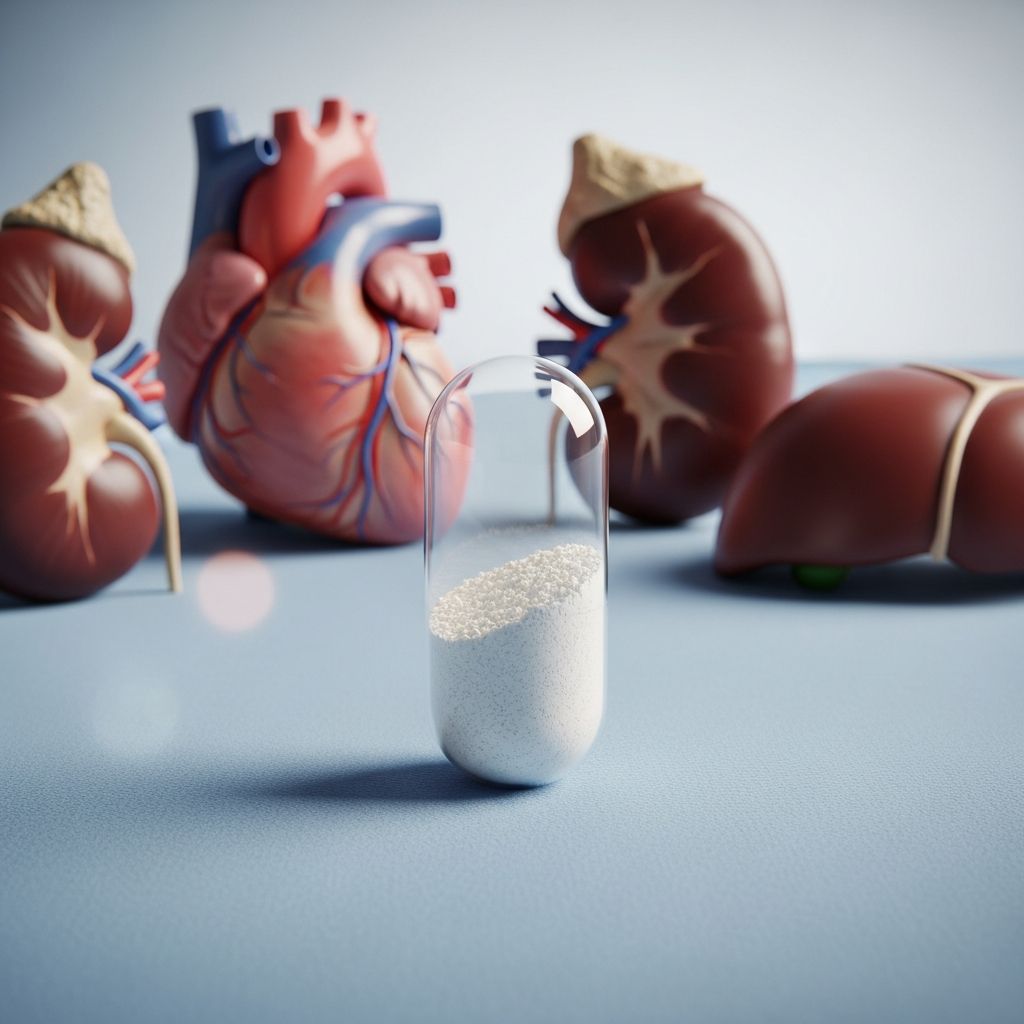
Tacrolimus is a critical immunosuppressant medication primarily used to prevent organ rejection in patients who have undergone transplants such as kidney, liver, or heart. Available under brand names like Advagraf, Prograf, and Modigraf, it works by suppressing the immune system’s response to the transplanted organ.
About tacrolimus
Tacrolimus belongs to the class of calcineurin inhibitors, potent drugs that prevent the body from rejecting transplanted organs. It is derived from the bacterium Streptomyces tsukubaensis and is significantly more potent than similar drugs like cyclosporine—up to 100 times more effective in inhibiting T-cell activation.
The medication binds to FK506-binding protein 12 (FKBP12), forming a complex that inhibits calcineurin, a calcium-dependent phosphatase. This blocks the production of interleukin-2 (IL-2) and other cytokines, reducing T-lymphocyte activation and proliferation, which are key drivers of organ rejection.
Tacrolimus is available in immediate-release formulations (e.g., Prograf capsules) for twice-daily dosing and extended-release versions (e.g., Advagraf, Modigraf) for once-daily administration, improving patient adherence. It is FDA-approved for prophylaxis of organ rejection in allogeneic liver, kidney, heart, and lung transplants, often used in combination with other immunosuppressants like corticosteroids or mycophenolate.
Beyond transplants, tacrolimus has off-label uses in autoimmune conditions such as Crohn’s disease, graft-versus-host disease, myasthenia gravis, rheumatoid arthritis, and topically for moderate-to-severe atopic dermatitis.
Key facts about tacrolimus
- Drug group: Calcineurin inhibitor immunosuppressant.
- Brand names: Prograf (immediate-release), Advagraf, Modigraf, Astagraf XL (extended-release).
- Common doses: 0.05-0.1 mg/kg/day orally, divided into two doses for immediate-release; adjusted based on blood levels (target 5-15 ng/mL).
- Treatment duration: Lifelong in most transplant patients to prevent chronic rejection.
- Is it a steroid? No, tacrolimus is not a steroid; it is a non-steroidal immunosuppressant.
- Alcohol interaction: Avoid excessive alcohol, as it may increase side effects like liver toxicity.
When is tacrolimus prescribed?
Tacrolimus is the cornerstone of post-transplant immunosuppression, particularly for solid organ transplants including kidney, liver, heart, lung, pancreas, and intestine. It is indicated for both prophylaxis and treatment of acute rejection episodes, often as rescue therapy when cyclosporine fails.
In clinical practice, it reduces the incidence of acute rejection and allows steroid minimization. For instance, in kidney transplants, extended-release formulations are used for de novo or conversion therapy from immediate-release tacrolimus. Pediatric use is approved for liver transplants.
Dosage
Tacrolimus dosing is highly individualized, guided by therapeutic drug monitoring (TDM) due to its narrow therapeutic index. Blood levels are measured frequently, especially early post-transplant, targeting trough concentrations of 5-15 ng/mL depending on the organ, time post-transplant, and combination therapy.
| Transplant Type | Initial Dose (mg/kg/day) | Target Trough Level (ng/mL) |
|---|---|---|
| Kidney | 0.1-0.2 (immediate-release) | 5-15 (early), 3-8 (maintenance) |
| Liver | 0.05-0.1 | 5-15 |
| Heart | 0.075 | 10-20 (early) |
Extended-release forms (Advagraf/Modigraf) are dosed once daily on an empty stomach. Dose adjustments are made for renal/hepatic impairment, drug interactions, and metabolism status (e.g., fast metabolizers may need higher doses or once-daily prolonged-release like LCP-Tac). Always follow specialist guidance; never self-adjust.
How and when to take tacrolimus
- Swallow capsules whole with water, ideally 1 hour before or 2 hours after food to avoid variable absorption.
- Immediate-release: Twice daily, 12 hours apart. Extended-release: Once daily at the same time.
- If you miss a dose, take it as soon as remembered unless near the next dose—do not double up.
- Vitamin D-fortified food is fine, but avoid grapefruit/grapefruit juice as it inhibits CYP3A4 metabolism.
Related Stories



Side-effects of tacrolimus
While effective, tacrolimus has significant side effects due to chronic immunosuppression and calcineurin inhibition. Common issues include nephrotoxicity (acute/chronic), neurotoxicity (tremors, headaches), diabetes mellitus, hypertension, and electrolyte imbalances (hyperkalemia, hypomagnesemia).
Compared to cyclosporine, tacrolimus has lower rates of hyperlipidemia, hirsutism, and gingival hyperplasia but higher diabetes and neurotoxicity risk. Long-term use increases malignancy and infection risks.
| Common (>1 in 10) | Serious (seek help) |
|---|---|
| Tremor, headache, insomnia, nausea, diarrhea, hypertension | Signs of infection, kidney issues (reduced urine), high blood sugar, seizures |
| High potassium, low magnesium | Chest pain, vision changes, severe abdominal pain |
Monitor via regular blood tests: CBC, renal/liver function, glucose, lipids, electrolytes, BP. Report persistent issues to your transplant team.
Interactions
Tacrolimus is metabolized by CYP3A4; strong inhibitors (ketoconazole, grapefruit) increase levels, while inducers (rifampicin) decrease them, risking rejection or toxicity. Key interactions:
- Increase tacrolimus levels: Antibiotics (erythromycin), antifungals, calcium channel blockers.
- Decrease levels: Anticonvulsants (phenytoin), St John’s wort.
- Other: Live vaccines contraindicated; avoid NSAIDs for kidney protection.
Inform all healthcare providers of tacrolimus use. TDM is essential during changes.
Other medicines, food, drink, and tacrolimus
- Food: Take consistently regarding meals; high-fat meals delay absorption.
- Drinks: Avoid grapefruit juice; moderate alcohol only.
- Herbals: St John’s wort reduces efficacy—avoid.
- Vaccines: Use inactivated only; delay live vaccines.
Pregnancy and breastfeeding with tacrolimus
Tacrolimus crosses the placenta; use only if benefits outweigh risks, with close monitoring. Data suggest no major teratogenicity but increased preterm birth risk. Breastfeeding is not recommended due to excretion in milk. Consult specialists for contraception and planning.
Common questions about tacrolimus
Can you take paracetamol (acetaminophen) with tacrolimus?
Yes, in standard doses, but monitor kidney function as both can affect it. Avoid ibuprofen/NSAIDs.
Can I drive or ride a bike on tacrolimus?
Yes, if not experiencing side effects like tremors or dizziness. Inform DVLA if relevant.
Can I drink alcohol with tacrolimus?
Limit intake; excessive alcohol worsens side effects.
Is tacrolimus a strong immunosuppressant?
Yes, one of the strongest, hence strict monitoring.
Does tacrolimus cause weight gain?
Possible indirectly via diabetes/steroids; maintain diet/exercise.
How long should you take tacrolimus for?
Usually lifelong post-transplant.
Can tacrolimus cause hair loss?
Rare; more common is hirsutism with alternatives.
Can lifestyle changes help with side-effects?
Yes: low-salt diet for BP, exercise, diabetes management.
Monitoring and long-term management
Regular TDM, biopsies, and multidisciplinary care minimize risks. New formulations like LCP-Tac improve adherence and renal outcomes in fast metabolizers. Tacrolimus remains the workhorse of transplant immunosuppression despite challenges.
References
- Tacrolimus (Prograf, Advagraf): Uses and Monitoring — DrOracle.ai. 2023. https://www.droracle.ai/articles/174661/is-tacrolimus-used-for-preventing-organ-rejection-and-treating
- Tacrolimus for the prevention and treatment of rejection of solid organ transplants — PubMed/NCBI. 2015-11-01. https://pubmed.ncbi.nlm.nih.gov/26588770/
- Tacrolimus – StatPearls — NCBI Bookshelf. 2023. https://www.ncbi.nlm.nih.gov/books/NBK544318/
- Tacrolimus: Uses, Interactions, Mechanism of Action — DrugBank. 2023. https://go.drugbank.com/drugs/DB00864
- Immunosuppressive drugs in organ transplantation — Immunology Research Journal. 2022. https://www.immunologyresearchjournal.com/articles/immunosuppressive-drugs-in-organ-transplantation-to-prevent-allograft-rejection-mode-of-action-and-side-effects.html
- Tacrolimus Education — Siemens Healthineers. 2023. https://www.siemens-healthineers.com/en-us/laboratory-diagnostics/assays-by-diseases-conditions/organ-transplant/educational-content/tacrolimus
- Tacrolimus—why pharmacokinetics matter in the clinic — Frontiers in Transplantation. 2023-05-12. https://www.frontiersin.org/journals/transplantation/articles/10.3389/frtra.2023.1160752/full
Similar Articles








Read full bio of Sneha Tete