Tafluprost Eye Drops: Essential Guide To Saflutan Use
Comprehensive guide to Tafluprost eye drops for managing glaucoma and ocular hypertension effectively.
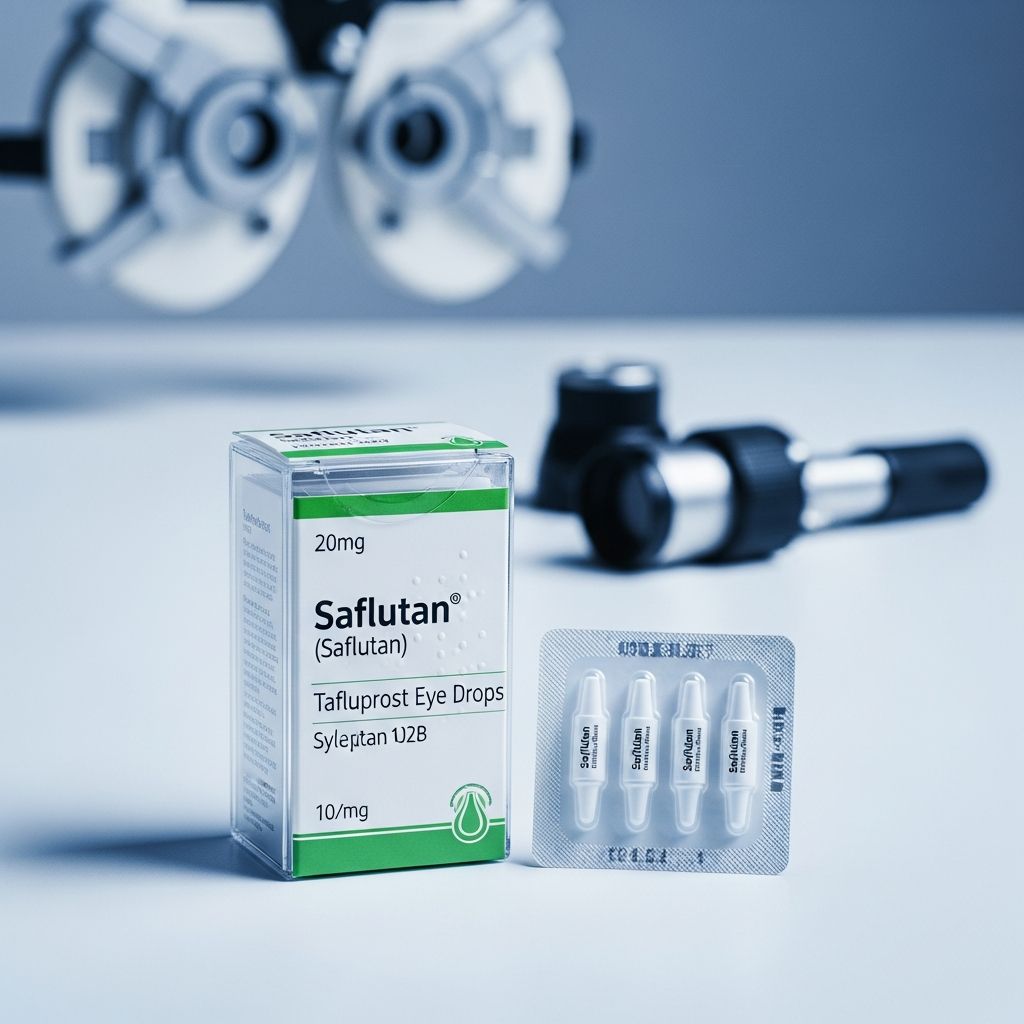
Tafluprost eye drops, marketed as
Saflutan
, are a prostaglandin analogue designed to lower intraocular pressure in adults with open-angle glaucoma or ocular hypertension. These conditions involve elevated eye pressure that can damage the optic nerve and lead to vision loss if untreated. By enhancing fluid outflow from the eye, tafluprost effectively reduces pressure, typically starting within 2-4 hours and peaking at 12 hours post-administration.About Tafluprost Eye Drops
**Tafluprost** belongs to the class of medicines known as prostaglandin analogues. It works by mimicking natural prostaglandins, which increase the uveoscleral outflow of aqueous humor—the fluid inside the eye—thereby decreasing intraocular pressure (IOP). This mechanism is crucial for preventing optic nerve damage in glaucoma patients and mitigating risks in those with ocular hypertension.
| Type of Medicine | Used For | Brand Name | Available As |
|---|---|---|---|
| Prostaglandin analogue | Raised eye pressure (glaucoma, ocular hypertension) | Saflutan® | Single-dose units (preservative-free) |
Open-angle glaucoma is the most common form, characterized by gradual blockage of drainage channels, leading to IOP buildup. Ocular hypertension, without optic nerve damage yet, heightens glaucoma risk. Regular use of tafluprost helps maintain safe IOP levels, preserving vision.
Before Using Tafluprost Eye Drops
Consult your doctor before starting tafluprost if you have specific health concerns. It is not suitable for everyone, and precautions ensure safe use.
- Pregnancy or breastfeeding: Inform your doctor, as safety data is limited. Tafluprost may pass into breast milk.
- Eye surgery history: Especially lens replacement or removal (e.g., cataract surgery), as it may affect outcomes.
- Respiratory issues: Asthma or COPD patients should discuss risks, though systemic absorption is minimal with proper administration.
- Past eye infections: Particularly viral, like herpes simplex keratitis, due to potential exacerbation.
- Other medications: Including over-the-counter eye drops, herbals, or systemic drugs. Separate applications by 5-10 minutes.
- Allergies: To tafluprost or ingredients like phosphates (0.04 mg per drop), which rarely cause corneal issues in damaged eyes.
No dose adjustment is needed for elderly patients (>65 years) or most adults, but always follow prescribed guidance.
How to Use Tafluprost Eye Drops
Follow these steps for optimal results and minimal side effects. Saflutan comes in preservative-free single-dose units for sterility.
- Wash hands thoroughly.
- Remove contact lenses; reinsert after 15 minutes.
- Tilt head back, pull down lower eyelid to form a pocket.
- Squeeze one drop into the conjunctival sac of the affected eye(s) once daily, preferably evening.
- Close eyes for 1-2 minutes; press nasolacrimal duct (inner eye corner) to reduce drainage and systemic absorption.
- Blot excess solution to prevent eyelid darkening.
- Discard unit immediately after use—do not save.
Use exactly as directed: one drop per eye daily. More frequent use diminishes efficacy and raises side effect risks. If using other drops, wait 5-10 minutes.
Related Stories



Getting the Most from Your Treatment
Consistency is key to managing IOP. Use tafluprost at the same evening time daily for steady control. Read the patient leaflet for full details on storage (room temperature, protect from light) and disposal.
- Attend regular eye exams to monitor IOP and optic nerve health.
- Temporary blurred vision or watering post-instillation clears quickly—avoid driving until clear.
- Preservative-free formulation reduces long-term irritation risks compared to multi-dose bottles.
- If a dose is missed, apply next scheduled dose; do not double up.
Combining with other glaucoma therapies? Space administrations to avoid overflow. Lifestyle aids like avoiding heavy lifting (which raises IOP) complement treatment.
Side Effects of Tafluprost Eye Drops
Most users tolerate tafluprost well, but monitor for effects. Common ones are mild and transient; report persistent issues.
| Common Side Effects | Action |
|---|---|
| Eye redness, irritation, pain, itching | Discuss with doctor if concerned |
| Blurred vision, watery eyes | Avoid driving/tools until clear |
| Iris color change, longer/thicker/darker eyelashes, eyelid skin darkening | Often permanent; discuss with doctor |
Cosmetic changes: Eyelash alterations (increased length, thickness, pigmentation, number; possible trichiasis) and periorbital darkening occur gradually, more in one eye if unilateral. Reversible upon discontinuation for lashes; skin changes may persist.
Rare/Serious: Allergic reactions (rash, swelling), corneal edema, macular edema (especially post-cataract), exacerbation of inflammation. Stop use and seek immediate care for severe symptoms. Phosphates may cause corneal clouding in pre-damaged eyes.
Long-term preserved drops can irritate, but Saflutan’s single-dose design minimizes this.
How to Cope with Tafluprost Side Effects
- Eye discomfort/redness: Artificial tears may soothe; consult pharmacist.
- Blurred vision: Wait 15-30 minutes before activities.
- Eyelash/iris changes: Cosmetic only; doctor may switch treatments if bothersome.
- Allergic signs: Discontinue; antihistamine drops if approved.
- Track changes in a journal for doctor reviews.
Report any new symptoms promptly.
FAQs
Q: What is Saflutan used for?
A: Saflutan treats open-angle glaucoma and ocular hypertension by lowering eye pressure in adults.
Q: How often do I use Tafluprost?
A: Once daily, one drop in the affected eye(s) in the evening. Do not exceed this.
Q: Can I wear contacts with Tafluprost?
A: Remove before use; reinsert after 15 minutes.
Q: Are there permanent side effects?
A: Iris color and some skin changes may be permanent; eyelashes often revert.
Q: What if I forget a dose?
A: Use the next dose as scheduled; never double.
Q: Is Tafluprost safe in pregnancy?
A: Consult your doctor; limited data available.
References
- SAFLUTAN (tafluprost ophthalmic solution) Product Monograph — Health Canada. 2023. https://pdf.hres.ca/dpd_pm/00058012.PDF
- SAFLUTAN 15 micrograms/ml eye drops, solution, in single-dose container – Summary of Product Characteristics — medicines.org.uk. 2023-10-01. https://www.medicines.org.uk/emc/product/5115/pil
- Tafluprost eye drops (Saflutan) – Patient.info — Patient.info. 2025-01-24. https://patient.info/medicine/tafluprost-eye-drops-saflutan
- SAFLUTAN 15 micrograms/ml Eye drops, solution in single dose container Patient Information Leaflet — medicines.org.uk. 2023. https://www.medicines.org.uk/emc/files/pil.5115.pdf
- Tafluprost Ophthalmic – MedlinePlus Drug Information — MedlinePlus (NIH). 2024. https://medlineplus.gov/druginfo/meds/a612030.html
- Tafluprost (ophthalmic route) – Mayo Clinic — Mayo Clinic. 2024-05-01. https://www.mayoclinic.org/drugs-supplements/tafluprost-ophthalmic-route/description/drg-20075545
- Saflutan Package Leaflet – HPRA — Health Products Regulatory Authority (Ireland). 2023. https://assets.hpra.ie/products/Human/35063/684c0ea3-1bc8-4fdb-8f6c-66270a6ae6b8.pdf
Similar Articles








Read full bio of medha deb