Tailored Therapies for Diabetic Macular Edema
Discover how individualized treatment strategies using anti-VEGF agents, steroids, and lasers are transforming outcomes for patients with diabetic macular edema.
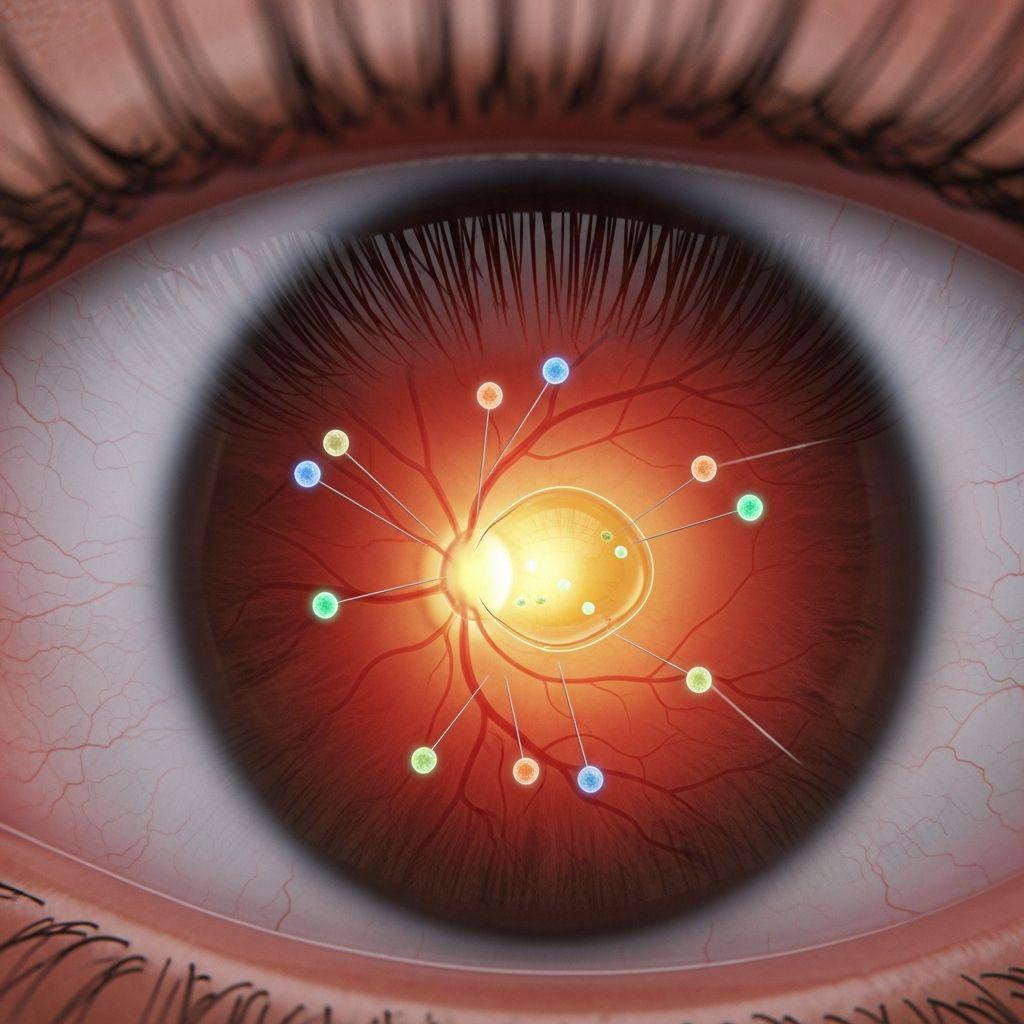
Diabetic macular edema (DME) stands as a primary cause of vision impairment in individuals with diabetes, resulting from fluid accumulation in the macula due to leaky retinal blood vessels. Effective management hinges on customizing treatments to patient-specific factors such as disease severity, visual acuity, and comorbidities, shifting from uniform protocols to precision medicine approaches.
Understanding the Pathophysiology of DME
The retina’s central region, the macula, is vital for sharp vision. In diabetes, chronic hyperglycemia damages retinal capillaries, leading to breakdown of the blood-retinal barrier. This triggers leakage of fluid and proteins, causing macular thickening and distorted vision. Key drivers include elevated vascular endothelial growth factor (VEGF), inflammation, and oxidative stress.
Clinically, DME manifests as center-involved (affecting fovea) or non-center-involved types, with optical coherence tomography (OCT) revealing central subfield thickness and intraretinal cysts. Early detection via routine screening is crucial, as timely intervention can prevent irreversible damage.
Core Principles of Personalized DME Management
Personalization begins with comprehensive assessment: baseline visual acuity (e.g., 20/40 or worse prompts aggressive therapy), OCT metrics, fundus photography, and systemic factors like HbA1c and blood pressure. Guidelines emphasize optimizing glycemic control (<7% HbA1c) and hypertension management as foundational steps before ocular therapies.
- Glycemic Optimization: Tight control reduces DME progression risk by 29% per ETDRS data.
- Blood Pressure Control: Targets below 140/80 mmHg minimize vascular stress.
- Lifestyle Modifications: Weight loss and exercise enhance retinal health.
Anti-VEGF Agents: The Cornerstone of Therapy
Intravitreal anti-VEGF injections target the primary culprit—VEGF—stabilizing vessels and resolving edema. These agents, administered monthly initially then tapered, have revolutionized DME care since ranibizumab’s FDA approval in 2012.
| Agent | Approval Year | Key Trial | Dosing Regimen | Visual Gain (Letters) |
|---|---|---|---|---|
| Ranibizumab | 2012 | DRCR Protocol I | Monthly x6, then PRN | +8-9 at 1 year |
| Aflibercept | 2014 | Da Vinci | 2mg q4-8 weeks | Superior to laser |
| Faricimab | 2022 | Recent studies | q8-16 weeks | Dual VEGF/Ang-2 inhibition |
DRCR Protocol I demonstrated ranibizumab plus deferred laser outperformed laser alone, gaining 8-9 ETDRS letters versus 3. Aflibercept in Da Vinci showed robust anatomic and functional improvements. Newer bispecific agents like faricimab offer extended intervals, reducing treatment burden.
Personalization: Patients with poor baseline vision (<20/50) or thick CST (>400μm) benefit most from prompt anti-VEGF. Treat-and-extend protocols adjust based on response.
Corticosteroid Options for Refractory Cases
When anti-VEGF yields suboptimal results—seen in 40-50% of cases—corticosteroids address inflammation via implants or injections. Dexamethasone 0.7mg implant (Ozurdex) improved vision by ≥15 letters in 22% in MEAD study, lasting 3-6 months.
Fluocinolone acetonide (Iluvien) provides 2-3 year sustained release for chronic DME. Triamcinolone, though effective short-term, risks elevated IOP and cataracts more than implants.
Related Stories



- Ideal Candidates: Pseudophakic eyes, prior anti-VEGF non-responders.
- Monitoring: IOP checks every 1-3 months.
Protocol B highlighted triamcinolone’s inferiority to laser in efficacy but utility in select cases.
Laser Photocoagulation: A Targeted Adjunct
Focal/grid laser seals microaneurysms, standard pre-anti-VEGF era per ETDRS (1985), reducing vision loss risk. Now reserved for non-center-involved DME or adjunct in persistent cases.
Advantages: One-time outpatient procedure, cost-effective. Risks: Paracentral scotomas. DRCR protocols recommend deferring 6 months post-anti-VEGF.
Emerging and Combination Strategies
Combination anti-VEGF + laser or steroids enhances outcomes in resistant DME. Novel therapies like selective retinal therapy restore RPE function. Gene therapies and oral VEGF inhibitors are in trials.
Systemic adjuncts: Fenofibrate reduces DME progression by 30% per FIELD study (though not primary source here).
Factors Influencing Treatment Selection
| Factor | Preferred Therapy | Rationale |
|---|---|---|
| Central DME, VA <20/40 | Anti-VEGF first-line | Best visual recovery |
| Anti-VEGF non-responder | Switch steroid implant | Inflammation dominant |
| Non-central DME | Laser + observation | Preserves fovea |
| Pregnancy/Young | Laser/bevacizumab (off-label) | Avoid long-term steroids |
Patient adherence, access, and costs guide real-world choices. Telemedicine OCT aids extend intervals.
Monitoring and Long-Term Outcomes
Quarterly visits initially, extending to 4 months if stable. OCT tracks CST <250μm goal; BCVA improvement ≥5 letters signals success. 5-year data show 50% maintain gains with sustained therapy.
Complications: Endophthalmitis (1/5000 injections), IOP rise (30% steroids), atrophy (rare laser).
Patient Education and Prevention
Empower patients: Annual dilated exams for diabetics, symptom awareness (blurry central vision). Low-vision rehab for irreversible loss.
Frequently Asked Questions (FAQs)
What is the first treatment for DME?
Anti-VEGF injections like ranibizumab or aflibercept are standard for center-involved DME.
How often are injections needed?
Monthly for 4-6 months, then every 4-12 weeks based on response.
Are steroids safe for DME?
Yes, via implants, but monitor for glaucoma/cataracts.
Can DME be cured?
No cure, but treatments stabilize or reverse damage in most.
How does diabetes control affect DME?
Strict HbA1c <7% halves progression risk.
References
- Diabetic Macular Edema – EyeWiki — EyeWiki (AAO). 2023. https://eyewiki.org/Diabetic_Macular_Edema
- Diabetic Macular Edema Treatments – WebMD — WebMD. 2024. https://www.webmd.com/diabetes/diabetic-macular-edema-treatment
- Undertreatment of Diabetic Macular Edema — Review of Ophthalmology. 2023. https://www.reviewofophthalmology.com/article/undertreatment-of-diabetic-macular-edema
- Current Treatments for Diabetic Macular Edema – PMC — PMC (NCBI). 2023-05-29. https://pmc.ncbi.nlm.nih.gov/articles/PMC10253534/
- Diabetic Macular Edema (DME) – Prevent Blindness — Prevent Blindness. 2024. https://preventblindness.org/diabetic-macular-edema-dme/
- Diabetic Macular Edema – IDF — IDF. 2019. https://idf.org/media/uploads/2019/09/IDF-DME-CPR.pdf
Similar Articles








Read full bio of Sneha Tete