Tamsulosin: Essential Dosage, Side Effects, Interactions
Explore the uses, benefits, risks, and practical advice for tamsulosin in managing prostate health effectively.
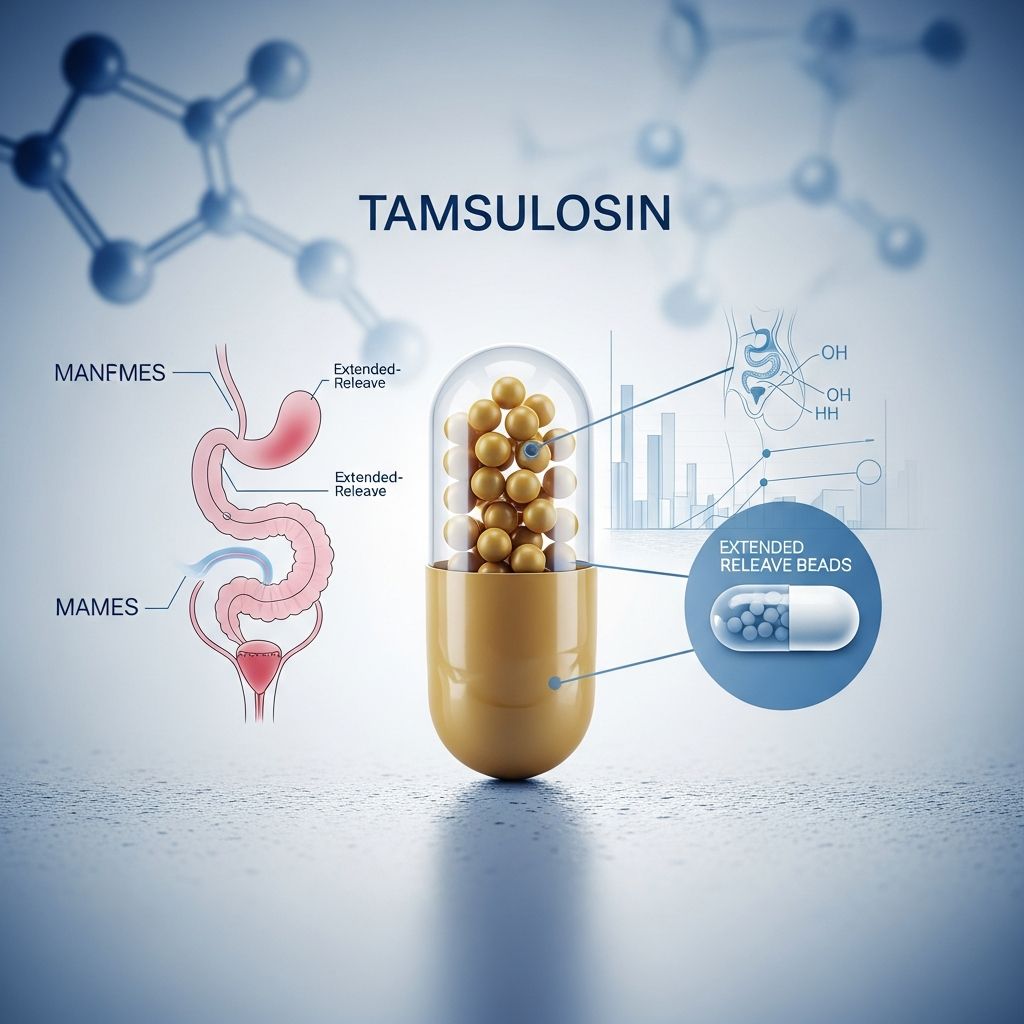
Tamsulosin is an alpha-1 blocker primarily prescribed to alleviate urinary difficulties associated with benign prostatic hyperplasia (BPH), a common condition in aging men where the prostate gland enlarges and obstructs urine flow. By relaxing muscles in the prostate and bladder neck, it improves urine flow and reduces symptoms like frequent urination or weak stream.
Understanding Benign Prostatic Hyperplasia and Tamsulosin’s Role
Benign prostatic hyperplasia affects over half of men in their 60s and up to 90% by age 85, leading to bothersome lower urinary tract symptoms (LUTS). Tamsulosin targets alpha-1A adrenergic receptors concentrated in the prostate, providing symptom relief without shrinking the gland itself. Clinical studies demonstrate its efficacy in enhancing peak urinary flow rates and reducing symptom scores within weeks of starting treatment.
Unlike general alpha blockers, tamsulosin’s selectivity minimizes cardiovascular effects, making it suitable for many patients with comorbidities. Long-term use up to six years shows sustained benefits with a favorable safety profile, as adverse events decrease over time.
Standard Dosage and Administration Practices
The typical starting dose is 0.4 mg once daily, taken approximately 30 minutes after the same meal each day to ensure consistent absorption. If inadequate response after 2-4 weeks, the dose may increase to 0.8 mg daily. Capsules should be swallowed whole, not crushed or chewed, to avoid rapid release that could heighten side effects.
Missed doses should be taken as soon as remembered unless close to the next dose; doubling up is not advised. For patients with severe kidney impairment, dose adjustments may not be necessary, but liver issues require caution.
| Dose Level | Timing | Expected Onset |
|---|---|---|
| 0.4 mg | After meal | 1-2 weeks |
| 0.8 mg | After meal, if needed | Further improvement |
Common Side Effects and Management Strategies
Most users experience mild, transient side effects that often resolve as the body adjusts. These include:
- Headache, affecting up to 20% initially
- Dizziness or lightheadedness, especially upon standing (orthostatic hypotension)
- Runny or stuffy nose (rhinitis)
- Abnormal ejaculation, such as retrograde ejaculation in 4-18% of men
- Back pain, fatigue, or diarrhea
To manage dizziness, rise slowly from sitting or lying positions and avoid sudden movements. Hydration and avoiding alcohol can help. Abnormal ejaculation is usually reversible upon discontinuation and does not affect fertility.
Serious Adverse Reactions Requiring Immediate Attention
Though rare, certain effects demand prompt medical intervention:
- Intraoperative Floppy Iris Syndrome (IFIS) during cataract surgery, linked to current or recent use—inform your ophthalmologist months in advance.
- Priapism: Prolonged, painful erection lasting over 4 hours, risking permanent damage—seek emergency care.
- Severe allergic reactions: Swelling, rash, breathing difficulty, or Stevens-Johnson syndrome (blistering skin).
- Low blood pressure causing fainting or falls.
Patients reporting chest pain, blurred vision, or flu-like symptoms with persistent lower back pain should contact their doctor promptly.
Related Stories



Drug Interactions and Contraindications
Tamsulosin can amplify effects of other blood pressure-lowering agents or erectile dysfunction medications like sildenafil, risking severe hypotension. Avoid combining with other alpha blockers such as alfuzosin.
Contraindications include known hypersensitivity or concurrent use of strong CYP3A4 inhibitors (e.g., ketoconazole). Use caution with PDE5 inhibitors; dosage timing adjustments may be needed.
| Drug Class | Examples | Risk |
|---|---|---|
| PDE5 Inhibitors | Sildenafil, Tadalafil | Hypotension |
| Other Alpha Blockers | Alfuzosin | Enhanced side effects |
| CYP3A4 Inhibitors | Ketoconazole | Increased tamsulosin levels |
Lifestyle Adjustments to Enhance Treatment Outcomes
Complementing tamsulosin with lifestyle changes maximizes relief:
- Limit caffeine and alcohol to reduce bladder irritation.
- Practice double voiding: Urinate, wait, then try again.
- Perform pelvic floor exercises (Kegels) to strengthen supporting muscles.
- Maintain a healthy weight and stay hydrated, but avoid excessive fluids before bed.
- Avoid decongestants or antihistamines that worsen urinary retention.
Regular monitoring via uroflowmetry or symptom questionnaires helps track progress.
Special Considerations for Patient Populations
Elderly patients, common BPH sufferers, may experience heightened dizziness; starting at lower doses aids tolerance. Those planning eye surgery must disclose tamsulosin history. Intraoperative Floppy Iris Syndrome persists even after discontinuation.
For men with mild liver impairment, standard dosing applies, but severe cases warrant alternatives. No dose adjustment needed for kidney issues unless severe.
Long-Term Use: Efficacy and Safety Data
Studies spanning six years confirm tamsulosin’s durability, with peak flow improvements maintained and side effect incidence dropping below 5% after two years. Abnormal ejaculation remains the most persistent but benign issue.
Discontinuation rates due to adverse events are low (around 5-10%), supporting its role as first-line therapy.
Frequently Asked Questions (FAQs)
Can tamsulosin cause erectile dysfunction?
No, it rarely causes ED; retrograde ejaculation is more common but reversible.
How soon does tamsulosin work?
Many notice improvement in 1-2 weeks, full effects in 4-6 weeks.
Is it safe to drink alcohol on tamsulosin?
Limit intake; alcohol worsens dizziness.
What if I forget a dose?
Take it when remembered; skip if near next dose—do not double.
Does tamsulosin shrink the prostate?
No, it relaxes muscles for symptom relief, not size reduction.
Monitoring and When to Consult Your Doctor
Track symptoms using validated scales like IPSS. Report worsening LUTS, blood in urine, or inability to urinate immediately, as these may signal complications like acute retention or prostate cancer (though BPH itself is benign).
Annual prostate exams remain essential; tamsulosin does not treat or prevent cancer.
References
- Tamsulosin: Side effects, dosage, uses, and more — Medical News Today. 2023-10-15. https://www.medicalnewstoday.com/articles/tamsulosin-oral-capsule
- Tamsulosin (oral route) – Side effects & dosage — Mayo Clinic. 2024-01-20. https://www.mayoclinic.org/drugs-supplements/tamsulosin-oral-route/description/drg-20068275
- Long-Term Efficacy and Safety of Tamsulosin for Benign Prostatic… — PMC (NCBI). 2006-05-01. https://pmc.ncbi.nlm.nih.gov/articles/PMC1477608/
- Side effects of tamsulosin — NHS. 2023-11-10. https://www.nhs.uk/medicines/tamsulosin/side-effects-of-tamsulosin/
- Tamsulosin (Flomax): Uses, Side Effects, Interactions — WebMD. 2024-02-05. https://www.webmd.com/drugs/tamsulosin-flomax
Similar Articles








Read full bio of Sneha Tete