Tardive Dyskinesia vs. Dystonia: Key Differences
Understand the distinct characteristics, causes, and treatments of tardive dyskinesia and dystonia.
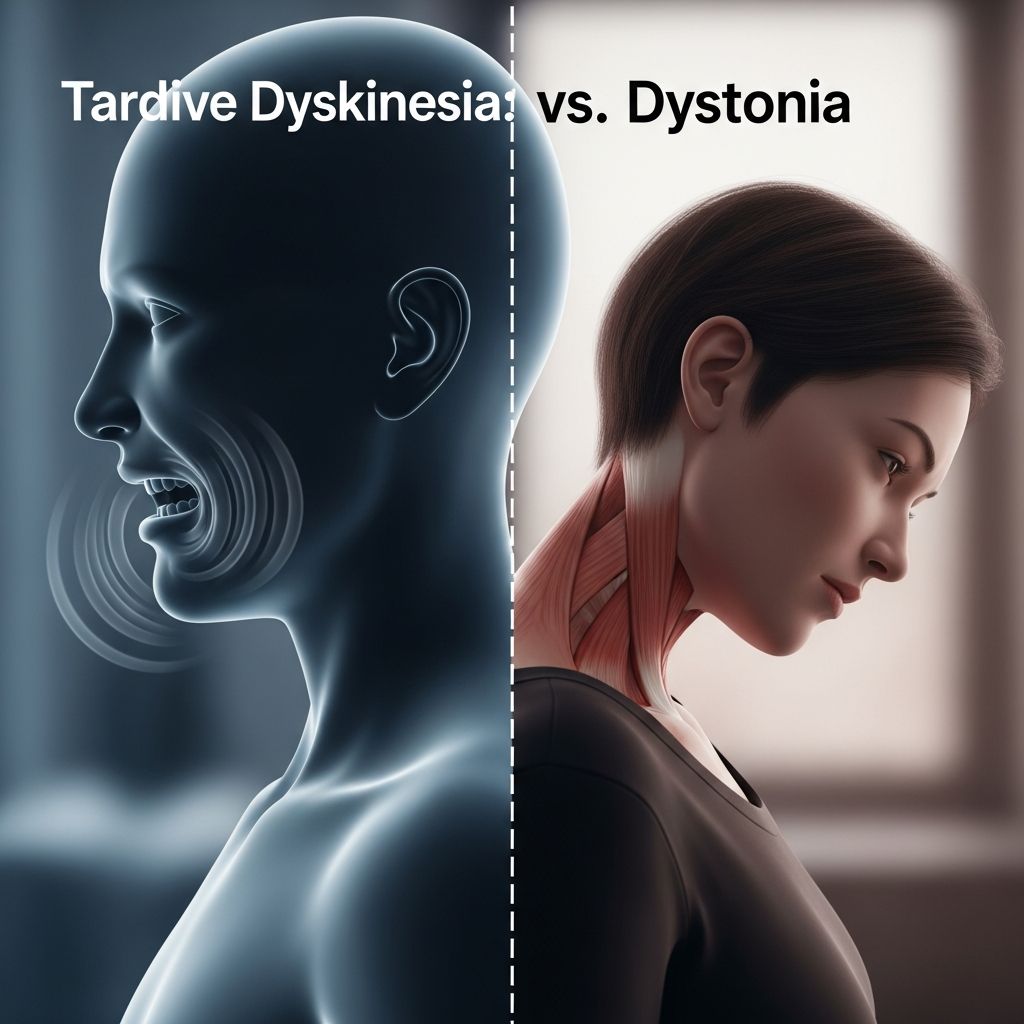
Tardive Dyskinesia vs. Dystonia: Understanding the Differences
Tardive dyskinesia and dystonia are two distinct movement disorders that are often confused due to their overlapping characteristics. Both conditions involve involuntary, unintentional muscle contractions that can make daily functioning difficult. However, they differ significantly in their symptoms, underlying causes, and treatment approaches. Understanding these differences is crucial for accurate diagnosis and effective management.
What Are Movement Disorders?
Movement disorders are neurological conditions characterized by problems with nerve signals that communicate with muscles, resulting in uncontrollable movements. Both tardive dyskinesia and dystonia fall into this category, affecting how the body moves and responds to muscular control. These disorders can impact various body regions, from the face and neck to the limbs and torso, significantly affecting quality of life and daily activities.
Overview of Dystonia
Dystonia is a movement disorder characterized by involuntary muscle spasms and contractions that lead to twisting movements and unusual body postures. Unlike some other movement disorders, dystonia involves sustained or repetitive movements that can affect specific body parts or generalize throughout the body. The condition can stem from various causes, including genetic factors, brain injuries, certain neurological conditions, and sometimes as a side effect of medications such as antipsychotics.
The severity of dystonia varies widely among individuals. Some people experience mild symptoms affecting only one body region, while others may have severe symptoms impacting multiple areas and significantly limiting their mobility and function.
Overview of Tardive Dyskinesia
Tardive dyskinesia (TD) is a movement disorder that primarily causes jerky, irregular, or involuntary movements. The condition is typically characterized by abnormal muscle movements that are not rhythmic and may be described as flowing or writhing. Tardive dyskinesia is most commonly a side effect of antipsychotic medications, though it can also develop from certain antidepressants and antihistamines. Approximately 500,000 people in the United States are thought to be affected by tardive dyskinesia, with 60% to 70% experiencing moderate symptoms.
Key Differences Between Dystonia and Tardive Dyskinesia
| Characteristic | Dystonia | Tardive Dyskinesia |
|---|---|---|
| Type of Movement | Muscle spasms, twisting, sustained contractions, unusual postures | Jerky movements, irregular patterns, slow flowing movements, non-rhythmic |
| Commonly Affected Areas | Eyes, face, vocal cords, neck, torso, limbs | Face, tongue, neck, torso, limbs |
| Primary Causes | Genetics, brain injury, neurological conditions, medications | Antipsychotic medications, some antidepressants, antihistamines |
| Onset Timeline | Can develop at any age depending on cause | Develops after medication use, may take months to years |
| Reversibility | Depends on underlying cause | May persist years after medication discontinuation |
Symptoms of Dystonia
Dystonia manifests through various involuntary muscle contractions that create distinctive movement patterns:
- Sustained muscle spasms and cramps affecting specific body regions
- Twisting movements that may affect the neck, spine, or limbs
- Unusual or abnormal body postures that persist
- Repetitive writhing movements in affected areas
- Muscle stiffness and tension
- Pain or discomfort associated with sustained contractions
The severity and affected body areas vary considerably. Some individuals experience focal dystonia affecting only one body region, such as cervical dystonia affecting the neck muscles, while others develop generalized dystonia affecting multiple body parts.
Symptoms of Tardive Dyskinesia
Tardive dyskinesia presents with a distinct pattern of involuntary movements that can range from mild to severe. Common symptoms include:
Related Stories



- Lip smacking and unusual mouth movements
- Tongue protrusion or unusual tongue positioning
- Jaw clenching or moving side to side
- Blinking excessively or eye movements
- Puffing out the cheeks repeatedly
- Tapping, twitching, or jerky movements of hands and feet
- Hip rocking or upper body swaying
- Slow, flowing, or writhing movements resembling squirming
Symptom severity can fluctuate over time. In rare cases, tardive dyskinesia may cause serious complications such as difficulty breathing or eyes becoming fixed in an upward position, situations requiring immediate emergency medical attention.
Causes of Dystonia
Dystonia has multiple potential causes, making it more diverse in origin than tardive dyskinesia:
- Genetic factors: Many forms of dystonia are inherited, passed down through families with specific genetic mutations
- Brain injuries: Head trauma or stroke can trigger dystonia development
- Neurological conditions: Parkinson’s disease, cerebral palsy, and other conditions may cause secondary dystonia
- Medications: Antipsychotics and other drugs can cause medication-induced dystonia
- Infections: Certain infections affecting the brain may trigger dystonia
- Toxin exposure: Heavy metal poisoning or other toxic exposures can cause dystonia
- Idiopathic: In many cases, no specific cause is identified
Causes of Tardive Dyskinesia
Unlike dystonia, tardive dyskinesia has a more specific primary cause:
- Antipsychotic medications: The most common cause, particularly first-generation (typical) antipsychotics
- Antidepressants: Certain antidepressant medications can rarely cause tardive dyskinesia
- Antihistamines: Some antihistamine medications have been associated with tardive dyskinesia development
- Dopamine antagonists: Any medication blocking dopamine receptors increases risk
- Duration of medication use: Longer exposure to causative medications increases risk
- Individual susceptibility: Some people are more prone to developing tardive dyskinesia than others
The reasons why some individuals taking these medications develop tardive dyskinesia while others do not remain incompletely understood. Risk factors may include age, gender, genetic predisposition, and cumulative medication exposure.
Diagnosis of Dystonia
Diagnosing dystonia involves a comprehensive evaluation process:
- Neurological examination: Assessing muscle tone, movement patterns, and affected body areas
- Medical history: Reviewing family history, medications, past injuries, and symptom onset
- Brain imaging: MRI or CT scans to rule out structural brain abnormalities
- Blood and urine tests: To exclude metabolic or toxic causes
- Genetic testing: When hereditary dystonia is suspected
- Specialist referral: Neurologists confirm diagnosis and develop treatment plans
Diagnosis of Tardive Dyskinesia
Diagnosing tardive dyskinesia can be challenging due to its delayed onset after medication initiation:
- Medication history review: Detailed timeline of antipsychotic or other medication use
- Symptom assessment: Careful evaluation of movement patterns and affected areas
- Neurological examination: Assessing involuntary movements and ruling out other conditions
- Brain imaging: MRI or CT scans to exclude other causes
- Blood and urine tests: To rule out metabolic or toxic causes
- Neurologist referral: Specialists confirm diagnosis and assess severity
The diagnosis of tardive dyskinesia may be particularly difficult because symptoms can develop months or even years after starting or stopping the causative medication, making the temporal connection less obvious.
Treatment Options for Dystonia
Treatment approaches for dystonia are individualized based on the type, severity, and underlying cause:
- Botulinum toxin injections: Highly effective for focal dystonia, reducing muscle contractions
- Oral medications: Anticholinergics, benzodiazepines, or other agents to reduce symptoms
- Physical therapy: Exercises and techniques to improve movement and function
- Deep brain stimulation: Surgical option for severe, treatment-resistant cases
- Treating underlying causes: Addressing genetic, metabolic, or other treatable underlying conditions
- Lifestyle modifications: Stress reduction and activity management
Treatment Options for Tardive Dyskinesia
Management of tardive dyskinesia focuses on addressing the medication-related cause and symptom relief:
- Medication adjustment: Reducing or discontinuing the causative antipsychotic when possible
- Switching medications: Changing to newer atypical antipsychotics with lower tardive dyskinesia risk
- Symptomatic medications: Using tetrabenazine or other agents to reduce involuntary movements
- Botulinum toxin: May help with specific symptom areas
- Deep brain stimulation: Reserved for severe cases not responding to other treatments
- Dose reduction: Gradually lowering medication doses when clinically appropriate
Tardive Dystonia: A Severe Variant
Tardive dystonia is a particularly severe form of tardive dyskinesia characterized by sustained, twisting movements of larger muscle groups, particularly affecting the neck and trunk. This variant is considered the most disabling form of tardive syndrome and can lead to serious complications including spinal disease, difficulty swallowing, and respiratory difficulty. Tardive dystonia appears more commonly in young men at onset, though severe cases are more prevalent in older women.
Complications and Long-term Impact
Both conditions can lead to significant complications affecting overall health and quality of life:
- Social and functional disability limiting work and social participation
- Physical injuries from falls or sustained contractions
- Spinal problems and myelopathy in severe cases
- Difficulty swallowing and eating
- Respiratory compromise in severe cases
- Pain and muscle damage
- Psychological distress and reduced quality of life
Frequently Asked Questions (FAQs)
Q: Can dystonia and tardive dyskinesia occur together?
A: Yes, both conditions can occur as side effects of antipsychotic medications. However, they present different movement patterns and require distinct diagnostic approaches. A healthcare provider can differentiate between them through careful evaluation.
Q: Is tardive dyskinesia reversible?
A: Tardive dyskinesia may persist for years after discontinuing the causative medication. Early recognition and medication adjustment offer the best chance for symptom improvement. Some individuals experience complete remission, while others have persistent symptoms.
Q: Can dystonia be cured?
A: Cure depends on the underlying cause. Genetic forms cannot be cured but can be managed effectively with treatment. Secondary dystonias caused by medications or injuries may improve with appropriate treatment addressing the underlying cause.
Q: How long does it take for tardive dyskinesia to develop?
A: Tardive dyskinesia can develop soon after starting causative medications or several years into treatment. This variable timeline makes diagnosis challenging and emphasizes the importance of regular monitoring in patients taking antipsychotics.
Q: What is the difference between chorea and athetosis?
A: Chorea involves rapid, jerky, involuntary movements, while athetosis consists of slow, flowing, writhing movements. Tardive dyskinesia can present with either pattern or both, contributing to the variable presentation of this condition.
Q: Are there lifestyle changes that help manage these conditions?
A: While not replacing medical treatment, stress reduction, adequate sleep, regular physical activity within limitations, and avoiding triggers may help manage symptoms. Working with healthcare providers to develop comprehensive treatment plans is essential.
References
- Dystonia vs. Tardive Dyskinesia: What to Know — Healthgrades. 2024. https://resources.healthgrades.com/right-care/brain-and-nerves/dystonia-vs-tardive-dyskinesia
- Tardive Dyskinesia – Symptoms & Definition — National Organization for Rare Disorders (NORD). 2024. https://rarediseases.org/rare-diseases/tardive-dyskinesia/
- Treatment of tardive dystonia: A review — Testini P. Frontiers in Dystonia. 2023. https://www.frontierspartnerships.org/journals/dystonia/articles/10.3389/dyst.2023.10957/full
- Clinical Comparison of Tardive and Idiopathic Cervical Dystonia — Molho ES. Movement Disorders. 1998. https://pubmed.ncbi.nlm.nih.gov/9613742/
- What The Difference Between Dyskinesia And Dystonia — Lone Star Neurology. 2024. https://lonestarneurology.net/blog/dyskinesia-vs-dystonia/
Similar Articles








Read full bio of medha deb