Tattoo Removal: How It Works, Process, Healing & Scarring
Complete guide to tattoo removal methods, procedures, healing timeline, and scarring prevention.
Understanding Tattoo Removal: Your Complete Guide
Tattoo regret is more common than many people realize, with nearly 20 percent of Americans with tattoos experiencing some level of regret about their ink. Whether your tattoo no longer reflects who you are, was done poorly, or simply doesn’t match your current lifestyle, numerous effective removal options are available today. Understanding how these methods work, what to expect during the process, and how to care for your skin afterward can help you make an informed decision about pursuing tattoo removal.
How Tattoo Removal Works
The fundamental goal of all tattoo removal methods is to break down permanent ink particles into smaller fragments that your body can naturally eliminate. However, different removal techniques achieve this goal through distinct mechanisms, each with varying levels of effectiveness and potential for scarring.
Laser tattoo removal and topical removal creams work by targeting the ink directly while minimizing damage to surrounding skin, resulting in a lower risk of scarring. In contrast, methods such as dermabrasion, chemical peels, and surgical excision focus on removing the layers of skin that contain the tattoo pigment. While these physical removal methods can be effective, they typically result in more noticeable scarring as your skin heals around the treated area.
Laser-Based Removal
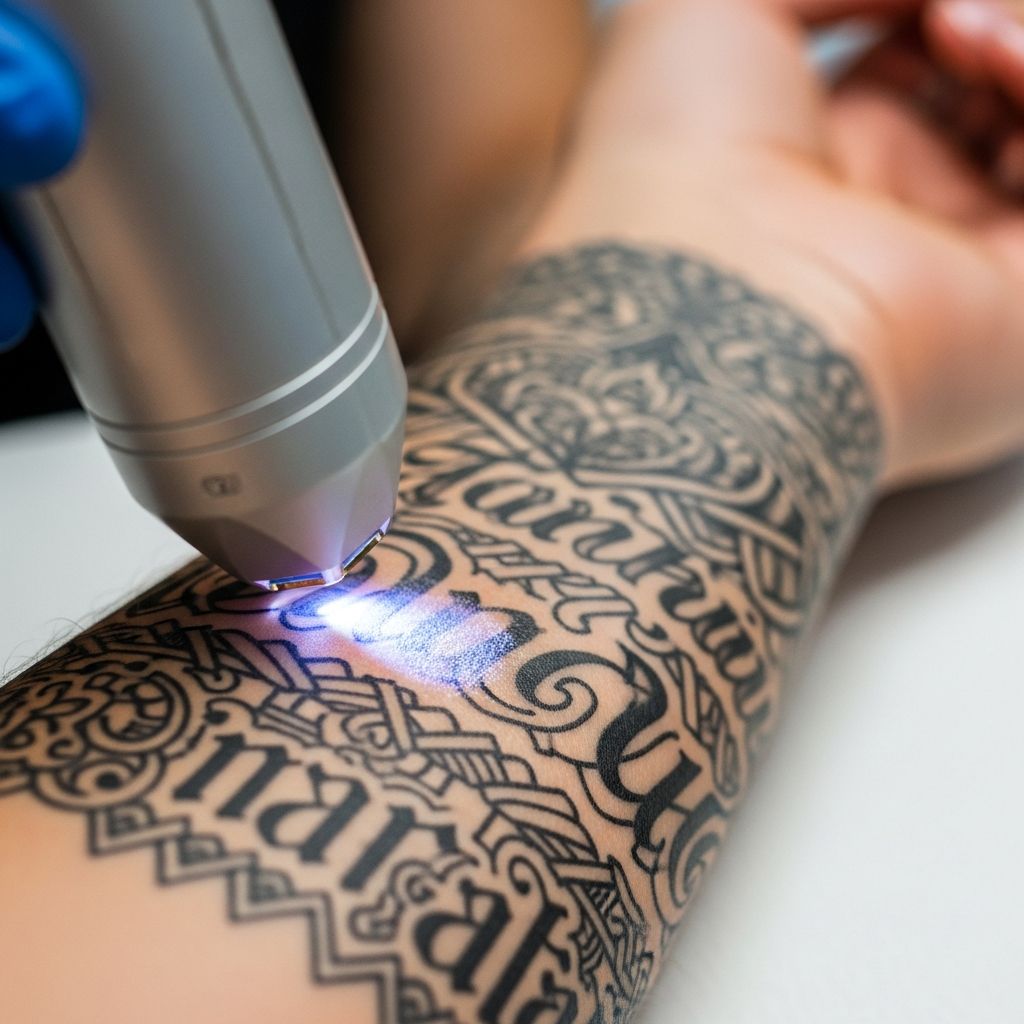
Laser technology represents the gold standard for tattoo removal in modern dermatology. During a laser tattoo removal procedure, the device emits very short, fast pulses of concentrated light energy that directly target the ink pigment beneath the skin’s surface. This light energy heats the ink particles, causing them to fragment into much smaller particles. Your body’s natural immune system then recognizes these fragmented particles as foreign material and gradually flushes them out through the lymphatic system over the following weeks and months.
The effectiveness of laser removal depends significantly on the specific wavelengths used. Advanced laser systems, such as the Enlighten laser, feature multiple wavelengths in a single device—typically 532, 670, and 1064 nanometers—allowing treatment of tattoos with various ink colors. Different wavelengths penetrate skin at different depths and target specific ink pigment colors more effectively. Black and dark blue inks, for example, respond well to the 1064 nm wavelength, while red and orange inks are better treated with shorter wavelengths.
Non-Laser Removal Methods
For patients seeking alternatives to laser treatment, several other professional options exist. Surgical excision involves physically removing the tattooed skin and suturing the remaining skin together. This method works best for small tattoos and typically results in a linear scar. Dermabrasion uses mechanical abrasion to sand away the tattooed skin layers, while chemical peels use caustic substances to dissolve skin layers containing ink. These methods are generally less popular than laser removal due to higher scarring risks and potentially less predictable results.
The Tattoo Removal Process
Pre-Treatment Consultation and Assessment
Before beginning any tattoo removal procedure, scheduling a comprehensive consultation with a qualified dermatologist or licensed professional is essential. During this appointment, your provider will:
– Assess your tattoo’s size, color composition, and placement on your body- Evaluate your skin type and natural skin color to determine treatment suitability- Review your medical history and current medications- Discuss realistic expectations for removal and potential outcomes- Explain the number of treatments you’ll likely need- Address any concerns or questions about the procedure
Your provider will measure your tattoo and may photograph it to document the baseline appearance. This documentation helps track progress throughout your treatment series and provides a clear before-and-after record.
Related Stories



Preparation Guidelines Before Treatment
Proper preparation significantly impacts the success of your tattoo removal and minimizes potential complications. Follow these guidelines in the weeks leading up to your appointment:
– Avoid sunbathing and tanning beds for at least two weeks before treatment, as tanned skin increases the risk of complications- Skip waxing and other hair removal methods in the treatment area- Discontinue chemical peels and collagen injections for two weeks prior- Avoid perfumes, deodorants, retinoids, and other potential skin irritants before and after treatment- Cease use of aspirin, non-steroidal anti-inflammatory drugs (NSAIDs), and herbal supplements three to five days before your appointment, as these increase bruising risk- Take acetaminophen for pain management instead of ibuprofen or similar medications
During the Procedure
Laser tattoo removal is typically performed on an outpatient basis, meaning you’ll return home the same day. The procedure itself generally takes between 10 to 30 minutes, depending on your tattoo’s size and complexity. Here’s what you can expect during your appointment:
Your treatment area will be thoroughly cleansed, and depending on your pain tolerance and tattoo size, a numbing cream may be applied to minimize discomfort. You’ll be provided with protective eyewear to shield your eyes from the laser light. Your provider will then position the laser handpiece against your skin and activate it repeatedly in short pulses across the tattooed area. Many patients describe the sensation as similar to a rubber band snapping against the skin, though the experience varies among individuals.
For patients with darker skin tones, your provider may apply cooling gel or cold packs to the treatment area to protect the surrounding skin. In some cases, a test patch may be performed first to assess how your skin responds to the specific laser settings, allowing your provider to adjust parameters for optimal results with minimal risk.
Understanding Treatment Expectations
Number of Sessions Required
Tattoo removal is not a one-session process. Multiple treatments spaced three to eight weeks apart are typically necessary to achieve optimal results. The exact number of sessions depends on several factors:
– Tattoo size and surface area- Ink color and pigment composition- Tattoo age and depth of ink penetration- Your individual immune system response- Your skin type and healing capacity- Whether the tattoo was professionally or non-professionally applied
Professional tattoos with high-quality ink typically require more sessions than amateur or poorly applied tattoos. Each treatment session should progressively lighten the tattoo, though complete removal may take 6 to 12 months or longer. Spacing treatments allows adequate time for your body to process and eliminate the fragmented ink particles.
Pain and Discomfort
Most patients report that laser tattoo removal is significantly less painful than the original tattooing process. The discomfort level varies based on individual pain tolerance, tattoo location, and the specific area being treated. Taking over-the-counter pain relievers like acetaminophen before your appointment can help manage any discomfort. Some clinics offer topical anesthetics or cooling systems to further reduce sensation during treatment.
Recovery and Healing Timeline
Immediate Post-Treatment Period
Immediately following your laser tattoo removal session, you may experience temporary side effects that are typically mild and resolve quickly. Your skin in the treated area may appear red, feel warm to the touch (similar to a mild sunburn), and may show slight swelling or bruising. These reactions are completely normal and indicate that the laser energy successfully targeted the tattoo ink.
First Few Days After Treatment
For the first 24 to 48 hours after treatment, avoid scrubbing the treated area vigorously. You can shower with warm (not hot) water the day after your session, though you should gently pat the area dry rather than rubbing. Keep the area clean and apply any recommended aftercare products provided by your clinician.
Swelling and redness typically peak within the first 24 to 72 hours and gradually diminish over the following week. Some patients experience mild crusting or scabbing, which is a normal part of the healing process. Resist the urge to pick at any scabs, as this can increase scarring risk and potentially lead to infection.
Weeks Two Through Four
During the second to fourth weeks post-treatment, the treated area continues healing as your body processes the fragmented ink particles. Redness and swelling typically resolve completely during this period. You may notice the tattoo appearing lighter than before, though significant fading becomes more apparent with each successive treatment.
At this point, you can typically resume normal activities, including exercise, though you should continue protecting the area from sun exposure. Sun exposure can trigger hyperpigmentation or hypopigmentation in the treated area, so applying broad-spectrum sunscreen with SPF 30 or higher is important for several months following each treatment.
Long-Term Recovery
Complete healing occurs over several months as your immune system continues clearing away ink debris. Individual results vary significantly based on numerous factors, and optimal results may require multiple treatment sessions spaced several weeks apart. Most patients notice progressive lightening with each treatment session.
Scarring and Skin Changes
Risk of Scarring
One of the primary advantages of laser tattoo removal over other methods is its relatively low scarring risk. Laser treatment specifically targets ink pigment while minimizing damage to surrounding skin and deeper tissue layers. However, scarring risk is not zero, particularly with certain skin types or pre-existing skin conditions.
Factors that increase scarring risk include:
– Darker skin types, which are more prone to keloid or hypertrophic scar formation- Pre-existing tendency toward abnormal scar formation- Tattoos located over bony areas or areas with thin skin- Failure to follow proper aftercare instructions- Aggressive laser settings that are too intense for your skin type
Minimizing Scarring Risk
Your dermatologist will carefully consider your natural skin color and type when determining the most appropriate treatment approach and laser settings. This individualized assessment helps minimize the risk of adding or losing pigmentation (hypopigmentation or whitening of the skin) and reduces overall scarring risk. Following all pre- and post-treatment care instructions is equally important for preventing complications.
Other Pigmentation Changes
Some patients experience temporary hyperpigmentation (darkening) or hypopigmentation (lightening) in the treated area. These changes are usually temporary and resolve over several months as skin continues healing. Protecting the area from sun exposure helps prevent these pigmentation changes from becoming permanent.
Factors Affecting Removal Success
Several variables influence how successfully your tattoo can be removed and how many treatments you’ll need:
Ink Color: Black and dark blue inks respond most readily to laser treatment. Red, orange, and yellow inks require specific wavelengths and may need more sessions. Green and purple inks can be particularly challenging to remove.Ink Density: Heavily saturated tattoos with thick ink application typically require more sessions than lightly applied tattoos.Tattoo Age: Older tattoos are often easier to remove because the ink has naturally degraded somewhat over time.Skin Type: Lighter skin types generally respond more predictably to laser treatment, while darker skin types require more careful laser parameter selection.Tattoo Location: Tattoos on areas with better circulation (such as the face or neck) typically respond better to treatment than those on extremities where circulation is more limited.Professional vs. Amateur: Professional tattoos with quality ink may require more sessions than amateur or home tattoos.
Comparing Tattoo Removal Methods
| Removal Method | Effectiveness | Scarring Risk | Sessions Required | Recovery Time |
|---|---|---|---|---|
| Laser Removal | Very High | Low | Multiple (6-12+) | Minimal to Moderate |
| Surgical Excision | High (for small tattoos) | High (linear scar) | 1 Session | Several weeks |
| Dermabrasion | Moderate | High | 1-3 Sessions | Several weeks |
| Chemical Peels | Low to Moderate | High | Multiple Sessions | Several weeks |
| Topical Creams | Low | Very Low | Ongoing Application | Minimal |
Post-Treatment Care Instructions
Proper aftercare is essential for promoting healing and minimizing complications. Follow these guidelines after each treatment session:
– Keep the treated area clean and dry for at least 24 hours- Apply any prescribed topical medications or healing ointments as directed- Use cool compresses or ice packs to reduce swelling (limit to 15-20 minutes at a time)- Avoid hot water, hot showers, and hot baths for at least 48 hours- Wear loose, comfortable clothing that doesn’t rub against the treated area- Avoid swimming, hot tubs, and saunas for at least one week- Refrain from strenuous exercise for 24-48 hours after treatment- Apply broad-spectrum sunscreen (SPF 30+) once any wounds have healed- Avoid picking, scratching, or scrubbing the treated area- Do not apply makeup or other cosmetics to the treated area for at least 24 hours- Continue avoiding NSAIDs and herbal supplements for several days after treatment
Frequently Asked Questions
Q: How many laser tattoo removal sessions will I need?
A: The number of sessions varies widely depending on tattoo size, ink color, location, and your individual factors. Most tattoos require 6 to 12 sessions spaced 6 to 8 weeks apart, though some may need fewer or more.
Q: Is laser tattoo removal painful?
A: Most patients describe the sensation as less painful than getting the original tattoo. Many compare it to a rubber band snapping against the skin. Topical anesthetics and cooling systems can help minimize discomfort.
Q: Will laser tattoo removal leave a scar?
A: Laser removal has a relatively low scarring risk compared to other removal methods. However, scarring risk increases with darker skin types and aggressive laser settings. Following proper aftercare minimizes this risk.
Q: How long is the recovery period after tattoo removal?
A: Recovery varies by individual. Redness and swelling typically resolve within 1-2 weeks. You can usually return to normal activities immediately, though you should protect the area from sun exposure for several months.
Q: Can all tattoo colors be removed?
A: Most colors can be removed, but some are more challenging. Black, dark blue, and red respond well to laser treatment. Green, purple, and certain shades of yellow may require more sessions or specialized wavelengths.
Q: What should I do if I experience complications after treatment?
A: Contact your dermatologist immediately if you experience signs of infection, excessive scarring, significant pigmentation changes, or allergic reactions. Most minor side effects resolve on their own with proper care.
Q: Can I get a new tattoo over the removal site?
A: It’s best to wait until the area has completely healed and any pigmentation changes have resolved before getting a new tattoo. Consult with your tattoo artist and dermatologist about timing.
Q: How much does laser tattoo removal cost?
A: Costs vary based on tattoo size, location, complexity, and the number of sessions needed. Most practices charge per session rather than for complete removal. Insurance typically doesn’t cover cosmetic tattoo removal.
References
- Tattoo & Birthmark Removal: Pigmented Lesions — Cleveland Clinic. Accessed 2025. https://my.clevelandclinic.org/cosmetic-plastic-surgery/procedures/tattoo-birthmark-removal
- Tattoo Removal: How It Works, Process, Healing & Scarring — Cleveland Clinic. Accessed 2025. https://my.clevelandclinic.org/health/treatments/8313-tattoo-removal
- Laser Tattoo Removal Procedure, Benefits, and Risks — WebMD. Accessed 2025. https://www.webmd.com/skin-problems-and-treatments/laser-tattoo-removal
- Laser Tattoo Removal Aftercare Tips — Vaseline. Accessed 2025. https://www.vaseline.com/us/en/articles/skin-care-basics/tattoo-removal-after-care.html
- Ultimate Guide of Tattoo Removal — Ultimate Image MedSpa. Accessed 2025. https://ultimateimagemedspa.com/tattoo-remover-guide/
Similar Articles








Read full bio of medha deb