Tea Tree Oil: 4 Evidence-Based Uses And Safety Notes
Explore the scientific evidence on tea tree oil's benefits, uses, and safety considerations for skin health.
Tea Tree Oil: Usefulness and Safety
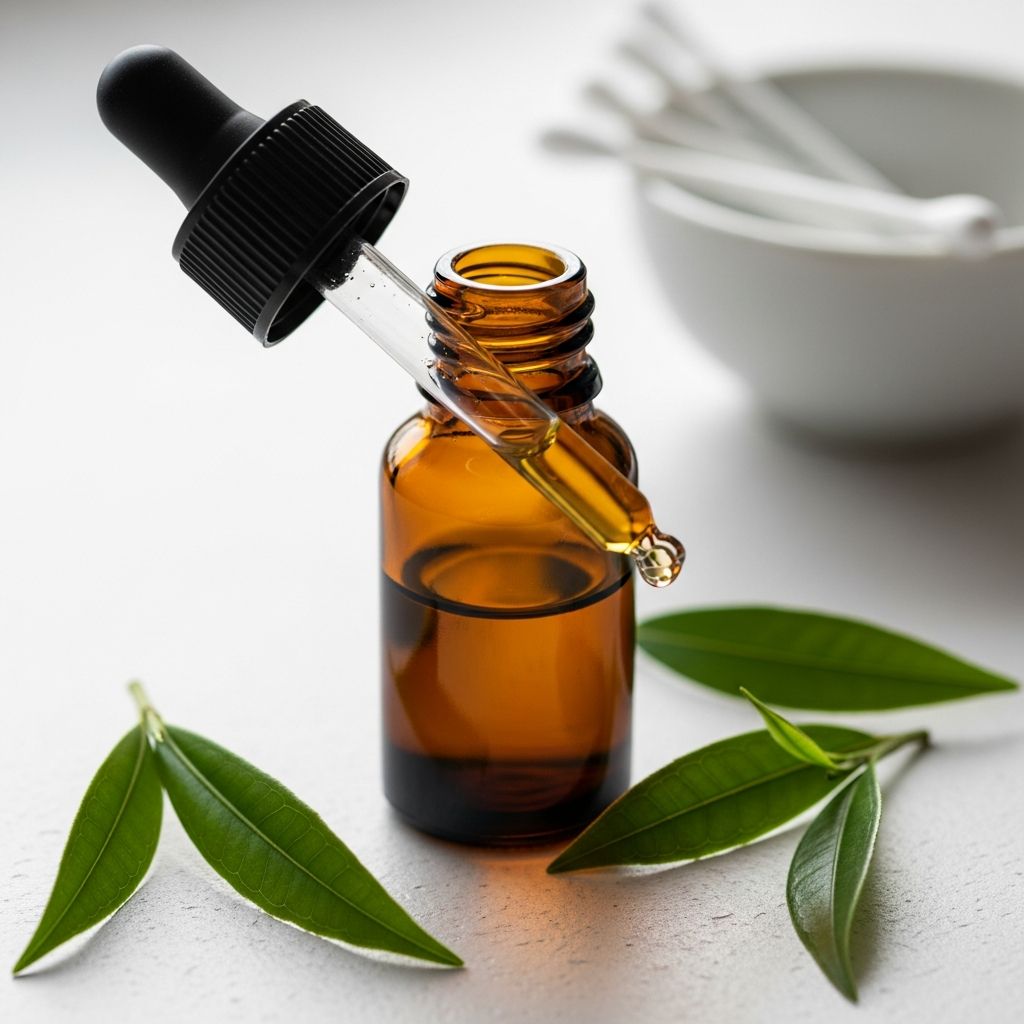
Tea tree oil, derived from the leaves of Melaleuca alternifolia, has been used for centuries in traditional medicine and is increasingly popular in modern skincare and wellness practices. However, understanding what scientific evidence actually supports its use is essential for making informed health decisions. The National Center for Complementary and Integrative Health (NCCIH) has compiled research on tea tree oil’s potential benefits and safety profile to help consumers and healthcare providers distinguish between marketing claims and evidence-based applications.
What Is Tea Tree Oil?
Tea tree oil is an essential oil obtained from the Australian tea tree plant. The oil contains numerous bioactive compounds, with terpinen-4-ol being the primary component responsible for its antimicrobial and anti-inflammatory properties. The therapeutic potential of tea tree oil has made it a popular ingredient in skincare products, hair care formulations, and various wellness applications. Traditional uses span decades, but contemporary medical practice requires rigorous clinical evidence to validate these traditional applications.
Antimicrobial and Anti-Inflammatory Properties
Laboratory research has demonstrated that tea tree oil possesses significant antimicrobial activity against various microorganisms. The oil’s effectiveness is primarily attributed to terpinen-4-ol, which comprises at least 30% of quality tea tree oil preparations. Studies show that tea tree oil is approximately 11 times more active against certain microorganisms than phenol, a well-known antimicrobial agent.
The antimicrobial mechanism involves disruption of microbial cell membranes. Tea tree oil increases membrane fluidity and permeability in various microorganisms, leading to loss of membrane integrity and inhibition of cellular respiration. For example, respiration in certain fungal species is inhibited by approximately 95% after treatment with 1.0% tea tree oil concentration.
Beyond antimicrobial effects, tea tree oil demonstrates anti-inflammatory activity through multiple pathways. The water-soluble components can inhibit the production of inflammatory mediators, including tumor necrosis factor alpha (TNF-α), interleukin-1β (IL-1β), and prostaglandin E2 by approximately 30% to 50%. These anti-inflammatory properties suggest potential therapeutic applications for conditions involving inflammatory responses in the skin and other tissues.
Clinical Applications and Research Evidence
Acne Treatment
Acne is one of the most commonly cited uses for tea tree oil, with numerous consumer products marketing it as an acne solution. However, the scientific evidence for acne treatment remains limited. A small amount of research suggests that tea tree oil, when applied topically to the skin, might be helpful for managing acne, but more comprehensive clinical trials are needed before definitive conclusions can be reached. The existing evidence does not provide sufficient data to recommend tea tree oil as a primary or alternative acne treatment at this time, though it may warrant consideration as a complementary approach in certain contexts.
Athlete’s Foot (Tinea Pedis)
Athlete’s foot represents one of the more promising applications for tea tree oil based on available evidence. Clinical trials have evaluated the efficacy of tea tree oil solutions for tinea infection. In one study comparing 25% and 50% tea tree oil solutions to placebo, marked clinical responses were observed in 72% and 68% of patients receiving tea tree oil treatment, respectively, compared to 39% of placebo-treated patients. Mycological cure rates were 55% and 64% in the treatment groups versus 31% in the placebo group.
However, the evidence indicates that tea tree oil may not work as well as standard pharmaceutical treatments like tolnaftate. In comparative studies, tolnaftate demonstrated cure rates of 85% compared to lower rates with tea tree oil formulations. Additionally, adverse skin reactions occurred in some patients using higher concentrations of tea tree oil, suggesting that lower concentrations (25%) may offer a better balance between efficacy and tolerability.
Related Stories



Fungal Nail Infections
Fungal nail infections represent an area where only limited research has been conducted on tea tree oil effectiveness. Both the amount and quality of available research are insufficient to allow any conclusions to be reached regarding tea tree oil’s utility for this condition. More rigorous clinical trials would be necessary to establish whether tea tree oil offers meaningful benefits for treating nail fungal infections.
Other Potential Applications
Research has explored tea tree oil for various other conditions. Laboratory studies demonstrate activity against specific pathogens and in specific contexts, but human clinical evidence remains sparse. Smaller research studies suggest that topical tea tree oil may help treat ocular demodicosis, a mite infection affecting the lower eyelids. However, these studies are limited in scope and number, preventing broad recommendations at this time.
Safety and Side Effects
While tea tree oil is often perceived as a natural and therefore safe product, safety considerations are important. Adverse effects have been documented, particularly with higher concentrations or prolonged use. In clinical trials, dermatitis occurred in one patient using 25% tea tree oil and in three patients using 50% tea tree oil, indicating a concentration-dependent risk of skin irritation.
Tea tree oil should never be ingested, as oral consumption can cause serious adverse effects including drowsiness, confusion, weakness, diarrhea, nausea, vomiting, and abdominal pain. Cases of toxicity from ingestion have been reported, emphasizing that this product is intended exclusively for topical application in appropriate formulations and concentrations.
Individuals with sensitive skin should exercise caution when using tea tree oil products. The oil can cause allergic contact dermatitis in susceptible individuals. Some studies suggest that neat (undiluted) tea tree oil may be better tolerated than lower-concentration commercial products in certain applications, though this finding requires further investigation. It is advisable to perform a patch test on a small area of skin before widespread application to identify potential adverse reactions.
Product Quality and Formulation Considerations
The effectiveness and safety of tea tree oil products depend significantly on their formulation and composition. Quality standards have been established to ensure consistent therapeutic potential. Specifically, tea tree oil should contain a minimum of 30% terpinen-4-ol, the primary antimicrobial component, with no specified upper limit. Conversely, 1,8-cineole content is limited to a maximum of 15%, as high concentrations of this component may reduce the relative proportion of terpinen-4-ol while potentially contributing to skin irritation, though recent evidence suggests this limitation may warrant reconsideration.
The vehicle or base used in tea tree oil formulations significantly impacts therapeutic efficacy. Research indicates that product formulation can substantially influence antimicrobial activity. Users should select products from reputable manufacturers that comply with established quality standards and provide transparent information about oil composition and concentration.
Current Evidence Summary
| Condition | Evidence Level | Recommendation |
|---|---|---|
| Acne | Limited | More research needed; may be considered complementary approach |
| Athlete’s Foot | Moderate | May be helpful but less effective than standard treatments |
| Fungal Nail Infections | Insufficient | Insufficient evidence; more studies required |
| Ocular Demodicosis | Limited | Requires additional research to validate |
Research Gaps and Future Directions
Significant gaps remain in our understanding of tea tree oil’s therapeutic applications. While laboratory studies demonstrate antimicrobial and anti-inflammatory mechanisms, translating these findings into clinical practice requires more rigorous, adequately powered randomized controlled trials. Many existing studies suffer from small sample sizes, variable formulations, and inconsistent outcome measures, limiting the ability to draw definitive conclusions.
Future research should focus on comparative effectiveness trials comparing tea tree oil to established pharmaceutical treatments, standardized formulations to ensure consistency across studies, optimal concentrations and application methods, long-term safety profiles with extended use, and specific patient populations who might benefit most from tea tree oil therapy. Additionally, investigations into the anti-inflammatory mechanisms could reveal novel therapeutic applications beyond current known uses.
Frequently Asked Questions
Q: Can tea tree oil be used on the face for acne?
A: While some research suggests tea tree oil may be helpful for acne, the evidence is limited. If you choose to use it, apply diluted tea tree oil to the skin and perform a patch test first to check for allergic reactions or irritation.
Q: Is it safe to ingest tea tree oil?
A: No. Tea tree oil is toxic when ingested and can cause serious adverse effects including drowsiness, confusion, weakness, and gastrointestinal problems. Use tea tree oil only for topical application in appropriate formulations.
Q: How does tea tree oil compare to prescription treatments?
A: For conditions like athlete’s foot, tea tree oil may be less effective than established pharmaceutical treatments. However, it may be considered an alternative option if standard treatments are not tolerated or contraindicated.
Q: What concentration of tea tree oil should I use?
A: Quality standards recommend a minimum of 30% terpinen-4-ol content. For topical use, concentrations of 25% have been associated with better tolerability than higher concentrations while maintaining reasonable effectiveness.
Q: Can tea tree oil cause allergic reactions?
A: Yes. Some individuals may develop allergic contact dermatitis or other skin irritation from tea tree oil. Always perform a patch test on a small skin area before widespread use.
Q: Should I use neat tea tree oil or diluted formulations?
A: The choice depends on the specific application and individual tolerance. Research suggests that neat tea tree oil may be effective in some contexts, but diluted formulations can reduce irritation risk while maintaining therapeutic benefits.
References
- Melaleuca alternifolia (Tea Tree) Oil: A Review of Antimicrobial and Anti-inflammatory Activities — Carson, C. F., Hammer, K. A., & Riley, T. V. Clinical Microbiology Reviews. 2006-01-01. https://journals.asm.org/doi/abs/10.1128/cmr.19.1.50-62.2006
- Melaleuca alternifolia (Tea Tree) Oil: A Review of Antimicrobial and Anti-inflammatory Activities — National Center for Biotechnology Information. 2006-01-01. https://pmc.ncbi.nlm.nih.gov/articles/PMC1360273/
- Efficacy and Safety of Melaleuca alternifolia (Tea Tree) Oil for Human Health: A Systematic Review — National Center for Biotechnology Information. 2023-01-01. https://pubmed.ncbi.nlm.nih.gov/37033604/
- Tea Tree Oil: Usefulness and Safety — National Center for Complementary and Integrative Health (NCCIH), National Institutes of Health. 2024-01-01. https://www.nccih.nih.gov/health/tea-tree-oil
- Tea Tree Oil — Mayo Clinic. 2024-01-01. https://www.mayoclinic.org/drugs-supplements-tea-tree-oil/art-20364246
Similar Articles








Read full bio of medha deb