Tech Tools For Kids With Vision Loss: 4 Essential Devices
Discover innovative apps, devices, and strategies to empower children with blindness or low vision in learning and daily activities.
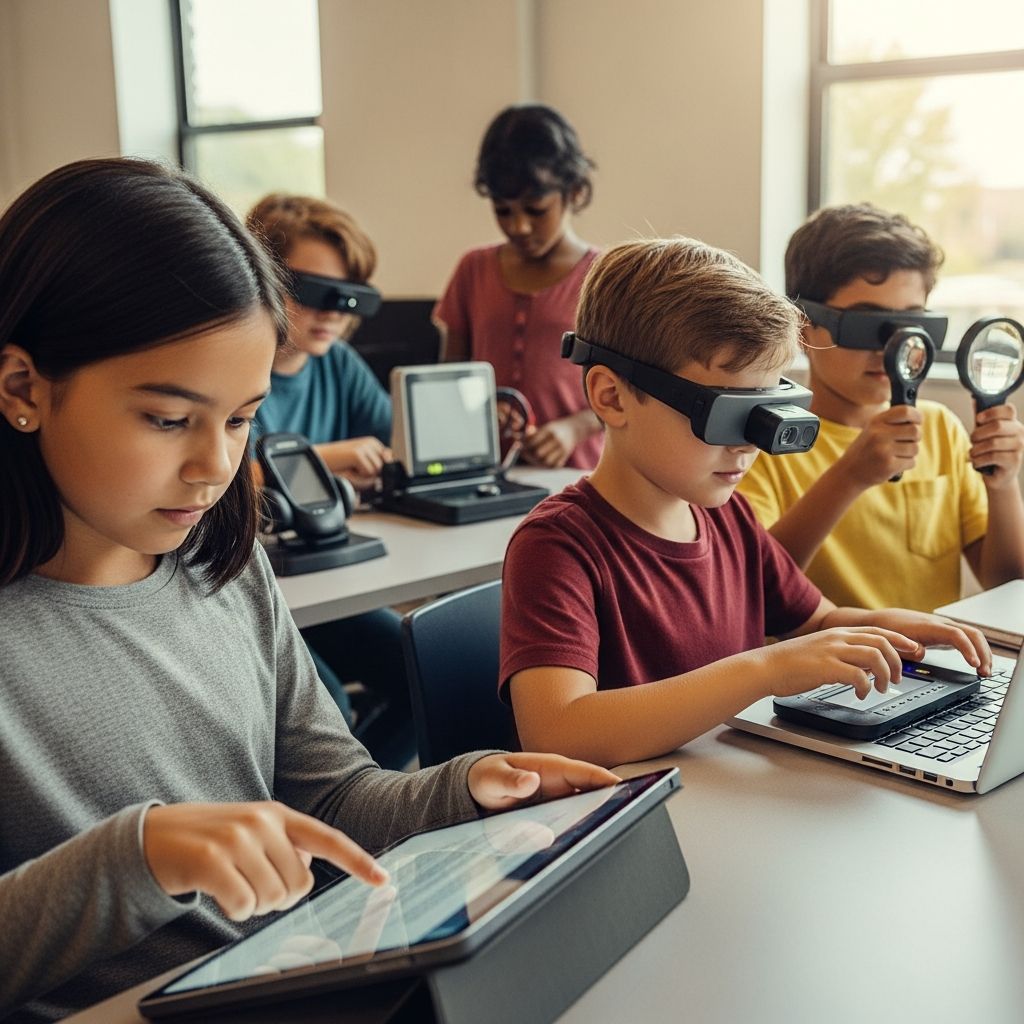
Technology plays a transformative role in supporting children with blindness or low vision, offering tools that enhance independence, education, and play. These solutions range from voice-activated devices to specialized apps, helping kids navigate a digital world designed primarily for sighted users.
Understanding Vision Challenges in Children
Children with visual impairments face unique hurdles in accessing information, learning, and interacting with their environment. Blindness or low vision can stem from conditions like retinopathy of prematurity, optic nerve hypoplasia, or congenital cataracts, affecting how kids process visual data. Digital devices, while ubiquitous in education, can exacerbate eye strain if not adapted properly, particularly with blue light exposure that children absorb more readily than adults.
Prolonged screen use contributes to digital eye strain, characterized by fatigue, dryness, and focus difficulties, alongside risks like myopia progression from near-work activities. For visually impaired children, the priority shifts to assistive tech that bypasses visual reliance, promoting equal participation.
Essential Apps for Accessibility
Mobile applications bridge accessibility gaps by converting text to speech, describing images, and enabling navigation. Key apps include:
- VoiceOver (iOS): Apple’s built-in screen reader vocalizes on-screen elements, supporting gesture-based navigation for blind users.
- TalkBack (Android): Google’s equivalent provides auditory feedback and haptic cues for touch exploration.
- Seeing AI: Uses AI to describe surroundings, read text, and identify objects in real-time, ideal for low-vision exploration.
- Be My Eyes: Connects users to sighted volunteers via video for instant assistance with tasks like reading labels.
These apps reduce dependency on others, fostering confidence. Parents should enable them early and practice in controlled settings to build familiarity.
Devices Tailored for Visual Impairments
Specialized hardware complements software, providing tactile and auditory alternatives:
| Device Type | Key Features | Best For |
|---|---|---|
| Braille Displays | Refreshable pins form tactile Braille from digital text | Reading digital books, note-taking |
| Video Magnifiers | Camera enlarges documents up to 60x with color modes | Low vision reading, crafts |
| Smart Speakers (e.g., Echo) | Voice commands for info, music, reminders | Daily routines, homework help |
| Oral Scanners | Scan printed text to speech instantly | Homework, menus |
Such devices integrate with school curricula, allowing participation in STEM activities via auditory or haptic feedback.
Safe Screen Practices for All Kids
Even with assistive tech, screen safety is crucial. Children’s eyes are more vulnerable to blue light, potentially disrupting sleep and contributing to retinal stress. Implement these habits:
- Adhere to the 20-20-20 rule: Every 20 minutes, look 20 feet away for 20 seconds.
- Position screens at arm’s length, slightly below eye level.
- Encourage frequent blinking to combat dryness.
- Limit exposure: No screens for ages 0-2; max 1 hour for 2-5 years per WHO/AAP guidelines.
Outdoor time counters myopia risk by promoting distance focus.
Age-Appropriate Tech Guidelines
Tailor tech use by developmental stage:
| Age Group | Recommended Limits | Tech Focus |
|---|---|---|
| 0-2 years | None | Human interaction, tactile toys |
| 2-5 years | ≤1 hour/day educational content | Simple voice apps, large-icon interfaces |
| 6-12 years | 2 hours/day max, with breaks | Screen readers, magnifiers for school |
| 13+ years | Balanced with outdoor activity | Advanced AI tools, Braille integration |
These align with pediatric recommendations, prioritizing real-world engagement.
Related Stories



Building Healthy Digital Routines
Establish family-wide rules: Create screen-free zones (bedrooms, meals), use timers for breaks, and model good habits. For vision-impaired kids, pair tech with occupational therapy to refine motor skills for device use. Regular eye exams detect issues early, as refractive errors can mimic impairment symptoms.
Night mode reduces blue light; avoid screens 1 hour pre-bedtime for better sleep. Encourage diverse activities like audio books and outdoor play to balance digital reliance.
Innovations on the Horizon
Emerging tech like AR glasses for audio descriptions and AI tutors promise greater inclusion. Research emphasizes combined strategies: tech plus environmental adaptations for optimal outcomes.
Frequently Asked Questions
What causes digital eye strain in kids?
Reduced blinking, close focus, and blue light lead to fatigue, dryness, and headaches.
Are blue light glasses necessary?
AAO states no strong evidence for harm from device blue light; prioritize habits over filters.
How much screen time is safe?
Follow age-based limits from WHO/AAP: none under 2, limited educational use after.
Can tech help blind kids learn Braille?
Yes, Braille displays and apps like BrailleBlaster convert text to tactile learning.
When should vision-impaired kids get eye exams?
Annually or as recommended, to monitor changes and fit assistive devices.
Integrating these tools thoughtfully ensures children with vision loss thrive digitally while safeguarding eye health.
References
- Children’s Vision and Electronic Devices — Prevent Blindness. 2023. https://preventblindness.org/childrens-vision-and-electronic-devices/
- Tips for Protecting Kids’ Eyes from Digital Screens — Colorado Eye Clinic. 2024. https://coloradoeyeclinic.net/tips-for-protecting-kids-eyes-from-digital-screens/
- Eye Health in the Digital Age — Space Coast Ophthalmology. 2024. https://spacecoastophthalmology.com/eye-health-in-the-digital-age/
- Screen-based behaviour in children is more than meets the eye — PMC (National Library of Medicine). 2022-03-01. https://pmc.ncbi.nlm.nih.gov/articles/PMC8905461/
- 4 Strategies to Protect Your Child’s Eyes in the Digital Era — CommonSpirit. 2023. https://www.commonspirit.org/blog/4-strategies-to-protect-your-childs-eyes-in-the-digital-era
- How Too Much Screen Time Affects Kids’ Eyes — Children’s Hospital of Philadelphia (CHOP). 2024. https://www.chop.edu/news/health-tip/how-too-much-screen-time-affects-kids-eyes
Similar Articles








Read full bio of Sneha Tete